1 min read

I’ve blogged here before about how time vanishes and that if you’re a reader it can be so frustrating when it takes ages to read a book. Well, I would like to demonstrate that reading book reviews, rather than eating into more of your precious time, can actually save you time. Bear with me!
First, time is precious, so you don’t want to waste valuable reading time on something you’re not going to enjoy, right? And, if you’re like me, you don’t like giving up on books. I have to really dislike a book before I’ll give up on it. If it’s just that I’m not getting into it then I only allow myself to give up by promising that I’ll come back to it later; I felt able to re-shelve Zadie Smith’s White Teeth a few years ago after making this bargain! So, following a book reviewer you trust or who is on the same wavelength as you can help you choose more wisely.
Second, book reviews can help you engage with the conversation about a book even if you haven’t read it. Do you remember those How to bluff your way in… books? Great for appearing informed at dinner parties/interviews/meetings! Seriously, though, they can help you put things in context. You can watch those bookish Sky Arts TV programmes or listen to the high-brow radio shows and still feel part of it because you know something about the books being discussed.
Third, it can give you background and context about a book so you already have a bit of knowledge about it before you start. A book review can set a scene or give you some of the themes to look out for, thereby enhancing your appreciation of a book. Perhaps even give you some good angles for your book group!
 There are so many books published that you may find people in your usual circle haven’t read the same things as you. But you will always find book review websites (whose authors would love you to post comments or engage in conversation, hint, hint!), or online reading communities, who have read your favourite most recent read. Sometimes, if I read a book I love (or loathe, though these are very few) I’m just bursting to talk about it with someone. I can always do that online.
Do you enjoy reading book reviews? If so, why? Or if not, why not?
If you have enjoyed reading this blog post and would like to keep up to date with future posts that I publish, it would be great if you could subscribe, so you can get notifications by email. Please click on the subscribe button to the right or below (depending on the device you are viewing).
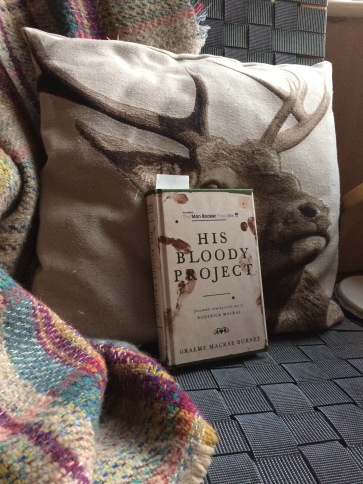 I have to say, though, that it’s a totally gripping story. Roddy Macrae is the 17-year old son of a crofter in a small village in the Scottish Highlands. The book begins with five short police statements from different witnesses who later testify in Roddy’s trial. They recount the incident, in August 1869, when Roddy murdered three other residents of the village: Lachlan Mackenzie, the village Constable and long-time foe of Roddy’s father, Mackenzie’s teenage daughter, Flora, and his young son Donnie. These witnesses observed Roddy walking through the village covered in blood and in addition to their account of the events they saw, they make observations on his character and background. Thus, there is little doubt that Roddy carried out the triple murder and the scene is set for an account of how these events came to pass.
 I have a friend with several shelves full of cookbooks and yet I know she rarely gets to use them. She and her partner both have full-time demanding jobs, three children and very busy lives, so why does she buy so many? I’m not quite as bad, my vice tends to be fiction, but we do also have quite a few cookery books, and yet we return to the same few recipes week in, week out.

 This is a novel about race in modern America where the white population seems to feel it has solved the problem of racism. Firstly, it abolished slavery and then set in place several pieces of legislation to reinforce racial equality. Unfortunately, this has not addressed a fundamental problem of disparity of outcomes between whites and blacks (or people of colour more widely), in academic achievement, income, social status, crime, you name it, the statistics paint a troublesome picture. The thesis of the novel is that, whilst white America is slightly uncomfortable with the facts as they stand, they can point to a number of black high achievers (not least the first African-American President) as evidence that they have done all they could. The under-achievement of the rest can be put down to, for example, their own fecklessness or problems of character.
 Julia's books