Women’s Prize book review #4 – “Trespasses” by Louise Kennedy

The smart money was on Barbara Kingsolver to win the 2023 Women’s Prize for Fiction, announced a fortnight ago, and the predictions were correct. Kingsolver is the first person to win the prize twice (she won previously with her highly acclaimed 2009 novel The Lacuna). I have not yet read Demon Copperhead – when I decided on the order I wanted to read the Women’s Prize shortlist I decided to leave it till last since it is by far the longest of the six books. So it is definitely on my TBR list and I am looking forward to it even more now.

I did manage to get through four out of the six shortlisted books, which I am happy with, given that it has been a very busy couple of months. The day job has been quite demanding, as has home and family life so I’m impressed with myself that I even managed to get through that many! Audio did the heavy lifting here, and the fourth book, which I am reviewing here, was another that I listened to on audio. 

I don’t know much about Louise Kennedy, other than that her Twitter feed is witty and self-deprecating! Trespasses is her debut novel which gives me some hope given that she is around the same age as me I think! It seems her writing career took off relatively late in life and she spent most of her working life as a chef. Kennedy grew up near Belfast and her intimate awareness of the impact of the troubles on ordinary people in Northern Ireland in the 1970s, ‘80s and ‘90s is a powerful theme in this book.

The main character is Cushla, a young woman who teaches in a Catholic primary school. She lives alone with her widowed alcoholic mother and helps out at the family pub, which is now run by her angry and domineering brother. The regulars in the pub make up a motley band of locals, some political some not, and include British soldiers from the local barracks who come across as insensitive, cruel and exploitative. 

There are two main strands to the novel, connected with Cushla’s two jobs. In school, Cushla’s pupils report their daily news and the vocabulary of military events, hardware and death, are shocking when they come out of the mouths of, literally, babes. One particular pupil that Cushla connects with is Davy McGeown, bullied (as is his entire family) because he is the product of a ‘mixed marriage’. Cushla takes Davy somewhat under her wing, giving him lifts to and from school for example and becomes closely involved with the family, particularly after Davy’s father suffers a brutal beating at the hands of paramilitaries. 

The second strand of the novel is the affair that Cushla begins with Michael Agnew, a prominent Belfast barrister, who although he is a protestant, manages to remain a powerful neutral force, drinking in Cushla’s family’s pub, for example, defending young Catholic men who become embroiled in paramilitary activity. Cushla and Michael are instantly attracted to one another but their affair is scandalous on many levels – he is married, he is older than her, socially they are from very different backgrounds and, of course, they have different religious affiliations, though neither of them is particularly attached to their religion. Their affair takes place in secret, mostly at Michael’s ‘town’ apartment. His wife remains mostly at their family home and there are hints that she is an alcoholic; certainly he tells Cushla that his marriage is “complicated” and he cannot offer her any commitment. To help provide cover for the affair, Cushla starts going out with another teacher at school, Gerry, who, it later transpires, has secrets of his own. 

Kennedy writes beautifully about the tender and passionate relationship that Cushla and Michael have. She also writes beautifully about the love and care Cushla has for Davy McGeown and his family, and the complex relationship she has with her difficult and mentally unstable mother. This is a novel about people, about love, and about family, and yet Kennedy weaves in some profound truths about life in Northern Ireland at that time – the messy politics, religious prejudice, the dominance of the church (and alludes to abuse in the Catholic church) living in constant fear, and yet, also, fear becoming normalised. It is an account of a kind of hell, but one in which love can still thrive, like weeds popping up through cracks in concrete. 

I loved this book and it is a brilliant debut. The audio version was also brilliantly read by Brid Brennan. Highly recommended.

Winner of the Women’s Prize for Fiction announced tonight

Well, I did not hot my target, but I had fun trying! When the shortlist for this year’s Women’s Prize was announced a few weeks ago, I set myself the goal of reading all six titles, much as I do with the Booker Prize in the autumn. The Women’s Prize is at least as big as the Booker now, so why not. (Dare I say it is also a bit more accessible?)

I’ve read three out of the six novels and have posted reviews on Fire Rush by Jacqueline Crooks, Black Butterflies by Priscilla Morris, and The Marriage Portrait by Maggie O’Farrell. I have almost finished my fourth, Trespasses by Louise Kennedy. I have not yet started Demon Copperhead by Barbara Kingsolver or Pod by Laline Paull, although I will definitely read both of them.

I have loved all the books I have either finished or am reading. Two are debut novels, and in only one instance (Maggie O’Farrell) have I read anything previously by the author. I have heard a great deal of praise for Kingsolver, but have not heard much about Pod, though it sounds a very unusual and innovative work.

The winner will be announced this evening at 7.10pm by Chair of Judges Louise Minchin, and it can be watched live on YouTube.

Of the four that I have read or am reading, all would be a worthy winner. They are fantastic novels. For me, the one that has stood out though is Fire Rush. It has such a raw energy and the author creates a world that draws you in and is completely compelling.

Only a few hours to go – let’s see if the judges agree with me!

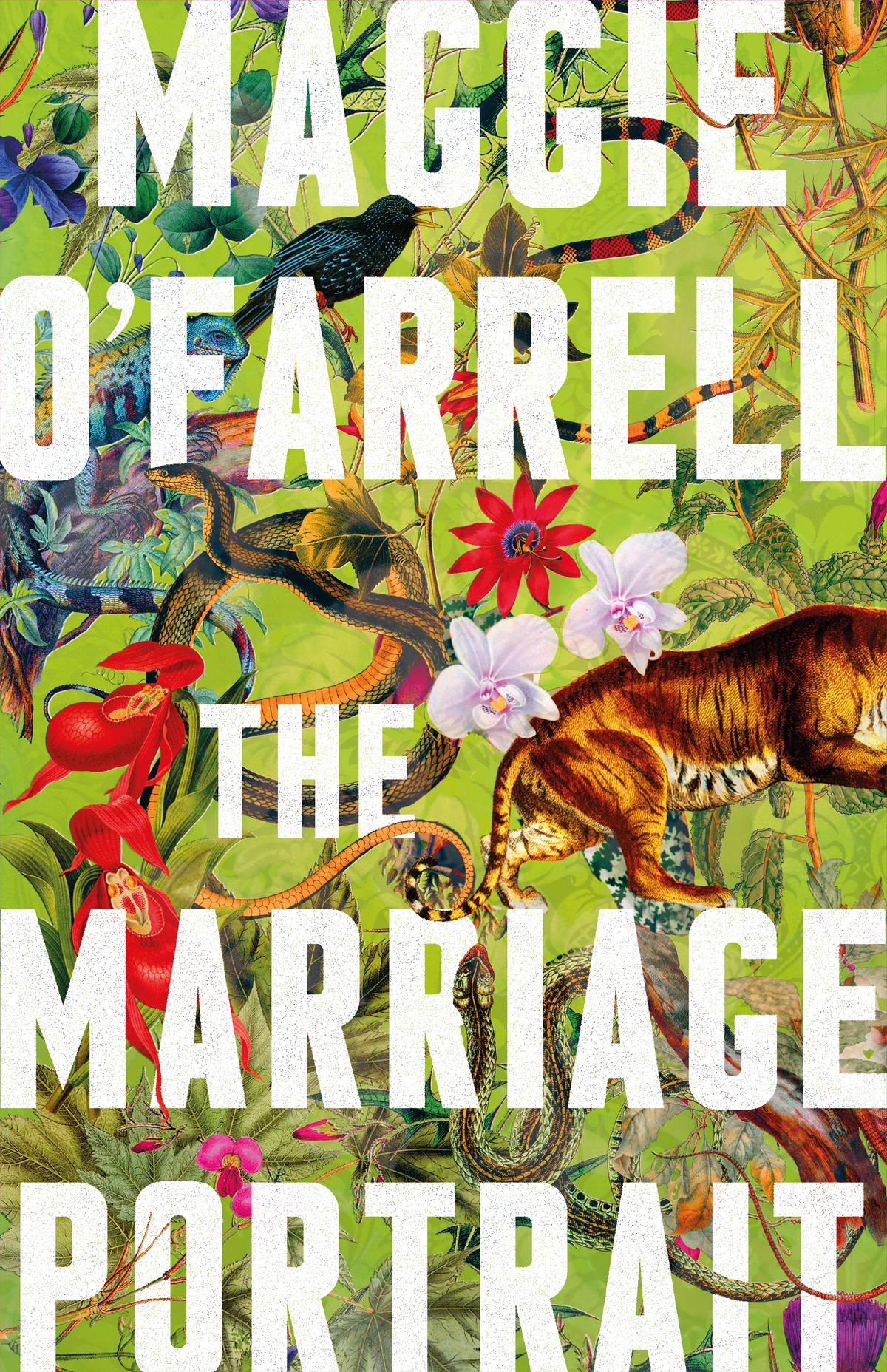
Women’s Prize shortlist review #3 – “The Marriage Portrait” by Maggie O’Farrell

Maggie O’Farrell won the Women’s Prize in 2020 with her eighth novel, Hamnet. It would be quite a coup if she won the prize again in 2023 with her ninth novel. Hamnet is without doubt one of my favourite novels of recent years. Beautifully written, moving, and an astonishing subject. In The Marriage Portrait O’Farrell takes a somewhat similar approach: taking a real historical figure, about which very little is known, and inventing their back story. This time, O’Farrell takes us to 16th century Italy. 

The main character in the novel is Lucrezia de Medici who lived a short life from 1545-1561. She was the daughter of the then Duke of Florence and his noble Spanish wife. She was their fifth child, and is portrayed in O’Farrell’s novel as somewhat unruly. Little was really expected of her, apart from a decent marriage, but as the third daughter, she would not have been considered for the highest ranking match. Her brothers, of course, were schooled in the arts of ruling. Lucrezia is portrayed as sensitive, and passionate about art and nature. She is taught to paint, since she shows some aptitude for it and it at least keeps her out of trouble. Painting is the one activity in which she finds true happiness.

Lucrezia’s elder sister Maria is matched with the nobleman Alfonso, the heir to the Duke of Ferrara, but when Maria dies suddenly, Lucrezia is forced to step in as a substitute. The children’s nurse, Sofia, sensing Lucrezia’s horror at the prospect, manages to persuade the Duke to hold back from marrying his daughter off, on the basis that she is still a child and not yet begun to menstruate. There is only so long that Sofia can protect her charge, however, and at the tender age of 15, Lucrezia is married to Alfonso, who, by then, is Duke of Ferrara. 

Lucrezia is terrified to leave her family. Initially, she is taken to her husband’s country residence, the delizia, where, as Duchess, she enjoys a little more freedom than she had in Florence. Her husband Alfonso, is constantly preoccupied with matters of state and a schism in his own family and largely abandons her. It is clear, however, that her expected role is to bear heirs and Lucrezia endures the consummation of their marriage with fear and horror. 

When the couple return to court to begin married life proper, Lucrezia becomes increasingly aware of a more sinister side to her husband. It is clear that her initial fear of him was not simply girlish trepidation, but a deeper sixth sense. Very soon she begins to fear for her safety. 

The novel opens at a banquet, where Lucrezia is being fed various delicacies by Alfonso. It is 1561, the year that she died and Lucrezia tells the reader that she believes her husband wishes her dead. Thereafter, the novel flits back and forth between Lucrezia’s early childhood, giving a sense of how her character and her place in the household evolved, and 1560-61 and the progress of her brief marriage. 

Having enjoyed Hamnet so much, I was really looking forward to this book and treated myself to a signed hardback copy. It moves at a much slower pace than Hamnet and I found it quite difficult to get into at first. There is more scene-setting and building of character than there is plot, but then we are talking about a very short span of time in the life of a person who did not have very much to do with their days! About halfway through, once Lucrezia is married, I think it improved – the sense of threat builds, the insular nature of courtly life becomes more apparent, and Lucrezia’s isolation all add to the feeling of danger for her. Even those she might reasonably think of as ‘friends’ – her husband Alfonso, his sisters, the servants – all in fact represent a potential threat. Her only confidante is her ladies maid Emilia, but she is also powerless and vulnerable. It is only when a group of artists arrives to set about making a commemorative portrait  of her (the marriage portrait) that Lucrezia realises the deep peril of her situation. As the novel darkens, it improves.

I would recommend this novel although for me it did not have the powerful impact of Hamnet, but then it must be very difficult to follow something that brilliant.

Women’s Prize shortlist review #2- “Black Butterflies” by Priscilla Morris

My second book review from the Women’s Prize shortlist. Fire Rush set the bar high, but Black Butterflies is a cracker too! It’s the debut novel by Priscilla Morris and has garnered a lot of attention, being shortlisted for a number of prizes. Morris draws on her part-Yugoslav heritage for the subject matter of this novel and her intimate knowledge of Sarajevo and her feeling for the people of that city shine through. 

Set in 1992, at the time of the outbreak of the Balkan wars and in particular the devastating siege of the city of Sarajevo, the war is seen through the eyes of Zora Kovovic, an artist of Serb origin who teaches at the university and lives with her Bosnian journalist husband. Their daughter lives in England with her English husband and child, and Zora’s mother lives alone in a flat nearby.

The novel opens with Zora visiting her mother’s flat only to find that a coarse and rather frightening Bosnian family has moved in following the passage of a law that entitles them to occupy empty properties. Zora’s mother has been staying with her over the winter, recovering from illness. The sense of impending doom is clear, everything is about to change. Zora and Franjo, Zora’s husband, who is somewhat older than her, decide that he should leave Sarajevo and take her mother with him, for the safety of England. Zora says she will follow later, she feels a duty to her students and wants to keep an eye on both her mother’s and their own apartments, fearing that they will be taken over otherwise. She does not feel in any danger. She believes that the life they have in cosmopolitan, artistic Sarajevo, which feels like the Paris of the Balkans, could not possibly be under threat. 

Franjo and Zora’s mother leave and the situation in the city rapidly deteriorates as war between the ethnic groups in the former Yugoslavia escalates. Very quickly, bombs begin to drop, snipers in the hills surrounding the city,target its inhabitants and many are killed simply going about their daily business. Bodies begin to appear in the streets. The siege intensifies, there are power outages, food becomes scarce and eventually essential services are cut off – water, sewage, power and telephone lines. It very quickly becomes impossible for Zora to escape. 

Spoiler alert:

The novel follows the siege for a year, recounting in vivid detail the suffering of the people who chose to remain in the city. What is hardest for Zora is the loneliness. Without Franjo and her mother and no possibility of contacting them or her daughter, Zora is completely isolated. Her mental state is reflected in her art. When she is prevented from working at the university, she withdraws to her studio to paint obsessively, but when the building where her studio is housed burns down and she loses almost all her work, it is like she has been robbed of her very soul. This theme pervades the novel and is not only a powerful metaphor for Zora’s individual suffering, but also a measure of the cultured and refined nature of the community, contrasting with the crudeness and brutality of the soldiers who become the masters of the frightened city-dwellers. 

Zora’s apartment is in a small block and she and the other residents who elected to remain develop a powerful bond. They often share what little food they have, and find comfort in one another’s company. It feels like the only thing keeping them sane. Zora eventually escapes Sarajevo, with the help of her son-in-law, who manages to secure a press pass and counterfeit papers to get her out, but though she wants to be reunited with her family, she finds it difficult to leave her fellow Sarajevans and part of her wants to stay. The siege has changed her, changed all of them and they will never be the same again after the experiences they have shared. There is the sense that her loved ones will never truly be able to understand her ever again. 

This is a really powerful novel, which I loved, but which is absolutely heartbreaking at the same time. As a senseless war on the eastern side of the European continent rages once more, this reminder of the horrors of the Balkan war and the break up of the former Yugoslavia (indeed, tensions in that area seem to be re-emerging), we get a glimpse of what life is like for the innocent bystanders in times of war. Again, I listened to this on audio and it is skilfully narrated by Rachel Atkins.

Women’s Prize shortlist review #1- “Fire Rush” by Jacqueline Crooks

It’s been a busy few weeks with half term, travel away from home and the day job, so I have not been doing as much reading as I would have liked. This is especially disappointing given that I’d set myself the goal of reading the shortlist for this year’s Women’s Prize! I have been doing a fair bit of driving and running though so at least I’ve been getting through some of them on audio. There is nothing quite like the feel of a book in your hands, but, increasingly, I am finding audio is the way I access most of my reading. Are you finding this too?

Fire Rush by Jacqueline Crooks was the first of the shortlisted books that I picked up and I am so glad I chose the audio version. At its heart is a love for music, specifically dub reggae, and the interconnectedness of the music, the Caribbean culture, the London scene of the 1970s where the book is set, and the idea of music as salvation. Short excerpts of dub reggae are built into the audiobook at key moments and it gives an extra dimension to the text, characters and setting, as well as the pace and tension of the book. This is also not a musical genre I am particularly familiar with, so I definitely would not have ‘heard’ it if I had read the book in hard copy.

The book opens in 1978 in the south London suburb of Norwood, where twenty-something Yamaye lives with her indifferent and sometimes cruel father. Her life seems to be going nowhere and the bleakness of the moment – it was a period of economic stagnation, cultural wilderness and all against a racist backdrop – is tangible. Yamaye lives for music, dub reggae, and spends her weekends at an underground club in the crypt of a church with her friends, sassy Asase and white Irish girl Rumer. There is an ever-present sense of threat from the authorities and most of the characters have had a brush with the law at some point. There is also an ever-present threat of violence, from darker forces operating in this underground world. 

At The Crypt, Yamaye meets Moose, a craftsman who works with wood, particularly the teaks and mahoganies from the Caribbean where he is from and where his grandmother still lives. Moose and Yamaye embark on a love affair. He dreams of going back to Jamaica with her and living a free and peaceful life in the country. Yamaye has dreams too, of becoming a DJ, mixing tracks at reggae nights. 

Spoiler alert:

All their dreams are shattered, however, by two devastating events: Moose is killed in police custody and Asase is found guilty of murdering Yamaye’s friend and the owner of the record shop she frequents. Events turn quite dark and fearing that her life is in some danger, Yamaye escapes to Bristol where she spends time in a ‘safe house’ which proves to be anything but. She must make a second escape and flees this time to Jamaica, determined to track down Moose’s grandmother, to find out more about her roots, and specifically to try and connect with her late mother who died mysteriously in Ghana when Yamaye was a child. In Jamaica she finds a new lease of life, but also encounters new dangers that will lead her to a final reckoning with forces that want to harm her. 

This is a really powerful book which tells a fascinating story. Over a period of five years or so we watch Yamaye grow from being a timid and cowed young woman, oppressed in her own home, to one who finds her inner power through music, love and embracing her true cultural inheritance. 

I loved this book. It was both gripping and engaging from start to finish. The audiobook is brilliantly read by Leonie Elliott (the actress who plays Lucille in Call the Midwife) who manages the range of voices and accents with aplomb. This is an example of audio really adding to the experience of the book and I recommend it highly. 

At the Hay Festival 2023

I had a busy half term week, spending time with my children and some friends, and a glorious couple of days at the Hay Festival, so no time for blogging. I didn’t make it to Hay last year; with both my daughters doing important exams, I just felt I couldn’t be away from home at such a crucial time. So it was especially sweet to go back this year. I went for two days, staying overnight in a tent – I am NOT a camper! – at the official Hay campsite, which I felt was preferable to a B&B miles away. It was an experience. Perhaps the coldest night of my life. Hay on Wye is in quite an exposed position, with a cool breeze, even though the sun shined the whole time. Night time temperatures dropped to around 5 degrees, so it was not comfy, even beneath the many layers I had packed. The good value and the proximity to the festival site made it worthwhile though. I’m not sure what it would have been like if it had been raining.

I saw some really interesting presentations, very little on the fiction front this year, strangely. To be honest, I don’t think I picked the best days with regard to the programme of events. My fantasy is to spend the whole week there, to dip in and out, participate in some of the off-site events, perhaps do some of the walks in the area, but that will have to wait until I am free of the tyranny of the the school calendar! It’s also not cheap: drinks and meals on the site are expensive, so if you could self-cater somehow and take packed lunches it would be much more manageable.

Below are some of my photos from the event. If you’ve never been I highly recommend it. If travelling to Hay is not possible, you can watch many of the events on the Hay Player, which is very reasonable at £15 a year and gives you access to a huge back catalogue of events too.

George Monbiot (journalist and climate activist) and Minette Batters (head of the NFU) discussing farming and the environment – a very heated debate!

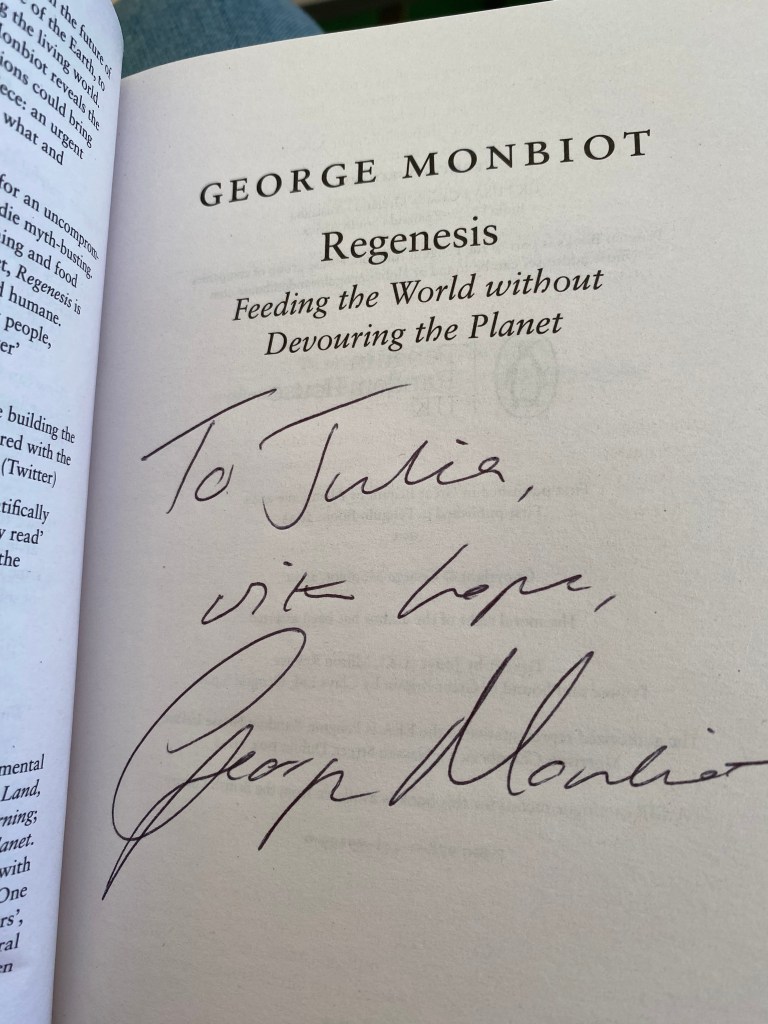
On the few occasions when I have met famous people I have not been very good at it! They say you should never meet your heroes. This time I managed to mumble a few words of conversation in the brief encounter to get my book signed.

BBC colleagues Jeremy Bowen and Frank Gardner discuss their experiences in the Middle East
The Hay Festival at night when all the day’s crowds have gone

BBC correspondent Lyse Doucet gives the Christopher Hitchens memorial lecture, covering the future of journalism and the concept to truth in reference to AI. A panel of historians discusses how we represent history, particularly in reference to Britain’s stately homes, with the CEO of the National Trust.

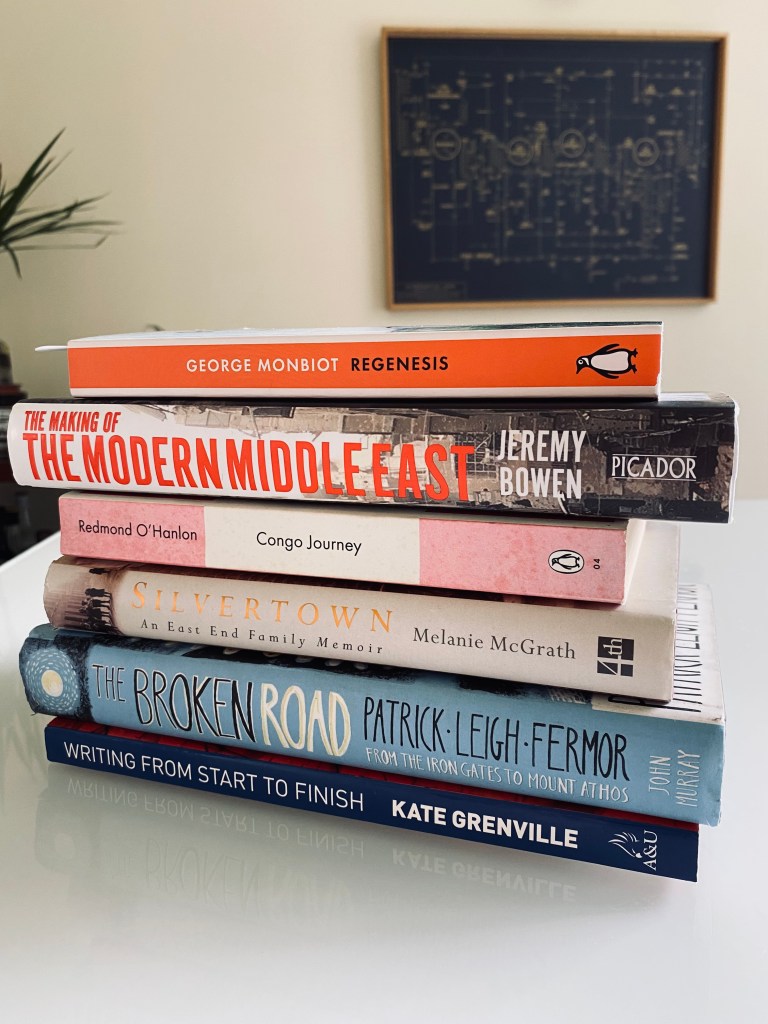
And of course, the obligatory book haul – another of the expenses at Hay! I believe I was quite restrained…

As usual, Hay 2023 was inspiring, fascinating, at times controversial and always stimulating.