Book review – “Night Watch” by Jayne Anne Phillips

Do you ever find yourself seemingly out of step with the general consensus and wondering “is it me?”, thinking you must have missed something? I have had that experience twice recently. Last week my husband and I went to see the newly released film Black Bag, a spy thriller set in London, and starring Cate Blanchett and Michael Fassbender as a married couple working for the British secret service. Now, I love both these actors and was excited to see the movie, especially as Fassbender seems to be very selective about what he does these days (his last movie, The Killer, released two years ago was superb). But, honestly, it was quite mediocre. Disappointing. It was short, poorly edited, the characters were two dimensional, the plot opaque and the script weak. I read one lukewarm newspaper review but, apparently, reception by critics has been largely positive – according to Rotten Tomatoes it received an average rating of 8.2/10. I’m baffled. 

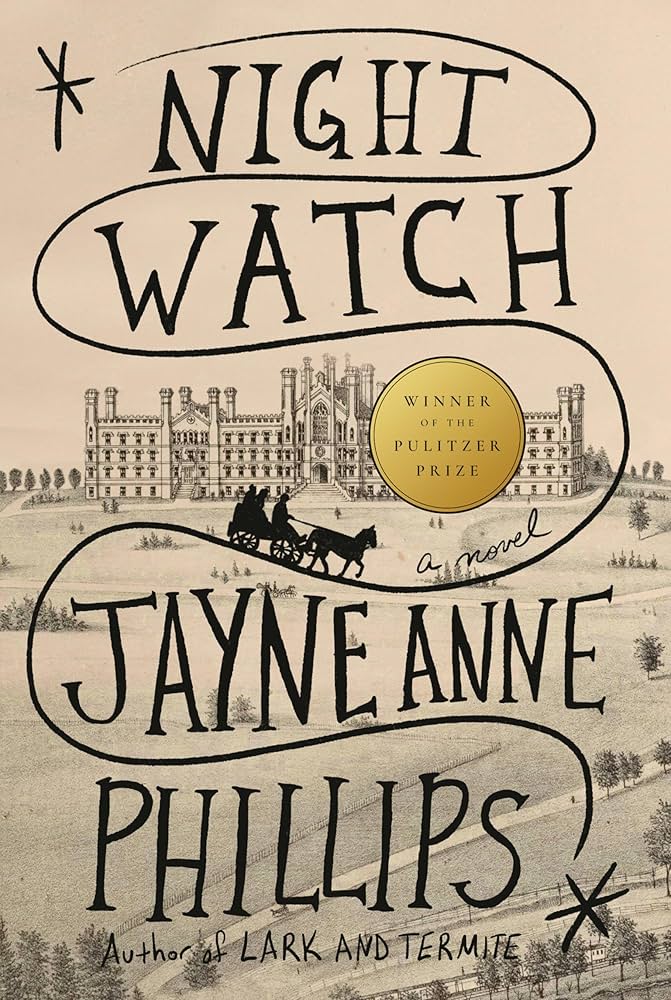
I have a similar feeling about Night Watch, the Pulitzer Prize winning novel by Jayne Anne Phillips. It was my book club choice for last month and I had not completed it by the time we met. I just found it quite slow and never felt motivated to read it. I almost gave up but my friends convinced me it was worth finishing. Set in the 1870s in the United States it follows the fortunes of a twelve year old girl ConaLee and her mother Eliza, a woman who has been deeply traumatised by sexual abuse and has been mute for many months. Eliza has born three children by her abuser, a boy and further boy and girl twins. ‘Papa’ is a former civil war soldier, who fought on the Confederate side, and has been brutalised by his experience. When Eliza is living alone with ConaLee he and a fellow runaway come across their small homestead and he rapes Eliza for the first time. She fights back as best she can and he goes away but he returns and this time makes the homestead, and Eliza, his own.

ConaLee’s father is a man who grew up with Eliza in her family home. He was a servant, an orphan taken under the wing of another servant, mother figure Dearbhla, an Irish immigrant and a strong and resourceful woman who will become vital to Eliza and ConaLee. Eliza and the boy fall in love, for which he will be severely punished, but eventually run away together and Eliza gives birth to their daughter ConaLee. He then goes off to fight for the union side in the civil war and is lost to them.

When we meet ConaLee and her mother, Papa is taking them to the Trans-Allegheny Lunatic Asylum in West Virginia. Having grown tired of the family he now has and Eliza’s state of mind, he plans to abandon them there. The asylum is a forward thinking institution run by Dr Story, nephew of the founder, who, based on his Methodist religion, had very specific ideas about how to treat the mentally ill – with exercise, routine, fresh air, good food and talking therapy. 

The book then sets out the back stories of each of the characters and the plot of the novel becomes clearer. It explores the terrible effects of the war, particularly on the women and is detailed and graphic in some of the scenes. A large part of the novel also explores Dr Story’s philosophy behind the methods used at the asylum. It is a place of peace and tranquility where inmates and staff are treated with respect and kindness, and where Eliza finally might be able to recover from her trauma in a place of safety. 

I did find the book lacked momentum, however. I usually like non-linear time frames, but I found the jumping back and forth between characters and life stages, not so much confusing as frustrating because it meant the pace was constantly shifting. I also found there was very little connection between outside and inside the asylum. I did not really see the point of knowing so much about the methods in the asylum. I’m not sure what that setting added to the story other than that it was a plot device. Yes, it was a place of safety for people who were damaged and previously unsafe, but it also had its vulnerabilities, as will become clear. I liked the character of Dearbhla, but, again, she seemed under-used – I’m not really sure what she was for. And, for me, the story was just not strong enough. And I was really annoyed by the omission of quotation marks to indicate dialogue – why? It made it tricky to read sometimes.

The critics loved this book, mostly, and in addition to winning the Pulitzer Prize, it was shortlisted for a number of other awards, so, as with Black Bag, I am left wondering what I am missing. I note that the New York Times took a less positive view which makes me feel less of an outsider! I’d love to know what others thought of this book. I would struggle to recommend it, if I’m honest.

Books out this spring

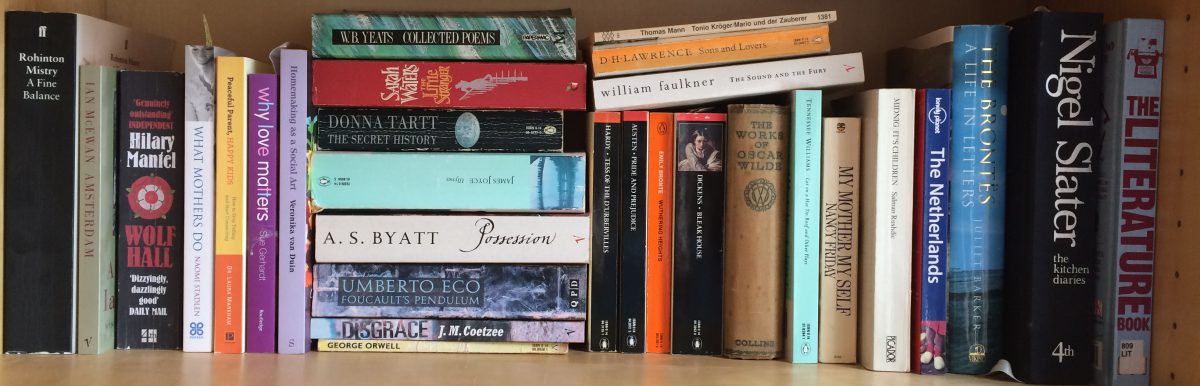
It really does feel that at long last there is a bit of a change in the air. I am spring cleaning my bookshelves at the moment – always a very challenging task. Books that I have forgotten I owned, books I might want to re-read (someday!) and books that I am ready to let go of, either because they deserve to find a new home or because I am accepting I will almost certainly never get around to them! And I need to make some space for the new titles coming out this season. A few have caught my eye and I thought I would share them with you.

I have been enjoying a lot of non-fiction in recent months and I find that I feel more excited by this genre’s new books than the fiction, to be honest.

Everything is Tuberculosis by John Green

A few years ago I read a book about tuberculosis by science writer Kathryn Lougheed and found it absolutely fascinating. My paternal grandfather died of the disease in London in 1940 just days before his second child (my dad) was born, and I was drawn to this book as I was trying to find out more about my family history. This book comes at a flexion point I think, as I was reading in the newspaper just this week of fears that cases of this terrible condition are likely to rise in the coming months and years following the withdrawal of US aid to developing countries. In our globalised world, we should not expect to be able to contain the disease within national boundaries (as we found with the Covid 19 pandemic) so it will be no surprise to see cases increase in the global north.

Story of a Murder by Hallie Rubenhold

Hallie Rubenhold caught the attention of the literary world with her bestselling book The Five about the women who were the victims of the infamous Victoria London serial killer Jack the Ripper. Her new book, released at the end of March, gives the same treatment to another famous murder case. In 1910, a London doctor, Hawley Crippen, murdered his wife Belle Elmore, a music hall performer. In this book, Rubenhold applies her research and detective skills to uncovering the story of how a group of Belle’s friends helped bring the killer to justice, and shady associates who may also have had a role. The book has been highly praised and its publication is much anticipated.

Maternity Service by Emma Barnett

I am an avid listener to the BBC Radio 4 morning news programme Today, and Emma Barnett is one of its main presenters. She is a broadcasting tour de force and made her name with some spectacular interviews on Radio 5 Live, and changed the face of another Radio 4 stalwart show Woman’s Hour. She is a campaigner for many feminist causes and is a high profile mother of young children who speaks passionately about the challenges of juggling motherhood and a career. As I work with new mothers I am very interested in what she has to say on the topic.

So, that’s the non-fiction, what of the fiction?

Dream Count by Chimamanda Ngozi Adichie

Published just a week or so ago and immediately longlisted for the Women’s Prize, this is the much anticipated new novel from Chimamanda Ngozi Adichie, her first in a decade. I love her work – her book Half of a Yellow Sun about the Biafran war is one of my favourite books of all time – and have reviewed her recent non-fiction books on here. This will be top of my TBR list for spring.

Flesh by David Szalay

Szalay’s 2016 novel All That Man Is was one of the first books I reviewed on this blog, after it was shortlisted for the Booker Prize that year. It wasn’t my favourite on the shortlist but I did enjoy it and found it interesting to read men’s perspectives on life’s dilemmas. Flesh follows the life of a young Hungarian boy as he moves from his small town to the ranks of the super-rich in London. With so much toxic masculinity in the world just now I feel this might be an important read.

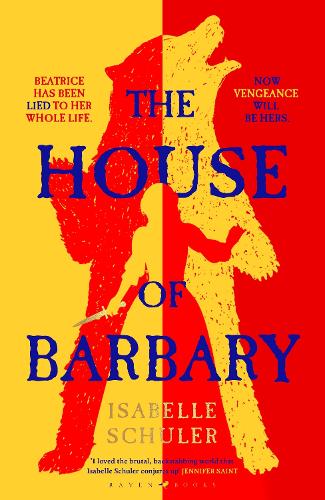
The House of Barbary by Isabelle Schuler

This is said to be a feminist re-telling of the legend of Bluebeard which interests me as this myth has crossed my path a couple of times in recent years, also as a feminist re-telling. First in the non-fiction book Women Who Run With Wolves by Clarissa Pinkola Estes, and second in Angela Carter’s collection of short stories The Bloody Chamber. The book is a re-imagining of a number of brutal myths and the opening story (which gives the book its title) concerns the Bluebeard tale. I have not heard of Isabelle Schuler so I am interested to read her treatment of this story.

So, that lot should keep me occupied for a little while!

What books are you looking forward to reading this spring?

Audiobook review – “The Women” by Kristin Hannah

This was one of my book club’s favourite reads of 2024. It had not crossed my radar at all (one of my friends suggested it) but was a New York Times bestseller last year. The novel is broad in scope and while the central theme of the novel is the much-overlooked role of women nurses in the Vietnam war, it is essentially a story of a life and draws in other themes and events in its sweeping timescale.

The central character is Frances ‘Frankie’ McGrath, whom we first meet as a young woman from an affluent background, a military family, in southern California. It is the 1960s and the expectation is that young Frances will do her duty and make a good marriage. There is a family party to celebrate the fact that her brother (with whom she is very close) has enlisted and is about to go off to Vietnam to fight for his country, following in the footsteps of his father and many other men in the family. There is a wall of honour in the family home covered with portraits of the various family members who served in the military. At this stage, the war still seems like an honourable endeavour for America, taking a moral stand against communism.

An intelligent woman with little else to do, Frances decides to follow in her brother’s footsteps and enlist, as a nurse. She expects, rather naively, that her parents will be proud of her, but their reaction is furious and ashamed. This is clearly not the sort of thing the women in the family do. Under a cloud of antipathy, Frances undergoes her short period of training before being transferred to a field hospital in Vietnam. Frances’s sheltered life has done nothing to prepare her for what she will face there. Soon after her arrival she experiences her first emergency with casualties being brought in from the field, horrific death and injury, inclement weather, power cuts, scarce resources. It is a very rude awakening and Frances spends her first few days in complete shock. She is supported by the two women friends she makes there, fellow nurses Barb and Ethel. 

Frances undergoes a rapid transformation – not least from Frances to Frankie – she grows up, she learns to drink, smoke, fall in love and adapt to her new role and wholly new environment. The portrayal of the war and the conditions is visceral and the author handles it deftly. Writers and film makers do nig hold back on the horrors of war nowadays, as they might once have done, and the very particular horrors of Vietnam have been thoroughly explored, but it bears repeating. It is far in the past now (so much so that this book is considered historical fiction) but it is good to be reminded of the dangers inherent in hubristic over-confidence and who ultimately pays the price for the failure.

Beyond the war, when Frankie returns to the US, it becomes a more personal story. She battles with romantic betrayal, rejection by her parents, the loss of her beloved brother and denial by the American public of her part in the war. This is Kristin Hannah’s central mission with this book – for years, the role of women was completely overlooked. Most did not know that women had served and what they had been through. When Frankie returns and finds that the US public has turned against the war and that the pacifists partly blame the service personnel, she takes up the cause of veterans. Disillusioned, lost and alone we follow Frankie’s recovery and rehabilitation as she searches for new meaning in her life.

This book has been widely praised although some reviewers have described it as overly-long. I did feel that the second half of the book was a little more laboured and lacked the force of the Vietnam sections. Yes, there is much to say about the way veterans were treated both by American society and by their government when they came home, but this story is separate from the ‘women’s role’ that was the opening rationale for the story. That said, I did enjoy the book, it does stretch credulity a little, but it is a page-turner nonetheless.

Recommended.

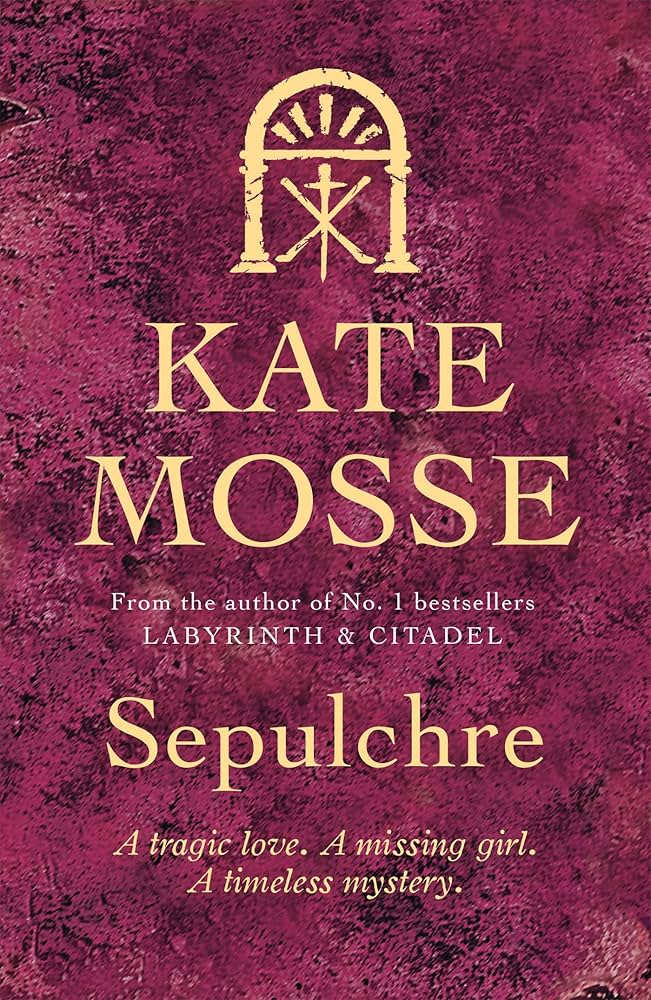
Book review – “Sepulchre” by Kate Mosse

I read this book over the New Year holiday and I thought it would be fitting to publish my review today as the 2025 Women’s Prize for Fiction longlist has just been published. Only a handful of the books on the list have crossed my radar – Elizabeth Strout seems to be a regular on prize shortlists at the moment and her latest book Tell Me Everything has made the longlist. Yael van der Wouden’s book The Safekeep, which I reviewed after it was shortlisted for the 2024 Booker Prize is also there. But perhaps most interestingly, Chimamanda Ngozi Adichie’s long-anticipated new novel Dream Count has made the longlist – the book was only published today – that’s timing!

Kate Mosse was of course the founder of the Women’s Prize (formerly the Orange Prize) which is now in its 30th year. She is an extraordinary woman. Labyrinth, the first book in the Languedoc trilogy, of which this book, Sepulchre, is also a part, was published twenty years ago and Mosse is currently touring with a one-woman show, sharing her secrets about the book.

So, what of Sepulchre? I was eager to get to this novel having so thoroughly enjoyed Labyrinth. The third instalment, Citadel, is on my TBR list. Labyrinth has been an international bestseller, translated into more than forty languages. Sepulchre is a little less well known, I think, and the novels can be read and enjoyed in isolation, although for me, having read Labyrinth, deepened my understanding of the themes explored in the second novel. 

Sepulchre follows a similar structural premise to Labyrinth – two women whose lives are intertwined in ways that we as readers do not know about but which will emerge as the narrative progresses. The author tells their stories in parallel, using the technique of the contemporary character uncovering details about the life of her distant predecessor. In this novel, the two women are Leonie Vernier, from the late 19th century, and Meredith Martin from the present day.

Leonie is a young woman living in Paris with her mother and brother. There is a sense of threat in the air, both from social and political upheavals of the time (one of the opening scenes is of a violent uprising in a theatre) and because of some mysterious business that Anatole, Leonie’s brother, is involved in. A shady character, Victor Constant, enters their lives and it is clear that he bears some ill will towards the family, particularly Anatole. When it is suggested that the siblings go to Rennes-le-Bains (a town about 50km south of Carcassonne, which is where the connections with Labyrinth begin) to visit their widowed aunt, a young woman who was married to their late uncle, it is in large part to enable Anatole to evade the attention of Victor Constant. 

In Rennes-le-Bains, at the remote mansion the Domaine de la Cade, the siblings enjoy a relaxed time with Isolde their aunt and begin to experience a quieter life away from Paris. Leonie explores the grounds of the Domaine although she experiences a disturbing supernatural event in an abandoned chapel in a densely wooded area in the grounds (further links to Labyrinth). She paints, sews, explores the town and makes friends with some of the local gentry, including Audric Baillard, an intellectual and someone to whom Leonie is curiously drawn. Audric, of course, appeared in both time periods in Labyrinth

The modern-day character is Meredith Martin, an American writer, teacher and musician, who arrives in France ostensibly on a research trip for a book she is writing about Claude Debussy (whom we meet earlier in the novel as he is a neighbour of the Vernier family in Paris), but also in search of information about a French musician ancestor, about whom she knows very little. She was adopted after her young and troubled mother died. Whilst in Paris she has a tarot reading which takes her to Rennes-le-Bains. She stays at a country house hotel (the former Domaine de la Cade) and becomes enmeshed in the personal family difficulties of Hal, whose father has recently died in mysterious circumstances, and whose uncle now stands to control the entire business of the hotel where the two brothers were partners. 

The plot of the novel is complex and clever. Mosse manages to draw out the connections between the two womens’ stories whilst making each one uniquely interesting and separately gripping. The scenes of denouement in both stories are powerfully told without melodrama or sentimentality and I found myself gripped by events, eager to read ‘just one more page’ to find out what happens next! Her control of the story is masterful. There is a wide range of characters although I’m afraid I did not think that some of these were as complex or as well-drawn as those in Labyrinth. Victor Constant, for example, felt like a pantomime villain at times. This does not detract from the overall effect, however, which is of a talented writer with a passion and feel for her subject, completely in command of the narrative. 

I am looking forward to picking up the final instalment of the trilogy, Citadel and devouring that one too!

The 1st day of Spring!

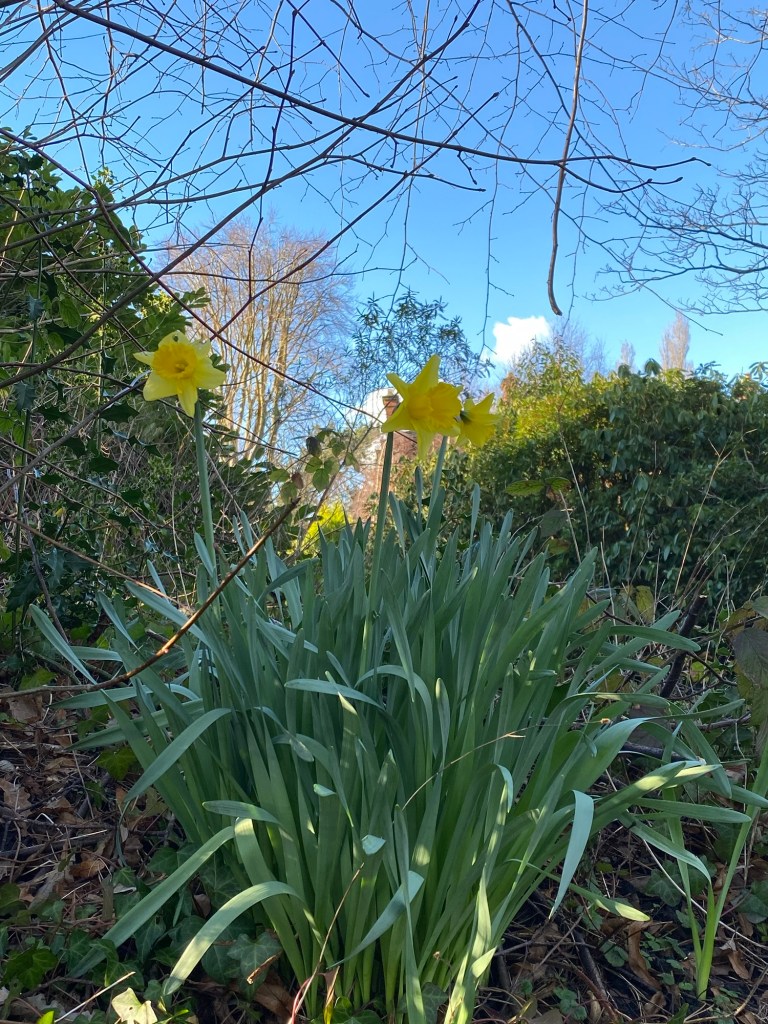
It has felt like it was a long time coming and then it seems to have happened all at once. February was both long (the final last yards of the winter slog), but at the same time a full 72 hours shorter than both of the months which bookend it (January and March). As I write this, the sun is shining outside of the window, my youngest has just called me from the north east of England to tell me what a beautiful day it is in her university town (she sounds more well than she has done for weeks) and I am just back from a short visit to my middle one, who is studying much further south) where crocuses, daffodils and narcissi were blooming everywhere.

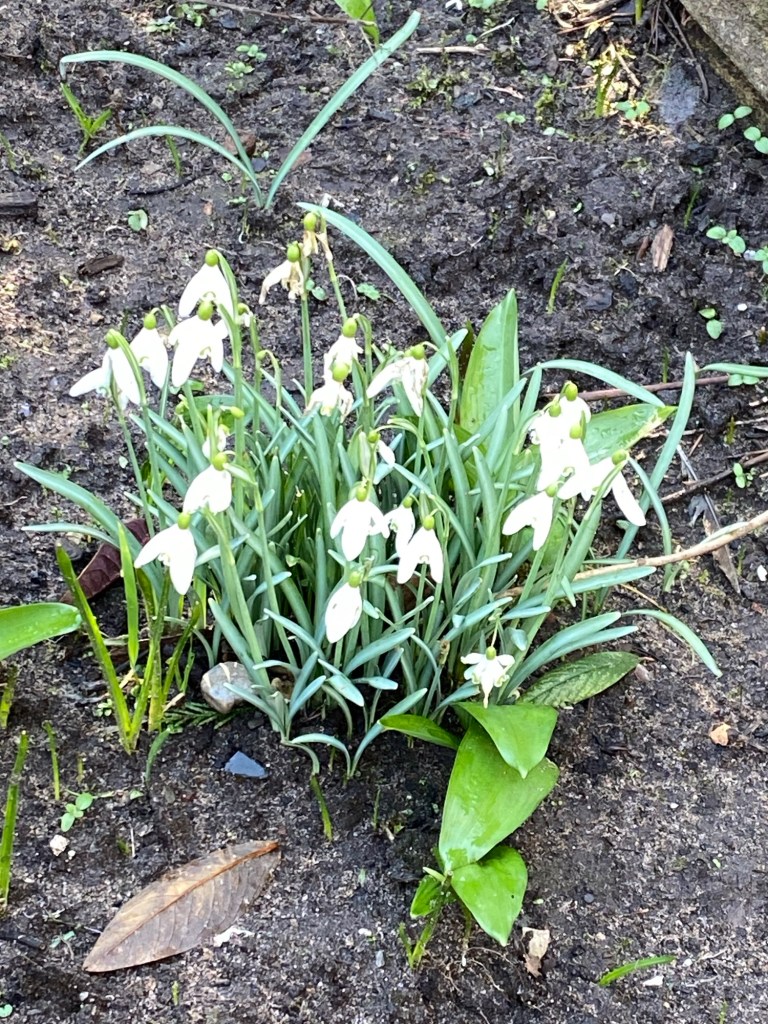
As well as being in the north west, my own garden is north-facing and the flowers are always slower to bloom, but my camellias definitely have buds, the snowdrops are out and the other bulbs are showing promise. It’s still cold, around seven degrees apparently, and I’m wrapping my hands around my tea cup, but the sunshine makes it seem less cold and, more importantly, my spirits feel somewhat lifted.

I hope like me you are feeling a little more energised. March promises to be a fairly quiet month for me, with less work than I have had over the last few weeks, but I am hoping to make the most of that time with some spring cleaning of my much neglected house, some gardening and lots of reading. I am a bit stuck with my current book, Night Watch by Jayne Anne Phillips, about which I was so hopeful but which I am struggling to get through. I have just completed Naomi Klein’s Doppelganger: A trip into the mirror world which is brilliant and has left me with a list of ‘must reads’ and ‘must watch’ films, YouTube clips and television shows! I highly recommend the book, which won the Women’s Prize for Non-fiction last year, and will post my review of it soon.

After my wonderful trip to Venice I have a small stack of books which I bought from the secondhand website World of Books, which I am eager to dive into, coffee table books about the palazzos, and writers’ memoirs of the city.

What is so striking about spring is the sense of hope I find I have suddenly – about all the cleaning and tidying I’m going to get through, about all the books I’m going to read, the yoga classes I am going to attend and the general sense of order I am going to bring to my life! Well, that is what it is to be human I think, to be hopeful and to keep striving!

So, Dydd Gŵyl Dewi Hapus to everyone especially anyone out there with Welsh connections – what brilliant thinking to have your saint’s day on the first day of meteorological spring – and apologies if I have misspelt that. Happy reading, planting, spring cleaning, travelling or whatever it is you will be doing with your March.