Book review – “Prisoners of Geography” by Tim Marshall

I remember a friend recommending this book to me a few years ago and I made a mental note but never got around to reading it, so I was delighted to pick this up at my local Oxfam bookshop at the start of the summer. The book was first published ten years ago (my edition was revised and updated in 2016) but a further edition has been published this year. One can understand why a new version was needed; 2015 seems almost quaint at this point, another era. It pre-dates the first Trump presidency, Russia’s 2022 invasion of Ukraine, Britain leaving the European Union and, of course, the Covid-19  pandemic. It also pre-dates by some distance the devastating events of the last two years in Israel and Gaza.

And yet, one of the striking things about reading this nine year-old edition is how prescient it is and how it explores some territorial issues that never seem to go away. The Middle East chapter explores the ancient origins of conflict in the region, the way it has been used as a political football by colonisers (particularly the British and the French, sadly) and the cavalier attitudes that have been shown towards tribal, cultural and religious sentiments. The seeds of present-day conflict in many countries in this region have been sown over decades, if not centuries. 

The Africa chapter is equally shame-inducing – the actions of arrogant colonisers have created so many of the problems that the continent is experiencing today and the wealth of natural resources present there continue to make Africa a target for richer nations wishing to exploit division and grow richer and more powerful in the process. Marshall also argues that the vagaries of climate, topographical challenges and the prevalence of some devastating diseases have hampered African nations’ ability to prosper.  

The book opens with a chapter on Russia and a very interesting discussion about the psyche of that nation which may go some way to explaining its attitude to Ukraine. Of course, Russia first invaded Ukraine when it took Crimea in 2014 – that will have been very recent history when Marshall was writing this book – and it is quite prescient that he chooses to start the book almost with a warning that Russia has not yet completed the job it set out to do in 2014, now more than ten years ago. Putin can afford to be a patient man as, unlike many world leaders, he does not have to worry about the threat of being voted out of power. 

China is endlessly fascinating and merits a chapter of its own, as does the United States, and here Marshall writes of the tremendous natural advantages that country enjoys – perhaps leaders of that country might be a little more humble and recognise the many gifts they have been given. 

Marshall is a journalist and broadcaster and former foreign affairs editor for Sky news. He knows his stuff and has written several books on the subject of the politics of nationality and of place, all of which seem to have been well-reviewed. I have seen him speak on several news and current affairs programmes over the years and he is a man worth listening to. 

This book is by no means a light read, nor an uplifting one but perhaps an essential one for anyone interested in world affairs and global justice.

Book review – “Dream Count” by Chimamanda Ngozi Adichie

I posted earlier in the week about this year’s Booker Prize shortlist and one of the books I was surprised not to see on the list (it did not even make the longlist) was the latest (and for me long-awaited) novel by Nigerian author Chimamanda Ngozi Adichie. So surprised was I by this oversight that I even double checked the eligibility criteria – was it published within the time frame? It was indeed and I remain very puzzled. It is hard to believe that it is twelve years since Adichie published her last novel Americanah, though in the intervening period she has written some shorter form non-fiction works. She and her partner have a young family so presumably she has been focusing on raising her children and she also lost both her parents and has written about her grief at these events.

Well, it was, in  my opinion,  worth the wait because she has well and truly hit a very rich seam once again with this, her fourth novel. Dream Count reflects on the dilemmas facing women today, on the choices between career and family, on the unreliability of too many men, on cultural clashes, on food, on the Covid 19 pandemic, on loneliness and fulfilment, on Africa and on inequality. 

The novel traces the story of four women – Chiamaka, who comes from a wealthy Nigerian family, her cousin Omelogor, a brilliant financial analyst and sometime academic, Chiamaka’s friend Zikora, a lawyer, and her long-time housekeeper in the US Kadiatou. The novel opens with Chiamaka’s story at the time of the Covid 19 pandemic when she finds herself stranded in the US, only able to communicate with family via internet video calls, as happened with so many of us. Chiamaka is a travel writer, who has had only moderate success, but her family’s wealth means she has no real need to work. There is pressure from her family to marry and have a family, however. Chiamaka is a romantic and the novel recounts some of her many relationships, but the men in her life invariably fall short either of her ideals of marriage or in terms of their character. 

Omelogor is a self-made woman, highly intelligent and extremely able from a young age she became a financier in Nigeria and made her fortune by taking her own share of the corrupt profits she helped her unscrupulous bosses cream off the state. A modern day Robin Hood-ess she sets about redistributing funds to less fortunate, less educated women in her community, women trying to support their families by setting up small businesses. Latterly she takes a sabbatical in the US and becomes a researcher into internet pornography and how this impacts on men’s perceptions of women and how they conduct themselves in relationships.

Kadiatou is Chiamaka’s housekeeper in the US. A deeply caring woman who left Nigeria at the behest of a man who promised to marry her. She has a daughter to whom she is devoted. Kadiatou becomes embroiled in a high-profile sexual assault case which closely resembles the true story of Nafissatou Diallo, a maid at a luxury New York hotel, and Dominique Strauss-Kahn, Director of the IMF, in 2011. The author references this case in her afterword. In her exploration of Kadiatou’s assault, the author explores the perennial problem of power imbalance and how the law and the media are stacked against immigrants, women and poorer people.

The fourth main character is Zikora, close friend of Chiamaka and Omelogor, a lawyer who also experiences family pressure to marry and start a family, but who again, finds herself let down by inadequate men, but also, sadly, a distant mother. 

The novel alternates between the different women’s perspectives, exploring their back stories, their thoughts, their preoccupations and their dreams. ‘Dream count’ seems to refer to the different sexual and romantic relationships and encounters they have, the good, the bad and the really ugly. Thus the term ‘dream’ becomes one that is loaded with irony and with cultural perceptions (a partner may appear ideal, dream-like, from the outside, but there are usually problems and inadequacies that make them unsuitable or unacceptable to these women). In their different ways none is prepared to settle for a second-best. 

There is so much to love in this novel. I listened to it on audio and was delighted that the opening part of Chiamaka is read by the author. Her voice is smooth and rich and filled with the nuance that only she, as the author, could understand. Thus she brings expression that makes listening even more of a pleasure. If I had read this as a book I feel sure I would have been turning the corner on every other page, defacing it with hundreds of underlinings and notes because the language and the expression are so powerful. 

It is the best post-pandemic novel I have read to date and a book I highly recommend. 

Booker Prize shortlist 2025

The shortlist for this year’s Booker Prize was announced recently, an event which more or less passed me by. I have been so busy with my day job recently (and will continue to be for the next few weeks) that my reading, writing and blogging have fallen badly by the wayside. I have a long break in November, however, and I am determined to get some balance back in my life.

In the nine years since I have been writing this blog I have endeavoured each year to read through the shortlist in time for the announcement of the winner. I think most years I get through all the books (even if it takes me months!), but I think I have only once managed to get to the end by the time of the winner announcement, and only called it right on one occasion also (with the very memorable Shuggie Bain, winner in 2020).

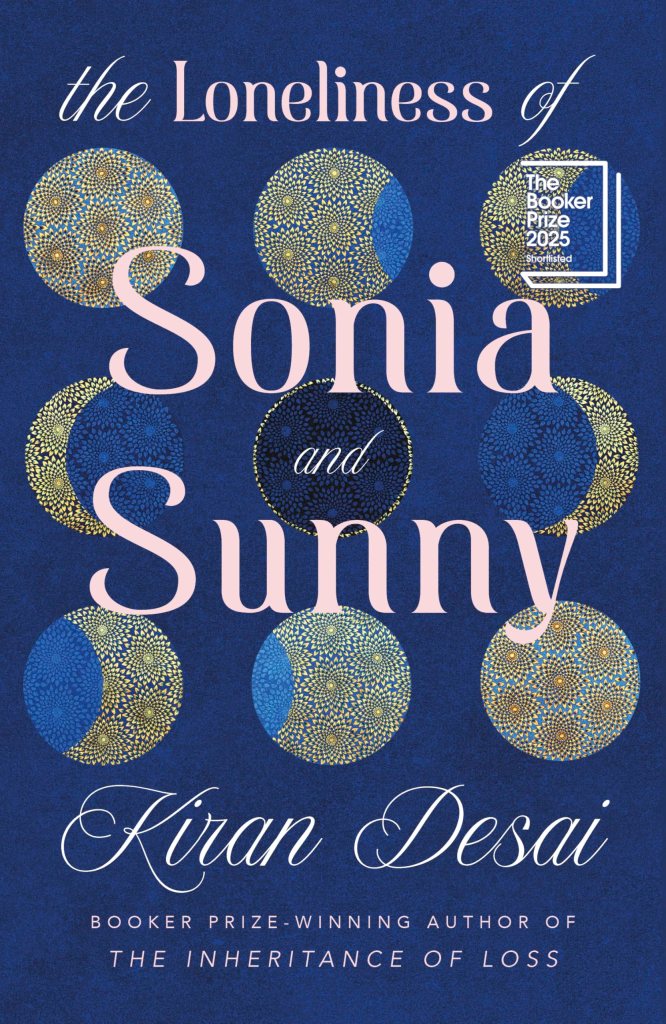
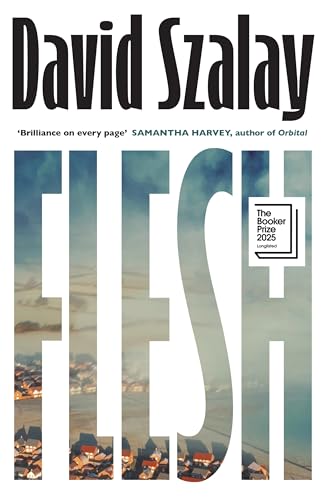
This year’s shortlist is made up of experienced novelists. I am familiar with the work of half of them – Kiran Desai, a previous Booker winner (2006, The Inheritance of Loss) is the daughter of legendary Indian novelist Anita Desai, who wrote Fasting, Feasting, which I read many years ago and which was also shortlisted for the Booker Prize. David Szalay, wrote All That Man Is which was shortlisted for the Booker in 2016 (the year I started blogging). And Andrew Miller whose book The Land in Winter I read a few months ago in my book club and have already reviewed it on here – so I have one under my belt!

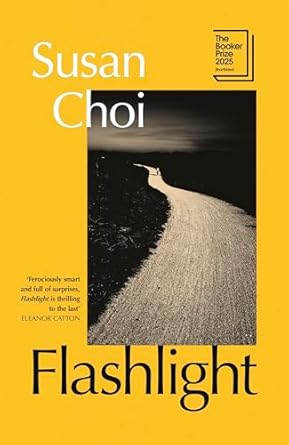
Some of the books are exceedingly long – Flashlight comes in at just under 500 pages and The Loneliness of Sonia and Sunny a whopping 700 pages! I am not quite sure where to start; I think The Rest of Our Lives by Ben Markovits speaks to me most at this point – the opening line of the blurb is “What’s left when your kids grow up and leave home?” Kind of where I am in life!

This year’s Prize is distinguished also by its interesting judging panel, which includes Sex and the City actor Sarah Jessica Parker, and authors Kiley Reid and Ayọ̀bámi Adébáyọ̀, both of whose work I have reviewed on here. The judging panel is chaired by veteran bestselling author Roddy Doyle.

So, what chance do I give myself of finishing even half these novels by 10th November when the winner is announced? Let’s say 50/50!

Happy reading!

Book review and travels in Vienna – “When the World Was Ours” by Liz Kessler

I read this book at the end of the summer. It is set partly in Vienna, where we went for our family holiday in July, though that is not why I read the book, or why I went to Austria! Pure coincidence. When the World Was Ours is actually a book for young people, or what is often called ‘middle grade’ fiction, but that should not deter any adult from buying it – I was gripped from start to finish and absolutely loved it. 

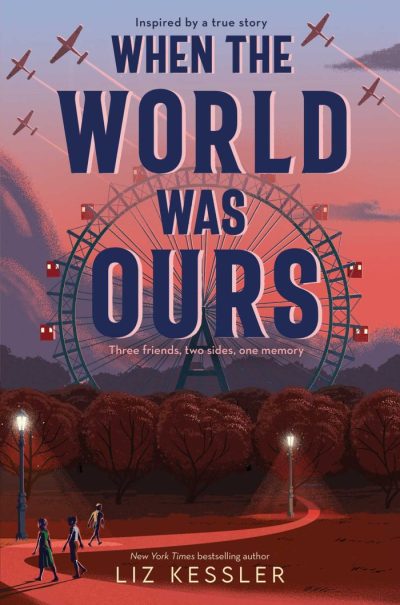
The book opens in Vienna in the mid-1930s at the birthday celebration of nine year-old Leo. Leo’s father has taken him to the city’s ferris wheel for a treat, along with Leo’s two very close friends Max and Elsa. There they meet an English couple, a dentist and his wife, who are in town for a conference and afterwards the couple and all the children are invited back to Leo’s family home for Sachertorte, the iconic Austrian dessert. 

The three children are inseparable, firm friends; Elsa’s main dilemma is which of the two boys she will marry when they grow up! But timing is everything, and as political events around the children develop, it is clear that they will not be unaffected by the fascist takeover of the city and country by Hitler and his army. Leo is Jewish, as is Elsa. Max is not. This will create a wedge between them as Leo and Elsa’s families must navigate the new environment; should they stay or should they try and escape? Meanwhile, for Max, the challenge is rather different. Always a more timid boy, somewhat in Leo’s shadow, he finds there are expectations upon him once his father begins to rise up the Nazi ranks, which it is not clear he will be able to meet.

I do not want to say more about the plot of the novel as it is a critical part of the enjoyment of the book. There is a gloomy inevitability about many of the events, however, as you might expect. It is a compelling read, with chapters alternating between the perspectives of each of the children.
The characters are well-drawn and the writing has a graceful simplicity that suits the subject-matter, the primary intended audience and the gravity of the events. It is plain without being patronising and I felt it was an authentic portrayal of the voices of the individual children.

I had the great pleasure to meet the author and discuss the book with her as she lives in the north west of England, not far from me. She came to our book club and was very generous with her time and her thoughts. As is stated at the beginning of the book, there are autobiographical elements as it is based on her own family history. This adds even more poignancy to the story and is a timely reminder that fascism and authoritarianism must never again be allowed to take hold. The consequences are intolerable.

Vienna

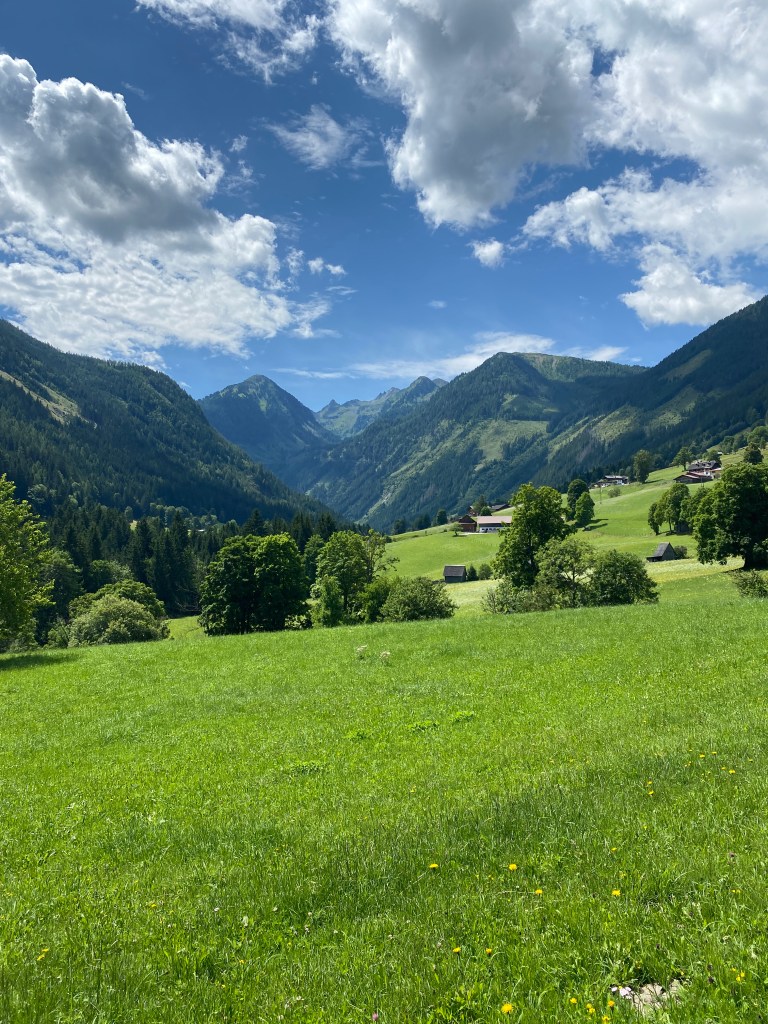
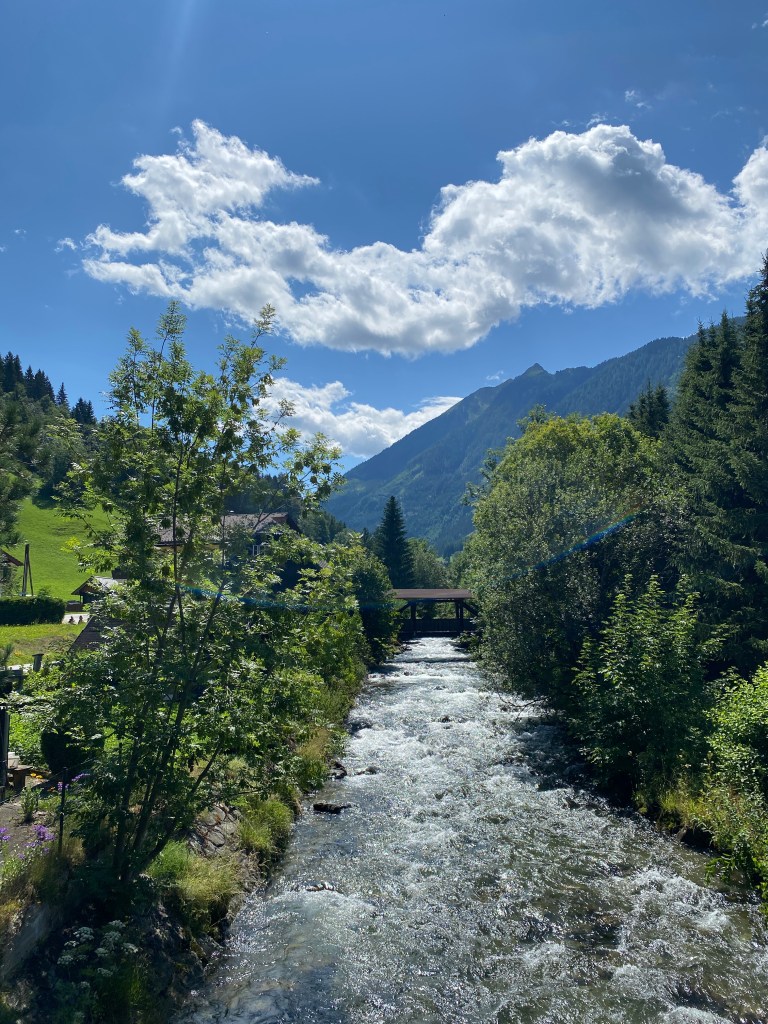
It was by sheer coincidence that my family went on holiday to Austria this summer. We have been skiing there a number of times  in the last couple of decades, but it is many years since I have been there in the summer. We spent a few days in Vienna and then travelled west to Schladming, normally a ski resort but a walker’s paradise in the summer, and where the hills were most definitely alive – verdant, green, lush and beautiful. 

Before I went I looked up ‘famous Austrian writers’ because I found I could not think of any! The list did not include many that I had heard of apart from Arthur Schnitzler, who wrote the novella Eyes Wide Shut, famously adapted for the screen by Stanley Kubrick and starring Nicole Kidman and Tom Cruise, and the poet Rainer Maria Rilke. Austrian culture is perhaps better distinguished by its eminent composers and artists, such as Mozart, Schubert, Strauss, Haydn and Klimt.

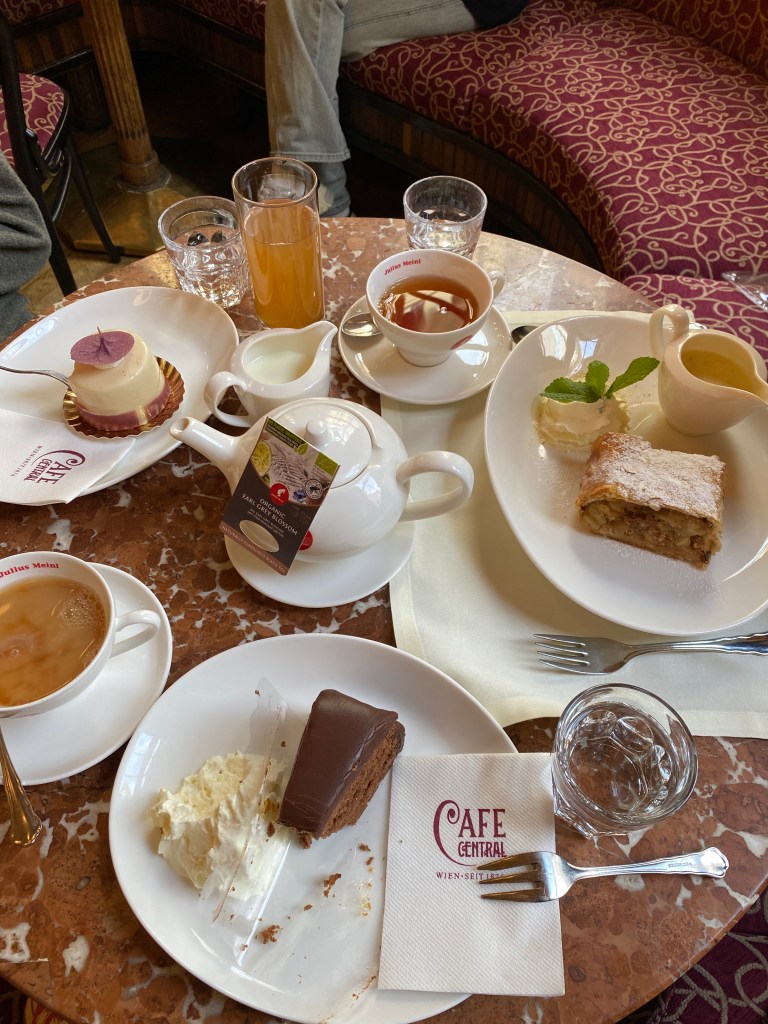
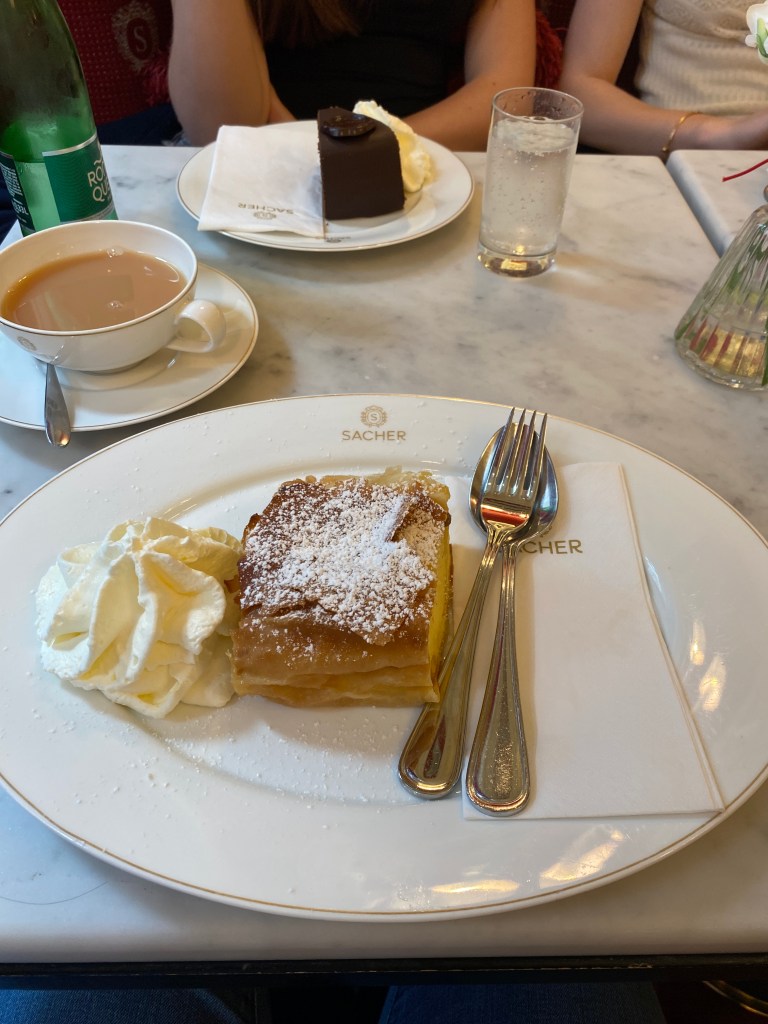
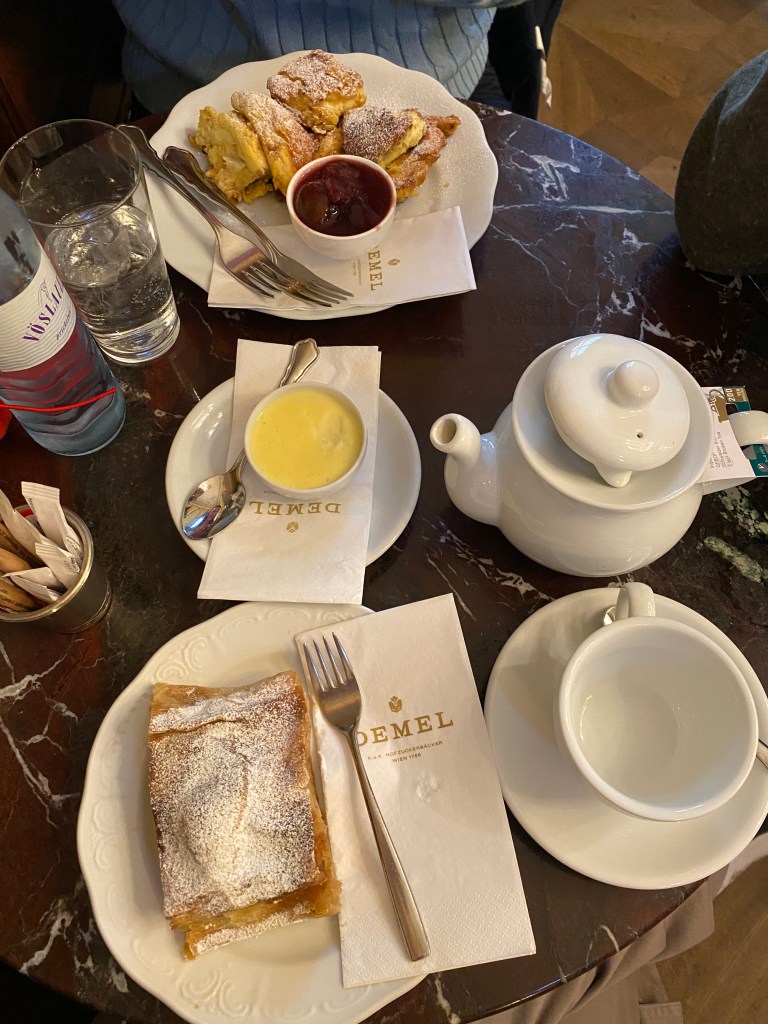
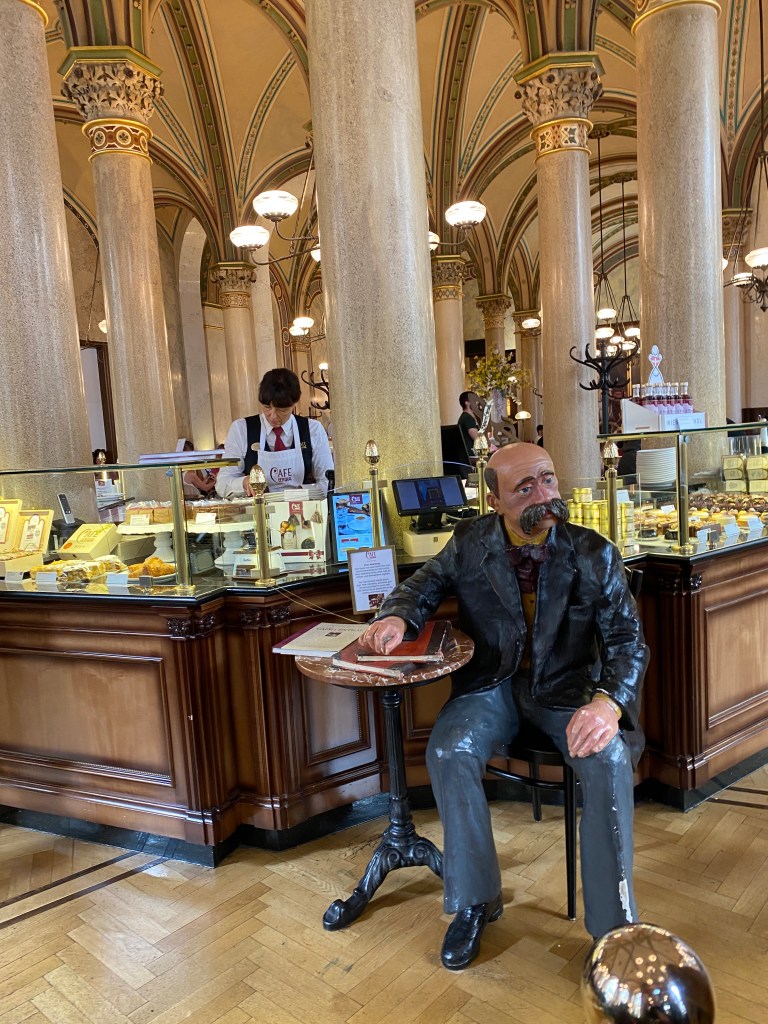
Vienna is truly one of the must-see capitals of Europe, however, not least because of its historical significance and its closeness to eastern Europe; Bratislava, the capital of Slovakia, is less than one hour’s drive away and the mighty Danube runs through both cities. Vienna is a stunning city, beauty on every corner, and it even gives its name to a particular kind of patisserie – Viennoiserie! Needless to say we sampled much of what it had to offer on this front, frequenting many coffee houses, including the famous Cafe Central, where Sigmund Freud is said to have hung out, and the Hotel Sacher, which claims the Sachertorte as its own. 

Had I read When the World Was Ours before going to Vienna, I would certainly have headed for the vast green space to the east of the city where the Riesenrad, the giant ferris wheel, still stands – next time!