
There will never be enough time to read all the books I want to read. As I get older, this is a fact I am trying to come to terms with. One brief stroll around a bookshop has me adding so many titles to my mental TBR list and that makes it hard to walk away from special offers! The result is that I have dozens of impulse-purchased books on my shelves that I aspire to one day get around to. Even worse is the charity bookshop, where the financial consequences of over-purchasing are lower. (Let’s not forget that, although book prices are increasing, the cost per hour of pleasure derived remains pretty low).
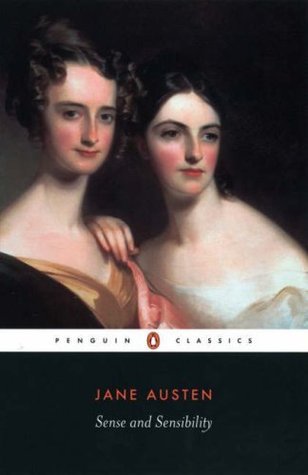
So, with so many new books being published every day, self-published books, audiobooks, and, indeed, other high quality content (such as book blogs!) there is much competing for our reading attention. As such, re-reading can feel like a bit of a luxury. My husband is a great re-reader, often choosing to go back to things that he feels still have more to give. Me, less so. So, when my book club decided it was time for a classic, we picked up on the 250th anniversary of Jane Austen’s birth at the end of last year (16th December 2025) and chose Sense and Sensibility, which I had last read when I was an undergraduate at London University. As an Austen lover, I knew the story well, of course, plus I’ve watched the (in my view) iconic 1995 film by Ang Lee, starring Emma Thompson, Kate Winslet and Alan Rickman. There is also a 2008 BBC television adaptation which received good reviews, and which purports to focus more on the sisters’ burgeoning sexual awakening, but I haven’t seen this.
Going back to the text, however, sent me on a journey I did not expect. I did half read, half listen – the audiobook was read by Rosamund Pike, and I appreciated her narration very much – but sometimes I found myself listening to a section or a chapter and then going back to my paperback book, because the text was so rich that I just wanted to savour the words on the page, as the author intended. One problem I had (and I have found this with other classics that I have revisited that I already own copies of) is that my Penguin paperback dates from the late 1980s when I would have bought it whilst at university, and the text is so tiny! The conversation at the very beginning of the book between John Dashwood and his wife Fanny, where they are discussing how much of the inheritance he should give up for his widowed step-mother and his three sisters to live on (fulfilling the stipulation in his late father’s will that he should provide for them) is priceless! When you think that it is likely Austen was perhaps nineteen or twenty years old when she wrote this novel, it makes her talent as a writer and as an observer of human nature even more astounding.
Which brings me on to my own maturity as a reader of this novel, compared to the teenager I was when I first encountered it. I was always a pretty sensible young person, so would probably have identified with Elinor more than Marianne anyway (I really can’t remember!). But Sense and Sensibility is considered to be one of Jane Austen’s more problematic novels in the sense that the outcome for the younger sister, Marianne, she of the more emotional, romantic, impetuous nature, is not really satisfactory; Willoughby, the man she falls so deeply in love with, turns out to be flawed and unreliable, and she is ultimately married off to the much less stimulating Colonel Brandon, a decent husband for the young Marianne but rather far from being the man of her dreams. A neat ending but fraught with disappointment. A younger reader might react more strongly to Marianne being unable to choose a life-partner more compatible with her own personality. As a mother of daughters around this age (though definitely not considering marriage!) I found myself very glad indeed that Marianne did not end up with the feckless Willoughby (prepared to bad-mouth his own new wife!). Brandon is definitely more solid, but I would certainly want my daughters (and my son) marrying for love and not prospects. But that is the Georgian era for you – the brother inherits the lot and leaves his sisters in virtual poverty, so what else could they do? And it is a world that Jane Austen well understood.
I love this novel, I love everything by Jane Austen, even though she was clearly not at the peak of her writing powers at this point. She was still honing her craft. Pride and Prejudice was published just two years later, in 1813 and there is a huge evolution in her abilities, showing us just what a unique gift she had. Her canon is small but remarkable and each of the novels has its strengths and bears re-reading many times.
I would like to think that I might re-read all of the novels in the coming months and years, see how I react to them well past the age that Austen lived. I visited her home in Chawton, Hampshire many years ago. I’d like to go there again. It is worth seeing the tiny desk from where she wrote these novels, by hand. If I manage to re-read all these novels, I will treat myself to the trip!
 Julia's books