Finish a book challenge #2 – “Venice: the lion, the city and the water” by Cees Nooteboom

Venice has to be one of the most enigmatic, captivating cities in Europe, and possibly one of the most painted and written about. For a small place it seems always to have punched above its weight. The entire metropolitan area of Venice (which is spread over more than a hundred islands) is around a quarter of the size of Greater London, with a fraction of the population. The central area of the city, to which most of its 30 million visitors a year will be drawn, is even smaller. It is considered to be a victim of over-tourism and has for many decades been “sinking” into the lagoon that surrounds it.

I have twice in my life been one of those tourists. The first time was in 1986 when as an 18 year old I “inter-railed” around Europe. It was July and it was jam-packed. The youth hostel was full and so I was sent to a convent on one of the other islands which took in female travellers in the summer months. It was so clean and peaceful, a world away from the crowds of Piazza San Marco. The second time was in August 2012, when my children were young. We were on a family holiday in Italy and went to Venice for the day (as ninety per cent of tourists do). I’m afraid we went on a gondola and bought glass souvenirs. Again, it was jam-packed and I came away feeling somewhat tarnished. 

But Venice has always had something of a resonance for me. I studied German at ‘A’ level and read Thomas Mann’s Der Tod in Venedig (Death in Venice). The 1971 Luchino Visconti film adaptation starring Dirk Bogarde is one of my all-time favourites. And one of my husband’s all-time favourite films is Nicholas Roeg’s Don’t Look Now starring Donald Sutherland and Julie Christie (which, incidentally, was on television recently, to mark its 50th anniversary). It is about a couple who, after the death of their young daughter, spend the winter in Venice while the Donald Sutherland character is on a commission to restore an ancient church. I remember when we first watched it together I fantasised about visiting the city in the winter – it seemed so empty! I imagine now though that even in the winter it remains a very busy destination, though I hope sometime in the not too distant future to go there, perhaps in January!

I spotted this book on the city in my local bookshop recently  and my darling daughters picked up my hints and got it for me for Christmas! The author is the acclaimed Dutch writer Cees Nooteboom, who comes from Amsterdam, another watery city. The book recounts a life-long love affair with Venice and oozes with the author’s affection. Like me, and no doubt many other visitors, he laments how the city has become overwhelmed by visitors (not unlike his home town of Amsterdam), and only a few thousand permanent residents can now call Venice home. He is also aware that he may also be part of the problem. 

Venice has…already been more than sold. Within the area of San Marco, 90 per cent of the restaurants are run by Chinese, Albanians and people from the Middle East…..I know the stories about the other tourists, and I also know the strategies Venetians have come up with to deny the plague, to ignore it…..In these ice-cold weeks of February and March, the great flood has ebbed away a little. Venetians do not have to contend with the foreigners who have taken their usual seat at their favourite cafe, and as I am writing this I am aware that I too am a tourist.

The above quote comes at the end of the book, but most of it concerns lesser-known Venice, where it remains just about possible to find the secret places and avoid the crowds, like a Jewish cemetery, less esteemed churches, some disused, and a once-impressive garden that is only accessible by appointment and whose guardians are somewhat surprised to welcome a visitor. It is a book to help you get to know another Venice. Perhaps something rather like the little convent that accommodated me in 1986. 

Who knows if I will ever get to see Venice in the winter or if it will be as empty as I want it to be, as in Don’t Look Now. If I do, I will be sure to have this book as my companion. It is translated from the original Dutch by Laura Watkinson and is wonderfully illustrated with photos by the author’s partner Simone Sassen (and in which there are hardly any humans). 

Finish a book challenge #1 – “Emergent Srategy” by Adrienne Maree Brown

Is it harder to read non-fiction? I note that all the books I challenged myself to complete (because they have been languishing on my Goodreads “currently reading” profile for such a long time that it’s frankly embarrassing) in January are non-fiction. In contrast, I have just completed a fairly long book. Stephen King’s Misery on audio in less than a week. It was compelling, un-put-downable and I loved it. Amazingly, it’s the first Stephen King novel I have ever read, horror being a genre that I have always eschewed, but of course, that is a very limited and naive view of King, which I now humbly admit. More of Misery for a future blog. 

I should turn to the topic in hand, the fact that I have completed a book that it appears I have been “currently reading” since September 2022! To be fair I have dipped in and out. I have gone through periods, between other books, where I have read quite big chunks of it, and times when I have not gone near it for weeks, or probably months. I was inspired to read it on the recommendation of a work colleague after a professional development event. She spoke of the book’s tremendous impact on her practice (we work in the charitable sector), encouraging her to see her work more positively when at times it can feel like you are getting nowhere, having very little impact, wading through treacle. 

At first I found the book made a lot of sense and the messages struck a strong chord with me. Adrienne Maree Brown is a black, American, Queer woman who describes herself as “fat” and is a campaigner for social justice and equality for all, particularly those in marginalised communities who face prejudice, discrimination, cruelty and are misunderstood. She has every right to be very angry, but she has come to approach her work, her practice, from a place of love, growth, and a belief in the positive power of human connection and community action. She has reached her belief in the rightness of this approach through her own personal growth and journey of self-love. 

Brown is an extremely thoughtful, articulate and intelligent activist and writer. The book is extensively researched and in many ways more of an academic text than a ‘non-fiction’ book. I listened to it on audio and it was lovely to hear the author’s words spoken in her own voice, in the way she wanted to express herself, but sometimes this also made it difficult to follow, especially as there are extensive footnotes. There are times when I wanted to go back and ‘re-read’ sections, which is less easy with audio, but, honestly, I doubt that I would have finished it at all if I’d read a paper copy of the book. It was quite hard work!

Of course, there are as many genres of non-fiction as there are fiction and this book is as different as it’s possible to be from, say, Venice, another of my “finish a book challenge” titles that I plan to review later this week. Travel writing, creative non-fiction can be as much about story-telling as the finest examples of the art of the novel. Emergent Strategy is a powerful book for activists, campaigners, people like me working in the charity sector, trying to get a message out there and make a difference, and offers an alternative approach that might well be more effective and less stressful. It encourages us to see the best in people, to focus on micro-changes as steps towards success and frames the work as an organic process. Brown draws heavily on examples from the natural world, the value of diversity, symbiosis and slow movement, for inspiration. 

I found this book mostly enjoyable and though it’s appeal may well be limited it is also possible that it provides a manifesto for change and growth that could be our best hope for a peaceful and healthy future on earth.

Booker shortlist review #6 – “Prophet Song” by Paul Lynch

January has turned into a bit of a rest and recuperate month for me. As I write, there is exactly one week left of the month and after some pretty wild weather in the UK over the last few days, I can report that the sun is shining in Manchester. I have been in my garden this morning assessing the storm damage and putting the covers back over the furniture after the wind had blown them off, and can report that green shoots are peeking out of the ground. I have an ancient nesting box on a wall that was put there by previous owners of our house and I have noticed from my kitchen window that some blue tits have been busy fluttering around it. The afternoons are definitely getting a bit longer and I do feel a slight sense of spring in the air. It feels like the long dark winter is starting to give way. Hmm, does that mean I have to stop resting and recuperating and start doing?!

For me, this month has also been about catching up. On all the things I did not manage to get done in the hectic weeks leading up to Christmas, and on all the unfinished books that have languished in piles for far too long. Perhaps that’s a sign of spring too, wanting to get rid of the old and usher in the new, draw some lines under what has passed. My most delayed unfinished task, certainly as far as this blog is concerned, is completing reviews of the 2023 Booker shortlisted titles. My final review is of the book that actually won, Prophet Song by Paul Lynch. It was widely welcomed as a good winner and the author has certainly done his time as a hard-working writer, so a good choice from the judges in that respect. It wasn’t my favourite book of the six (The Bee Sting was the outstanding one for me), but it was certainly imaginative, well-crafted and had important things to say. 

Set in Dublin in an apparently near-future, Prophet Song  is a story told from the perspective of Eilish Stack, a scientist and mother of four children, her youngest just a baby. Eilish’s husband Larry is a trade unionist, a senior officer in the Teacher’s Union of Ireland, not exactly a militant group, and when he is arrested on vague charges of seditious behaviour and subversive activity, Eilish’s world begins to fall apart. What also falls apart is the society she has known, normal social order, and most frighteningly, the family’s future suddenly seems very unclear. 

Larry is detained indefinitely and neither Eilish nor a lawyer are able to get access to him or any clarity from the authorities on why he remains in detention and what might happen to him. Eilish has to cope alone as a busy mother of three teenagers and a baby, carer for her elderly father whose dementia is beginning to impact significantly on his ability to live safely alone, and working full-time at the lab, the only breadwinner now. There is the sense of her gradually losing her hold on day to day life as well as the emotional and psychological strain of both personal and social events. 

Civil war effectively breaks out in the country. The government becomes increasingly totalitarian and, as is usually the case when democratic society breaks down in this way, for reasons that are quite baffling, a proportion of the society gets brought along, becomes complicit in the crackdowns and persecution. Eventually, Eilish feels she has no choice but to flee the country, to try and cross the border to the north (Northern Ireland), perhaps even try and get to the British mainland on a boat (anyone spot the irony?). Her sister lives in Canada and wants her and the family, including their father, to go there. Eilish’s father won’t, can’t, leave the country of his birth, and where he wants to die. Eilish has to make some terrible choices. 

I was reading this book at the time when hysteria in Britain about refugees crossing the channel in small boats was reaching boiling point. Nothing there is resolved and we seem unable to have a reasoned debate in this country about immigration or about human rights. In 2024, it is said that a staggering forty per cent of the world’s population live in countries that will hold general elections (how many participate is quite a different question), including in the UK of course. Some of these will take place in countries where it is democratic in name only, Russia for example (hmm, who do we think will win?). In others, like the US, the world is frankly holding its breath. The media in many of these countries cannot be said to be unbiassed, objective, representative or fair, and bad actors are capable of de-stabilising democracy through sophisticated technological tools, social media and deep-fakes. Some governments are also destabilising democracy themselves and implementing laws that favour the outcomes they and their supporters desire. By making Eilish so real, so relatable, her life so like ours, Paul Lynch, shows us how close all of us are to the seemingly unthinkable. It is a wake-up call and we all need to pay attention. 

Highly recommended.

Happy new year and book review – “Yellowface” by RF Kuang

I have been reading and liking a lot of posts from fellow bloggers about their reading year in 2023. I often do such a post myself except that my reading and blogging last year was pretty woeful and I don’t want to depress myself – comparison is never good for self-esteem! Life just got in the way in 2023, but no matter. I’ve also been reading a lot of blogs about, and been receiving a lot of emails from various newsletters and platforms I subscribe to, exhorting me to set my reading goals for the year. I still have a very busy six months ahead of me with education and family commitments so I’m not going to do anything that might make me feel like I’m somehow falling short. Last year, I set myself a challenge to read one long-neglected book from my shelves per month. I was doing pretty well up until the summer…

So, this year, I am going to set myself the same challenge, because I think it’s a good one. Plus my husband has started making noises about thinning out our book collection, not a bad idea in itself, but it does make my blood run a little cold. It is hard to justify buying more books however, when you have very many unread ones lying around. For January, I’m just going to set myself the task of finishing all the books I currently have on the go! If you glance at my Goodreads profile you will note that there are currently SIX(!), and at least three of them have been there for a very long time. So, I am going to try and get these read by the end of the month. A kind of clearing the decks before signs of spring and feelings of fresh starts commence in February. Did you know that in Ireland spring begins officially on the 1st of February? I don’t think it’s any warmer there or anything, but I visited my in-laws in Dublin for new year and I can confirm that daffodils were indeed blooming in their garden! The government has even instituted a new bank holiday in 2023 for St Brigid’s Day, to mark this traditional Gaelic festival welcoming the spring.

So, in the spirit of catching up and clearing out before spring, I want to start my reviewing year with a book that I read some months ago and which I have been meaning to write about ever since, but haven’t quite got around to. Yellowface was one of a few much-hyped novels of last year and I listened to it on audio over the summer. As well as being a great read, it is a complex and brilliantly constructed novel which explores many themes and ideas. 

The central character is June Hayward, a writer who is struggling to make her mark and whose agent and publisher are losing patience with her (lack of) output. June has a friend, Athena Liu, whose fortunes are very much in the ascendant. The two women were at Yale together and in her writing career, Athena has achieved everything that June desires, both commercial success and literary acclaim, making her a wealthy writer, a rare thing. To make matters worse (for June), Athena is beautiful, popular and socially skilled. June and Athena do not have a close relationship, rather they share some mutual friends, but on a night out to celebrate Athena having sold the television rights for her latest book, the two women find themselves drunk at Athena’s luxury New York apartment. On a whim, Athena decides to cook pancakes, but in a freak accident, chokes to death in front of June’s very eyes. In the chaotic aftermath of the incident, June finds herself alone in Athena’s apartment. Looking around her study she comes across the completed first draft of another novel, which Athena has produced in her trademark fashion – on a manual typewriter. Thus, no traceable digital copy. 

The temptation is too much for June and after reading it she decides that fate has decreed that she will be the one to knock it into shape, to turn it into a publishable piece. June works on the draft day and night for several weeks and by the end of the process feels the novel is as much hers as Athena’s. She sends it to her agent and the book is eventually published to great acclaim under the pen-name, Juniper Song, distancing it from June’s previous (mediocre) work, and adding an air of authenticity to the subject-matter – the unsung contribution of Chinese prisoners to the first world war effort in Europe. With her Asian heritage this would have been a natural choice of subject for Athena, but less so for June.

June revels in the success of the book and all appears to be going well until she begins to be trolled on social media by someone masquerading as the ghost of Athena Liu claiming that June stole the work, accusing her of cultural appropriation and even suggesting June may have had a hand in Athena’s death. Events quickly spiral out of control and the rest of the novel proceeds at pace as June tries to uncover who is behind the fake social media account. As doubts about her spread she must face into some very public challenges as well as private demons. At first, the accusations against June about cultural appropriation (the ‘yellowface’ of the title) seem pretty clear-cut, but the author is also unafraid of challenging the publishing industry’s fickleness and the rank hypocrisy that can play out in social media.    

There is only really one way this story can end and yet the author still manages to make it quite shocking and twisty. It is a genuine  page-turner and I was on the edge of my metaphorical seat throughout. Rebecca Kuang is an extraordinary young talent; she left China with her parents when she was just four years old, and the family moved to America. She won a scholarship to Cambridge, did an MSc at Oxford, has a PhD from Yale and had already published four novels before Yellowface. She is only 27. Reading her bio you can sort of empathise with June Hayward!

Highly recommended.

Booker shortlist review #5 – “Study for Obedience” by Sarah Bernstein

Study for Obedience was the shortest book on this year’s Booker Prize shortlist. It is an exquisite little piece in many ways, but I have to confess I remain ambivalent about it.

There is not much in the way of a plot. The central character and narrator is a female about which we know very little, apart from what she reveals through the course of the book. She may not be young, but she has certainly led a fairly sheltered, quiet life. We meet her when she is brought by her older brother to his home in order to look after him. He is a fairly dominant and not very pleasant individual whose wife has just left him and taken their children with her. Our narrator provides care and attention to him, keeping the house, feeding him, even reading to him and massaging him while he bathes. 

The place where the narrator and her brother live is unnamed but it is clear they are considered outsiders. The brother, however, has been able to achieve a degree of acceptance, through his wealth, his social status and the self-confident way he puts himself about. The narrator, however, his younger sister, is more timid, prefers to remain below the radar. The townspeople become suspicious of her, particularly when a series of strange events coincides with her arrival – a local dog experiences a phantom pregnancy; a sow crushes her litter of piglets; a herd of normally docile retired dairy cattle goes mad and all have to be destroyed. Our narrator attempts to ingratiate herself with the townspeople but her efforts go unrewarded. 

There are hints of antisemitism in the novel, the prejudice that never seems to go away. The brother and sister seem to be Jewish, different to the townspeople, but even though they are not overt in their faith, the narrator in particular arouses suspicion, hostility and is demonised. Reading the book, I was also reminded of the Salem Witch Trials, where femaleness is distrusted, almost pathologised, something to be held in check. How “obedient” is our narrator really?

What cannot be denied about this book is the quality of the writing and of providing a highly distinctive character perspective. What I am less sure about is, frankly, what the book is about! Perhaps it merits another read – it is certainly short enough to do that quite easily. My first response to it however, has been very much one of “and…?” 

It’s certainly unusual and perhaps that is how it ascended to the shortlist of the prestigious Booker, but I’m afraid it wasn’t a winner for me (or the judges, it seems).

Booker Prize announced tonight

As I write, the announcement of the 2023 Booker Prize is just a few hours away. You can follow proceedings live on the Booker YouTube channel here.

I have completed five out of the six shortlisted titles and am halfway through my final book Prophet Song. I have published reviews of four of the titles. I only finished Sarah Bernstein’s Study for Obedience today and I’m still not quite sure how I feel about it so I’m going to need to do a bit more processing before posting a review on that one.

Prophet Song? Hmm, I’m not sure. I’m about halfway through but I don’t think it’s going to turn out to be my favourite. I’m hoping to finish it in the coming days and to post a review later this week.

Cards on the table – The Bee Sting is the winner for me!

So, who do I think is going to win? Without a moment’s hesitation my favourite book was The Bee Sting and I also think it was the highest achievement. For me, If I Survive You comes second, and I have a sneaking feeling that one might win. It seems a little more “zeitgeisty”? Western Lane is, for me, just not quite in the same league, quietly moving though it is. This Other Eden is good, it tells a great story, but not as good as Murray or Escoffery for me.

Anyway, just a couple of hours to go. The Booker always throws up surprises, so I’m not expecting to have called it right!

Booker shortlist review #4 – “The Bee Sting” by Paul Murray

The Bee Sting is by some measure the longest book on this year’s Booker shortlist and the one I have enjoyed the most so far. I do think I actually prefer a long book. Murray is an Irish novelist and this is his fourth novel. He is no stranger to the Booker as his second novel, Skippy Dies, was longlisted in 2010. He is also no stranger to prizes, his debut, An Evening of Long Goodbyes, having won the Whitbread First Novel Award in 2003. So, he comes with something of a pedigree. 

The Bee Sting is a novel about a modern family living in an unnamed town in the Midlands in Ireland. Dickie Barnes runs the family business, a car dealership in the town, which was established by his father Maurice, an outgoing entrepreneurial type, who now lives in Portugal. Under Dickie’s stewardship however, and following a series of unfortunate events, including an economic downturn and a devastating flood, the business is now under threat. Dickie’s wife Imelda is introduced to us as superficial and glamorous and it is clear there are tensions in the marriage, worsened by the decline in the family’s fortunes.

But the novel opens with Cass, Dickie and Imelda’s teenage daughter, whose main preoccupations in life are social media and fantasising about a future life as a bohemian living in the city with her best friend Elaine. There is also PJ, her younger brother, who lives for computer games, his friends and the woods at the back of the family home which form part of their land and in which there is a brick outhouse they call the bunker.

Each member of the family gets a long section of the book to tell their story and gradually we learn more about their internal dilemmas. Imelda, for example, is far from the vacuous character her daughter believes her to be. We learn that she grew up in a violent, deprived and socially outcast family. She was the only girl in the family and her mother died when she was a teenager. She is a renowned beauty though, which is both her gift and a curse. When she meets and falls in love with the charismatic Frank Barnes, son of local businessman Maurice and a gifted football player, it looks as if she will finally escape her violent and vulgar father and brothers. But then Frank is killed in a car accident. 

Frank’s family is devastated by grief. Dickie comes home from Trinity (having had a mixed experience there himself) and decides that he will step in to run the garage with his father and marry Imelda, look after her the way Frank would have wanted. On their wedding day, Imelda arrives at church and refuses to lift her veil for the whole day – a bee became trapped in the fabric inside the car on the way to the church, she says, and stung her face. (When Cass learns of this story via a newspaper clipping on the internet it only confirms her perception of her mother as vain and superficial.) For Imelda and Dickie, we are invited to consider whether this was a dark omen overshadowing their future.

This the basic story of the novel and as we hear each character’s perspective on both past and present events, layers of the onion are gradually peeled away to reveal a set of four people wrestling with deep insecurities, questioning themselves and their decisions, and yet curiously unable to meet each other in their place of need. There is love, but they are hamstrung and unable to express it. Overshadowing the novel is the threat of climate change. As an escape from his problems, Dickie develops a strange friendship with handyman Victor, a single, lonely bachelor obsessed with wiping out the grey squirrel population and ‘prepping’ for the end of civilisation as we know it. This thread of the story provides some light relief (yes, really!) at times

This novel is darkly comic in places – you may feel guilty at some of the laugh out loud moments – and deeply affecting in others. The characters are brilliantly drawn, particularly the young people I felt. I listened to it on audio and was very impressed by all the performances. Its scope is relatively small, a single family of four, surprising for such a long novel, but it explores great depths and is thoroughly engaging. If I have any criticism, I think, for me, it was the ending, which obviously I’m not going to reveal here. I felt built up to a pitch of tension and then badly let down. So, I’m a little bit cross about that! 

Still highly recommended though.

Booker shortlist review #3 – “Western Lane” by Chetna Maroo

Western Lane is one of two very short books on this year’s Booker Prize shortlist. Chetna Maroo is a British Indian novelist who lives in the UK and Western Lane is her debut novel. It feels like a brave and unusual work – it is not what you would expect a first novel to be and this suggests a certain confidence on the part of the author and, gratifyingly and even more unusually, a willingness to take a risk on the part of the publisher. A risk that appears to have paid off!

The main character in the novel is Gopi, but it is about a family, a father and his three daughters, trying to rebuild their lives in the aftermath of the devastating death of their mother. Set in Luton, the family comprises Gopi and her two older sisters, Khush and Mona. When their mother dies, their father, ‘Pa’, decides that they need a focus and decides sport is the answer. He takes them to the leisure centre at Western Lane for frequent training, but it is only really Gopi who shows any significant aptitude or enthusiasm. Visiting Western Lane so regularly means Gopi gets to know one of the other young and talented players, Ged, to whom she is clearly attracted. Pa also seems to enjoy a connection with Ged’s mother. 

Gradually, Khushi and Mona give up their squash, but Gopi’s progress becomes almost the family’s project. When the opportunity arises for Gopi to take part in a competition in Durham and Cleveland, this provides a goal for them to work towards. Pa and the coach at Western Lane draw on the strong tradition of successful Pakistani and Indian players, watching videos and studying their tactics, to both motivate and instruct Gopi.

Against the backdrop of Gopi’s developing prowess in squash there is the deterioration in the family home. Pa has focused so intensely on his daughters that he neglects his own mental and physical health. Monai, the eldest of the three girls nearly becomes the little mother in the household, even using the small wages she gets from her part-time jobs to buy food. It comes to a head when Pa has a near-breakdown. At around the same time, Gopi injures Ged when the pair are practicing together and Ged’s mother will no longer let him play her. The girls’ auntie and uncle who live in Edinburgh, come to visit and are appalled by the state of the home and how the girls are being brought up. Something must be done.

This is a story about grief and about coming of age, and particularly for young girls trying to navigate that process without a mother. The book is also about the healing power of sport, which is an interesting and novel way to approach the issue of grief. It is a small, quiet, gentle novel, but no less powerful for that. Is it Booker-shortlist-worthy? I’m not sure. I enjoyed it and would recommend it but I can’t say it is a great book. 

Booker shortlist review #2 – “This Other Eden” by Paul Harding

I’ve been a bit quiet on the blogging front recently. I’ve started a new training course, adding a qualification for my day job, so time has been a bit pressured to say the least. I am delighted to say that I HAVE been reading though, and keeping on track with the Booker shortlist, so I have a few banked and ready for review. I wrote about If I Survive You a couple of weeks ago, a book I enjoyed, but can’t say I was wowed by. The next book on my list was This Other Eden by American author Paul Harding. This is Harding’s third novel in thirteen years, so he is not as prolific as some, but his debut novel, Tinkers, won the Pulitzer Prize in 2010. 

This Other Eden is set on the fictional Apple Island, just off the coast of Maine, during the late nineteenth/early twentieth century. Apple Island is home to a small and quite insular community. Most are of mixed ethnic origins. The islanders are marginalised and keep themselves very much to themselves and there exists a mutual suspicion between them and the authorities on the mainland. Although financially poor and living without modern conveniences, there is a kind of purity to the way of life on the island. The people live modestly but are relatively self-sufficient and are untroubled by “normal” social conventions and behaviour.

The sense of ‘idyll’ comes under threat, however, when community and religious leaders on the mainland begin to express concern about what they perceive as the uncivillised way of life on Apple Island. At first they dispatch a young teacher, Matthew Diamond, to the island to educate the children in basic reading, writing, arithmetic and, most importantly, religious instruction. Over time, Matthew Diamond finds he grows fond of the children and finds a few of them to be unexpectedly talented, in art, mathematics and literature. 

The mainland authorities are not satisfied by simply sending a teacher to support the children; it is as if they feel their own way of life, the social standards they are attempting to uphold, are gravely threatened by the islanders whom they see as little better than savages in their midst, particularly the adults. Soon enough, a party of experts is sent to examine the island’s inhabitants, take physical measurements and so on, as if this will indeed determine (confirm?) the extent of moral decrepitude present in the population. There is indeed some inbreeding, the history of the community is troubled, but the treatment of the islanders by the authorities, juxtaposed with their gentleness and love, invites the reader to question who is the more savage. Needless to say, it does not end well for the islanders, there is a certain inevitability building throughout the book.

This is a powerful and affecting novel and is based on real historical events which took place on Malaga Island in 1911 when an entire community was evicted from its settlement. I thoroughly enjoyed this book and listened to it on audio. 

Recommended.

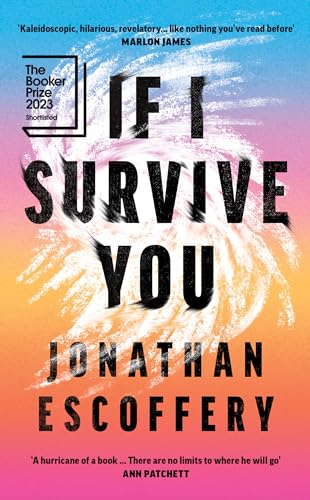
Booker book review #1 – “If I Survive You” by Jonathan Escoffery

If I Survive You  is Jonathan Escoffery’s debut novel, published earlier this year. Quite an achievement to be shortlisted for the Booker on your first attempt! It is described by the publisher as a series of linked short stories, following the fortunes of a family living in Miami. The parents left their native Jamaica when they were young, in the 1970s, when there was civil and political turbulence in the country, looking for a better life and a better future for their two sons, Delano and Trelawney. Each of the chapters follows a different character or stage of a character’s life. Trelawney’s story, however, makes up the bulk of the book.

The family is neither settled nor happy. The father, Topper, works mostly as a labourer in building and landscaping. They eventually own their own home and he runs his own small business, but the house is structurally unsound and in a state of gradual decay – a metaphor perhaps for the family’s fortunes generally. The parents eventually separate after many years of unhappiness, and Sanya, the mother, returns to Jamaica. The country is still, at that stage, troubled by unrest and political turmoil but she finds that preferable to life in the United States.

Delano is the elder of the two brothers. He aspires to be a musician, but when responsibility is foisted on him fairly early in life (his partner becomes  pregnant) he sets up his own landscaping business. Trelawney is very different to his brother and the two are at loggerheads for most of the book. Even as children they fought bitterly and were cruel to one another, not helped by the fact that their father seems to favour Delano. It is not clear why. When the parents separate, they each take one boy to live with them, and Topper takes Delano, making it quite clear that he does not want Trelawney, seems even to fear him somehow. Possibly because Trelawney has greater potential, is more academic and gets a college degree. It’s as if his father considers him better able to look after himself. Delano, he seems to believe, needs him more, but this creates a toxic environment around the relationship between the three men.

In spite of his education, Trelawney does not have it easy, however, and it is his story we follow most closely. He is mostly homeless, at times even living in his car, which he can barely afford to put fuel in. He works in various dead-end jobs until finally securing a position as the manager of a housing block for elderly people, where he is forced to do the company’s bidding, maximising revenue at the expense of the ageing and frail inhabitants. Trelawney is a young man who has done everything that has been asked of him to participate fully in American society and yet as a Black man he remains subject to casual racism and systemic discrimination. Even his girlfriend’s family, themselves Latin American immigrants, cannot accept him and are openly hostile. We learn that Trelawney is relatively light-skinned, which makes him an outsider even in the Black community – perhaps that is also why he is rejected by his father? He cannot find anywhere that he fits, a home, a sense of belonging. 

A further motif that runs through the book is the Hurricane Andrew disaster, one of the most devastating ever to hit Florida. It represents one of the actual events that citizens had to try and ‘survive’, but for Trelawney, his brother, his whole family and countless others, there are many other daily battles for survival.

This is a powerful novel in many ways – the characters, particularly the three central males, are well-drawn. The author writes about racism and discrimination in a way that only a person intimately acquainted with such experiences could. He also writes honestly and sympathetically about a deeply dysfunctional family, particularly where paternal relationships are concerned. For me, the weakness of the novel lies in the lack of a narrative thread. In many ways it is series of ‘shorts’; I am reminded of Bernardine Evaristo’s Booker-winning Girl, Woman, Other here, but that book was more successful, I think, because each of those stories could have stood alone. That is not the case with If I Survive You where each story only makes sense in relation to the whole. And yet, there is not a strong enough story, for me, to hold the whole thing together.

In writing this review, I have struggled to recall certain details, for example, when it is set (from Wikipedia I learn that Hurricane Andrew struck in 1992)  and the names of most of the minor characters. Beyond the profound sense of unease about injustice, racism and societal trauma, I find myself unable to answer the question about why this book should be a Booker-winner.

Recommended, but perhaps not heartily.