

I remember a friend recommending this book to me a few years ago and I made a mental note but never got around to reading it, so I was delighted to pick this up at my local Oxfam bookshop at the start of the summer. The book was first published ten years ago (my edition was revised and updated in 2016) but a further edition has been published this year. One can understand why a new version was needed; 2015 seems almost quaint at this point, another era. It pre-dates the first Trump presidency, Russia’s 2022 invasion of Ukraine, Britain leaving the European Union and, of course, the Covid-19 pandemic. It also pre-dates by some distance the devastating events of the last two years in Israel and Gaza.
And yet, one of the striking things about reading this nine year-old edition is how prescient it is and how it explores some territorial issues that never seem to go away. The Middle East chapter explores the ancient origins of conflict in the region, the way it has been used as a political football by colonisers (particularly the British and the French, sadly) and the cavalier attitudes that have been shown towards tribal, cultural and religious sentiments. The seeds of present-day conflict in many countries in this region have been sown over decades, if not centuries.
The Africa chapter is equally shame-inducing – the actions of arrogant colonisers have created so many of the problems that the continent is experiencing today and the wealth of natural resources present there continue to make Africa a target for richer nations wishing to exploit division and grow richer and more powerful in the process. Marshall also argues that the vagaries of climate, topographical challenges and the prevalence of some devastating diseases have hampered African nations’ ability to prosper.
The book opens with a chapter on Russia and a very interesting discussion about the psyche of that nation which may go some way to explaining its attitude to Ukraine. Of course, Russia first invaded Ukraine when it took Crimea in 2014 – that will have been very recent history when Marshall was writing this book – and it is quite prescient that he chooses to start the book almost with a warning that Russia has not yet completed the job it set out to do in 2014, now more than ten years ago. Putin can afford to be a patient man as, unlike many world leaders, he does not have to worry about the threat of being voted out of power.
China is endlessly fascinating and merits a chapter of its own, as does the United States, and here Marshall writes of the tremendous natural advantages that country enjoys – perhaps leaders of that country might be a little more humble and recognise the many gifts they have been given.
Marshall is a journalist and broadcaster and former foreign affairs editor for Sky news. He knows his stuff and has written several books on the subject of the politics of nationality and of place, all of which seem to have been well-reviewed. I have seen him speak on several news and current affairs programmes over the years and he is a man worth listening to.
This book is by no means a light read, nor an uplifting one but perhaps an essential one for anyone interested in world affairs and global justice.

 Barefoot Books World Atlas by Nick Crane & David Dean (£9.99). I love the values and ethos behind Barefoot Books. Multi-cultural and humanitarian themes are present in everything they publish and their books can be valuable tools in combatting exclusion in our world and teaching children about kindness. This world atlas focuses on the interaction between environment and the communities and cultures of the world.
 Illumanatomy by Kate Davies and Carnovsky (£15.00). A superb large format book about the human body that goes into real detail. The illustrations are outstanding; when viewed with the special lenses provided you can see different parts of the body (skeleton, muscles, organs) and how they interact. Perfect for budding biologists!
 EtchArt: Hidden Forest by AJ Wood, Mike Jolley & Dinara Mirtalipova (£9.99). This is rather like those books in the colouring trend except the images you create are shiny and sparkly. The child uses the etching tool provided to produce glorious forest-themed pictures (there is also a sea-themed one available). Lovely, and nice and solid.
 Wreck this Journal by Keri Smith (£12.99). Yes, I know it’s not exactly a reading book (though there are plenty of words) there are writing and drawing opportunities. I actually love this series as I think they tap into teenagers’ anarchic tendencies, whilst also encouraging a degree of creativity. Here’s the 2017 offering and the cover is much nicer than previous editions. Good fun.
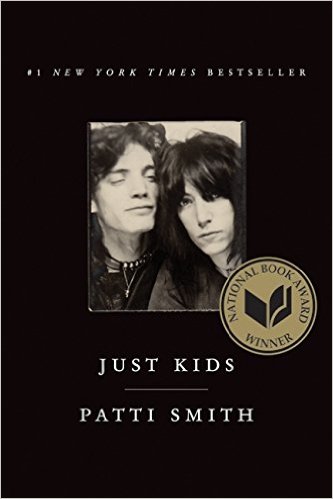 I’ve been an admirer of Patti Smith for a number of years now. I’m a bit young to have been a fan of hers when she first broke onto the music scene in the mid-1970s. I became aware of her much later when I picked up a sale copy of her debut album Horses. I was also aware of Robert Mapplethorpe, the late artist-photographer who was her lover and then close friend when they were both very young. Mapplethorpe died of AIDS in 1989 and it must have been in the 1990s that I saw an exhibition of his work in London (I had an interest in photography at the time). Later on again I learned about the connection between the two and how Patti had been, if you like, Mapplethorpe’s ‘muse’ when he was first discovering his art.
 I’m not knocking either of these genres, I’m simply saying that literary non-fiction is a very tough genre to sell in. I read recently that the average non-fiction title in the US sells 250 copies a year (one for roughly every million people), or 2,000 copies over its lifetime. It makes you wonder why on earth you would write one! Many seem to be written by academics, journalists or people who have already established themselves in a chosen field and know they are writing for a particular niche. One striking thing about the genre, though, is that authors have a real passion for the topic, and the authenticity of the work is palpable.
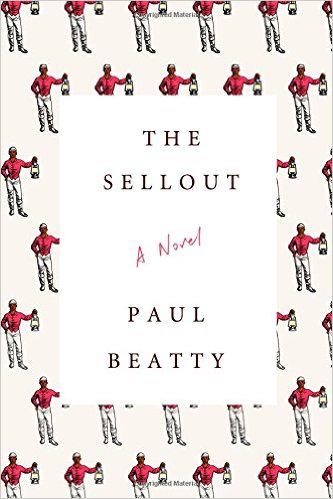 This is a novel about race in modern America where the white population seems to feel it has solved the problem of racism. Firstly, it abolished slavery and then set in place several pieces of legislation to reinforce racial equality. Unfortunately, this has not addressed a fundamental problem of disparity of outcomes between whites and blacks (or people of colour more widely), in academic achievement, income, social status, crime, you name it, the statistics paint a troublesome picture. The thesis of the novel is that, whilst white America is slightly uncomfortable with the facts as they stand, they can point to a number of black high achievers (not least the first African-American President) as evidence that they have done all they could. The under-achievement of the rest can be put down to, for example, their own fecklessness or problems of character.
 Julia's books