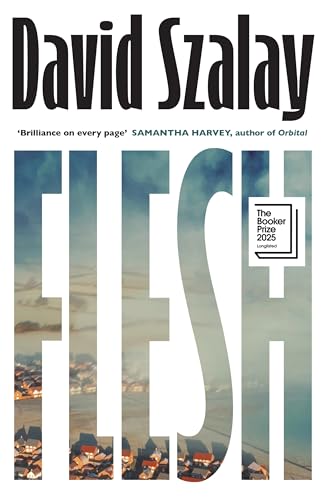
This was the fourth book that I read from this year’s Booker shortlist (this post is entitled number three because I read The Land in Winter back in February) and it is the title that won the prize. This book is undoubtedly better (in my humble opinion) than The Rest of Our Lives and more compelling than The Loneliness of Sonia and Sunny, although I’m not sure I prefer it to The Land in Winter. It is David Szalay’s second attempt at the Booker, his 2016 novel All That Man Is having been shortlisted previously. This review does not contain significant spoilers, but it is a tough one to review without giving away a little of the events.
The novel centres on one main character, István, and follows the ups and downs of his life. We first meet him as a teenager in a small town in Hungary where he lives with his mother. István is on the cusp of sexual maturity and, not untypically, feels himself alone, different from other boys around him. When one of his classmates arranges an initiatory sexual encounter for him with a willing girl he at first seems to believe that this will launch him into a world he so desperately wants to belong to – the sexually experienced – but it goes embarrassingly wrong and he finds himself further isolated. From there he falls into the arms of a neighbour – a woman in her forties – with whom he embarks on a journey of sexual discovery. Events will soon spiral out of control, however, and will lead István to the first ‘down’ in his eventful life.
A few years later István is in the military, and serves in Iraq, where he distinguishes himself. His life finally seems to be ‘up’ although his experiences leave him with PTSD. After the army, more disappointing sexual encounters follow and then a lack of direction and meaning until István finds himself in London where he is employed as a security guard in a nightclub. Late one night, whilst heading home after his shift, István intervenes in a street mugging and saves a man’s life. The man, ageing, but still active as a businessman running a high-end protection services agency, takes István under his wing. This will set István on another upward trajectory that will take him into the worlds of high finance and the English upper classes.
There is a lot going on in this novel – we follow the path of István’s life from the moment things start happening for him (as a boy in Hungary), to, really, a point when things stop happening for him. A period, I am guessing, of about 40 years. The novel is almost picaresque; it reminded me a little of the 1975 Stanley Kubrick film Barry Lyndon (starring Ryan O’Neal as the eponymous character) – a brilliant film if you haven’t seen it. The central character is not a bad person, in many ways he is highly sympathetic and someone who has a lot of love to give, but he also is blighted by a handful of bad decisions and some unforeseeable misfortunes. István, like Barry Lyndon, will experience tremendous highs and very deep lows. Sex is also a common theme and whatever stage István finds himself at, there is a sexual situation to match – sometimes this is part of the bad decision and sometimes it shows István at his most tender, some of his finest moments are in his intimate encounters with women.
Szalay’s writing style in this novel is spare, and the dialogue is particularly interesting, particularly authentic in its perfunctoriness, which, alongside the pretty fast-paced plot, makes it quite a fast read. I can see why it won the Booker – it is quite the novel of our times and with this particular writing style (so antithetical to Kiran Desai’s Indian epic) it seems to encapsulate the short attention span culture, the Instagram-worthy outer life but beneath which lies deep darkness. István lives in an era and a continent never more densely populated and yet as a man he finds himself so often alone.
This is a good read and I recommend it.
 Julia's books