Regular readers of this blog will know that I have been working on my first book for just under a year now. It’s a long process! I finished my first draft just before Easter, but even though it was gratifying to reach that milestone, to be able to type “The End” I was aware that, in many ways it was just that – a milestone, not the end. It was the end of the beginning.
In the last few weeks of writing I had begun to build up a list of gaps, things I still needed to research, passages or chapters that I knew would not read the way I wanted and tweaks that may be necessary with the structure. I conducted my first full read through a couple of weeks ago and found it reassuring that I was indeed right – there were gaps, bits that did not flow and the non-linear structure I was so excited about, well, perhaps that did not work as well as I thought. I wasn’t down about it though. I have a long list of tasks again, but feel generally positive.


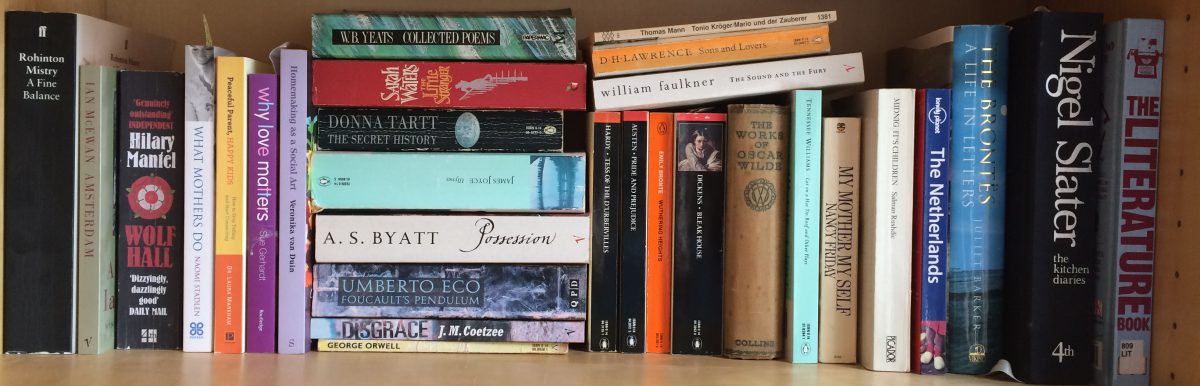
Emily Bronte, John Keats and George Orwell are among the many artists who died young from TB, giving the disease a ‘romantic’ image
An area where I felt I needed more information was in understanding tuberculosis (TB). This disease was rife in Britain in the nineteenth and early twentieth centuries. The numbers are astonishing: in England and Wales about four million people are thought to have died from TB between 1851 and 1910. TB-related deaths began to fall from this point onwards but were still shocking: in 1913, there were 36,500 deaths from TB in England and Wales (reaching a peak of 46,200 in 1918, at the time of the European Spanish ‘flu pandemic). By 2013, there were just 280, down from a rate of almost 100 per 100,000 population in 1913, to 0.5 per 100,000 a century later. (Source: Office for National Statistics)
The decline in the mortality rate for the disease can be put down to a number of factors: mainly improved living conditions and sanitation, but also better understanding of the disease (it was once thought to be hereditary, not contagious), the discovery of an effective antibiotic treatment in the late 1940s and, latterly, a nationwide vaccination programme (remember the BCG?). The virtual eradication of the disease in this country is a cause for celebration, but, worldwide, it remains a devastating killer: 1.4 million people a year die from TB.
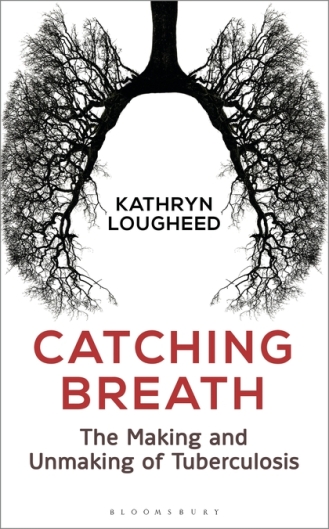 One of the books I consulted as part of my research into understanding more about the disease, its symptoms and its effects, was published very recently, in 2017. It’s called Catching Breath: the making and unmaking of tuberculosis by Kathryn Lougheed. The author is a former scientific researcher and is now a journalist and science writer. The book is excellent. It is fantastically well-written, even funny in parts (the author has an interesting sense of humour – her Twitter handle is @ilovebacteria!). She is out to make some serious points, however, about this, one of the oldest diseases known to humanity, which has so successfully mutated, crossed species and diversified and which just keeps on winning. Her main argument is that TB remains a disease of poverty and inequality. Globally, it affects the weakest – the young, the old, the poor or those who are already sick. She argues that, although it is a complex disease, if there was sufficient political will, many more lives could be saved. If there was as much resource and international effort put into tackling TB as there has been, say, to addressing AIDS, there would have been far greater success to date. In 2015 the World Health Organisation (WHO) announced its ‘End TB strategy‘, which set a goal to reduce worldwide deaths from the disease by 95% by 2035, although it would seem that nothing short of a heroic research effort will be required to meet this.
If you are at all interested in the politics of health and disease, inequality between the developed and the developing world, and about humanity’s ongoing battles with diseases old and new, this is a fascinating and engaging read. I had intended merely to dip into the bits that interested me for my own research, but I have ended up reading the whole book. In Kathryn Lougheed, science’s loss is the publishing world’s gain. I hope this book gets nominated for some non-fiction or science-writing prizes.
Have you read any good science or non-fiction books recently?
If you have enjoyed this post, do subscribe to my blog by clicking the ‘Follow’ button. Let’s also connect on social media.
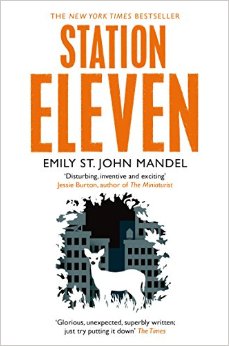 The book is set in Canada and the United States just 20 years after a catastrophic virus seemingly wipes out about 99% of humanity in a matter of days. The consequences of this are that, within a short space of time, electricity, running water and all the other basic services we take for granted, cease to exist. Vehicles are abandoned on motorways as their passengers leave their homes, to escape to…where? These people then die. Aircraft no longer fly and people are stranded pretty much wherever they happened to be at the moment the virus struck. And then mostly die. Whilst reading I recalled all those diseases in recent years that seemed to prefigure cataclysmic consequences (AIDS, Swine fever, SARS, Avian ‘flu, Ebola) fights which, for the most part, we eventually won; in this novel it is the disease (Georgian ‘flu) that prevails. And that’s scary.
 The author has quite a task managing this complexity: each of the four characters’ stories are told separately and in a non-linear way, but they are like pieces of a jigsaw gradually being pieced together until the overall picture becomes clear. The novel jumps back and forth in time and I found this quite difficult to follow. Also, for me, the drawing together of the strands was a little too contrived; it just did not seem entirely plausible that a tiny number of survivors could have such a connected past. I think this has been my problem with science-fiction generally (but perhaps I haven’t read enough); I get that you have to suspend disbelief but it’s too much for me when that means suspending credibility.
 Julia's books