Booker Prize shortlist 2023

For me, few things herald the arrival of autumn in the literary sphere more than the announcement of the Booker Prize shortlist, one of the world’s foremost literary prize for novels written in English. For a few years now I have attempted to read my way through the shortlist and predict the winner ahead of the awarding of the prize, which is usually sometime in October. It generally works out at one book a week, which for me, in the last couple of years has been a tall order. I never usually manage to read all six books on the shortlist in time; I think my best performance to date has been about five. For some reason we have been given a little longer this year – the winner of the Prize will be announced on 26 November, well over two months from now – so I feel I am in with a fighting chance!

I did not agree with the judges last year – the winner, The Seven Moons of Maali Almeida by Shehan Karunatilaka, was among my least favourite on the shortlist. I am not familiar with any of the authors on this year’s shortlist. Facts I have gleaned about the shortlist are: there is a two-thirds/one third gender split (guess the proportions); half the authors are called Paul; there is one very long and one very short novel; half the novelists are north American, one is African, and the two Europeans are both Irish!

I am not familiar with any of the shortlisted authors. I was disappointed not to see Sebastian Barry’s Old God’s Time make the shortlist, having been on the longlist. I have just finished that book so look out for my review soon. I also wanted to see Ayobami Adebayo’s A Spell of Good Things make the shortlist as my book club loved her 2017 novel Stay With Me. However, that is the Booker – it never fails to surprise or to be bold and brave and not follow the crowd.

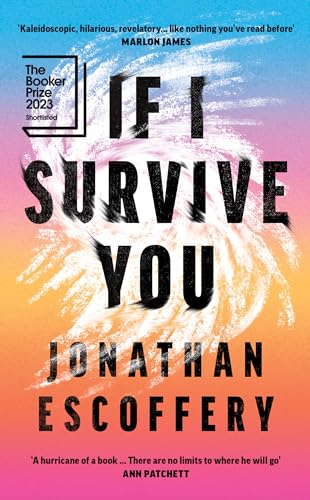
I’m going to kick off my reading marathon with Jonathan Escoffery’s If I Survive You and build up to Paul Murray’s The Bee Sting, which at 656 pages represents the greatest threat to my not completing the shortlist!

Ready, Set, Go…

Women’s Prize book review #5 – “Demon Copperhead” by Barbara Kingsolver

I had a strange reading summer – rather than go sequentially through the various titles I planned to read, I was juggling half a dozen or so simultaneously. It sort of worked – I had different books for different moods – but it meant that it took me a long time to get through each one. Hence, it’s taken me a while to get through all six books on the Women’s prize shortlist. Demon Copperhead felt like a fairly constant companion. I listened to it on audio and it’s long. But that was okay, because it’s stunning and I didn’t want it to end. You know when you get one of those books that you grieve for once the reading experience is over? Well, Demon Copperhead was one of those for me. It’s a well-deserved winner of this year’s Women’s Prize for Fiction, a stand-out piece of work in what was a very strong field. This was my penultimate read from the six shortlisted titles so I hadn’t read it when it was announced as the winner.

Demon Copperhead is a modern-day re-telling of the Charles Dickens classic David Copperfield. The broad plot of that novel, as you may be aware, is that we follow our hero from infancy to maturity, from inauspicious beginnings, fatherless and later orphaned. David is sent to various schools and institutions where he is treated badly, but somehow survives due to his own determination and intelligence. David marries early, but his young wife dies soon after. Only then does he realise his love for the daughter of one of the few benign guardians in his life.

Barbara Kingsolver turns this Victorian bildungsroman into a story of a modern American tragedy setting her novel in Virginia, one of the most deprived and left-behind parts of the United States (and where she has made her home). Demon lives with his drug and alcohol addicted mother in a trailer, his father having died before his birth. The trailer is on land owned by the Peggot family, whose son ‘Maggot’ is Demon’s close childhood friend. The Peggots take Demon on a short break to visit their daughter June in Tennessee, one of their few children who has made something of herself and therefore a rare role-model for Demon. On their return home, Demon finds that his mother has married her cruel and violent lover Stoner. 

Demon’s mother relapses and he is sent to a foster-carer, a tobacco farmer whose motives for fostering are dubious at best, though it is convenient for the social services department to overlook this because he takes on their most difficult to place cases and has several other teenage boys living with him. After the death of his mother, Demon is sent to a different foster family, the feckless McCobbs who have entered into fostering merely to obtain income to meet their significant debts. They fail to meet Demon’s most basic needs for food and clothing and force him to sleep on a mattress in their laundry room. Eventually, Demon decides to run away from the McCobbs and finds his way to his paternal grandmother’s home, a woman he has never met. She undertakes to ensure he is cared for, however, and arranges for him to live with the husband of one of her former foster-children (who died of cancer) and his daughter Agnes.

Demon finally seems to have found himself in a good situation with decent people who care about him…but we are only halfway through the book. Hard to believe, but the worst is still to come. There have been hints throughout of what is to befall our hero: his mother’s addiction problems, the drug-dealing of the much-admired leader of boys at the tobacco farm, ‘Fast Forward’, and the portrayal of a certain hopelessness about life in this part of the country. Demon will inevitably become sucked into what is surely one of the most heinous scandals perpetrated by the pharmaceutical industry, the oxycontin crisis that continues to wreak havoc and destroy lives on an industrial scale in parts of the USA. 

The story continues, darkens further. It is not a read for the faint-hearted and yet you cannot stop because as the reader you have become invested in this powerful central character, our narrator who speaks directly to us. We feel his pain. 

Kingsolver follows the plot of David Copperfield faithfully, keeping many of the names and adapting others, the cleverest for me is U-Haul, the modern-day Uriah Heep who Kingsolver imbues with similarly odious characteristics. It is heartbreaking to think that things we thought belonged to a past century, cruelty and neglect towards children, the suffering of people born poor, are still with us.

Taking on a re-telling of a book like David Copperfield, considered by many to be Dickens’s finest novel, was an act of awesome ambition but Kingsolver has accomplished her task with aplomb and created a true tour de force of a novel.

Highly recommended.

Winner of the Women’s Prize for Fiction announced tonight

Well, I did not hot my target, but I had fun trying! When the shortlist for this year’s Women’s Prize was announced a few weeks ago, I set myself the goal of reading all six titles, much as I do with the Booker Prize in the autumn. The Women’s Prize is at least as big as the Booker now, so why not. (Dare I say it is also a bit more accessible?)

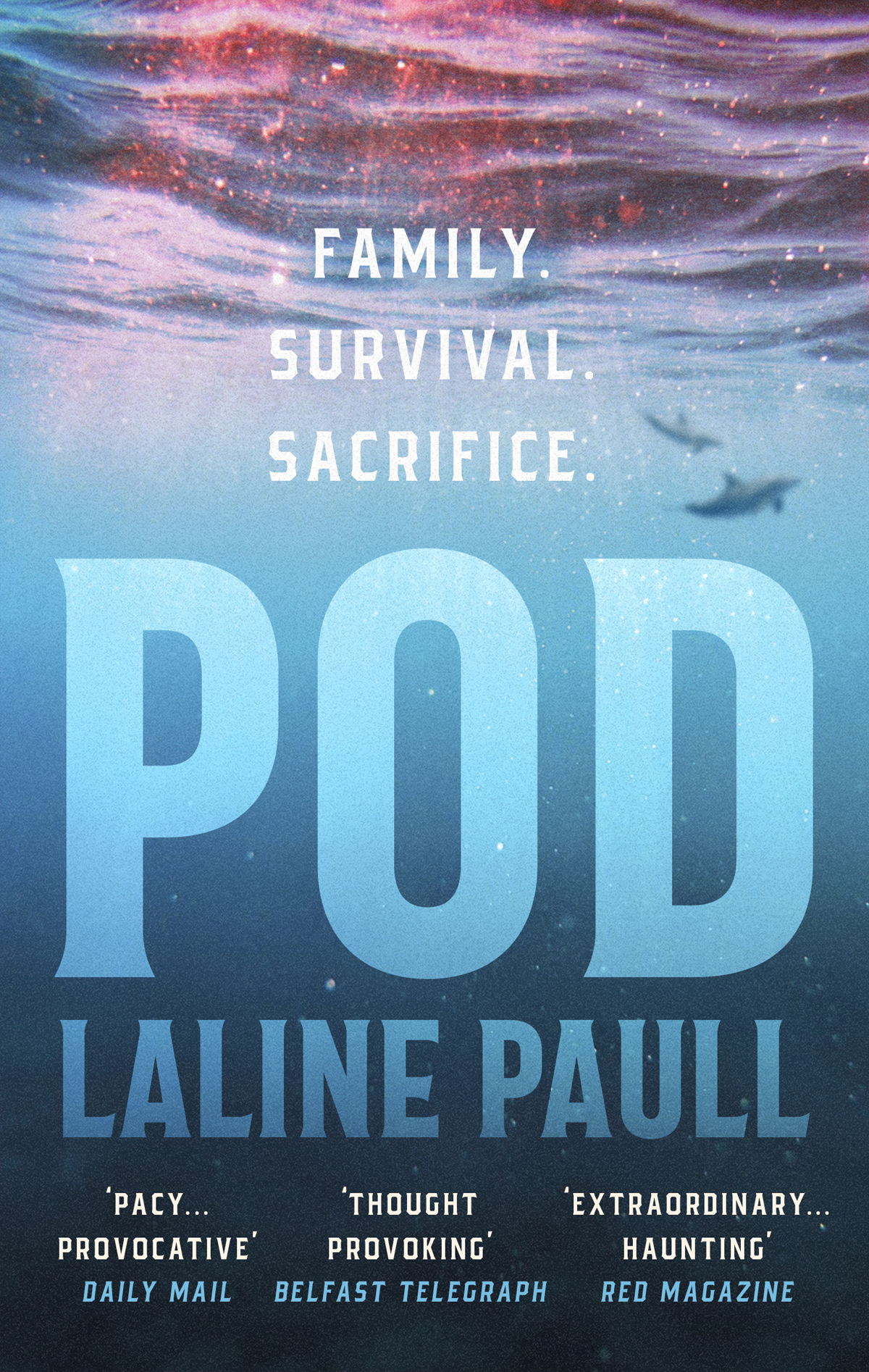
I’ve read three out of the six novels and have posted reviews on Fire Rush by Jacqueline Crooks, Black Butterflies by Priscilla Morris, and The Marriage Portrait by Maggie O’Farrell. I have almost finished my fourth, Trespasses by Louise Kennedy. I have not yet started Demon Copperhead by Barbara Kingsolver or Pod by Laline Paull, although I will definitely read both of them.

I have loved all the books I have either finished or am reading. Two are debut novels, and in only one instance (Maggie O’Farrell) have I read anything previously by the author. I have heard a great deal of praise for Kingsolver, but have not heard much about Pod, though it sounds a very unusual and innovative work.

The winner will be announced this evening at 7.10pm by Chair of Judges Louise Minchin, and it can be watched live on YouTube.

Of the four that I have read or am reading, all would be a worthy winner. They are fantastic novels. For me, the one that has stood out though is Fire Rush. It has such a raw energy and the author creates a world that draws you in and is completely compelling.

Only a few hours to go – let’s see if the judges agree with me!

Women’s Prize shortlist review #3 – “The Marriage Portrait” by Maggie O’Farrell

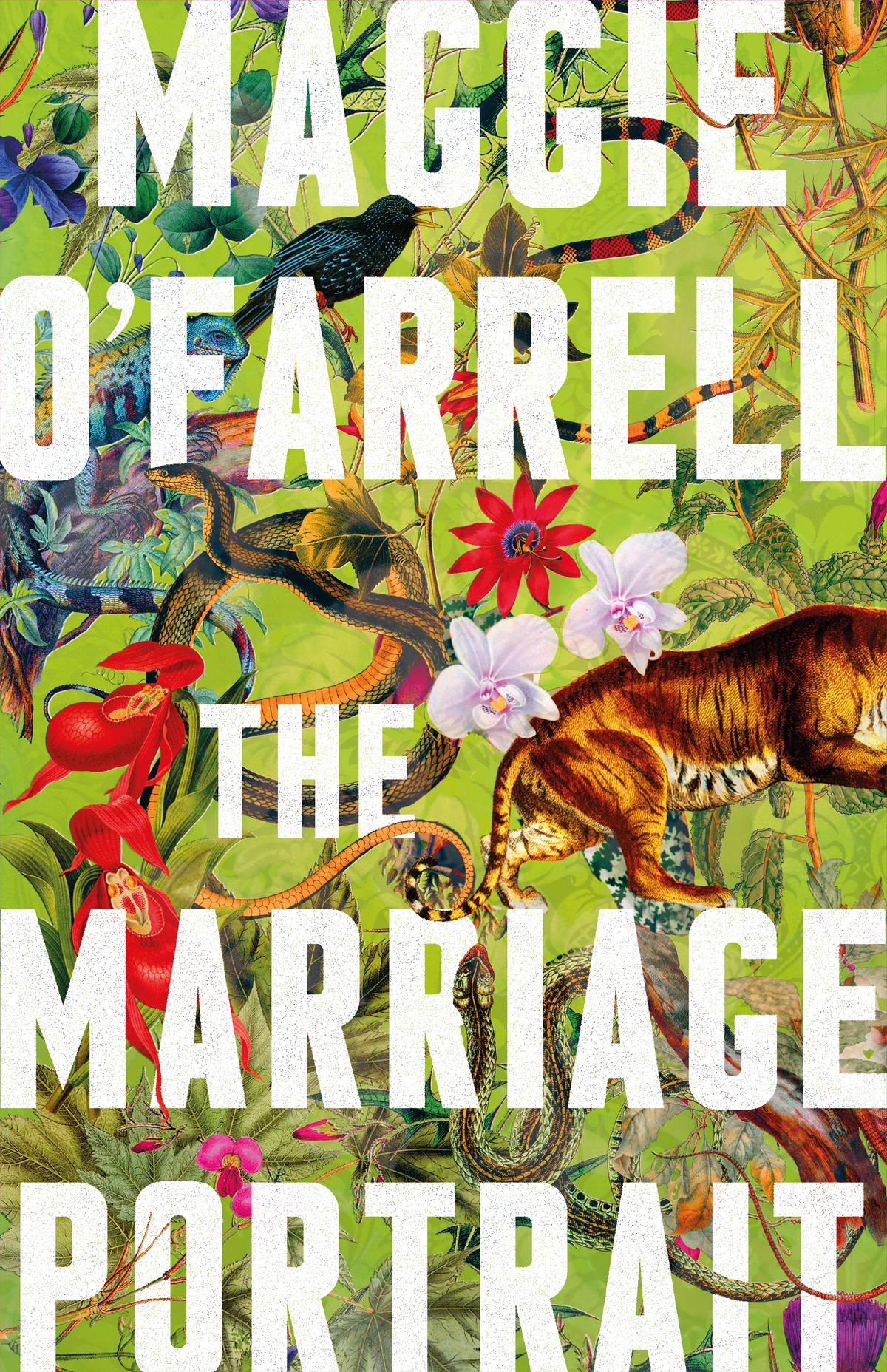
Maggie O’Farrell won the Women’s Prize in 2020 with her eighth novel, Hamnet. It would be quite a coup if she won the prize again in 2023 with her ninth novel. Hamnet is without doubt one of my favourite novels of recent years. Beautifully written, moving, and an astonishing subject. In The Marriage Portrait O’Farrell takes a somewhat similar approach: taking a real historical figure, about which very little is known, and inventing their back story. This time, O’Farrell takes us to 16th century Italy. 

The main character in the novel is Lucrezia de Medici who lived a short life from 1545-1561. She was the daughter of the then Duke of Florence and his noble Spanish wife. She was their fifth child, and is portrayed in O’Farrell’s novel as somewhat unruly. Little was really expected of her, apart from a decent marriage, but as the third daughter, she would not have been considered for the highest ranking match. Her brothers, of course, were schooled in the arts of ruling. Lucrezia is portrayed as sensitive, and passionate about art and nature. She is taught to paint, since she shows some aptitude for it and it at least keeps her out of trouble. Painting is the one activity in which she finds true happiness.

Lucrezia’s elder sister Maria is matched with the nobleman Alfonso, the heir to the Duke of Ferrara, but when Maria dies suddenly, Lucrezia is forced to step in as a substitute. The children’s nurse, Sofia, sensing Lucrezia’s horror at the prospect, manages to persuade the Duke to hold back from marrying his daughter off, on the basis that she is still a child and not yet begun to menstruate. There is only so long that Sofia can protect her charge, however, and at the tender age of 15, Lucrezia is married to Alfonso, who, by then, is Duke of Ferrara. 

Lucrezia is terrified to leave her family. Initially, she is taken to her husband’s country residence, the delizia, where, as Duchess, she enjoys a little more freedom than she had in Florence. Her husband Alfonso, is constantly preoccupied with matters of state and a schism in his own family and largely abandons her. It is clear, however, that her expected role is to bear heirs and Lucrezia endures the consummation of their marriage with fear and horror. 

When the couple return to court to begin married life proper, Lucrezia becomes increasingly aware of a more sinister side to her husband. It is clear that her initial fear of him was not simply girlish trepidation, but a deeper sixth sense. Very soon she begins to fear for her safety. 

The novel opens at a banquet, where Lucrezia is being fed various delicacies by Alfonso. It is 1561, the year that she died and Lucrezia tells the reader that she believes her husband wishes her dead. Thereafter, the novel flits back and forth between Lucrezia’s early childhood, giving a sense of how her character and her place in the household evolved, and 1560-61 and the progress of her brief marriage. 

Having enjoyed Hamnet so much, I was really looking forward to this book and treated myself to a signed hardback copy. It moves at a much slower pace than Hamnet and I found it quite difficult to get into at first. There is more scene-setting and building of character than there is plot, but then we are talking about a very short span of time in the life of a person who did not have very much to do with their days! About halfway through, once Lucrezia is married, I think it improved – the sense of threat builds, the insular nature of courtly life becomes more apparent, and Lucrezia’s isolation all add to the feeling of danger for her. Even those she might reasonably think of as ‘friends’ – her husband Alfonso, his sisters, the servants – all in fact represent a potential threat. Her only confidante is her ladies maid Emilia, but she is also powerless and vulnerable. It is only when a group of artists arrives to set about making a commemorative portrait  of her (the marriage portrait) that Lucrezia realises the deep peril of her situation. As the novel darkens, it improves.

I would recommend this novel although for me it did not have the powerful impact of Hamnet, but then it must be very difficult to follow something that brilliant.

Women’s Prize shortlist review #2- “Black Butterflies” by Priscilla Morris

My second book review from the Women’s Prize shortlist. Fire Rush set the bar high, but Black Butterflies is a cracker too! It’s the debut novel by Priscilla Morris and has garnered a lot of attention, being shortlisted for a number of prizes. Morris draws on her part-Yugoslav heritage for the subject matter of this novel and her intimate knowledge of Sarajevo and her feeling for the people of that city shine through. 

Set in 1992, at the time of the outbreak of the Balkan wars and in particular the devastating siege of the city of Sarajevo, the war is seen through the eyes of Zora Kovovic, an artist of Serb origin who teaches at the university and lives with her Bosnian journalist husband. Their daughter lives in England with her English husband and child, and Zora’s mother lives alone in a flat nearby.

The novel opens with Zora visiting her mother’s flat only to find that a coarse and rather frightening Bosnian family has moved in following the passage of a law that entitles them to occupy empty properties. Zora’s mother has been staying with her over the winter, recovering from illness. The sense of impending doom is clear, everything is about to change. Zora and Franjo, Zora’s husband, who is somewhat older than her, decide that he should leave Sarajevo and take her mother with him, for the safety of England. Zora says she will follow later, she feels a duty to her students and wants to keep an eye on both her mother’s and their own apartments, fearing that they will be taken over otherwise. She does not feel in any danger. She believes that the life they have in cosmopolitan, artistic Sarajevo, which feels like the Paris of the Balkans, could not possibly be under threat. 

Franjo and Zora’s mother leave and the situation in the city rapidly deteriorates as war between the ethnic groups in the former Yugoslavia escalates. Very quickly, bombs begin to drop, snipers in the hills surrounding the city,target its inhabitants and many are killed simply going about their daily business. Bodies begin to appear in the streets. The siege intensifies, there are power outages, food becomes scarce and eventually essential services are cut off – water, sewage, power and telephone lines. It very quickly becomes impossible for Zora to escape. 

Spoiler alert:

The novel follows the siege for a year, recounting in vivid detail the suffering of the people who chose to remain in the city. What is hardest for Zora is the loneliness. Without Franjo and her mother and no possibility of contacting them or her daughter, Zora is completely isolated. Her mental state is reflected in her art. When she is prevented from working at the university, she withdraws to her studio to paint obsessively, but when the building where her studio is housed burns down and she loses almost all her work, it is like she has been robbed of her very soul. This theme pervades the novel and is not only a powerful metaphor for Zora’s individual suffering, but also a measure of the cultured and refined nature of the community, contrasting with the crudeness and brutality of the soldiers who become the masters of the frightened city-dwellers. 

Zora’s apartment is in a small block and she and the other residents who elected to remain develop a powerful bond. They often share what little food they have, and find comfort in one another’s company. It feels like the only thing keeping them sane. Zora eventually escapes Sarajevo, with the help of her son-in-law, who manages to secure a press pass and counterfeit papers to get her out, but though she wants to be reunited with her family, she finds it difficult to leave her fellow Sarajevans and part of her wants to stay. The siege has changed her, changed all of them and they will never be the same again after the experiences they have shared. There is the sense that her loved ones will never truly be able to understand her ever again. 

This is a really powerful novel, which I loved, but which is absolutely heartbreaking at the same time. As a senseless war on the eastern side of the European continent rages once more, this reminder of the horrors of the Balkan war and the break up of the former Yugoslavia (indeed, tensions in that area seem to be re-emerging), we get a glimpse of what life is like for the innocent bystanders in times of war. Again, I listened to this on audio and it is skilfully narrated by Rachel Atkins.

Women’s Prize shortlist review #1- “Fire Rush” by Jacqueline Crooks

It’s been a busy few weeks with half term, travel away from home and the day job, so I have not been doing as much reading as I would have liked. This is especially disappointing given that I’d set myself the goal of reading the shortlist for this year’s Women’s Prize! I have been doing a fair bit of driving and running though so at least I’ve been getting through some of them on audio. There is nothing quite like the feel of a book in your hands, but, increasingly, I am finding audio is the way I access most of my reading. Are you finding this too?

Fire Rush by Jacqueline Crooks was the first of the shortlisted books that I picked up and I am so glad I chose the audio version. At its heart is a love for music, specifically dub reggae, and the interconnectedness of the music, the Caribbean culture, the London scene of the 1970s where the book is set, and the idea of music as salvation. Short excerpts of dub reggae are built into the audiobook at key moments and it gives an extra dimension to the text, characters and setting, as well as the pace and tension of the book. This is also not a musical genre I am particularly familiar with, so I definitely would not have ‘heard’ it if I had read the book in hard copy.

The book opens in 1978 in the south London suburb of Norwood, where twenty-something Yamaye lives with her indifferent and sometimes cruel father. Her life seems to be going nowhere and the bleakness of the moment – it was a period of economic stagnation, cultural wilderness and all against a racist backdrop – is tangible. Yamaye lives for music, dub reggae, and spends her weekends at an underground club in the crypt of a church with her friends, sassy Asase and white Irish girl Rumer. There is an ever-present sense of threat from the authorities and most of the characters have had a brush with the law at some point. There is also an ever-present threat of violence, from darker forces operating in this underground world. 

At The Crypt, Yamaye meets Moose, a craftsman who works with wood, particularly the teaks and mahoganies from the Caribbean where he is from and where his grandmother still lives. Moose and Yamaye embark on a love affair. He dreams of going back to Jamaica with her and living a free and peaceful life in the country. Yamaye has dreams too, of becoming a DJ, mixing tracks at reggae nights. 

Spoiler alert:

All their dreams are shattered, however, by two devastating events: Moose is killed in police custody and Asase is found guilty of murdering Yamaye’s friend and the owner of the record shop she frequents. Events turn quite dark and fearing that her life is in some danger, Yamaye escapes to Bristol where she spends time in a ‘safe house’ which proves to be anything but. She must make a second escape and flees this time to Jamaica, determined to track down Moose’s grandmother, to find out more about her roots, and specifically to try and connect with her late mother who died mysteriously in Ghana when Yamaye was a child. In Jamaica she finds a new lease of life, but also encounters new dangers that will lead her to a final reckoning with forces that want to harm her. 

This is a really powerful book which tells a fascinating story. Over a period of five years or so we watch Yamaye grow from being a timid and cowed young woman, oppressed in her own home, to one who finds her inner power through music, love and embracing her true cultural inheritance. 

I loved this book. It was both gripping and engaging from start to finish. The audiobook is brilliantly read by Leonie Elliott (the actress who plays Lucille in Call the Midwife) who manages the range of voices and accents with aplomb. This is an example of audio really adding to the experience of the book and I recommend it highly. 

Audiobook review – “Cleopatra and Frankenstein” by Coco Mellors

I’ve had my eye on this book for a while. It has been highly praised in the United States, winning lots of plaudits for its debut novelist Coco Mellors, and in the UK it was a Sunday Times bestseller. The blurb was tantalising; set in New York city it tells the story of a whirlwind romance and its consequences, and comparisons with Sally Rooney have been drawn. My book club liked the sound of it too. We mostly do audiobooks these days as we are busy ladies of a certain age with families and work, etc, and I downloaded it excitedly.

It is essentially a novel of character studies. Cleo is a twenty-something artist struggling to make ends meet in New York where she has a low-calibre job while making her art in her spare time. Cleo is troubled and drifting. She is British but feels no connection with her home country where she has no friends and very little family. Her mother died by suicide when she was in her final year at university. Her parents separated when she was young and her father remarried a ghastly woman and has a new family.

Cleo’s US visa is about to expire and she has no idea what she is going to do next when she meets Frank at a party. Frank is twenty years her senior and owns a successful advertising agency. The opening chapters focus heavily on their initial meeting and the intense chemistry between them, and the inevitability of their getting together. The opening is clever and satisfying to read while also telling us a lot about these two people. It sets the scene really well. Despite the age difference Cleo and Frank seem well-suited. It is tempting to say that Cleo is looking for a ‘father-figure’, but I don’t think that would be correct; she is looking for stability though. Her life experience also makes her older than her years. Frank also had a troubled upbringing, his mother was an alcoholic, and he says he has never met anyone like Cleo before. He is perhaps a little younger than his years. Needless to say, their relationship blossoms. The impending expiry of Cleo’s work visa creates a literary turning point in the plot of the novel. Frank asks Cleo to marry him in a kind of ‘what have they got to lose’ way and they have a quickie ceremony at City Hall, witnessed by an emotional hot dog seller.

So far so good, but for me, the book goes somewhat downhill from here. It is clear that the rest of the novel is going to be about their marriage – will they repent of having married in haste? 

Spoiler alert!

The next few chapters focus a lot on Cleo and Frank’s circle, rather than the couple themselves, and I felt I rather lost the two main characters here. Coco Mellors goes into detailed character portraits of their friends Santiago, Anders and Vincent, and Frank’s younger half-sister Zoe, and we meet Cleo’s father and his wife Miriam, who were cringingly two-dimensional for me. There were times when I wanted to give up on this book because I was so deeply irritated with the secondary characters. I found them lazy stereotypes and I could not fathom why we needed to know so much about them. My only conclusion is that they were there to tell us a bit about “life in New York city”, which I found a bit patronising. It all seemed like something out of Wall Street! Or they were there for padding, to take the focus off Cleo and Frank for a few months, the period during which they were relatively content with one another, until the author could legitimately turn to problems arising in their marriage after the first flush or romance. 

About half way through a further character is introduced. Eleanor is a forty year-old copywriter who goes to work in Frank’s agency. It is clear she is much more ‘ordinary’ than the ‘extraordinary’ Cleo (looks-wise) but there is something about her that attracts Frank’s attention. They share an easy companionability that contrasts with the more intense relationship he has with Cleo. Not unexpectedly, Frank and Cleo’s marriage begins spectacularly to disintegrate, as do the other characters in the book, in a kind of parallel decline. To be fair, the book gets better again from here, although I found the ending disappointingly predictable.

I’m really not sure about this book. It is well-written and I liked the characters of Cleo and Frank, and Eleanor. I disliked most of the others though and found the novel a bit unbalanced in that respect. It’s not a bad read, though it could be quite triggering for some, covering themes of suicide, addiction, and childhood trauma. 


My main complaint is that it seems to favour sensationalism over authenticity and other books I have read recently cover similar themes better (for example, any of Sally Rooney’s books and Sorrow and Bliss by Meg Mason). I came across an LA Times review which said that Cleopatra and Frankenstein read as though it had been written to be adapted for a Netflix series, and I think I probably agree.

Reading challenge book review – “All Quiet on the Western Front” by Erich Maria Remarque

The April book in my ‘Trying not to be too challenging’ Reading Challenge for this year was All Quiet on the Western Front, the best-known novel by Erich Maria Remarque which draws on his experience as a German soldier in the First World War. First published in 1929, only ten years after the end of that war, it has become one of the most iconic novels about war, all the more poignant because it is written from the perspective of an ‘enemy’ fighter. The book was banned in Germany, where the National Socialists were capitalising on the villification of their country in defeat and felt the book made Germany appear weak. 

My copy is a well-thumbed 1977 reprint that came from my husband’s collection when we got together. I did try reading once before years ago, but as a mother of young children at the time it was just too much for me to bear. I suppose the horrors of yet another senseless and destructive war in Europe appearing in the daily news bulletins, plus the release of a film adaptation that did very well at the Oscars recently, meant the book caught my eye as I was browsing the TBR shelves this time. 

The central character and narrator of All Quiet on the Western Front is Paul Baumer, a young soldier at the Front, serving with other young men who, only weeks earlier, were his friends at the school they attended in a quiet German town. They were persuaded to sign up by their fervently patriotic schoolmaster Kantorek, who told them of glory to be had in serving their nation; their illusions are quickly shattered once they are posted to the Front. Parts of this book are very difficult to read. The vivid accounts of hideous deaths, of gruesome injuries, and of the trauma of enduring such terror, fear and physical pain are stomach-churning, but one is compelled to read almost from a sense of guilt that young men had to, often still have to, endure the horror while the rest of us sit at home in comfort or mourning. One cannot help but think of Ukrainian and Russian soldiers at this point.

Besides the accounts of trench warfare, what is equally shocking is how little progress either side seems to make in exchange for their losses. You have to ask how any of it could be called a victory. The pace of the book is also extraordinary: the periods of fierce and brutal conflict are short episodes of violent action amidst a wider tedium. Most of the soldiers’ time (those that survive the battles) seems to be spent doing very little, just trying to survive. Or in Paul’s case, thinking. The rations are poor and the food is often rank, the conditions are appalling – the descriptions of the ongoing battle to keep rats at bay at night is particularly awful – and no detail is spared in describing toilet habits, for example. 

When Paul returns home for a period of leave, the contrast between his life on the Front and that of civillians is stark. Distressingly, Paul feels that he can no longer relate to his family, that he must spare them the reality of war, but that in doing so he is a co-conspirator in concealing the truth. He cannot wait to get back to the Front, to be with those who can understand him, who share his experience. 

Paul survives almost the whole war, dying only weeks before its end, on a relatively calm day when the single line report from the military authorities read simply “In westen nichts neues” (translated as “All quiet on the Western Front”) from which the book takes its title. In reality, Paul could never have returned to his old life and his family, not after what he had seen and experienced. 

We are not youth any longer. We don’t want to take the world by storm. We are fleeing. We fly from ourselves. From our lives. We were eighteen and had begun to love life and the world; and we had to shoot it to pieces. The first bomb, the first explosion, burst in our hearts. We are cut off from activity, from striving, from progress. We believe in such things no longer, we believe in the war.

Paul, in All Quiet on the Western Front, Chapter 5

There have been two translations of the book into English; my edition will be the original by Arthur Wesley Wheen. The second was by Brian Murdoch in 1993. It is interesting that my edition does not include any credit to the translator. Nowadays, translation is considered almost an art in itself, bringing the out the intention and talent of the author to those unable to read books in their original language. 

I recommend this book highly. It is practically essential reading, though it is not an easy one. 


The next book for this challenge from my TBR shelf is The Bloody Chamber by the late great feminist author Angela Carter. I think I got this as part of a set of three books by her (along with Nights at the Circus and Black Venus) back in the day when I used to subscribe to a postal book club (remember those?) It’s another of those books I’ve been ‘meaning to read’ for years – at last an excuse!

Book review – “The Temporary Gentleman” by Sebastian Barry

A book currently on my TBR (soon!) list is the latest novel by Sebastian Barry, one of my favourite authors. Since reading Days Without End a few years ago, I have loved every one of his books that I have picked up and I am sure his latest will be equally special. I have particularly enjoyed the family saga approach he has taken to many of his novels. Listening to him speak at a recent online event (what a wonderful man, I adore him – he would be my fantasy dinner party guest), he talked about mining the resources of his own family and other families he was familiar with to find the powerful stories of ordinary people. For many Irish people, particularly those living in the first half of the last century, there are indeed powerful stories, and Barry gives a voice to the trauma and suffering that many experienced for multiple complex reasons.

In The Temporary Gentleman, Barry tells the story of Jack, the third of the McNulty brothers (we heard the story of one in The Whereabouts of Eneas McNulty, and, more obliquely, Tom in The Secret Scripture). Jack is perhaps the son his mother was most proud of, for seemingly having made something of himself: leaving Sligo to go to university in Dublin, getting a profession as an engineer, and marrying the beautiful Mai Kirwan, daughter of the local doctor and therefore of a higher social standing than he might reasonably have hoped to achieve. 

When his father-in-law retires and Jack and Mai take up residence in the handsome family home, their seemingly perfect lifestyle (and marriage) begins to crumble. The root of the problem is Jack’s uncontrolled drinking and gambling habits which soon lead them into debt and shame. Worse, his neglect of Mai impacts on her mental health and she too enters a spiral of emotional decline.

The novel is told from Jack’s point of view. He is narrating his story while working as an engineer in Ghana. Here he is ‘the temporary gentleman’, with a servant, a status he feels he does not deserve. He looks back on his life, reflecting on events and in particular the impact of his choices and his behaviour on Mai. The pain and regret he experiences is palpable and Barry manages to explore this with compassion and a sense of shared trauma.

This is yet another powerful novel from Sebastian Barry. He explores similar themes to the other McNulty family novels, but with each individual’s story he gives it a new twist and a fresh perspective. I would love to go back and read the stories of the other two brothers again because each sibling is referred to as well as their partners. 

Highly recommended.

Audiobook review – “The Dog of the North” by Elizabeth McKenzie

My book club chose this book for our March read after examining the longlist for this year’s Women’s Prize for Fiction. We love this particular competition and always try and tackle one or two books on the shortlist – we are getting ahead of ourselves this year! I am ashamed to say that I have still not read last year’s winner, The Book of Form and Emptiness by Ruth Ozeki (we chose others from the shortlist), but that will have to wait for another time.

Books from literary competitions are not always considered particularly accessible, but this novel feels like a real ‘reader’s book’, something the Women’s Prize does particularly well. It is  darkly comic, wonderfully written and with a quirky storyline that will lift you without being patronising, and which does not opt for the easy or predictable plot solutions. 

Penny Rush is a thirty-something who has reached a difficult stage in her life. She has just separated from her husband Sherman, who seems to have experienced a premature mid-life crisis and taken up with another woman. Penny quits her job as a dental nurse, vowing to have a fresh start, and has just a few hundred dollars to her name when a series of family crises beset her. Penny is a lonely soul at this stage. Her beloved mother and stepfather disappeared some years earlier while touring in the Australian outback. Their disappearance has never been explained and their deaths remain unconfirmed. Penny’s sister Margaret now lives in Australia with her football player husband and two children. When Penny’s grandparents suddenly need help to deal with their own problems, only Penny is available to help.

Penny’s eccentric grandmother, former medical doctor (though who retains her license to practice), known as Pincer, gets into trouble with the police when human remains are found in her home. Penny teams up with Pincer’s accountant and friend Burt in an effort to help her. They conspire to clean up Pincer’s chaotic, and dangerously dirty home while she is out and it is the staff of the cleaning company Penny engages who find the bones. Burt is himself an eccentric, though it turns out, also a very sick one. He drives a highly customised and very ancient van which he calls ‘the dog of the north’. When Burt is admitted to hospital, he lends Penny ‘the dog’ which she needs to deal with the many issues that are piling up at her door.

Penny’s grandfather, Arlo, Pincer’s ex-husband, lives with his ghastly second wife Doris, but their marriage is bitter and tumultuous. As Arlo is ageing and his need for support is growing, Doris tells Penny in no uncertain terms that she wants her to get him out of the house and into a retirement facility. With Arlo’s agreement she does this. Penny and Arlo share a deep grief about the disappearance of Penny’s parents. Once out of Doris’s clutches, Arlo decides that he wants to make one final effort to discover what happened to his daughter and son-in-law, and he persuades her to accompany him to Australia. Penny becomes very sick on the trip, having contracted a dangerous infection when Pincer, angered by what she saw as Penny and Burt’s interference, stabbed her with a brooch.

The above is just a snapshot of the events of the book but I hope it gives a flavour of the journey that the novel takes you on. There are also many offshoots to the main storyline: when Burt is sick, his brother Dale visits him from Santa Barbara. Dale represents the calm and stable presence in the chaos of the situation in which Penny finds herself. She is drawn to him, despite his not being as colourful as many of the people she is used to and their relationship evolves slowly over the course of the novel. In the background there is also Gaspard, Penny’s biological father whom she was forced to remain in contact with throughout her childhood, but a man she now tries to avoid.

The novel is about a life that is constantly being buffeted between chaos and order. Penny wants order and calm (what her lost parents represent) but she somehow finds herself being pulled back into disorder, precariousness and unpredictability. Will she ever be able to assert herself and find the peace that she craves?

I loved this book. The characters are all brilliantly realised and the events, though extreme, are entirely believable. When you start the novel you enter a world where weird things, bad luck and chance encounters just happen. It is well-written and the pace is good. I listened to this on audio and the reading by Katherine Littrell was excellent.

Highly recommended.