#KeepKidsReading book review #3 – “Quiet Storm” by Kimberly Whittam

For my final #KeepKidsReading book review I would love to share with you a really wonderful book by a debut author, published by Usborne, who also happens to be local to me – Manchester based. Kimberly Whittam is a school teacher who has written a book for and about quieter shy children:

“Children who don’t raise their hand in class even though they know the answer, who don’t join in class discussion even though they’ve got something to say and children who are so, so talented and want to try out for the school play or join the school sports team and who are just too afraid to join in.”

Kimberly Whittam https://youtu.be/I8gtYq9zXu8

Many of us will recognise this child – that was me and it has at times been my own children, and certainly many children I know. Everyone is encouraged now to be loud and proud, to speak their truth and not be afraid of offending anyone, nor crave to be liked. But too often the people who say this have no idea how agonisingly difficult that can be. They were not “that” child. 

Storm Williams is twelve years old and in year seven at Daisy Mill Academy. She likes to keep a low profile and has clearly found settling in very challenging. Her best friend from primary school, Zarrish, was placed in a different form, leaving Storm feeling bereft, and she lives for the lessons where forms are mixed, such as PE, and they can be together. To make matters worse, Storm’s elder brother Isaiah is in year eleven and is an outgoing high-achiever, Head Boy and heavily involved in extra-curricular activity. All the teachers refer to Storm at “Isaiah’s little sister”; she has a lot to live up to. At the start of the book, Storm’s family faces a domestic drama – kitchen renovations lead to a burst pipe which makes their house uninhabitable – and the family has to move in with Storm’s grandma. 

It is during one of the PE lessons that Storm finds she has a previously undiscovered talent that she enjoys. The group begins athletics lessons and Storm finds that she is a very fast sprinter. The PE teacher encourages her to attend athletics practice and tells her he wants her to participate in an inter-school competition. The thought of going alone makes Storm feel queasy, but she decides that she will do it if her friend Zarrish comes along too. At first Zarrish says she will, but lets her friend down. Zarrish has become increasingly involved with a new girl at school, Melissa, who she was initially asked to ‘buddy’. But Melissa is sullen, manipulative and difficult and it soon becomes clear that she is pulling Zarrish away from Storm, persuading her into rule-breaking at school and deceitful and unkind behaviour. 

Storm finds herself in turmoil; lacking the confidence to participate in athletics without her friend’s support, but also finding for the first time that she excels at something and enjoys it, makes her reassess all of her assumptions about school life up to that point. 

Storm does find her voice and her niche and the difficult challenges she faces turn out to be a true turning point for her. She faces them with courage and with the support of her family and finds the strength of character to turn her back on what she knows to be wrong (treating people badly) and embracing doing what she loves, finding out a lot about herself along the way.

Storm is a lovely character and the situations she faces in this super book, the people around her at school, the teachers and the family situations (being mortified by her parents’ very public sense of fun!) will be familiar to lots of young people. 

Highly recommended for 9-12 year olds, or even a little older. 

#KeepKidsReading book review #2 – “The Dolls’ House” by Rumer Godden

I have a vague recollection of reading some books by Rumer Godden when I was a child, though unfortunately I cannot remember any specific titles. I was reminded of her a couple of years ago when reading fellow blogger Brona’s Books, who had a Rumer Godden reading week around the time of the author’s birthday. By coincidence I had happened to pick up an early edition of The Doll’s House in my local secondhand bookshop around the same time. Unfortunately, I did not get around to reading the book then and it has been sitting on my TBR shelf for too long. I decided to make it my ‘Off the TBR shelf’ book for June and now seems like a good time to review it as I am focusing on my #KeepKidsReading week. 

Rumer Godden was prolific and published over sixty books in a writing career that spanned seven decades. She wrote for both adults and children and also wrote poetry and non-fiction. A number of her books were adapted for film and television, most recently Black Narcissus which was released as a BBC mini-series in 2020. She was born in Britain but grew up in India where her father worked for a shipping company. 

The Doll’s House was Godden’s first book for children (published in 1947) and was turned into a film for children’s television in 1984. Godden wrote a series of books about dolls drawing parallels between their plight as passive and without agency, and the life of children, for whom adults make decisions, without necessarily consulting them. 

The Dolls’ House is a short book, easily consumed by an adult in one sitting, but I tried to read as a child would, or as a child might have it read to them, one short chapter at a time. The story concerns the fate of four dolls who live together as a family – Mr Plantaganet, Birdie, his ‘wife’, Tottie, a girl-child doll, and Apple, a younger boy-child doll. They are the toys of sisters Emily and Charlotte, and live in shoe boxes, but wish for a house of their own. Their wishes come true and the two sisters acquire an old Victorian dolls’ house which once belonged to their grandmother. With the help of a family friend they clean, repair and update the interior and the furnishings. Unfortunately, the dolls’ house comes with an unwelcome addition, a china doll called Marchpane, who is also very old. Marchpane would have been an expensive and precious doll in her day, unlike the Plantaganets, and is both haughty and cruel. When she is brought to live with them all she seems to cast a spell over the elder of the two sisters, Emily, and gradually, the Plantaganets are sidelined and ousted from the better rooms in their new home. 

On the surface, this is a simple story, but it explores notions of class, fairness, kindness and justice in ways that will be easily understood by children. It was a real throw-back reading this charming little book. The language is a bit old-fashioned, but I think it could still appeal to younger children, between about five and seven years old, perhaps shared with a grandparent, who will be able to bring their own memories into a telling of the story. 

“It is an anxious, sometimes a dangerous thing, to be a doll. Dolls cannot choose; they can only be chosen; they cannot ‘do’; they can only be done by; children who do not understand this, often do wrong things and then the dolls are hurt and abused and lost; and when this happens dolls cannot speak, nor do anything except be hurt and abused and lost. If you have any dolls, you should remember that.”

Chapter 1, ‘The Dolls’ House’ by Rumer Godden

#KeepKidsReading book review – “Stolen History” by Sathnam Sanghera

I am starting my #KeepKidsReading week book reviews with a newly-published non-fiction title that caught my eye. Sathnam Sangera published his best-selling book fort adults Empireland: How imperialism has shaped modern Britain in 2021. He is a journalist and has long campaigned for a more grown-up debate about the UK’s history of empire-building, what this means for us today and how it can help us manage some of the issues that arise from our multi-cultural society. Sathnam was part of a panel at the Hay Festival in a debate I saw there about Britain’s stately homes, the riches within them and how we as a society might engage with or view them in the modern era. It was fascinating.

The topic is certainly gaining traction (not before time, many would argue) and it is encouraging to see a book aimed at children on the subject. Sathnam Sanghera acknowledges the wonderful Horrible Histories series (books and television) for changing the way certain topics are taught to young people, making them accessible as well as entertaining. Sanghera sets out to do the same here, though it is a little heavier on the education than the entertainment side.

The author begins by explaining what the British Empire was and how Britain came to be perhaps the most powerful nation on earth. I learned quite a lot! I did not know, for example, that the British Empire was actually seven times larger than the Roman Empire and endured for a similar period of time.

He goes on to talk about some of the things we think of as ‘British’ that we actually imported from other parts of the Empire, not least tea! There are a number of pen-portraits of Empire figures, from the controversial explorers and colonisers, such as Robert Clive, to the many black and brown skinned individuals whose place in history has been minimised, such as Mary Seacole (who played just as big a role in the Crimean War as her white counterpart Florence Nightingale).

Sanghera does not shy away from controversial topics in this book and I think he handles them very well. For example, a theme running throughout is how objects (and indeed natural resources and human labour) were forcibly removed from their countries of origin. He alludes to the debate currently ongoing about the return of precious artefacts to their original owners. He also busts plenty of myths! For example, in the debate about whether British museums should return looted artefacts Sanghera points out that less than 1% of the British Museum’s current collection is on display so the place would hardly be hollowed out if even a lot of items were returned.

The author addresses head-on the fact that to many people the concept of ‘the British Empire’ remains sacred. He explains carefully why some people are made angry by discussions about it, without taking up a polar position himself. I think he manages quite successfully to explain why it remains important to people, whilst also equipping his readers with factual information and even a few strategies for handling discussions. He even explains terms such as ‘exceptionalism’ and ‘jingoism’ in simple but effective terms, which is quite something.

As you can probably guess, I rather liked this book and would recommend it to any parent keen for their child to have a grasp of this topic (which would probably be better than very many adults’ grasp!). It is definitely not just for families with multi-cultural heritage. I had some slight reservations about the title, because it suggests a ‘position’ that is actually much more nuanced in the book. But it turns heads I suppose.

Highly recommended (and for adults too!). It is published in paperback by the always wonderful Puffin Books, is very well illustrated and is set out in highly digestible chunks.

#KeepKidsReading – the summer holidays are here!

It’s too long since I did one of my periodic #KeepKidsReading weeks, where I write about what is currently happening in the world of children’s literature and post reviews of kids’ books that have caught my eye.

The premise of these themed weeks is to try and encourage people to spread the word about children’s books and perhaps even consider reading some themselves! It’s always such a treat to open a book that has been written with children in mind – it’s as good a min-retreat! We bookbloggers love reading – of course we do! – but when you get caught up in your stats, your reading speed (that feature on the e-reader is surely a thief of joy!) and how your ‘number of books read’ on Goodreads compares to last year, you can easily forget that reading is, at its most basic, just pure pleasure.

Generation Alpha (ie people born between 2010-24), aka ‘kids today’, have more competing pressures on their time than ever and, I would argue, more things to worry about. Reading educates, creates bonds, promotes wellbeing and empowers – as adults, parents and grandparents it is imperative that we do not allow this simple but oh so valuable pastime to slip away from them.

So, this is my teeny tiny little personal campaign!

If you know any children and they have not yet signed up for this year’s UK summer reading challenge, then get them along to the local library or point them in the direction of the website (Gen Alpha is, of course, digitally native!). This annual initiative is run by The Reading Agency and delivered in partnership with public libraries (because even though they are all digital natives, they don’t all have the hardware at home). Each year, the challenge has a theme and this year it’s Ready, Set, Read, with a sporting theme.

Later in the week I will be posting a few reviews of book suggestions for children, so look out for those.

In the meantime, happy reading and spread the word!

#KeepKidsReading

#KeepKidsReading classic audiobook review – “Alice’s Adventures in Wonderland” by Lewis Carroll

I was first given this book as a child in primary school (I still have my copy!) and though I recall reading it, I’m not sure what I thought about it at the time. I read it again (along with the sequel Alice Through the Looking Glass) while I was an English literature undergraduate (this time exploring the symbolism and the place of the work in the history of literature). It is easy to forget that this book was written in the Victorian era (it was first published in 1865), a time when children were definitely meant to be seen and not heard. Alice is nearly subversive when thought about in that context!

I came across the audiobook recently, read, to my excitement, by the marvellous actor Jodie Comer, who comes from Liverpool but who seems able to mimic just about any accent. As I had a longish solo car journey, I thought it would be the perfect accompaniment. I was slightly disappointed that Jodie Comer read it in a (perfectly executed) received pronunciation – fitting to the book’s period, but I think it might make it sound somewhat dated to a modern child’s ear. There was a wide range of other accents too though, various northern and west country voices for the animals. 

I listened in one sitting and it really is a marvel. I had forgotten just how many different ‘episodes’ there are! I was reminded of Philip Pullman’s His Dark Materials trilogy, which I think draws on the legacy that was established by Alice. I am currently watching season three of the BBC television adaptation of that series (which is further than I have read in the books) and I am struck by the succession of ‘worlds’ (or multiverses as I think it would be more fashionable to call them). Alice goes through a series of changes as she passes through the different areas of Wonderland and encounters different animals, some familiar, some fantasy, and different forms of people (such as the royal playing cards). As an adult, I have to admit that I have found this a little tedious at times – there is a kind of impatience in my watching/listening. But, of course, children have a much greater tolerance for this sort of thing and it’s probably a strong argument against bingeing. It’s simply too rich!

Listening to Alice, my absolute favourite section was the mock turtle’s story. I love the nonsense logic and I think the puns will make children laugh as much as I did. In performance terms, Jodie Comer had great fun with the Queen of Hearts and the King and the repetitions of “off with his head” got increasingly melodramatic. Again, children will love the anarchic humour.

Alice was a reaction to the constraints placed on children and the virtual denial of childhood in the late nineteenth century. Alice refers to the events going on around her as “curiouser and curiouser”, but of course, she is also curious, drinking potions and eating biscuits and mushrooms, even though she knows this is against every rule she has been taught, just for the hell of it, to see what happens. The message here is that curiosity is rewarded with adventures and rules can be broken…sometimes!

Some parts of this book may well feel dated to 21st century ears, and I was listening out for things that might offend, in the way that some have been offended by Roald Dahl recently, but Alice is much more fantastical, in my view. Its entertainment value for younger children remains strong, however, and Alice’s innocence still rings true. 

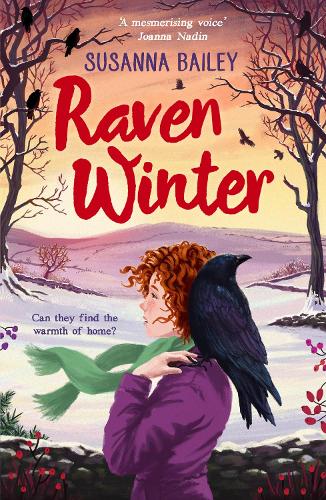
#KeepKidsReading Book Review – “Raven Winter” by Susanna Bailey

Having another #KeepKidsReading week on my blog has given me an ‘excuse’ to read a book which has been on my TBR pile for some time. It also fits perfectly with my reading challenge this year, which is to pick a long-ago purchased but so far neglected book off my bulging shelves. The first book of the year that I chose was Hilary Mantel’s early novella Fludd, a review of which I’ll post next week, but I wanted to tell you this week about Raven Winter. I picked this up when it was first published early last year, but somehow have never got to it. I’m so glad I did! 

The main character and narrator is Billie a twelve or thirteen year-old girl who lives with her ‘Mam’ and Mam’s boyfriend, Daniel in a flat somewhere in north east England. Billie moved to the flat relatively recently, having had to leave their previous home after her father went to prison for fraud against his employer. Billie has also started at a new school and is finding it difficult to make friends. People seem to know about her family situation and she has experienced some bullying. 

The other perhaps somewhat darker cloud in Billie’s life is Daniel, who is a dark and brooding presence throughout the book. He is a dominant and controlling character and there are strong suggestions that his intimidation of Billie’s mother is both physical and psychological. Billie cannot understand why her mother not only tolerates Daniel, but actually wants Billie to like him, welcome him as a substitute father. Billie misses her own father terribly; they were very close and shared a passion for nature and particularly birds. It is clear that there are secrets, that Billie has not been told the full story of her father’s ongoing absence, why they have lost contact with him, have not visited him for many months, and, now that his three year sentence has come to an end, why they are not reunited as a family.

Billie wants to run away. She sets out to do this one day, fleeing to a wild woodland area close to her home, Tanglewood, which her mother has warned her to stay away from. There, she finds an injured young raven and decides to take it home to nurse it back to health. Her relationship with the raven reminds of her father and brings her comfort. 

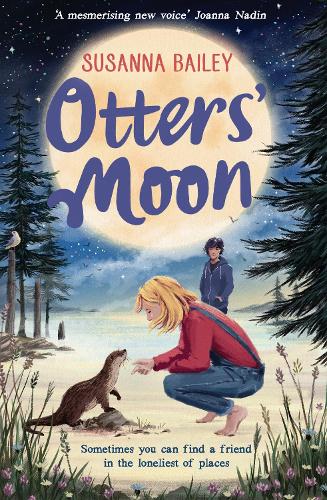
Raven Winter  is Susanna Bailey’s third book exploring the therapeutic relationship between animals and children who are facing challenging circumstances. Her first novel Snow Foal dealt was about a child going into foster care, and her second Otter’s Moon deals with divorce and relocation. Bailey clearly draws on her real-life experiences in the field of social work for her subjects. Raven Winter does suggest domestic abuse and a parent who is absent due to being in jail – tough topics – but I think it is done sensitively and gently. It is ‘middle-grade’ fiction after all, for the 8-12 age group. The bigger theme of the book in my view though is how children can find comfort in nature, how non-judgmental animals can help a child who feels alone, and how caring for someone or something outside of themselves, can be cathartic.

Bailey creates a lovely engaging character in Billie and the book is written very much from her point of view. To that extent I think it will encourage empathy in young readers. I also liked the way that the author ties up the ending. Even a few pages from the end it is not clear how things will turn out, so it will keep children interested. All the loose ends are tied up, but not in a schmaltzy, happily ever after way, rather in a realistic way that bears greater resemblance to the complexities of real life. It does end with hope, however, and that is the main thing needed in these sorts of books when they are aimed at this age group.

Recommended, and if Bailey’s other books are this good, they will provide ample material for children who enjoy this one.