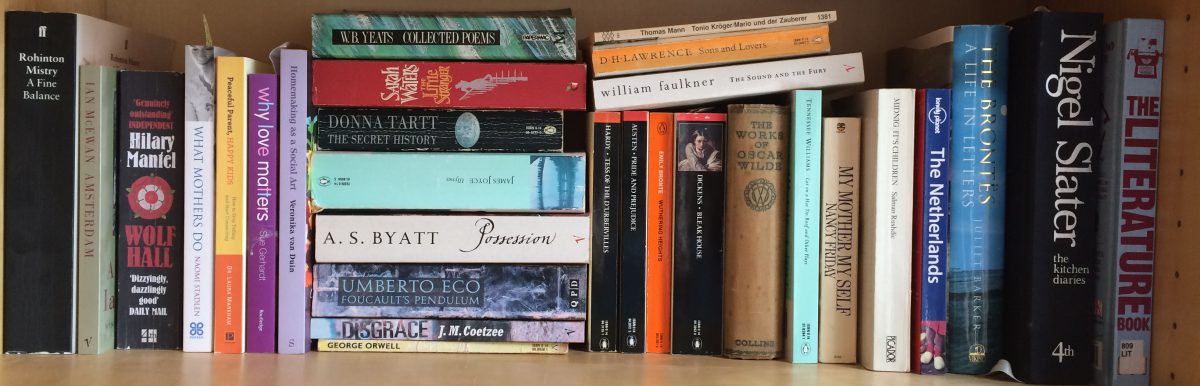
It was back in the summer that I published my first post in what was intended as an occasional series on building a library of books for your children. Last time I focussed on the 2-5 age group, mainly picture books and mainly classics. This time I am moving on a little to the 4-7 age group, ie Key Stage 1. This is the age when children are just learning to read, but they still value and need to be read to – the phonics and early reading books are much better than they used to be (I loved reading the Oxford Reading Tree Biff, Chip and Kipper books that my kids brought home from school), but they are designed to expose your children to vocabulary, word order and sentence construction – they are tools designed specifically to aid learning; good children’s literature, on the other hand, fosters joy, builds a bond between child and reader and should inspire.
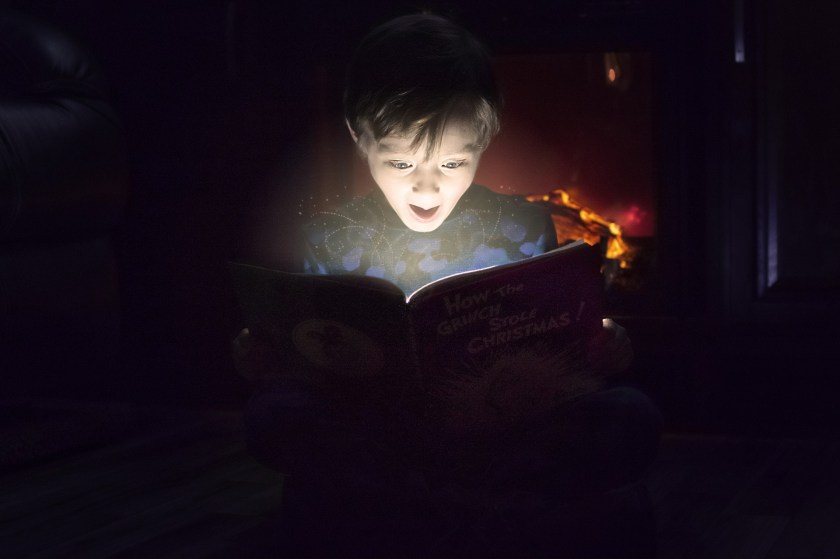
There are some good chapter books now for six and seven year olds: precocious readers who benefit from the challenge of something more complex, but still need age-appropriate themes and subject-matter. I would argue, however, that at this age pictures are still vitally important. Pictures help to build vocabulary organically, they give the child something to look at and focus on whilst listening, as they may not be able to read all of the words themselves, and they help the child develop their imaginative skills as they look at the visions created for them by authors and illustrators. For this age group, the quality of the illustration is just as important as the text; can you imagine AA without EH, or Julia without Axel?
So, for those of you looking to build a library for the child or children in your lives, here are my top ten suggestions. The list is (absolutely!) not exhaustive of course, but these ten will provide the foundation for something wonderful. Nearly all of the books below are just one in a series or the same authors have written similar titles that you can add to the collection.
- The Tale of Peter Rabbit by Beatrix Potter (plus the other 22 books in her classic collection!)
- The Mr Men and Little Miss series by Roger Hargreaves
- Winnie-the-Pooh by AA Milne
- The Cat in the Hat by Dr Seuss
- The Story of Babar by Jean de Brunhoff
- Finn Family Moomintroll by Tove Jansson
- Room on the Broom by Julia Donaldson and Axel Scheffler
- Look Inside – Things That Go by Rob Lloyd Jones and Stefano Tognetti
- The Snowman by Raymond Briggs
- The Jolly Postman by Janet and Allan Ahlberg
I would love to hear your suggestions of books for this age group, particularly any that you have enjoyed sharing with the little people in your life.
I would love to hear your suggestions of indispensable titles for 4-7 year olds.
If you have enjoyed this post, I would love for you to follow my blog. Let’s also connect on social media



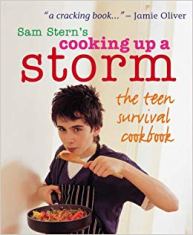 Cooking Up a Storm: The teen survival cookbook – Sam Stern & Susan Stern
 We are staying in Cancale, a smallish coastal town in Northern Brittany, arriving here on the overnight ferry from Cork to Roscoff, which was very pleasant indeed – good, reasonably-priced food, decent cabins and plenty to do.
 I’ve been unusually restrained with my holiday library this year, just the three books: Harvesting by Lisa Harding, a harrowing account of child prostitution, child trafficking, abuse and neglect, Death on the Nile, by Agatha Christie, the August choice for my Facebook Reading Challenge, and The Last Runaway by Tracy Chevalier, one of my book club’s summer reading titles.


 I am a firm believer that all reading material is good, just keep them at it, and adults should not judge if their kids want to read comics and picture books when they might think they ‘should’ be reading something more mature. If this sounds like a child you know, I’ve found a great little series they might find interesting. Hamish and the Baby Boom by Danny Wallace and illustrated by Jamie Littler is the fourth book in a series. Hamish Ellerby is the central character, a 12 year-old boy and leader of the Pause Defence Force in the town of Starkley. Hamish’s father is some sort of secret agent, ever engaged in defending earth against the evil Scarmash. Hamish has inherited some of his father’s abilities and leads his small group of friends in the PDF against strange and hostile happenings in the town of Starkley.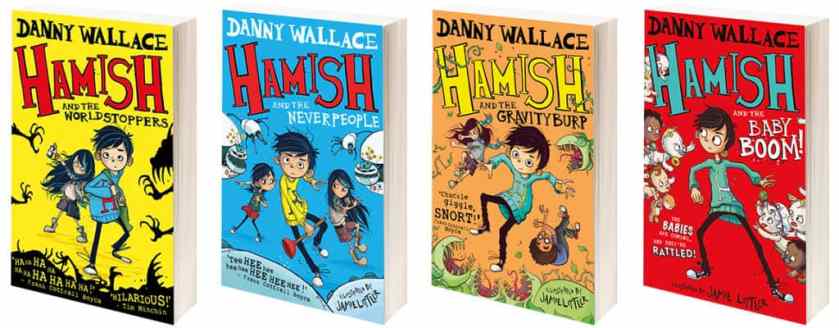
 I am a passionate supporter of public libraries, it’s where my reading journey started as child and I have never lost my fascination with them. With so much pressure on local council budgets, our libraries are under constant threat of closure. Many have already succumbed. Those that have survived have had to innovate, and this is great to see, becoming information and community hubs, putting on more and more events even becoming tourist information centres as well, but for me, their role as first-line guardians of our reading lives is foremost.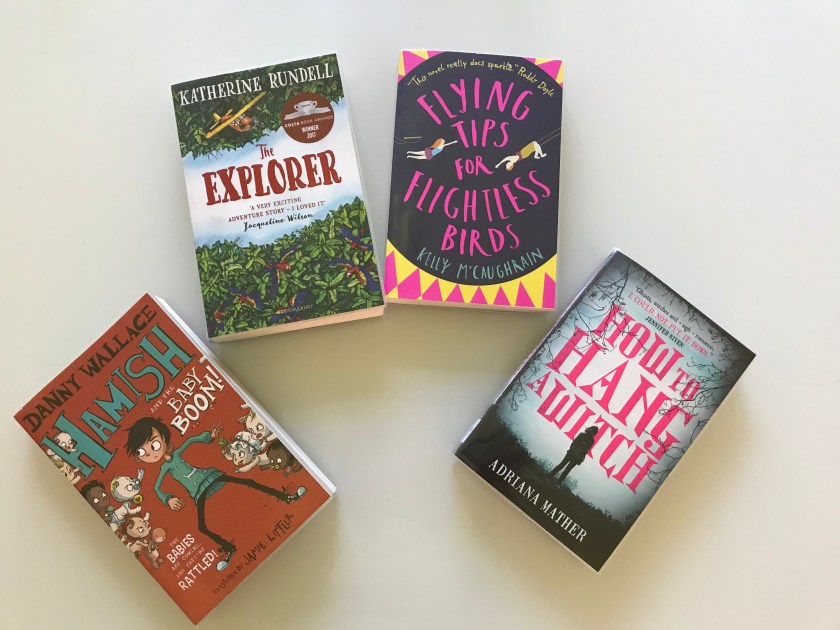
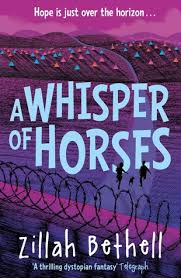 The novel is set in Lahn Dan, you’ll recognise the pun, but the place described in the book will be unfamiliar; it is practically a separate city-state within England, encircled by the ‘Emm Twenty-Five Wall’ that none of the inhabitants dare cross (told that there is only a deserted wilderness on the other side anyway). This is a time after ‘the Gases’ (a reference to climate change), the ‘Tems’ has deteriorated to a muddy flat and only the rich are able to live in the ‘crystal towers’ that afford them some natural light and allow them to live above the pollution layer. In a nod to Aldous Huxley’s Brave New World there is a strict hierarchy in the society: at the bottom are the Pbs, who do most of the work, then slightly higher up are the Cus, the professional classes, but true power lies only with the Aus. Give the child a prize who spots that these are chemical symbols and what this says about the social order! Lahn Dan is run by ‘the Minister’ a distant and slightly mythical figure, not unlike Big Brother, whose orders are carried out by Mordecai and his Secret Police. It all has echoes of 1984.
 The story begins near Aylesbury where the spivvy disgraced engineer Dr Absolom is trying to sell ‘mechanicals’. These are child robots which were initially created to perform tasks that society no longer wanted humans to do. We learn some vague details about how the experiment got out of hand when some rogue scientists tried to instil their creations with a soul. This was considered a step too far and laws were put in place to limit the capabilities of these creations, and, in particular, to forbid the building of adult-sized mechanicals. The environment we are observing, however, appears somewhat lawless, and it is clear that Absolom is operating on the margins and that there is a black market in mechanicals.
 This book is set in a familiar country (England) but in a future time where life has changed and the world is very different: bus journeys cost hundreds of pounds, many routine tasks and jobs are carried out (not very well) by robots and everyone carries a QWERTY, which it seems is some next generation pocket computer. Auden Dare is an eleven year-old school boy who lives with his mother in Forest Gate in east London. When we first meet him we learn that his father is away fighting in the war in Europe. Climate change has taken hold and water is scarce. Indeed, water, or the lack of it, seems to be the root cause of the conflict in which Auden’s father is involved. Auden has a condition called achromatopsia, which means he is unable to see colours, only shades of grey.
 Julia's books