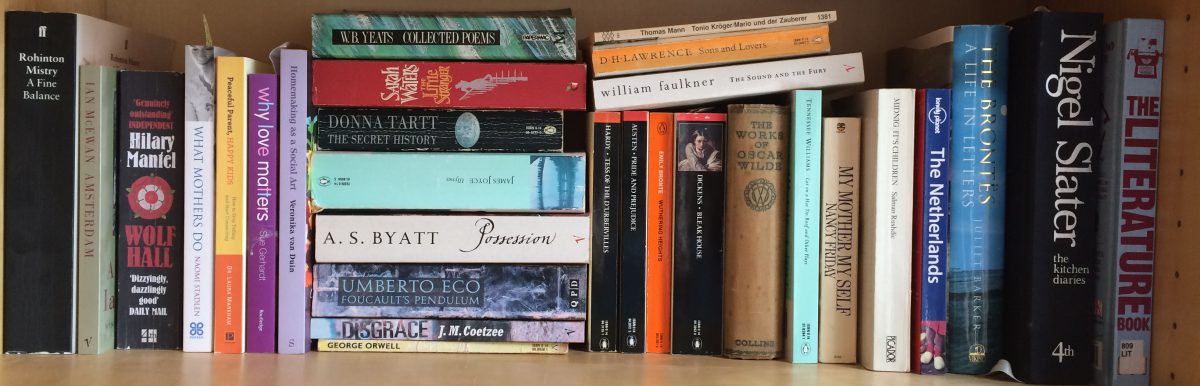
Last week I posted here about my July reading challenge, which was to go along to your local library and select a book. I couldn’t resist the appeal of three titles (as usual!) and found myself uncertain about which to tackle first (I decided on Evan Davis’s Post-truth: Why we have reached peak bullshit and what we can do about it in the end and I’m loving it!) This month’s challenge is linked with the annual Summer Reading Challenge aimed at primary-age children, which is launched in libraries this weekend. So, if you have children or grandchildren it’s a cheap, rewarding and wholesome activity you can do with them.
 Children these days have so many distractions which can take them away from reading; they seem to be so busy with out of school activities, have more homework than ever before and, of course, there are the digital distractions…don’t even get me started. But reading is such an important activity for them:
- it supports their ability to sustain concentration, which, in a world of instant gratification and over-stimulation, is a crucial skill,
- it is an aid to relaxation, by providing downtime, taking them away from social pressures,
- it can help with their imaginative and creative development – good writers are usually good readers, and
- it helps their literacy skills – time spent reading may be just as if not more valuable then learning about the rules of grammar and sentence structure (IMHO!). And is far more interesting.
Reading takes kids into new worlds, it helps them learn to be alone, another important skill in building their mental health resislience, and it gives them access to experiences that they don’t have in real life. The beauty of the Summer Reading Challenge is that all books count, so if you have a reluctant reader, they can still get rewards for non-fiction, reference books, science books, there is no judgement of their chosen material. This year, there is also an online link where kids can sign up, create a profile, review the books they’ve read, and generally share their thoughts. They can do it all here.
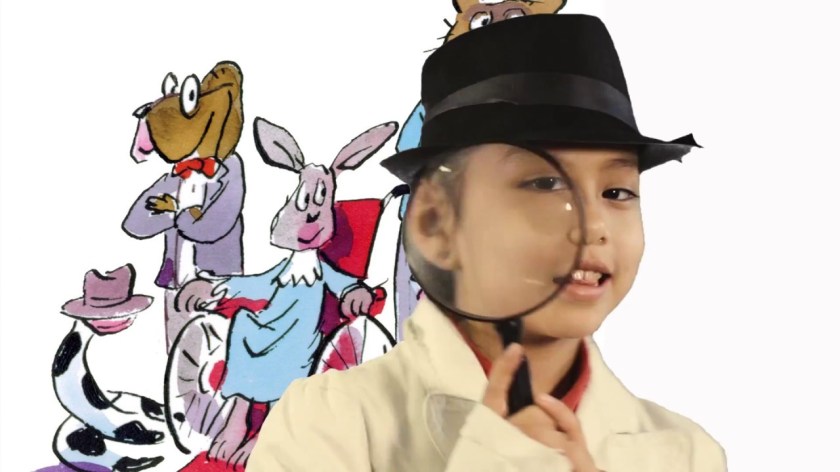
If you are reading this you are probably a keen reader yourself, so I don’t need to tell you about the benefits, of course. The trick is getting the reading habit embedded in our children’s lives from the outset, and that is where the Summer Reading Challenge is so good. This year’s theme is Animal Agents, a group of crime-busting creatures, beautifully illustrated by Tony Ross (of Little Princess fame). The idea is that for each book children read they get a smelly sticker and a clue that will help them solve a mystery.
So, if you’re kids have or are about to break up for the summer holidays and you’re looking for something to fill in the gaps, get along to the local library and sign up. This is my last year at primary school so I hope my 11 year-old will embrace it, even if it’s just for old time’s sake!
How easy do you find it to keep your children reading as they get older?
If you have enjoyed this post, please sign up to follow my blog and let’s connect on social media.
 Many households up and down the UK will be like mine this summer – tiptoeing around a teenager revising for their exams. In my household, my eldest is doing his GCSEs so this is our first experience of exams that really matter. It’s so hard for them and as a parent there is not a great deal you can do to help – which makes it hard for us too! At 16 they need to be working out their own best revision and study methods (definitely not the same as mine!) so although my heart is desperate to ‘help’ my head tells me that I need to step back and avoid interfering. Also, many of my son’s chosen subjects are areas I know very little about – Spanish, Russian – or have limited interest in – physics, electronics – or remember very little about – mathematics! So, beyond providing encouragement, food and drink, and making sure they’re getting enough sleep, what more can you do as a parent?
 Regular visitors to this blog will know that I am passionate about children’s literature. My children are part of the generation that grew up with Harry Potter. JK Rowling is one of my heroes, for a number of reasons, but primarily for all that she has done to get (and keep) children reading, particularly those who might otherwise not have done so. Harry Potter wasn’t the first literary character to bring wizarding and magic into children’s literary lives, however. The Snow Spider was first published 30 years ago and was a multiple award winner. It was originally published as a trilogy, but this anniversary volume has been issued as a stand-alone. I chose it for the book club I run at my daughter’s primary school.
 Julia's books