I’m travelling to Dublin on the ferry from Holyhead, north Wales as I write this, making our annual summer visit to see family and friends. I love Dublin and think of it as a second home, having visited the place several times a year for about two decades now. I haven’t seen all the ‘sights’, although Dublin Zoo, the art gallery, Powerscourt, and the Natural History Museum have all been well and truly ‘done’! When we visit we seem to spend much of our time just hanging out, visiting people, sharing meals, etc. For me, it’s only when you do that, after visiting a place so many times that you really get to the heart of it.
 It seems appropriate that I should be posting a review of Normal People this week, a book so very much about Ireland, the challenges and contradictions at the heart of a nation that has transformed itself in recent years. It is not just about Ireland, but about what it means to be young in Ireland and about class. It is also about identity and, in common with some of the issues faced in the UK and many other societies I am sure, the draw away from regional towns and cities, towards a centre, a capital, where there is perceived to be more opportunity, and what that means both for the individual and for society in the wider sense.
Connell and Marianne are two teenagers attending the same high school in Carricklea in the west of Ireland. Both are very bright and hopes about their future prospects are high, but that is where the similarities end; their lives couldn’t be more different. Connell is the much-loved only child of a young single Mum. The live together in a small house and Connell’s mother cleans for Marianne’s family. Although academically a high achiever, Connell still manages to be popular and admired. Marianne is much more of a loner and lives with her working Mum and brother (a threatening figure who becomes increasingly violent towards her). She is remote from her family, not well-liked at school, and has a spiky personality.
Despite their differences, Connell and Marianne develop a closeness which soon blossoms into an intense and sexual relationship. The author portrays skilfully the subtle differences in their perspectives, which will at times lead to difficulties of communication and understanding throughout their young lives and the ebb and flow of their relationship.
The pair both end up with outstanding exam results which means that both secure a place at the prestigious Trinity College, Dublin. We follow them to college and here their positions are reversed – it is Marianne now who finds her ‘tribe’ amongst the affluent, the elite, the middle classes, and Connell who struggles to feel at home, whose financial and social background contrasts so markedly with that of his peers.
Despite this, Connell and Marianne continue to have an on-off relationship for the duration of their university careers and beyond. At times their relationship is passionate and sexual, at others it is more platonic, mutually protective. But always it is intense, even where there is little contact between them, such as the period Marianne spends on a Scandinavian scholarship with the abusive artist she has for a boyfriend at the time.
It is a fascinating and compelling book, part elegiac romance, part social commentary, where there is very little in the way of plot, but an abundance of humanity that is acutely observed and intimately drawn. The book has rightly earned its young author widespread plaudits and praise and was shortlisted for this year’s Women’s Prize for Fiction. (The winner, An American Marriage by Tayari Jones, which I reviewed on here recently, was a worthy victor but I don’t envy the judges having to choose between these two outstanding novels.)
Normal People is a beautiful, clever book that will at times break your heart and at other times lift it, and I heartily recommend it. The only pity is that it’s relatively short!
Normal People has been widely read and reviewed – what did you think of it?
If you have enjoyed this post I would love for you to follow my blog. Let’s also connect on social media.


 There are of course, a lot of titles published in the Spring and early Summer, marketed specifically for the holiday reading market. I’ve been perusing the titles and these are the ones that have stuck out for me. The Music Shop by Rachel Joyce, is a love story set in the 1980s about Frank, a record store owner, and Ilse, a German woman whom Frank meets when she happens to faint outside his shop. It’s had good reviews and Rachel Joyce’s earlier novel, The Unlikely Pilgrimage of Harold Fry, did very well.
 Eleanor Oliphant is Completely Fine by Gail Honeyman is on my summer reading list. Set in Glasgow, it’s about the emotional and psychological journey of a young woman from shy introvert with a dark past to living a more fulfilling and complete life through friendship and love. I’m looking forward to it.
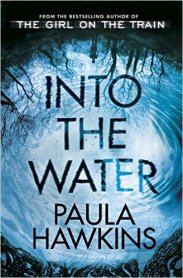 Paula Hawkins’s new novel Into the Water is everywhere, following the phenomenal success of The Girl on the Train which I’ve just finished listening to on audiobook. I had to find out what all the fuss was about! I enjoyed it, but I found most of the characters a bit irritating (that could be the influence of the actors reading, however) and, as I said, thrillers are not my favourite genre. Into the Water is another psychological thriller about a series of mysterious drownings. Like The Girl on the Train, I think, it’s as much about the internal dramas experienced by the characters as it is about ‘events’ so I’m sure it’s gripping.
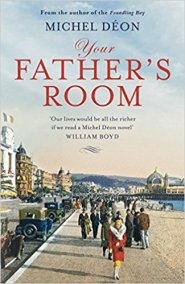 Finally, a little-known book that has caught my eye is Your Father’s Room by Michel Deon. Set in 1920s Paris and Monte Carlo (perfect if you’re off to France for your hols!) it is a fictionalised memoir based on the author’s own life. Looking back on his childhood in an unconventional bohemian family during the interwar period, the elderly narrator recounts how the events of his early life, including family tragedy, affected him growing up. I really need to read this; I’m writing a book myself partly based on my grandmother’s life in East London in the same period so I think I could learn a lot from how the author approaches this genre.
 It’s basically a book about sickness, and the various forms it takes; the sickness of the troubled central character, Yeong-hye, whose decision to renounce meat from her diet is the catalyst to a catastrophic sequence of events; the sickness of some of her relatives who simply cannot accept Yeong-hye’s decision or who use it to perpetrate their own base acts; and the sickness in the society which degrades and dehumanises Yeong-hye. The insidious and malevolent control meted out to Yeong-hye over a period of many years (a control that was legitimised by social and cultural norms) leads to her attempting to starve herself in a desperate attempt to assert her autonomy, and this has explosive consequences
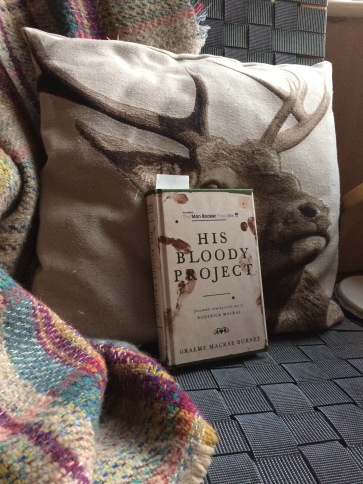 I have to say, though, that it’s a totally gripping story. Roddy Macrae is the 17-year old son of a crofter in a small village in the Scottish Highlands. The book begins with five short police statements from different witnesses who later testify in Roddy’s trial. They recount the incident, in August 1869, when Roddy murdered three other residents of the village: Lachlan Mackenzie, the village Constable and long-time foe of Roddy’s father, Mackenzie’s teenage daughter, Flora, and his young son Donnie. These witnesses observed Roddy walking through the village covered in blood and in addition to their account of the events they saw, they make observations on his character and background. Thus, there is little doubt that Roddy carried out the triple murder and the scene is set for an account of how these events came to pass.
 This is a novel about race in modern America where the white population seems to feel it has solved the problem of racism. Firstly, it abolished slavery and then set in place several pieces of legislation to reinforce racial equality. Unfortunately, this has not addressed a fundamental problem of disparity of outcomes between whites and blacks (or people of colour more widely), in academic achievement, income, social status, crime, you name it, the statistics paint a troublesome picture. The thesis of the novel is that, whilst white America is slightly uncomfortable with the facts as they stand, they can point to a number of black high achievers (not least the first African-American President) as evidence that they have done all they could. The under-achievement of the rest can be put down to, for example, their own fecklessness or problems of character.
 Julia's books