
Most of my reviews recently seem to have been of quite high-brow books. I wouldn’t want to give the impression that I’m any kind of snob when it comes to reading it’s just that it has all been quite literary of late. I’m currently reading Claudia Winkelman’s Quite in the crevices of my life (when the complex plotting of Tinker, Tailor, Soldier, Spy starts to make my head hurt!), my book club’s choice and which one of my friends described as ‘hubba bubba’! If you are old enough to remember what that is, well, it is describes the book perfectly! Look out for my review of that soon.

A novel I read recently, which was at the more popular end of the spectrum (no judgement intended), was Queenie, the debut novel by Candice Carty-Williams. It was shortlisted for a number of prizes, including the Waterstones Book of the Year and the Costa First Novel Award, was longlisted for the Women’s Prize last year and won in two categories of the British Book Awards in 2020 – Book of the Year and Debut Book of the Year. So, it was quite a sensation, and its thirty-two year old author seemed to be everywhere!
Rightly so, because it is a super book, very readable. In my head I thought it was a YA novel, the cover and the marketing scream YA, but it’s really quite adult; I’m not sure I’d be giving it to my 16 year-old for another year or so, for example. Lots of quite graphic sex.
Queenie Jenkins is a twenty-something Londoner of Jamaican origin and the novel begins with her break-up from long-term (white, middle-class) boyfriend Tom. He initially tells her it is a “break” but it becomes quite clear that he is simply trying to let her down gently. Or failing to be honest with her, depending on your perspective.
Queenie’s life soon spirals out of control. She has to move out of the apartment she shared with Tom into a much more shabby and smaller room in a house. She also finds herself engaging in a series of brief and bruising sexual encounters. Some are literally bruising – one affair with a junior doctor leaves her with a physical damage and a STD. Almost worse, however, is the work colleague who seems nice, approaches her with sensitivity and understanding, but, guess what? He just wants the sex and turns out to have…other commitments!
This is more than just a break-up novel, however. The book has been described by some as the ‘black Bridget Jones’, but it is far more complex than that. Queenie experiences gaslighting of the nastiest kind, and you can’t help but notice the racial dimension to that. But it’s not exactly a ‘race’ novel either…it is more complex than that too! It is a novel about sisterhood because it is friendship that gives Queenie the leg-up she needs to get her life back on track, her relationships with ‘The Corgis’ – the title of the Whatsapp group she invites her three closest confidantes to join.
This book is a good read. I don’t want to say ‘fun’ (like Bridget Jones) because it is at times deeply harrowing, although the author has a deft comic touch that quickly lifts you out of the gloom. It’s snappily written, with a style that a younger readership will recognise and engage with, but which is not too beyond the comprehension of this middle-aged reader either!
So, proof – I’m not just into classics and high-brow!
Recommended.
 What I liked about it, however, was less this grander aspect, but rather the quality of its story-telling. I must admit that 50 or so pages in, I was not overwhelmed! There are twelve characters in the book, all women bar one (who is trans), all black or mixed race. They are broken down into four groups of three, and each threesome is strongly connected in some way (eg mother/daughter). Each group is also connected with the others, even if only in a tenuous way (eg teacher and former pupil) and almost all are in some way connected to Amma, the first character we meet. Amma has written a play which is having its debut performance at the National and this provides the framework of the novel. Many of the characters are present at the penultimate chapter of the book, the after-party, where the differences between them and their lives are laid bare. This is interesting because the author is not only trying to draw out the similarities between the characters and their life experiences, suggested by their common characteristic of being mixed race and female, but she is also, I think, railing against the notion of such women/people being homogeneous; they are all far more than just their race or gender.
 This year, literary references are a little thinner on the ground, but I want to tell you about a couple that have caught my eye. My children were on their half term holiday last week and I took my youngest daughter (aged 10) to see Hidden Figures. It is based on a true story, but the film was inspired by a book of the same name by Margot Lee Shetterly. You will no doubt have seen the trailers, but, to summarise, it tells the story of three exceptionally talented mathematical minds whose contribution to the US space programme in the 1960s went largely unacknowledged…because they were African-American women working at a time when racial segregation was still in place. It is a remarkable story, very moving and very well told.
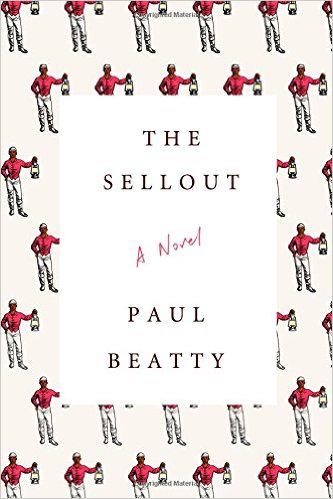 This is a novel about race in modern America where the white population seems to feel it has solved the problem of racism. Firstly, it abolished slavery and then set in place several pieces of legislation to reinforce racial equality. Unfortunately, this has not addressed a fundamental problem of disparity of outcomes between whites and blacks (or people of colour more widely), in academic achievement, income, social status, crime, you name it, the statistics paint a troublesome picture. The thesis of the novel is that, whilst white America is slightly uncomfortable with the facts as they stand, they can point to a number of black high achievers (not least the first African-American President) as evidence that they have done all they could. The under-achievement of the rest can be put down to, for example, their own fecklessness or problems of character.
 Julia's books