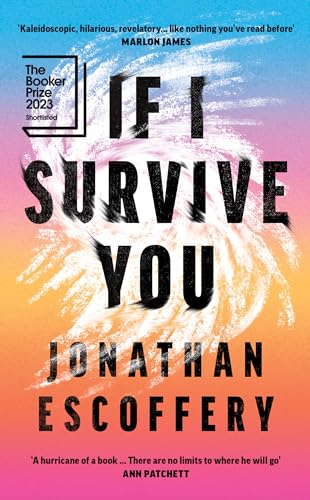
Booker book review #1 – “If I Survive You” by Jonathan Escoffery

If I Survive You  is Jonathan Escoffery’s debut novel, published earlier this year. Quite an achievement to be shortlisted for the Booker on your first attempt! It is described by the publisher as a series of linked short stories, following the fortunes of a family living in Miami. The parents left their native Jamaica when they were young, in the 1970s, when there was civil and political turbulence in the country, looking for a better life and a better future for their two sons, Delano and Trelawney. Each of the chapters follows a different character or stage of a character’s life. Trelawney’s story, however, makes up the bulk of the book.

The family is neither settled nor happy. The father, Topper, works mostly as a labourer in building and landscaping. They eventually own their own home and he runs his own small business, but the house is structurally unsound and in a state of gradual decay – a metaphor perhaps for the family’s fortunes generally. The parents eventually separate after many years of unhappiness, and Sanya, the mother, returns to Jamaica. The country is still, at that stage, troubled by unrest and political turmoil but she finds that preferable to life in the United States.

Delano is the elder of the two brothers. He aspires to be a musician, but when responsibility is foisted on him fairly early in life (his partner becomes  pregnant) he sets up his own landscaping business. Trelawney is very different to his brother and the two are at loggerheads for most of the book. Even as children they fought bitterly and were cruel to one another, not helped by the fact that their father seems to favour Delano. It is not clear why. When the parents separate, they each take one boy to live with them, and Topper takes Delano, making it quite clear that he does not want Trelawney, seems even to fear him somehow. Possibly because Trelawney has greater potential, is more academic and gets a college degree. It’s as if his father considers him better able to look after himself. Delano, he seems to believe, needs him more, but this creates a toxic environment around the relationship between the three men.

In spite of his education, Trelawney does not have it easy, however, and it is his story we follow most closely. He is mostly homeless, at times even living in his car, which he can barely afford to put fuel in. He works in various dead-end jobs until finally securing a position as the manager of a housing block for elderly people, where he is forced to do the company’s bidding, maximising revenue at the expense of the ageing and frail inhabitants. Trelawney is a young man who has done everything that has been asked of him to participate fully in American society and yet as a Black man he remains subject to casual racism and systemic discrimination. Even his girlfriend’s family, themselves Latin American immigrants, cannot accept him and are openly hostile. We learn that Trelawney is relatively light-skinned, which makes him an outsider even in the Black community – perhaps that is also why he is rejected by his father? He cannot find anywhere that he fits, a home, a sense of belonging. 

A further motif that runs through the book is the Hurricane Andrew disaster, one of the most devastating ever to hit Florida. It represents one of the actual events that citizens had to try and ‘survive’, but for Trelawney, his brother, his whole family and countless others, there are many other daily battles for survival.

This is a powerful novel in many ways – the characters, particularly the three central males, are well-drawn. The author writes about racism and discrimination in a way that only a person intimately acquainted with such experiences could. He also writes honestly and sympathetically about a deeply dysfunctional family, particularly where paternal relationships are concerned. For me, the weakness of the novel lies in the lack of a narrative thread. In many ways it is series of ‘shorts’; I am reminded of Bernardine Evaristo’s Booker-winning Girl, Woman, Other here, but that book was more successful, I think, because each of those stories could have stood alone. That is not the case with If I Survive You where each story only makes sense in relation to the whole. And yet, there is not a strong enough story, for me, to hold the whole thing together.

In writing this review, I have struggled to recall certain details, for example, when it is set (from Wikipedia I learn that Hurricane Andrew struck in 1992)  and the names of most of the minor characters. Beyond the profound sense of unease about injustice, racism and societal trauma, I find myself unable to answer the question about why this book should be a Booker-winner.

Recommended, but perhaps not heartily.

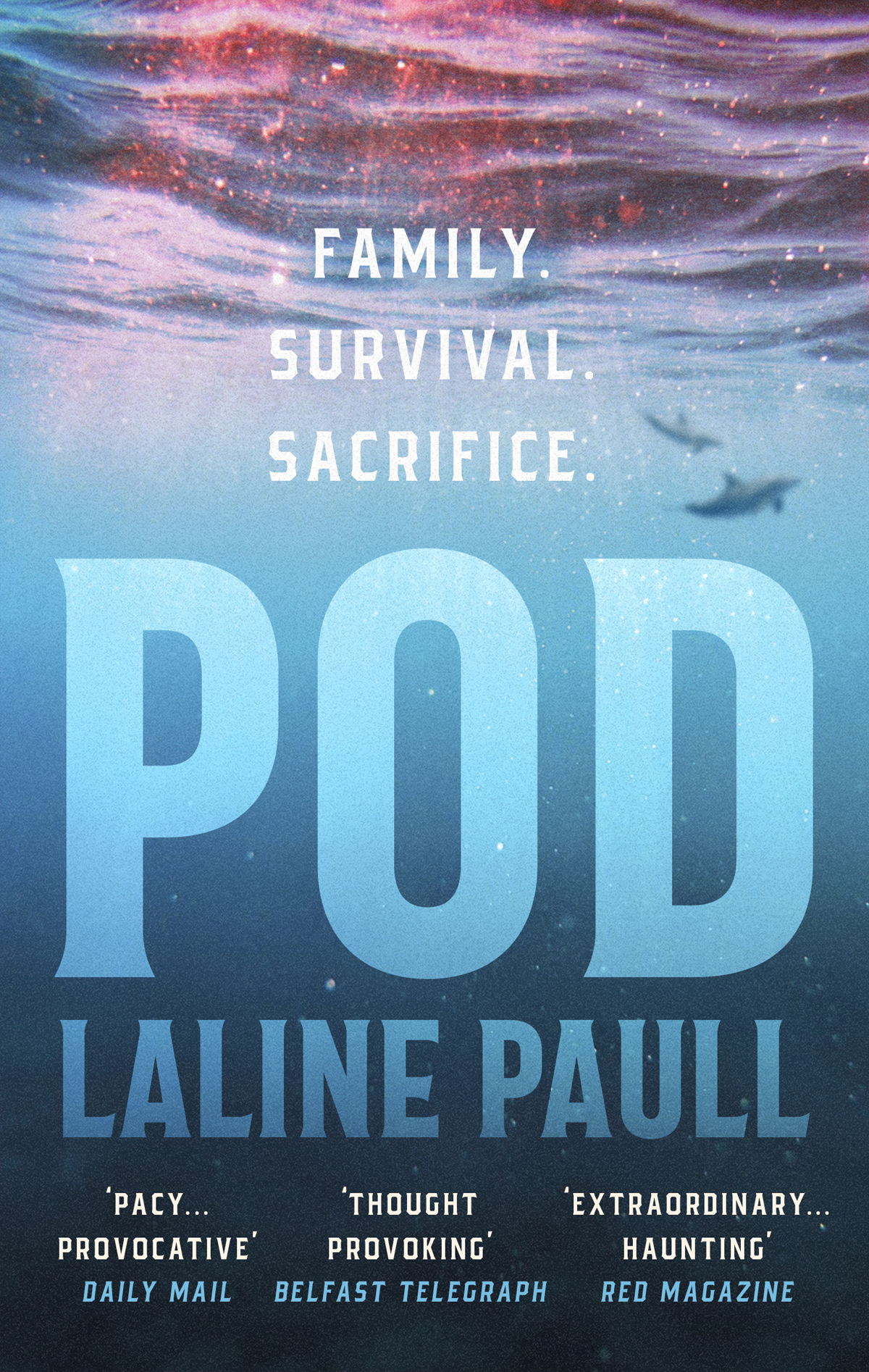
Women’s prize shortlist book review #6 – “Pod” by Laline Paull

I have at last completed this book, which is the final one I read on the Women’s Prize shortlist for this year. The publisher’s blurb describes it as “An immersive and transformative new novel of an ocean world – its extraordinary creatures, mysteries, and mythologies – that is increasingly haunted by the cruelty and ignorance of the human race.” Its main character is Ea, a dolphin who makes the difficult decision to leave her pod, believing that her disability (a form of deafness that prevents her from performing the special ‘spinning’ rituals unique to her kind) has made her responsible in large part for a tragedy that struck the pod and resulted in the death of her mother.

I was attracted by the theme of a marine world threatened and disturbed by the crisis facing our oceans. I hoped it might explore this profoundly important theme, one of the most critical issues facing the human race today, in a unique and innovative way. I thought it might be interesting to deal with it from the perspective of sea creatures and was curious about how the author might deal with that without it becoming trivial or childlike. Well, the answer is that she introduces strong violence and an erotic dimension. The characters have names and they communicate. They also operate in communities and there are both inter and intra-species rivalries. The communities are ordered in hierarchies and often these hierarchies are brutal. In the pod of dolphins that Ea joins for example, or rather is captured and forced into, there is a strong male leader who has his own harem, and rape and sexual exploitation are part of life for the younger female members. 

I cannot summarise the plot of the novel any further than this because, in truth, I’m not actually sure what it was all about! I have never watched Game of Thrones, but you would have to have been living under a rock these last few years to be unaware of it. Well, I think Pod might be a literary, dolphin version of Game of Thrones! I dislike writing negative reviews, I’d rather not post a review at all (except I am also a completer-finisher and have to finish all six reviews of the Women’s prize shortlist!), but I am afraid I really struggled to finish this book. Yes, it is well-written, yes it is imaginative and yes it is certainly unusual, but for me, it just didn’t work. I didn’t really care for any of the characters, mainly because I didn’t feel I could connect with them. They were animals, but they spoke, but some understood each other and others did not. It felt incoherent, confused and confusing. The descriptive passages, such as the accounts of rape and of full-blown underwater battles, were powerful in their way, but I was unable to see these in my mind. I struggled to envision the world the author was trying to create.

I wonder if science fiction fans might find this book more engaging than I did. Perhaps followers of this genre might be better than me at stretching credulity, buying into a landscape completely unfamiliar. I’m not sure. I have read science fiction that I felt was more successful than this novel. 

I’d be keen to hear from anyone else who has read this book, would love to hear your views, because I really feel like I have missed something with this novel. I did not read it consistently, which was perhaps part of the problem and perhaps why it felt inconsistent. But unfortunately, I did not feel motivated to read it, it just did not capture my interest. I was relieved to get to the end! Hmm, such a shame when a book does not work for a reader.

Book review – “Old God’s Time” by Sebastian Barry

I have been an enthusiastic follower of Sebastian Barry for a few years now. I love his work and I have heard and watched a number of interviews with him and he comes across as a wonderful man too – humble, compassionate, witty and someone who even despite his immense and widely acknowledged literary prowess does not take himself too seriously. There are a couple of his novels that I have still to read, but I was very excited when Old God’s Time was published earlier this year and received strong reviews.

It is not like any of Barry’s other novels that I have read. It bears his trademark command of prose, his profound empathy, particularly for those in their dying years, and his extraordinary ability to capture the unique spirit of Ireland – the light, the landscape (even this relatively urban one) and a particular perspective on the human condition. This novel is set mostly in the present day in Dalkey, a small coastal town not far from Dublin. Tom Kettle is our main protagonist, an ageing retired detective, living alone in an apartment in a converted mansion, who is contacted by his former boss for assistance in the unsolved suspicious death of a priest. Another priest has made some allegations about the incident, which occurred many years earlier, that the force now needs to follow up. Tom was involved with the earlier investigation when he was still working. 

Tom is treated respectfully by the two young officers who come to interview him and by the former boss himself when Tom is invited to the station to provide a DNA sample, just to ensure they are following all the correct procedures. The contact throws up a lot of painful history for Tom. We learn that he adored his late wife June, herself a deeply troubled woman, and that they had two children Winnie and Joseph, also troubled, but for different reasons. Tom reflects on how June came into his life, the things they had in common and the experiences she had as a child in the care of the Catholic church that he would never be able to relate to. Suffice it to say that the church does not come out well in this novel.

As Tom’s introspection goes to deeper and ever darker places, elements of the family life he shared with June and the children are gradually revealed, both the good and the bad. He reflects candidly on his police career and concludes that perhaps it took him away from his family in ways that caused later troubles. But he was simply a man trying to do his best. 

This is in many ways a simple book, lacking the complex timelines and plotting of some of his other works. But in other ways it is a very profound novel about an ordinary man looking back on the events of his life, the joys and the heartbreak, as the past comes crashing in on him with a dramatic denouement. 

This book was longlisted for this year’s Booker Prize, but, sadly, did not make it to the shortlist. It is, however, a ‘Highly recommended’ from me. If you are familiar with Barry’s work, you might find this one surprising. 

Booker Prize shortlist 2023

For me, few things herald the arrival of autumn in the literary sphere more than the announcement of the Booker Prize shortlist, one of the world’s foremost literary prize for novels written in English. For a few years now I have attempted to read my way through the shortlist and predict the winner ahead of the awarding of the prize, which is usually sometime in October. It generally works out at one book a week, which for me, in the last couple of years has been a tall order. I never usually manage to read all six books on the shortlist in time; I think my best performance to date has been about five. For some reason we have been given a little longer this year – the winner of the Prize will be announced on 26 November, well over two months from now – so I feel I am in with a fighting chance!

I did not agree with the judges last year – the winner, The Seven Moons of Maali Almeida by Shehan Karunatilaka, was among my least favourite on the shortlist. I am not familiar with any of the authors on this year’s shortlist. Facts I have gleaned about the shortlist are: there is a two-thirds/one third gender split (guess the proportions); half the authors are called Paul; there is one very long and one very short novel; half the novelists are north American, one is African, and the two Europeans are both Irish!

I am not familiar with any of the shortlisted authors. I was disappointed not to see Sebastian Barry’s Old God’s Time make the shortlist, having been on the longlist. I have just finished that book so look out for my review soon. I also wanted to see Ayobami Adebayo’s A Spell of Good Things make the shortlist as my book club loved her 2017 novel Stay With Me. However, that is the Booker – it never fails to surprise or to be bold and brave and not follow the crowd.

I’m going to kick off my reading marathon with Jonathan Escoffery’s If I Survive You and build up to Paul Murray’s The Bee Sting, which at 656 pages represents the greatest threat to my not completing the shortlist!

Ready, Set, Go…

Women’s Prize book review #5 – “Demon Copperhead” by Barbara Kingsolver

I had a strange reading summer – rather than go sequentially through the various titles I planned to read, I was juggling half a dozen or so simultaneously. It sort of worked – I had different books for different moods – but it meant that it took me a long time to get through each one. Hence, it’s taken me a while to get through all six books on the Women’s prize shortlist. Demon Copperhead felt like a fairly constant companion. I listened to it on audio and it’s long. But that was okay, because it’s stunning and I didn’t want it to end. You know when you get one of those books that you grieve for once the reading experience is over? Well, Demon Copperhead was one of those for me. It’s a well-deserved winner of this year’s Women’s Prize for Fiction, a stand-out piece of work in what was a very strong field. This was my penultimate read from the six shortlisted titles so I hadn’t read it when it was announced as the winner.

Demon Copperhead is a modern-day re-telling of the Charles Dickens classic David Copperfield. The broad plot of that novel, as you may be aware, is that we follow our hero from infancy to maturity, from inauspicious beginnings, fatherless and later orphaned. David is sent to various schools and institutions where he is treated badly, but somehow survives due to his own determination and intelligence. David marries early, but his young wife dies soon after. Only then does he realise his love for the daughter of one of the few benign guardians in his life.

Barbara Kingsolver turns this Victorian bildungsroman into a story of a modern American tragedy setting her novel in Virginia, one of the most deprived and left-behind parts of the United States (and where she has made her home). Demon lives with his drug and alcohol addicted mother in a trailer, his father having died before his birth. The trailer is on land owned by the Peggot family, whose son ‘Maggot’ is Demon’s close childhood friend. The Peggots take Demon on a short break to visit their daughter June in Tennessee, one of their few children who has made something of herself and therefore a rare role-model for Demon. On their return home, Demon finds that his mother has married her cruel and violent lover Stoner. 

Demon’s mother relapses and he is sent to a foster-carer, a tobacco farmer whose motives for fostering are dubious at best, though it is convenient for the social services department to overlook this because he takes on their most difficult to place cases and has several other teenage boys living with him. After the death of his mother, Demon is sent to a different foster family, the feckless McCobbs who have entered into fostering merely to obtain income to meet their significant debts. They fail to meet Demon’s most basic needs for food and clothing and force him to sleep on a mattress in their laundry room. Eventually, Demon decides to run away from the McCobbs and finds his way to his paternal grandmother’s home, a woman he has never met. She undertakes to ensure he is cared for, however, and arranges for him to live with the husband of one of her former foster-children (who died of cancer) and his daughter Agnes.

Demon finally seems to have found himself in a good situation with decent people who care about him…but we are only halfway through the book. Hard to believe, but the worst is still to come. There have been hints throughout of what is to befall our hero: his mother’s addiction problems, the drug-dealing of the much-admired leader of boys at the tobacco farm, ‘Fast Forward’, and the portrayal of a certain hopelessness about life in this part of the country. Demon will inevitably become sucked into what is surely one of the most heinous scandals perpetrated by the pharmaceutical industry, the oxycontin crisis that continues to wreak havoc and destroy lives on an industrial scale in parts of the USA. 

The story continues, darkens further. It is not a read for the faint-hearted and yet you cannot stop because as the reader you have become invested in this powerful central character, our narrator who speaks directly to us. We feel his pain. 

Kingsolver follows the plot of David Copperfield faithfully, keeping many of the names and adapting others, the cleverest for me is U-Haul, the modern-day Uriah Heep who Kingsolver imbues with similarly odious characteristics. It is heartbreaking to think that things we thought belonged to a past century, cruelty and neglect towards children, the suffering of people born poor, are still with us.

Taking on a re-telling of a book like David Copperfield, considered by many to be Dickens’s finest novel, was an act of awesome ambition but Kingsolver has accomplished her task with aplomb and created a true tour de force of a novel.

Highly recommended.

#KeepKidsReading book review #3 – “Quiet Storm” by Kimberly Whittam

For my final #KeepKidsReading book review I would love to share with you a really wonderful book by a debut author, published by Usborne, who also happens to be local to me – Manchester based. Kimberly Whittam is a school teacher who has written a book for and about quieter shy children:

“Children who don’t raise their hand in class even though they know the answer, who don’t join in class discussion even though they’ve got something to say and children who are so, so talented and want to try out for the school play or join the school sports team and who are just too afraid to join in.”

Kimberly Whittam https://youtu.be/I8gtYq9zXu8

Many of us will recognise this child – that was me and it has at times been my own children, and certainly many children I know. Everyone is encouraged now to be loud and proud, to speak their truth and not be afraid of offending anyone, nor crave to be liked. But too often the people who say this have no idea how agonisingly difficult that can be. They were not “that” child. 

Storm Williams is twelve years old and in year seven at Daisy Mill Academy. She likes to keep a low profile and has clearly found settling in very challenging. Her best friend from primary school, Zarrish, was placed in a different form, leaving Storm feeling bereft, and she lives for the lessons where forms are mixed, such as PE, and they can be together. To make matters worse, Storm’s elder brother Isaiah is in year eleven and is an outgoing high-achiever, Head Boy and heavily involved in extra-curricular activity. All the teachers refer to Storm at “Isaiah’s little sister”; she has a lot to live up to. At the start of the book, Storm’s family faces a domestic drama – kitchen renovations lead to a burst pipe which makes their house uninhabitable – and the family has to move in with Storm’s grandma. 

It is during one of the PE lessons that Storm finds she has a previously undiscovered talent that she enjoys. The group begins athletics lessons and Storm finds that she is a very fast sprinter. The PE teacher encourages her to attend athletics practice and tells her he wants her to participate in an inter-school competition. The thought of going alone makes Storm feel queasy, but she decides that she will do it if her friend Zarrish comes along too. At first Zarrish says she will, but lets her friend down. Zarrish has become increasingly involved with a new girl at school, Melissa, who she was initially asked to ‘buddy’. But Melissa is sullen, manipulative and difficult and it soon becomes clear that she is pulling Zarrish away from Storm, persuading her into rule-breaking at school and deceitful and unkind behaviour. 

Storm finds herself in turmoil; lacking the confidence to participate in athletics without her friend’s support, but also finding for the first time that she excels at something and enjoys it, makes her reassess all of her assumptions about school life up to that point. 

Storm does find her voice and her niche and the difficult challenges she faces turn out to be a true turning point for her. She faces them with courage and with the support of her family and finds the strength of character to turn her back on what she knows to be wrong (treating people badly) and embracing doing what she loves, finding out a lot about herself along the way.

Storm is a lovely character and the situations she faces in this super book, the people around her at school, the teachers and the family situations (being mortified by her parents’ very public sense of fun!) will be familiar to lots of young people. 

Highly recommended for 9-12 year olds, or even a little older. 

#KeepKidsReading book review #2 – “The Dolls’ House” by Rumer Godden

I have a vague recollection of reading some books by Rumer Godden when I was a child, though unfortunately I cannot remember any specific titles. I was reminded of her a couple of years ago when reading fellow blogger Brona’s Books, who had a Rumer Godden reading week around the time of the author’s birthday. By coincidence I had happened to pick up an early edition of The Doll’s House in my local secondhand bookshop around the same time. Unfortunately, I did not get around to reading the book then and it has been sitting on my TBR shelf for too long. I decided to make it my ‘Off the TBR shelf’ book for June and now seems like a good time to review it as I am focusing on my #KeepKidsReading week. 

Rumer Godden was prolific and published over sixty books in a writing career that spanned seven decades. She wrote for both adults and children and also wrote poetry and non-fiction. A number of her books were adapted for film and television, most recently Black Narcissus which was released as a BBC mini-series in 2020. She was born in Britain but grew up in India where her father worked for a shipping company. 

The Doll’s House was Godden’s first book for children (published in 1947) and was turned into a film for children’s television in 1984. Godden wrote a series of books about dolls drawing parallels between their plight as passive and without agency, and the life of children, for whom adults make decisions, without necessarily consulting them. 

The Dolls’ House is a short book, easily consumed by an adult in one sitting, but I tried to read as a child would, or as a child might have it read to them, one short chapter at a time. The story concerns the fate of four dolls who live together as a family – Mr Plantaganet, Birdie, his ‘wife’, Tottie, a girl-child doll, and Apple, a younger boy-child doll. They are the toys of sisters Emily and Charlotte, and live in shoe boxes, but wish for a house of their own. Their wishes come true and the two sisters acquire an old Victorian dolls’ house which once belonged to their grandmother. With the help of a family friend they clean, repair and update the interior and the furnishings. Unfortunately, the dolls’ house comes with an unwelcome addition, a china doll called Marchpane, who is also very old. Marchpane would have been an expensive and precious doll in her day, unlike the Plantaganets, and is both haughty and cruel. When she is brought to live with them all she seems to cast a spell over the elder of the two sisters, Emily, and gradually, the Plantaganets are sidelined and ousted from the better rooms in their new home. 

On the surface, this is a simple story, but it explores notions of class, fairness, kindness and justice in ways that will be easily understood by children. It was a real throw-back reading this charming little book. The language is a bit old-fashioned, but I think it could still appeal to younger children, between about five and seven years old, perhaps shared with a grandparent, who will be able to bring their own memories into a telling of the story. 

“It is an anxious, sometimes a dangerous thing, to be a doll. Dolls cannot choose; they can only be chosen; they cannot ‘do’; they can only be done by; children who do not understand this, often do wrong things and then the dolls are hurt and abused and lost; and when this happens dolls cannot speak, nor do anything except be hurt and abused and lost. If you have any dolls, you should remember that.”

Chapter 1, ‘The Dolls’ House’ by Rumer Godden

#KeepKidsReading – the summer holidays are here!

It’s too long since I did one of my periodic #KeepKidsReading weeks, where I write about what is currently happening in the world of children’s literature and post reviews of kids’ books that have caught my eye.

The premise of these themed weeks is to try and encourage people to spread the word about children’s books and perhaps even consider reading some themselves! It’s always such a treat to open a book that has been written with children in mind – it’s as good a min-retreat! We bookbloggers love reading – of course we do! – but when you get caught up in your stats, your reading speed (that feature on the e-reader is surely a thief of joy!) and how your ‘number of books read’ on Goodreads compares to last year, you can easily forget that reading is, at its most basic, just pure pleasure.

Generation Alpha (ie people born between 2010-24), aka ‘kids today’, have more competing pressures on their time than ever and, I would argue, more things to worry about. Reading educates, creates bonds, promotes wellbeing and empowers – as adults, parents and grandparents it is imperative that we do not allow this simple but oh so valuable pastime to slip away from them.

So, this is my teeny tiny little personal campaign!

If you know any children and they have not yet signed up for this year’s UK summer reading challenge, then get them along to the local library or point them in the direction of the website (Gen Alpha is, of course, digitally native!). This annual initiative is run by The Reading Agency and delivered in partnership with public libraries (because even though they are all digital natives, they don’t all have the hardware at home). Each year, the challenge has a theme and this year it’s Ready, Set, Read, with a sporting theme.

Later in the week I will be posting a few reviews of book suggestions for children, so look out for those.

In the meantime, happy reading and spread the word!

#KeepKidsReading

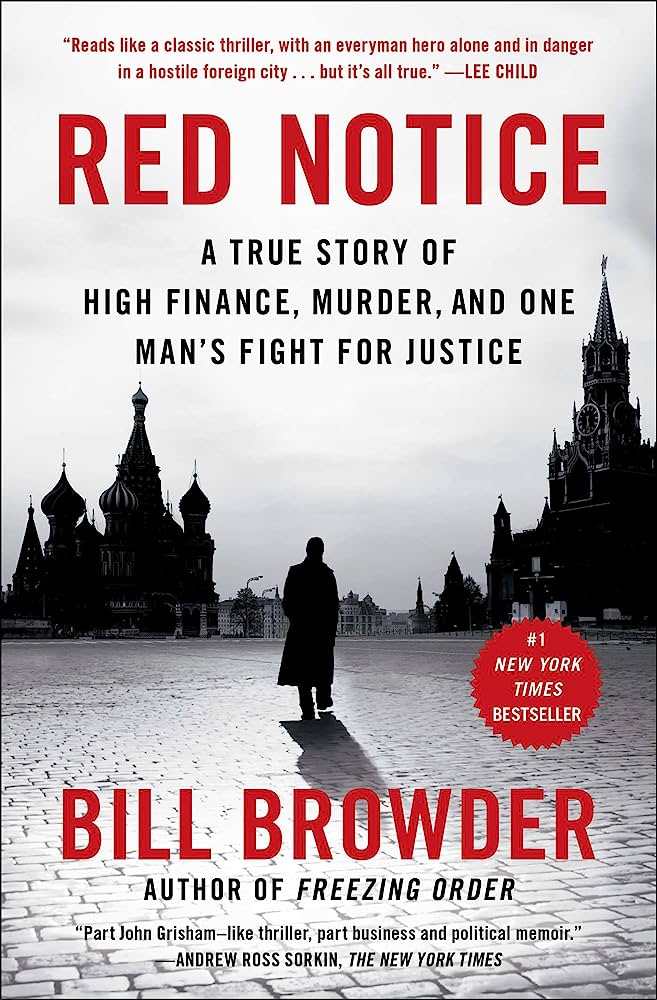
Audiobook review – “Red Notice” by Bill Browder

This was my book club’s June read. It wasn’t a title I suggested but I was happy to go along with it even though the blurb didn’t appeal that strongly. A true-life thriller about high finance and espionage did not seem like the kind of book I would normally read, but then isn’t that the joy of a book club, to make new discoveries? The book opens with the narrator (the author) giving a detailed account of his being detained at a Moscow airport without explanation, being held for endless hours without food or water. Attempts to contact friends, family, contacts in the British Embassy bear no fruit and finally his phone battery gives out. The intention of the Russian authorities seems to be to terrify their detainees, keeping them guessing about what might happen to them.

Finally, the author is allowed to leave and is put on a plane back to London, where he lives. This happened in the early 2000s, but there is a long history leading up to this event. Bill Browder then takes us on the long journey to explain how he came to be in this situation, beginning with his childhood in Chicago as the lowest-achieving child in a highly academic family. Young Bill clearly had something of the entrepreneur about him and despite his early difficulties in education (exclusion, boarding school, severe bullying) he eventually wins a place at Stamford business school. 

After completing his college education and a stint at a couple of consultancy firms he decides on an adventure, following somewhat in the footsteps of his eastern European grandparents. From an early age he shows clearly his entrepreneurial streak and a nose for an opportunity. He moves to Russia in the 1990s, as that country is emerging into the post-Soviet Union era. Browder begins to see the huge financial benefits that can be secured by being an early investor in the privatisation of national industries and he persuades a number of wealthy individuals to come on board with him. His Hermitage investment fund is extremely successful and he makes a lot of money, for himself and his investors. 

[Spoilers below]

Browder bases himself between Moscow and London, where he also starts a family, but it is clear that the pressures and demands of his lifestyle take their toll on his marriage. Eventually, he and his wife divorce – there is a lot of very personal material in this book too. Browder will eventually meet and marry a Russian woman with whom he has two daughters.

To support his finance business, Browder has to set up a strong team of lawyers and advisors, as well as colleagues with connections and insights into Russian society. In the time that Browder is operating in Russia, the country changes dramatically and a small number of people begin to make a lot of money – the rise of the oligarchs. Corruption was always part of the system, but now becomes endemic. As a foreigner (even worse, an American) profiting handsomely from Russia’s embrace of capitalism, Browder becomes a marked man. His life becomes endangered (hence the detainment at the airport) and he has good reason to believe that Putin himself is behind efforts to eliminate him. The ‘red notice’ of the title refers to the Interpol arrest warrant that the Russians tried to have exercised on him (which was eventually  withdrawn, much to the ire of the Russian authorities for whom this is a huge embarrassment). Browder realises that the Russians might attempt to get at him through his associates. He persuades most of them to flee the country, sometimes under cover, but one of his lawyers, Sergei Magnitsky, refuses. Browder tells us that he simply “loved his country too much”. Magnitsky is arrested, charged with trumped-up accusations of fraud, and imprisoned in a labour camp. His treatment there, including beatings, eventually leads to his death. 

This event shapes Browder’s life from then on and occupies the final third or so of the book. The author’s attempts to fight his friend’s case, and then to seek justice for him become the cause of his life. He devotes his time to raising awareness of human rights abuses in Russia and eventually succeeds in persuading the American Congress to pass ‘Magnitsky’s law’, with the help of key politicians such as the late John McCain, which permits sanctions against those guilty of human rights abuses, such as freezing of overseas assets and refusal of visas. Bill Browder continues to devote his life to persuading other countries to adopt similar legislation. 

This is a fascinating story and after my initial scepticism I have to say that I was completely hooked. In the context of Russia’s current behaviour it has extra resonance and gives an insight into the psyche of those in power in that country. I had heard of Magnitsky’s law, but had no idea of the background. Browder and his team were one of the first to use the then new platform YouTube to great effect as a publicity tool to raise awareness of their cause, when Sergei Magnitsky was still alive. The videos can still be seen on there and are powerful. Also, powerful, is the final chapter of the book, narrated on the audio version by the author himself. It is chilling when he tells us that if he is killed, we the readers will know who did it. 

A stunning and unique story, highly recommended.

Women’s Prize book review #4 – “Trespasses” by Louise Kennedy

The smart money was on Barbara Kingsolver to win the 2023 Women’s Prize for Fiction, announced a fortnight ago, and the predictions were correct. Kingsolver is the first person to win the prize twice (she won previously with her highly acclaimed 2009 novel The Lacuna). I have not yet read Demon Copperhead – when I decided on the order I wanted to read the Women’s Prize shortlist I decided to leave it till last since it is by far the longest of the six books. So it is definitely on my TBR list and I am looking forward to it even more now.

I did manage to get through four out of the six shortlisted books, which I am happy with, given that it has been a very busy couple of months. The day job has been quite demanding, as has home and family life so I’m impressed with myself that I even managed to get through that many! Audio did the heavy lifting here, and the fourth book, which I am reviewing here, was another that I listened to on audio. 

I don’t know much about Louise Kennedy, other than that her Twitter feed is witty and self-deprecating! Trespasses is her debut novel which gives me some hope given that she is around the same age as me I think! It seems her writing career took off relatively late in life and she spent most of her working life as a chef. Kennedy grew up near Belfast and her intimate awareness of the impact of the troubles on ordinary people in Northern Ireland in the 1970s, ‘80s and ‘90s is a powerful theme in this book.

The main character is Cushla, a young woman who teaches in a Catholic primary school. She lives alone with her widowed alcoholic mother and helps out at the family pub, which is now run by her angry and domineering brother. The regulars in the pub make up a motley band of locals, some political some not, and include British soldiers from the local barracks who come across as insensitive, cruel and exploitative. 

There are two main strands to the novel, connected with Cushla’s two jobs. In school, Cushla’s pupils report their daily news and the vocabulary of military events, hardware and death, are shocking when they come out of the mouths of, literally, babes. One particular pupil that Cushla connects with is Davy McGeown, bullied (as is his entire family) because he is the product of a ‘mixed marriage’. Cushla takes Davy somewhat under her wing, giving him lifts to and from school for example and becomes closely involved with the family, particularly after Davy’s father suffers a brutal beating at the hands of paramilitaries. 

The second strand of the novel is the affair that Cushla begins with Michael Agnew, a prominent Belfast barrister, who although he is a protestant, manages to remain a powerful neutral force, drinking in Cushla’s family’s pub, for example, defending young Catholic men who become embroiled in paramilitary activity. Cushla and Michael are instantly attracted to one another but their affair is scandalous on many levels – he is married, he is older than her, socially they are from very different backgrounds and, of course, they have different religious affiliations, though neither of them is particularly attached to their religion. Their affair takes place in secret, mostly at Michael’s ‘town’ apartment. His wife remains mostly at their family home and there are hints that she is an alcoholic; certainly he tells Cushla that his marriage is “complicated” and he cannot offer her any commitment. To help provide cover for the affair, Cushla starts going out with another teacher at school, Gerry, who, it later transpires, has secrets of his own. 

Kennedy writes beautifully about the tender and passionate relationship that Cushla and Michael have. She also writes beautifully about the love and care Cushla has for Davy McGeown and his family, and the complex relationship she has with her difficult and mentally unstable mother. This is a novel about people, about love, and about family, and yet Kennedy weaves in some profound truths about life in Northern Ireland at that time – the messy politics, religious prejudice, the dominance of the church (and alludes to abuse in the Catholic church) living in constant fear, and yet, also, fear becoming normalised. It is an account of a kind of hell, but one in which love can still thrive, like weeds popping up through cracks in concrete. 

I loved this book and it is a brilliant debut. The audio version was also brilliantly read by Brid Brennan. Highly recommended.