How often do you read a poem? The answer for me is rarely these days. It’s one of the reasons I wanted to include some poetry in my reading challenge for the year, to make myself sit down and do it. Why February? Well, firstly, it was Valentine’s Day last week, a time when one is more inclined, perhaps, to encounter a verse or two (or maybe even write one!) Secondly, and much more prosaically, it was half term, so I knew I wouldn’t get as much reading done as usual.
Well, I didn’t write my husband any poems (he was away, for goodness’ sake!), but I did read a few. The challenge was to choose a poem for each week and to read it every day for that week. In other words, four poems. The first one I chose was The Wild Swans at Coole by WB Yeats, a favourite of mine, having first got to know his work when studying for my English degree. It’s also a short poem, so an easy way into the challenge. First published a century ago (pure coincidence that I chose it), a year after the Easter Rising in Dublin, which affected Yeats deeply, the First World War was still going strong, and it was the year that he first married (at the age of 51), never having persuaded the real love of his life, Maud Gonne, to accept him.
“Their hearts have not grown old;
Passion or conquest, wander where they will,
Attend upon them still.”
It is a poem about ageing, about loss and grief and about the passage of time and Yeats’ search for true lasting beauty in a world where all about him was deteriorating and decaying. I had a different response to the poem, reading it now, aged forty-something, than I did in my early twenties, for obvious reasons.
I’ve always wanted to get to know Emily Dickinson (1830-86) better; she is a celebrated American poet, who lived as a virtual recluse in Massachusetts. She remains something of an enigma, not least because of the deep passions expressed in her poetry, so at odds with what is known about her life. A book was published in 2015 by Nuala O’Connor called Miss Emily, written from the point of view of an Irish maid who was taken on by the Dickinson household. I am keen to read this now, having dipped into the poetry.
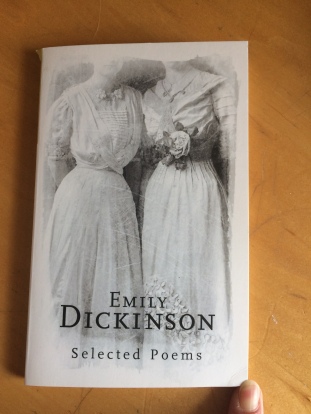
I picked up this lovely little volume in my local Oxfam bookshop (what wonderful work this charity does, not only in its programmes abroad, but in providing many towns with such a fantastic literary resource). From it I chose poem no. 249 (Dickinson did not give titles to her poems so they are known by numbers or first lines) “Wild Nights – Wild Nights!” Very appropriate for the week in which Valentine’s Day fell and fascinating when you think of the kind of life she led – a middle class spinster living in 19th century rural America.
“Wild Nights – Wild Nights!
Were I with thee
Wild Nights should be
Our luxury!”
For my final two choices I thought I’d better get a bit more modern, so I chose Jackie Kay from my other Oxfam purchase The Penguin Book of Poetry and Britain and Ireland since 1945. It’s quite an old anthology, published in 1998, so only one of Jackie’s poems is in there Brendon Gallacher. For my brother Maxie, but what a super poem it is. It’s about the narrator’s imaginary friend, a fantasy of a life much more exciting than her own. I had an imaginary friend as a child (Leda), through whom I had access to a much more colourful world, so can idenitfy with the theme! I also love listening to Jackie Kay, and here is a YouTube video of her reading this poem
The final poem for my challenge, which I shall continue reading next week, is Warming Her Pearls by the current British Poet Laureate Carol Ann Duffy. It is written from the point of view of a lady’s maid, one of whose tasks is to wear her mistress’s pearls before she goes out, in order that they are not cold on her skin. It has obvious themes about class but also has a deep erotic resonance – another one for Valentine’s Day perhaps!
I’ve enjoyed this month’s challenge much more than I expected and I have actually read more poems as a result than the four that I set myself. Poetry really is a pleasure and requires a lot less time commitment than a novel. It’s also incredibly relaxing! I would urge you to give it a try if it’s not your usual thing.
Do you have a favourite poem or poet?
If you have enjoyed reading this post and would like to received email notifications of future posts, I would love for you to subscribe to my blog. You can do so by clicking on the link below or to the right, depending on your device.
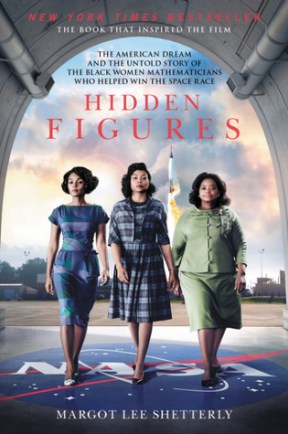 This year, literary references are a little thinner on the ground, but I want to tell you about a couple that have caught my eye. My children were on their half term holiday last week and I took my youngest daughter (aged 10) to see Hidden Figures. It is based on a true story, but the film was inspired by a book of the same name by Margot Lee Shetterly. You will no doubt have seen the trailers, but, to summarise, it tells the story of three exceptionally talented mathematical minds whose contribution to the US space programme in the 1960s went largely unacknowledged…because they were African-American women working at a time when racial segregation was still in place. It is a remarkable story, very moving and very well told.

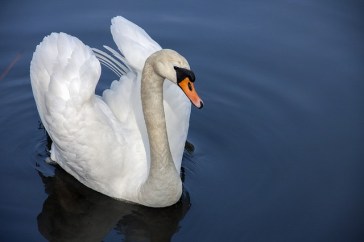 Now, dear reader, this blog is rather like the proverbial swan – whilst it may look smooth and effortless to you on the surface, the planning (reading, idea generation, social media, writing, etc) that goes on behind the scenes is like a military operation! Well, not exactly, but, you know, I do plan my reading, aim to bring you a book a week and try to blog twice a week. And this book has totally blown my schedule! You know what it’s like when you’ve got a busy day planned either at home or at work…and you hear the words “Mum, I’ve just been sick!” and you know your day is irretrievably banjaxed. Well, that’s how I feel.
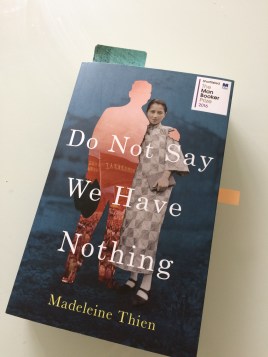 Do Not Say We Have Nothing, broadly speaking, is about China after the revolution, what it was like living under the dictatorship of Mao Tse Tung and about the hardships endured by the population, particularly by artists and intellectuals, in an era when culture was heavily proscribed. I have had a lifelong fascination with China, have read very widely about this enormously diverse and culturally rich nation, so I should be loving it. But I’m not! And I’m barely halfway through! I took a break from it this week and read Love, Nina by Nina Stibbe (which I’ll be reviewing soon), and that book is at the very opposite end of the literary spectrum – light, fun, quick to read. Many people probably would have given up by now. After all, a book, particularly a long one, is a huge investment is it not? I rarely give up on a book – I gave up on White Teeth by Zadie Smith a few years ago after a couple of false starts, but I have always planned to go back to it. My rationale for continuing with Do Not Say We Have Nothing is as follows:


 I’m not knocking either of these genres, I’m simply saying that literary non-fiction is a very tough genre to sell in. I read recently that the average non-fiction title in the US sells 250 copies a year (one for roughly every million people), or 2,000 copies over its lifetime. It makes you wonder why on earth you would write one! Many seem to be written by academics, journalists or people who have already established themselves in a chosen field and know they are writing for a particular niche. One striking thing about the genre, though, is that authors have a real passion for the topic, and the authenticity of the work is palpable.
 Julia's books