As I sat down at my computer to write this review, I was struck suddenly by the irony of being in lockdown as a result of a global pandemic, to write about a book whose title is the common term for an ancient disease. Scrofula (or mycobacterial cervical lymphadenitis to give it its medical name!) causes unsightly swelling of the lymph nodes in the neck which may burst to create open sores. It is an infectious disease, often associated with tuberculosis, which declined rapidly by the 20th century as more successful treatments for tuberculosis came on stream. It is still around today, mainly affecting immunocompromised patients, and there was a resurgence during the AIDS epidemic of the 1980s. Who knew?!
Scrofula became known as ‘the king’s evil’ because it was once believed that the touch of a monarch was enough to cure a patient of the disease. If only such treatment were enough for Covid-19. Although this book is not about scrofula directly, it opens in the Palace of Westminster where King Charles II is bestowing his ‘cure’ on a group of his disease affected subjects in a public ceremony.
 This is the third book in Andrew Taylor’s series of Marwood & Lovett novels. I have thoroughly enjoyed the first two books, The Ashes of London and The Fire Court and have listened to all three on audiobook. I love the narration of Leighton Pugh who is able to conjure the most amazing range of voices to suit the various characters. The fourth novel in the series, The Last Protector, was published earlier this month and I can’t wait to get on to that one now.
The book is set in Restoration London, in 1667, the year following the Great Fire (the first book in the series takes place during and in the immediate aftermath of that terrible event). In a further ironic twist for the times we are living in, let us not forget that the Great Fire immediately followed the plague epidemic of 1665-66 which is thought to have killed 100,000 people, or a quarter of London’s population at the time.
James Marwood is a Whitehall clerk, the son of a former Fifth Columnist, or traitor against the monarchy, who was imprisoned for his crimes. Marwood senior, a frail and senile character, was present in the first book, but died in the second, but the son is never quite free of his father’s reputation. Cat Lovett is the daughter of a regicide, a spirited and ambitious young woman with a passion for architecture, who, in the first novel was raped by her cousin, and, in fighting back, almost killed him when she poked his eye out. As a result she lives in hiding under an assumed name. It helps if you have read the first two books as it provides context and gives you an idea of the characters and their motivations, but it is not essential as the author brings in elements of the back-story.
Death and murder seem to follow James Marwood like a wasp to honey; when you are watching television shows like Midsummer Murders or Morse, you have to suspend your disbelief that so many suspicious deaths could occur in one small place, and it is rather like that with these novels! What I really like, however, is how the character of Marwood is developing, how his activity is drawing him ever closer into the inner workings of the royal court and therefore ever more entwined in the inevitable intrigue.
In this book, Marwood, who is in the employ of a senior Whitehall official and has gradually secured that man’s trust, is called upon to investigate a mysterious death at the home of Lord Clarendon, a relative by marriage of the king, but a man whose past has earned him many enemies at Court. By coincidence, Clarendon House is also undergoing building renovations which are being supervised by the architect James Haxeby, the ageing fiancé of Cat Lovett (masquerading as Jane Haxeby, the architect’s cousin). The dead man turns out to be Edward Alderley, Cat’s cousin and the man who raped her a year earlier, and Cat is about to be fitted up for the crime. When she then disappears, certain courtiers believe her guilt is obvious. Marwood believes Cat did not do it (though it must be said he is not 100% sure), and when sent in to investigate the circumstances of the murder he finds he is drawn into a much more sinister web of intrigue, of political turmoil among factions at Court and find himself in direct contact with the King himself, whom he has to inform about certain facts of the case which do not suit the accepted (and acceptable) version of events. For the first time in this series there is also a bit of love interest for Marwood, though I don’t want to reveal any spoilers!
Marwood’s fortunes and prospects are improving with each novel, but so is the degree of difficulty he finds himself in. This is a really fascinating series and I cannot wait to find out what happens to him in The Last Protector. The sense of time and place is powerfully evoked and it is clear that an impressive amount of research has gone into this and the other books in the series. These books are great to get thoroughly lost in, reading about a disease in the distant past may help you forget the disease we are facing in the present.
Highly recommended.
What kind of books provide escapism for you?
If you have enjoyed this post, I would love for you to follow my blog.
 The premise of the story is very simple: So-nyo is a wife and mother to five children, all of whom are now grown-up and living their lives in different parts of the country (South Korea). So-nyo lives a very simple fairly rural life with her husband at the family home, where there are many privations. The place is almost a throwback to a bygone era. So-nyo’s eldest son, Hyong-chol, lives in Seoul with his wife and family and it is while his parents are on their way to visit him (to celebrate the father’s birthday) that his mother goes missing; she was holding her husband’s hand on the busy underground station platform one moment, then she seemed to slip from his grasp and just disappeared into the crowd.
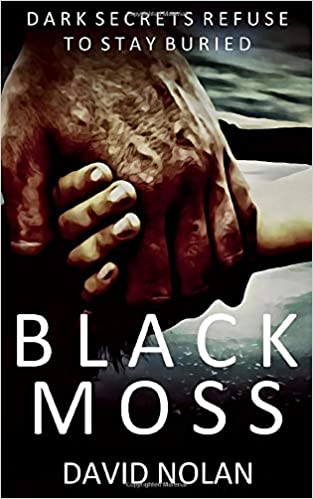 The book jumps back and forth in time between the present day and April 1990. In the present day we meet a middle-aged Danny Johnston, a long-in-the-tooth presenter of investigative television documentaries. He is past his peak professionally and clearly has some deep-rooted, well-suppressed emotional difficulties; the book opens with him crashing into a tree whilst drunk. He lives an empty life alone in London and is borderline alcoholic. His accident is well-publicised in the media and as a result he loses his television contract and is let go by his agent. With nothing to keep him in London he decides to return to the north, to Manchester where he grew up and where he began his career as a local radio reporter.
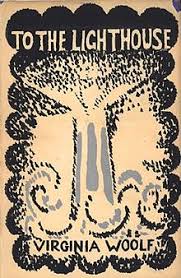 I had that very experience recently with my book club when we decided to read To The Lighthouse by Virginia Woolf. Some of us had read it before (though years earlier) others had not read it at all. But even those of us who had read it before could not remember very much about it! I read it when I was studying for my English degree 30 years ago; I would probably have got through most of Virginia Woolf’s books in a very short space of time, because that was what my degree entailed – reading lots and lots of books very quickly! I always remembered that To The Lighthouse was my favourite, but I could not honestly have told you what happens in it, except that the journey to the eponymous lighthouse was about something desired more than something fulfilled.
 Julia's books