Crime fiction – Val McDermid

Crime fiction is not one of my favoured genres, although whenever I have read any I generally enjoy it. I have really enjoyed dipping into Agatha Christie (I’ve reviewed Murder on the Orient Express, Death on the Nile and The ABC Murders on here and I really enjoyed Betty Boo by Argentinian author Claudia Pineiro, whose work I’d really like to get more into.

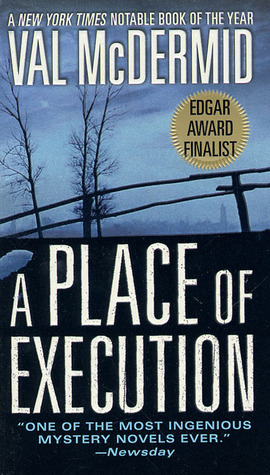
I have a lot of time for Val McDermid; she’s so interesting and entertaining, very funny when she appears on literary panel shows or festival events and just seems like a great ambassador for her profession. I decided over the summer that I really needed to sample some of her writing so I listened to the audiobook of A Place of Execution, one of her earlier works, published in 1999.

Review – A Place of Execution

The central character is George Bennett, an up and coming young detective in the Derbyshire force in the 1960s, somewhat disliked by a few of his colleagues due to his having received a university education, rather than coming up through the ranks. He is put on a very disturbing case involving the disappearance of a young girl, Alison Carter, from the small isolated village of Scardale. Many of the inhabitants of the village are members of the same family and the missing girl is in fact the step-daughter of one of the more well-to-do residents, Philip Hawkin, informally known as ‘the squire’ and very much considered an outsider. Although he has family connections to the village and inherited the manor house he now lives in with Alison’s mother Ruth, he grew up in the south and is not well-liked.

George and his assistant, Tommy Clough, encounter resistance in their investigations and George has a powerful sense of something not being right but he cannot put his finger on why. There is evidence of Alison having been harmed, perhaps sexually assaulted, but even though a thorough search of the vast rural area is conducted, no body is found and the case goes cold. This part of the novel is set in 1963 when the infamous Moors murders took place in Greater Manchester and there are references to the missing children in that case, as the respective forces share information to try and tease out common leads, but none are found.

Years later, journalist Catherine Heathcote, sets out to write a book about the famous unsolved case, and seeks out the now elderly George Bennett. As she digs deeper, however, she uncovers more than she bargained for, and when George suddenly writes to her and says that she must not publish and he can no longer cooperate with her in the work, she is dumbfounded.

I found this a brilliant novel and I was hooked. I could not work out what was going on and then at some point I thought I’d cracked the case, but I hadn’t! the plotting is superb. The characters are also all very authentic and well-drawn. It is no surprise to me that this book won awards and plaudits and was shortlisted for some prestigious prizes.

After reading this book, I encouraged my book club to read a Val McDermid novel. She has written so many so we searched for a ‘Top 10’ online and Past Lying was recommended.

Review – Past Lying

I listened to this novel on audiobook too and I found it to be much less interesting and somewhat more cliched. Published in 2023 and the seventh in McDermid’s Karen Pirie series (the name of the detective) it is set in Edinburgh during the Covid pandemic. Detective Karen Pirie is the head of the Historical Cases Unit at the Leith station, and is supported by two more junior colleagues, one of whom she now finds herself in a ‘bubble’ with in the apartment of Karen’s current boyfriend Hamish, who is spending lockdown in the Highlands making hand sanitiser.

Karen’s assistant Jason is contacted by a librarian at the national library who is in the process of cataloguing the archive of the famous now-dead crime writer Jake Stein, and has found an unpublished manuscript the circumstances of which bear a strong resemblance to an unsolved murder, that of a young student in Edinburgh some years earlier. With nothing better to do in the lockdown, Karen and her colleagues set about following up leads, going in whichever direction their investigative noses take them. They slowly uncover a complex story of literary rivalry and foul play, lust and betrayal. All perfect ingredients for a good crime novel, but for me there was something missing.

There are parallel stories in the novel too, as indeed there are in A Place of Execution, the personal lives of the characters. And Karen’s back story has some drama – her long-term partner was killed a couple of years before (in a previous novel, I believe) and she is still grieving, while working out what Hamish means to her. There is also a refugee story, another theme which appears in an earlier Karen Pirie novel, but the author does not draw out any connections between the case and this side story, which begs the question what then is it for? I wasn’t hooked in the same way as I was with A Place of Execution and when I thought I’d worked out what was going on I was eagerly awaiting a twist, but none came, so the ending of the book just felt anti-climactic.

I have found subsequently that other reviewers have been lukewarm about this book, so I’m puzzled as to why it was recommended as one of McDermid’s top ten; earlier books in the Karen Pirie series seem to have garnered much greater praise, such as A Darker Domain, published in 2009.

So, a mixed experience with Val McDermid. She has many more books in her oeuvre, and legions of her fans can’t be wrong, so I am sure I will trial a few more and hope I find them more satisfying, like A Place of Execution.
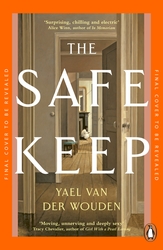
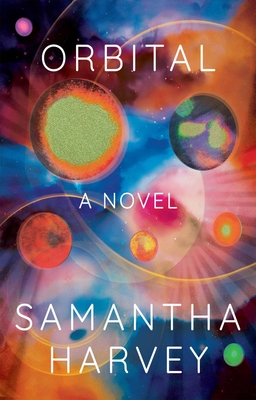
Booker shortlist review #6 – “The Safekeep” by Yael van der Wouden

Winner of the Booker prize 2024

This is my sixth and final review of this year’s Booker Prize shortlist. The winner was announced a couple of weeks ago so I didn’t quite get all my reviews in before the big day! The prize went to Samantha Harvey’s Orbital which is a worthy winner in my view and it is interesting that the Chair of judges said the decision of the panel was unanimous. It feels like it was a book for this moment, when we seem to be on the cusp of something big globally and could all do with stepping back and looking at the world from a different perspective. If only!

The Safekeep is one of the longer books on the shortlist and that’s partly why I left it until last to read. It is also the debut novel of its Dutch author (the first from the Netherlands to be shortlisted I believe) and is a very impressive piece of work. It is set in the rural east of the country, bordering Germany, in 1961 and the central character is Isabel, a young single woman living alone in the house formerly occupied by her and two brothers (Hendrick and Louis) and their mother. The mother is now dead and Isabel is still clearly deeply in grief. She is obsessive in trying to preserve the house and all its contents, even broken fragments of crockery that remind her of her mother. She creates an inventory of the contents when she believes that the maid Neelke is covertly taking items away. Isabel is an anxious and paranoid woman.

In many ways she has every right to be anxious; she sees herself as the only custodian of their parents’ legacy. Her older brother Hendrick escaped the small town as soon as he could, preferring to live in the city with his boyfriend, and the younger brother Louis is an irresponsible womaniser. He will also inherit the property when its official owner (Uncle Karel, who obtained the house for his sister during the war) dies. Isabel will be homeless without any means of supporting herself, a fact which they all seem to brush over. Isabel is lonely, isolated and grieving.

When Louis invites his siblings to meet his new girlfriend Eva (whom Isabel views with disdain at their very first meeting) and then installs her in the house when he has go to England to work for the summer, Isabel is furious and desperate. To make matters worse, Louis gives Eva their mother’s old room, which Isabel has treated almost as a shrine, and cannot understand why his sister is so affronted. Over the course of the summer, the development of Eva and Isabel’s relationship will transform their lives. 

It is hard to say more about this book without revealing the significant plot twist. It took me a while to warm to any of the characters: Louis is insufferable and selfish, Hendrick is bitter and Isabel is uptight and unreasonable. Eva, initially, seems dull and insipid. But the book is about Isabel’s transformation and her coming to terms with loss. She has lived in the shadow of her mother, her brothers, the war (which would still have been fresh in everyone’s memory in 1961) and not been allowed to be herself or even acknowledge who she is and what she stands for. It is also a book about memory, and legacy, and the importance and value of “things”, what we hold on to when our life feels outside of our control. There are some significant sex scenes which felt a bit cringey – the portrayal of the intensity was powerful but they went on too long and were overdone for me. I also listened to this on audio and found the reader not great, almost to the point of distracting, so I’d recommend reading the book on paper. The book is undoubtedly a powerful debut, however, and I look forward to what more this author has to offer in the future. 

It’s the Booker Prize winner announcement tonight! (And here’s my review #5 – “Held” by Anne Michaels

Held is the shortest novel on this year’s Booker shortlist and of the five that I have completed so far (I’ve almost finished The Safekeep) the one that I have found the most difficult to read. My brief scan of the reviews suggests that opinion differs quite widely and I suspect it is one of those ‘Marmite’ books. I’m afraid I didn’t love it. I have a copy of the author’s highly acclaimed 1996 novel Fugitive Pieces in my house somewhere, a book I have attempted to read a few times over the years and never quite managed to get into. That novel won the Orange Prize and many other awards when it was published so there is no doubt that Michaels is an author of quality. She is not prolific, Held is only her third novel, but she has published a number of poetry collections and is I believe the current poet laureate of Toronto. In my view she writes prose like a poet and her novels perhaps need to be approached and read in a different way. 

Held is set in a number of different time periods, from early 20th century Paris, to 1950s Suffolk, to London, Estonia and the final brief chapter in Finland, 2025, when who knows what might have happened. The periods are not linear, the novel jumps back and forth. Many of the characters in each chapter are connected by a family thread although mostly they do not know each other well, others seem completely random, but are connected via the greater human story. The other common feature is that each chapter is overshadowed by war, either being in an actual war zone, or affected by an experience of war, or troubled by the threat of war, and its twin, death. Each character has been affected by the premature loss of a loved one, a partner or parent, or the loss of what might have been, and the novel explores how grief is passed down through the generations, of the terrible trauma left by war death and the power of memory which both sustains us but can also be a heavy weight to carry.

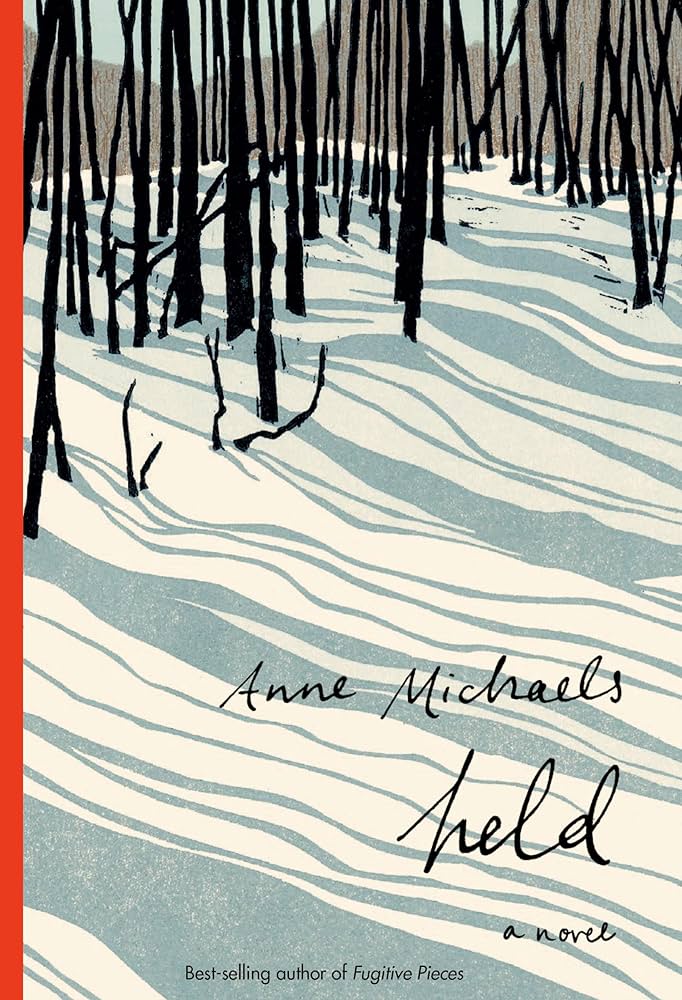
I read this on my Kindle and I think that was a mistake; it’s probably a book that benefits from being on paper in your hands, beautifully typeset and with a wonderful cover (like the one in the photo above). I hate the way that with a Kindle you keep looking at your reading speed! I was astonished when I opened to the book that “most readers” had read it in under two hours! (Probably all those literary journalists under pressure of a deadline.) It took me almost twice that and even then I felt I would have enjoyed it more if I’d read it more slowly. You can’t speed read poetry and you can’t speed read this book. 

I enjoyed it more towards the end once the narrative thread had emerged for me out of the literary mist, but for me it was still not strong enough to carry the book. There is some very powerful writing in here and I was moved by many of the characters – their griefs and passions felt very real – but it was just too disparate for me to feel a strong connection with them or with the themes of the book. Many of the novels on this year’s shortlist wear their politics very boldly, but with Held I would suggest it is more subtle, so much so that it is almost lost. This is a more philosophical novel than that.

I would recommend this book, and I may indeed try it again once I relieve myself of the pressure to get through the shortlist before 12 November. But it’s a book that is probably not for everyone. 

So, who is going to win…?

Well, I have completed five of the six books on this year’s shortlist and have almost finished the sixth (The Safekeep by Yael van der Wouden), but I’ve read enough of the last one to be fairly confident that it’s not a Booker winner, although I am enjoying it.

My hunch is that Percival Everett will take the prize with James. It would be quite a statement if this book wins, in the light of current political events in the US, although I doubt most people will be listening who need to listen. I did love the book and think it’s a great achievement. But I would be very happy if Samantha Harvey’s Orbital won. I think it is so imaginative and beautifully written as well as being captivating and profound. It also says a great deal about geopolitics, even bigger and more profound than the election of a US president for the next four years, and the world really does need to listen.

The winner is announced at 9.45pm UK time, with a live programme on BBC Radio 4 and live-streaming on the various social media channels.

Booker shortlist review #4 – “Creation Lake” by Rachel Kushner

I was on quite a roll with the Booker shortlist and beginning to think this was perhaps the strongest field for years. This is Rachel Kushner’s second time of being shortlisted, her 2018 novel The Mars Room also having enjoyed that distinction. I wasn’t mad about that novel and I’m afraid I’m not mad about this one either. I found I just kept waiting for something to happen and then there was a sort of denouement that was sketched out rather quickly and then it ended and I found myself asking what it was all about. 

The narrator and central character is a self-styled “Jane Doe” whom we know in this story as Sadie. She is a shape-shifter, trained in taking on alternative identities for her line of work. She learned her craft as an undercover agent working for the FBI in the United States, but seems to have found the rules of working in an organisation too stifling and now works freelance, often for people whom she also does not know. This is a book about people who can change who they appear to be. In the particular operation covered in this novel, Sadie is required to infiltrate a commune in southern France, influenced by the ideas of a reclusive intellectual (Bruno). The members of the commune are activists against capitalism and the modern world, living in an agricultural region, tending the land using traditional methods and attempting to live sustainably. Sadie’s mission is to cause havoc in the group and to urge them towards a big action that will ultimately undermine their cause. 

In order to complete her task, Sadie must develop a network of complex relationships, including a sham marriage, in order to gain the trust of the group members, to avert suspicion, and to cultivate an authentic identity. For me, Sadie comes across quite simply as a sociopath. She has no feelings for any of those she exploits in order to complete her mission, seems even to enjoy their vulnerability, and there is a kind of arrogance in her non-selfhood. I wondered whether this might be the point of the novel, that she might come unstuck as a result of excessive self-confidence.  

There is some clever prose in this book and some thorough research – Bruno the intellectual writes extensively about Neanderthals, about Home sapiens, our ancestors, which I assume is accurate? There is also some interesting exposure of some of the contradictions in the philosophy of those living in the commune – they really do not get along, and demonstrate that humans could never live in this kind of mutual arrangement. (I had many “we’re all doomed” moments listening to this book!) Like some of the others novels on the shortlist this is also a deeply political book, which I appreciated.

I’m afraid to say though that for me the narrative just wasn’t strong enough to hold it all together. There were parts I found, frankly, a bit boring and the plot just petered out, there did not seem to be any consequence and the sense of suspense just did not go anywhere for me. Kushner has cited John le Carre as one of her influences for the book and I can sort of see that, but le Carre’s novels deliver comprehensively on both plot and character and I felt this book was not really strong enough on either. 

I would struggle to recommend this book and will be surprised if it wins, but I have been very wrong before so let’s see!

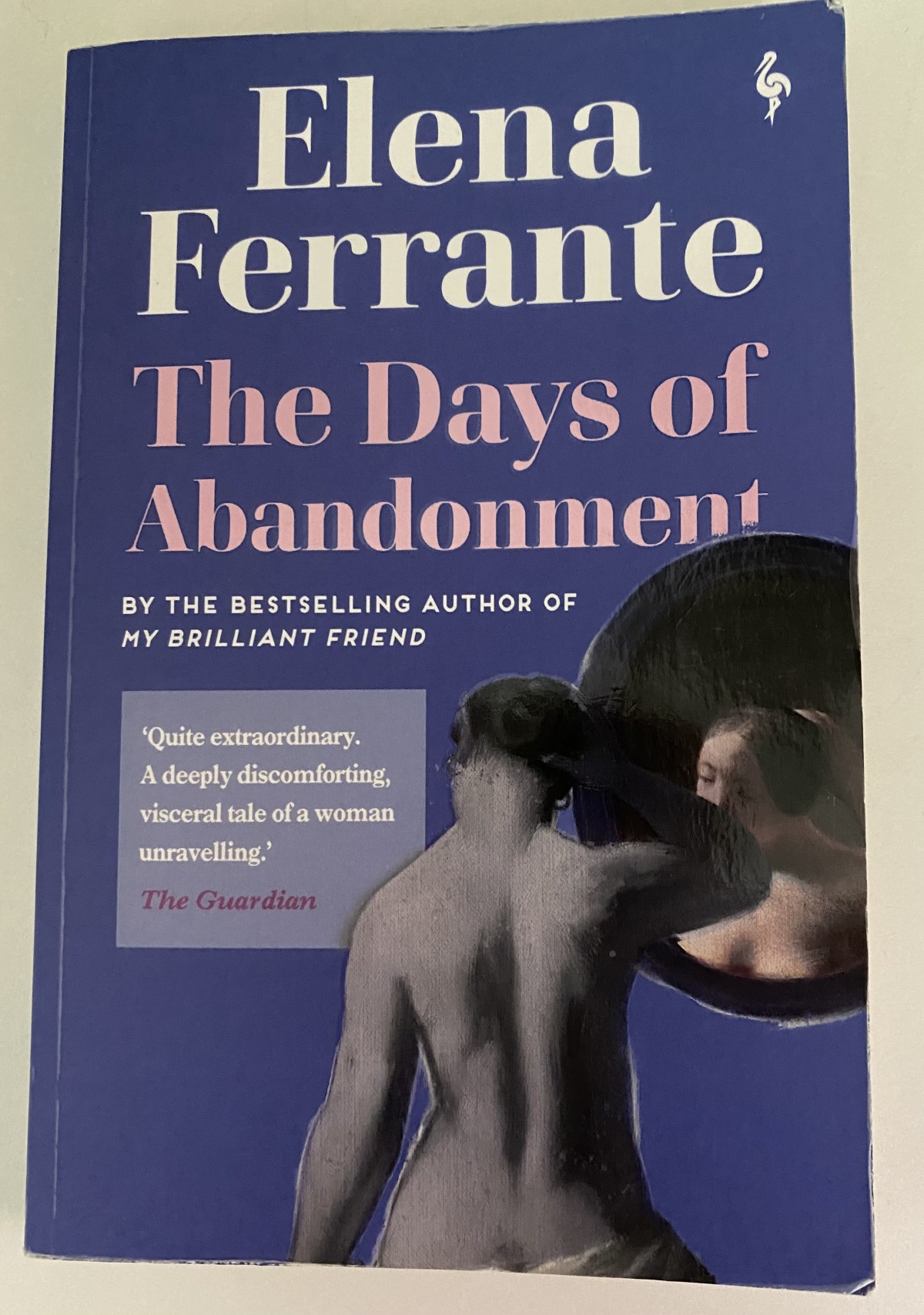
Book review – “The Days of Abandonment” by Elena Ferrante (And my 500th post!)

Last week I posted a blog reviewing two powerful books about new motherhood that I had read over the summer. During the holidays I also read The Days of Abandonment which I picked up at the Oxfam secondhand bookstall at the Hay Festival earlier this year. Ferrante’s Neapolitan novels (My Brilliant Friend, The Story of a New Name, Those Who Leave and Those Who Stay, and The Story of the Lost Child) are world-renowned, deservedly so, and I have reviewed most of them on this blog. They were published between 2011-15 so this novel, published in 2002 (first English translation by Europa Editions in 2005) is a good decade earlier in her writing career, and was only her second novel, her first having been published much earlier in 1992 (though the English translation actually came later, in 2006).

The Days of Abandonment covers another life-changing event in the life of a woman, a mother of young children – in the very first sentence of the book, the narrator announces “One April afternoon, right after lunch, my husband announced that he wanted to leave me.” The line is devastating in its simplicity and the juxtaposition of the routine domestic scene (“we were clearing the table; the children were quarreling as usual in the next room, the dog was dreaming, growling beside the radiator.”) with a piece of news so catastrophic and yet delivered so casually, sets the scene brilliantly and foretells the rest of the novel. One must not forget of course, that this is a translation from the original Italian and it is clear here that Ferrante had not only found her powerful authorial voice, but also a brilliant translator who would go on to translate her other works, Ann Goldstein.

Olga, the narrator, is a woman in her mid to late thirties and she has been married to Mario for 15 years. When he first gives her the news, she has difficulty taking it seriously and thinks he just needs reminders of how good their home life is, but then he admits that there is another woman and Olga is horrified to learn that she is the daughter of a friend and is very young, barely an adult. As realisation of the ending comes to her, the downward spiral begins. 

When Mario leaves, Olga’s mental state becomes increasingly precarious and her behaviour erratic. She is barely able to care for her young family, her two children and the family dog, and not at all able to support the children emotionally through this dramatic change in their circumstances. Olga must seek work to support them, she must attend to matters that were previously Mario’s responsibility, basic domestic tasks like walking the dog, paying utility bills and arranging household repairs. She is a capable and intelligent woman and yet she seems incompetent at basic tasks in her state of mental and emotional breakdown.

Olga’s interior world is fertile ground for Ferrante who explores themes of women’s place in marriage and their vulnerability, male fecklessness, and social expectations of the sexes even in modern society. At times the novel is a very hard read, inexorably bleak, and I felt intensely the injustice of Olga’s situation, her helplessness and her trauma. I found I needed to read it in small episodes. Like Soldier Sailor and Matrescence, which I reviewed last week, it is visceral and it is deeply feminine. 

This book might need a trigger warning – it took me right back to break ups I’d had in my twenties (pre-children and before I’d met my husband!), a long time ago, and I recognised Olga’s pain – this is not a book for the broken-hearted! For Ferrante admirers, however, it is a must-read. 

My 500th post!

I discovered last week by chance that this is my 500th blog post! I have been blogging since June 2016 – goodness hasn’t the world changed a lot in the that time? In my eight years of blogging I have read and reviewed over 300 books – not bad I think. This blog has probably made me read more than I ever have since university and that is reason enough to do it. It’s fitting that this milestone should be represented by Elena Ferrante, one of my favourite authors of the last few years, whose work really speaks to me. I only wish I could read it in the original Italian.

I am not the most prolific blogger and I have learned that it is much harder to cultivate a following than you would think, but I also feel the bookblogging world is a generous space and I get to have some bookish conversations with like-minded folk about books I have loved. So thank you to anyone who reads this or has read and commented on any previous post of mine.

So, forgive me for allowing myself a little bit of self-pride at this point and thanks to all of the other book lovers out there for helping to create this lovely corner of the blogosphere!