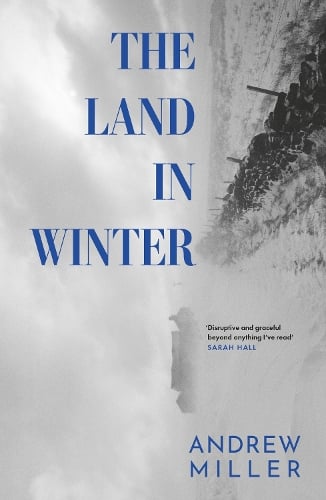
Audiobook review – “The Land in Winter” by Andrew Miller

It is late February and the weather has turned very cold, and very windy. The winter solstice is long past and the meteorological start of spring is only a little over a fortnight away, but in much of the UK right now there is the stark reminder that the winter is not yet done with us. Thus it was in Britain in the winter of 1962/63, a particularly harsh year where snow lay in deep drifts as late as mid-March. This is the setting of Andrew Miller’s tenth novel, a study of two couples, four individuals, trapped by the weather, as well as by social expectations, class and their own caged personalities. 

Eric Parry is the local doctor in a village in south-west England. He is married to Irene and they live in an attractive cottage on the outskirts of the village. Across the field from their home is a farm run by Bill Simmons. Bill is from a humble background but is Oxford-educated, and is a man who aspires to expand his farm, currently dairy-based with a single sullen bull, to something more modern and efficient and on a more industrial scale. He is married to Rita, a colourful but troubled woman, who has a past life in the bars and clubs of Bristol which she can never quite escape. The two women strike up an unlikely but easy friendship when they find that they are both pregnant and at around the same stage. In the 1960s in Britain young women were taught little about sex, married life and pregnancy and there is a kind of welcome relief in being able to compare notes. 

There is no such chemistry between Bill and Eric; they meet at a Christmas party that Irene hosts but it is clear that not only do they hail from different worlds, but that they are also prisoners of their background. What they have in common, however, is a profound sense of disappointment, of hopes dashed, a feeling that they will never be able to create the kind of life that they might have hoped for. At the start of the book this is not the case for the two women, Irene and Rita; they have hope, the optimism that comes with the burgeoning of new life inside them, although, as we will later discover, for Rita this brings back memories of past trauma. 

As Christmas passes and the familiar January gloom sets in, the snow lies ever deeper. The characters, having been thrown together initially, find themselves going in different directions, emotionally and geographically: Bill must visit his unrefined but cash-rich father to ask for money and Rita revisits past haunts and acquaintances in Bristol in an attempt to exorcise her demons. Eric and Irene become increasingly estranged and on a journey to visit her parents Irene becomes trapped on a broken down train and must take shelter in a nearby school for the blind where she is overwhelmed by a sense of isolation.

The breakdowns in the relationships and the individuals are slow, as life in the winter slows, almost to a frozen halt. We observe the gradual decline in slow motion. This is a powerful novel about the human condition that hits you almost without you realising it. The coldness of the world the characters inhabit is both the literal cold of the frozen landscape and the spiritual chill of England in the 1960s where status, the necessity of observing strict social rituals and behaviour and emotional illiteracy caused so much human misery. 

This was the perfect book for January and I listened to it on audio, read very well by the author. Recommended.

Book review – “Thunderclap” by Laura Cumming

The longlist for this year’s Women’s Prize for Non-fiction was announced last week. Only a couple of the books on the longlist have crossed my radar – Neneh Cherry’s autobiography (I have heard her talking about it on the radio quite a lot recently) and Anne Applebaum’s Autocracy Inc.: The Dictators Who Want to Run the World, which feels like it might be required reading at the moment, sadly. Anne Applebaum is someone I admire hugely and she is speaking at the Hay Festival this year, the opposite weekend to Colin Greenwood so I am trying to choose between her and Radiohead! Depression and joy perhaps!

So, I thought it might be a good week to post a review of Thunderclap by Laura Cumming, which was shortlisted for last year’s Women’s Prize for Non-fiction and has been widely praised since its publication in 2023. Laura Cumming is a journalist, art critic for the Observer, and Thunderclap is her third book. The subject is Carel Fabritius, the Dutch Golden Age painter, pupil of Rembrandt, who was killed in 1654 at the age of 32 in Delft when a building in the town where gunpowder was being stored exploded, killing more than a hundred people and injuring thousands of others. Fabritius was killed and his studio destroyed along with an unknown number of his paintings. Only about a dozen of his paintings remain in art galleries around the world. 

Laura Cumming follows in the footsteps of many other scholars and art experts in trying to find out more about the artist who showed so much promise (he has been described as the only one of Rembrandt’s many pupils who began to develop his own style after learning from the great Master, and at such a young age) but has left tantalisingly little. Experts have long felt that there simply must be more of his work, but that it just has not been found yet. He is a somewhat enigmatic figure and very little is known about his life; it is known that his first wife died young as did their infant daughter, and that he married again, but there are significant gaps and despite his rare talent he seems to have died quite indebted so he obviously did not live well from his work. For one so gifted he has left remarkably little behind, either in terms of paintings or a paper trail. 

Cumming writes of her deep love of Dutch art and how this was fostered from an early age. Her father was also an artist and nurtured her interest, and married with the deep dive into the life and work of Carel Fabritius (and his contemporaries) is biographical detail about her father and his creative life. She draws many parallels between her modest, gentle and talented father (who died prematurely) and the kind of person she imagines Fabritius might have been. Examining the facts of his life, his humble background, his marriage to a local girl, then widowhood and the loss of a child, she concludes that he carried a heavy burden and that this helps to explain his absence from the main Delft and Amsterdam artistic scenes. Cumming looks deep into a number of his paintings and finds in ‘Young Man in a Fur Cap’ (thought to be a self-portrait) traces of tragedy and grief. 

This book is both expansive (as well as Fabritius, Cumming writes at length about other Dutch painters of the time and the genre generally, her father and her own journey embracing art) as well as focussed on the tiny details of her subject, his life, his appearance, his paintings. I learned so much but I did not feel at any point that I was being given a history lesson – Cumming takes you on the journey with her.

One of my favourite books of recent years is Donna Tartt’s The Goldfinch, which, of course, concerns one of Fabritius’s most famous paintings of the same name. It now hangs in the Mauritshuis gallery in The Hague. I was drawn to find out more about the painting and its artist creator after reading that book, and Thunderclap came out shortly after I read it, so I have been keen to read this book. I was not disappointed, it really is excellent. Since completing it I have also been to the National Gallery in London to see the Van Gogh exhibition there. The National Gallery has two of the paintings Cumming explores in detail – ‘Young Man in a Fur Cap’ and ‘View of Delft, with a Musical Instrument Seller’s Stall’ – and it was a joy to see them and have a greater understanding of the work.

I recommend this book highly. 

By coincidence, I am currently reading Naomi Klein’s Doppelganger, which won the Women’s Prize for Non-fiction last year. I am enjoying it enormously and it shows what high quality this particular Prize promotes. The 2025 shortlist is out on 26 March.

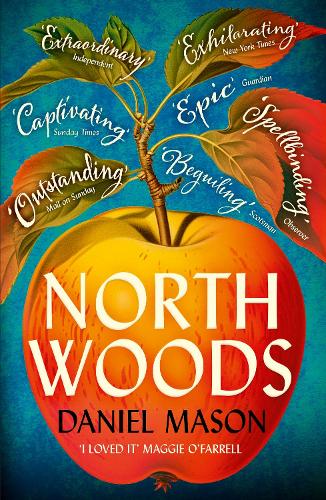
Book review – “North Woods” by Daniel Mason

This novel crossed my radar last year when I was seeing it everywhere. I am a sucker for a good cover and the first edition cover (a cougar sitting on a hillside) would have passed me by but later editions feature a beautiful apple with leaves and vibrant colours and it definitely caught my eye! So I was delighted when one of my book club companions suggested it. It is a work of historical fiction set in New England, something else that attracted me as it is a part of the world I know quite well, having spent a few months there as a student. The author, Daniel Mason, has published five novels previously and is both a writer and a medical doctor – his scientific background brings an extra dimension to the work. 

I learn lots of new things through reading, but I am delighted to have learned that this is an “epistolary novel” (something that I’m afraid my English Literature degree did not teach me!), told through a series of media – letters, diary entries, newspaper reports, as well as conventional narrative. It makes for great variety for the reader although the structural device was not universally praised by critics. It provides an interesting way of dealing with the different historical periods covered by the novel. 

The novel’s location is a property in Massachusetts (both the house and its land) and the characters are the many people who have occupied it since it was first settled by an English immigrant. Retired English soldier Charles Osgood emigrates to the new world in the 1700s and cultivates an orchard on the property. He sets about creating a special apple variety, named after himself, as a way of making his mark on the world. His wife dies and he must bring up his twin daughters alone, but is determined to pass on his knowledge of apples in order that they continue his work.

The two women inherit the property after their father’s death and so the house falls to a new generation, but history is not in the gift of those who have passed to determine and under their stewardship, the property begins its steady path to decline. The sisters are preternaturally close and when a suitor begins to woo one of them, the other cannot allow this to stand. Their unusual relationship and the events of their lives foreshadow later tragedies that will befall the various occupants: a gentleman conducting a scandalous illicit relationship, the lonely wife of a businessman disturbed by visions, and the schizophrenic loner who seems to have a profound connection to the property’s past history.

It is not only the human occupants who enjoy the author’s attention; we learn of a cougar taking up residence in the wilderness that the property becomes, and the reproduction of insects in the decaying woodland. I enjoyed these bits less, preferring the human characters and their life dilemmas, but I appreciated the depth of the author’s scientific knowledge. 

I thoroughly enjoyed this novel and personally I liked the variation in the ways of telling – I felt these created a good sense of the different time periods being explored. I listened to the book on audio and there were many different voices used for the various characters which helped to create an ensemble feel. It is also a deeply philosophical novel – Charles Osgood thought he was creating a place in history, but within a few generations his beloved orchard is derelict, built over and forgotten and apple varieties have diminished to a fraction of what was available in the past. The businessman envisions a presidential retreat for the house, but this is never realised and the house becomes broken and dangerous. Individual human lives have only minimal significance and nature will take over in some form. 

I’m afraid I did not like the ending. It did not seem true to the rest of the book to me. I liked how the ‘spirits’ of the past were ambiguous throughout the novel, but the ending seemed to take a particular stand on this that I could not subscribe to – I cannot say more than that without giving too much away. I recommend the book for the journey rather than the destination! 

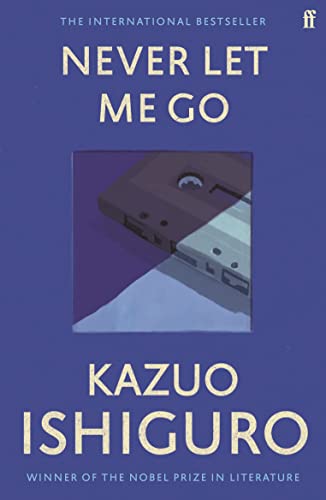
Book review – “Never Let Me Go” by Kazuo Ishiguro

I am very happy to be at the stage in life where I read books that have been recommended to me by my children (all now adults). This is one which my elder daughter enjoyed reading over the summer last year and which she thought I would too. She was not wrong; it is hard not to be a fan of Kazuo Ishiguro, one of our finest living writers, internationally acclaimed, winner of the Booker Prize in 1989 (for The Remains of the Day) and the Nobel Prize for Literature in 2017. The Remains of the Day was adapted for screen in 1993 and turned into a highly-acclaimed film starring Emma Thompson and Anthony Hopkins. Never Let Me Go was also made into a film in 2010 (though I did not know this) with a stellar cast which included Keira Knightley, Carey Mulligan and Andrew Garfield. Ishiguro has quite the pedigree and from what I have seen seems a very nice and down to earth chap. (And a British ‘Sir’ to boot.)

[This review contains some spoilers.]

I read and reviewed Klara and the Sun when it came out  in 2021, a novel about some of the potential repercussions of our obsession with technology and AI in particular (I posted about my own sense of alarm about this last month). It looked ahead to some future date when the advance was seemingly beyond our ability to arrest. The world it portrayed was at once familiar and extremely strange. Never Let Me Go bears some similarities in that it explores human cloning. Some readers may recall ‘Dolly the Sheep’ the first successfully cloned mammal who was born in Scotland in 1996 and died in 2003. At the time, there was a lot of fear-mongering about the consequences of this extraordinary achievement and some justified debate about how we as a human race should manage and control the inevitable advance of this particular field of science. In Never Let Me Go, Ishiguro imagines a world where this science is normalised into everyday life and what that means for the people involved.

The narrator of the story is Kathy, a woman still quite young when she is looking back on her life, and in particular at her childhood, from the perspective of one whose living purpose is to care for her peers, the others who share the same destiny as her. Kathy was brought up in an English boarding school (‘Hailsham’) where the staff are known to the young people as “the guardians”. This was in the late 1990s (when Dolly the sheep was all over the news?). Kathy tells us all about her life there, about the daily life of the children, about their relationships and petty differences, about the trivial things that were important to them. At first it is not clear to the reader exactly what is going on at Hailsham, but part way through, when reference is made to their future status as “donors” or “carers” it becomes increasingly and terrifyingly clear what these young people are for – their purpose is organ harvesting. They are all clones of someone on the outside (who they refer to as ‘models’ or ‘possibles’). 

When we think about clones we might think about robots (rather like Klara in Klara and the Sun), but the children at Hailsham have been created and have all the usual aspects of human personality. This presents challenges to how they are raised and ‘Hailsham’ was originally conceived as a place where their lives could be made rich, where they could develop relationships with one another (including sexual relationships) and be given some purpose in life until they would be required as donors. But of course, their lives are completely pointless, as Ishiguro shows us, their future is bleak; at some point they will donate, once, twice, perhaps more, after which they will weaken and die. By showing us the human frailty of the young people (petty squabbles, jealousies and meanness) he shows how they are just like us, how we could be just like them, just a few steps away from being nothing but an organ incubator. It would be easier if they were dehumanised (like Dolly). 

I found this a powerful novel that I have thought about much since I finished it a few months ago. As I have been thinking about it for this review, I have dipped back into sections of the book and seen things I did not see first time around, the pathos in Kathy, Ruth and Tommy’s trip to Norfolk for example, to search for Ruth’s “possible”, like a search for a mother, an origin story, but of course, the search is fruitless and deeply disspiriting to them all. It is a moment of realisation for them all – there is no-one out there for them. 

This book has to be on a list of must-read books of the twenty-first century.

Postcard from Venice

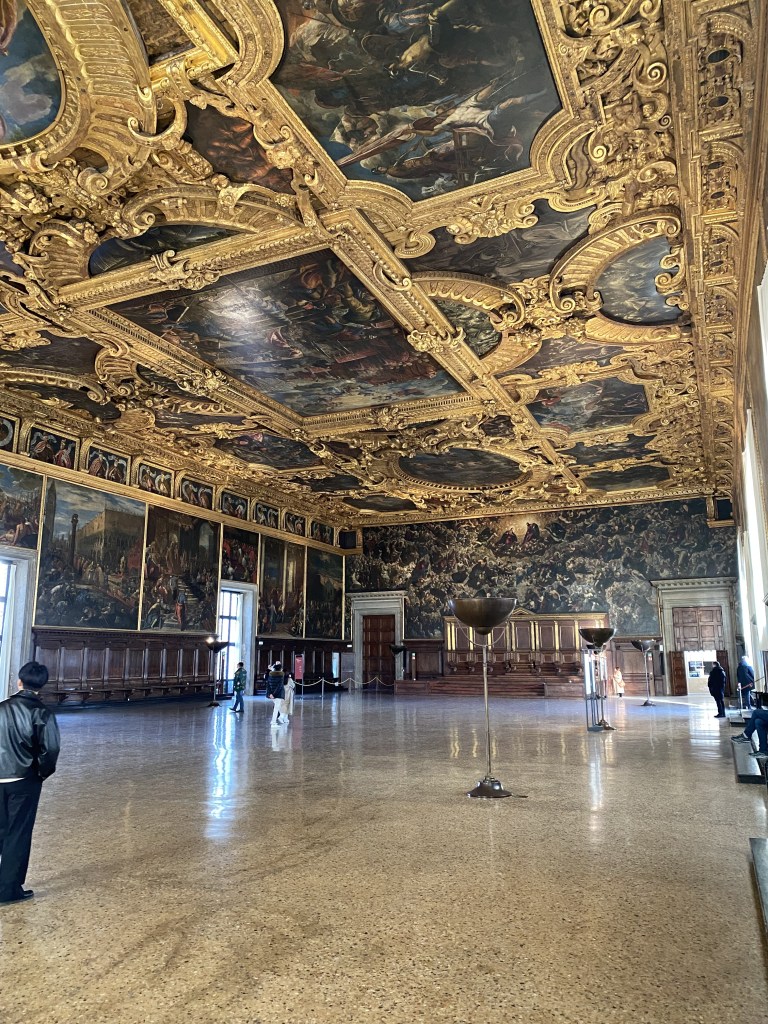
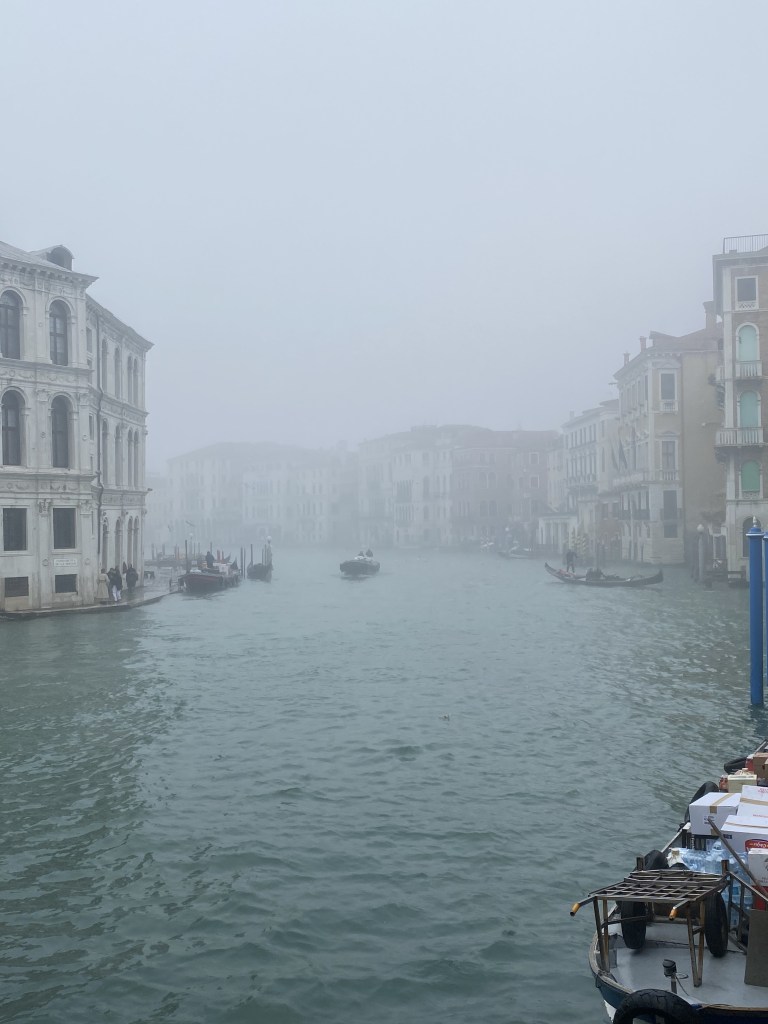
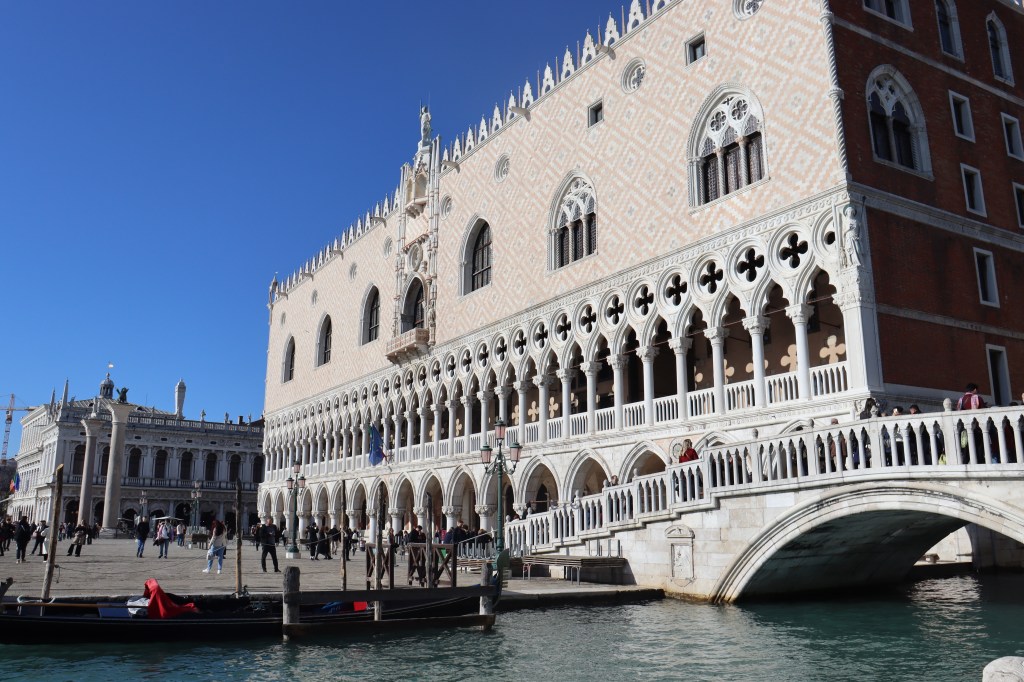
I have started the year as I hope to go on, fulfilling a long-held travel ambition! I have visited Venice a couple of times (once about 12 years ago when my kids were still quite young, and once when I was 18 and went inter-railing in Europe) and on both occasions it was mid-summer, very hot and very, very busy. Ever since, I have wanted to experience Venice in the winter season and last week, with no school term dates holding us back, my husband and I made the trip, spending 6 glorious days in this unique city. One of our favourite films is Nicholas Roeg’s Don’t Look Now (1973), starring Donald Sutherland and Julie Christie. It tells the story of a couple, grieving after the death of their young daughter, in a very grey wintry Venice, where Sutherland’s character is restoring a church. The setting is so atmospheric and ever since seeing it I have fantasised about being Julie Christie wandering along empty the alleyways and bridges over deserted canals!

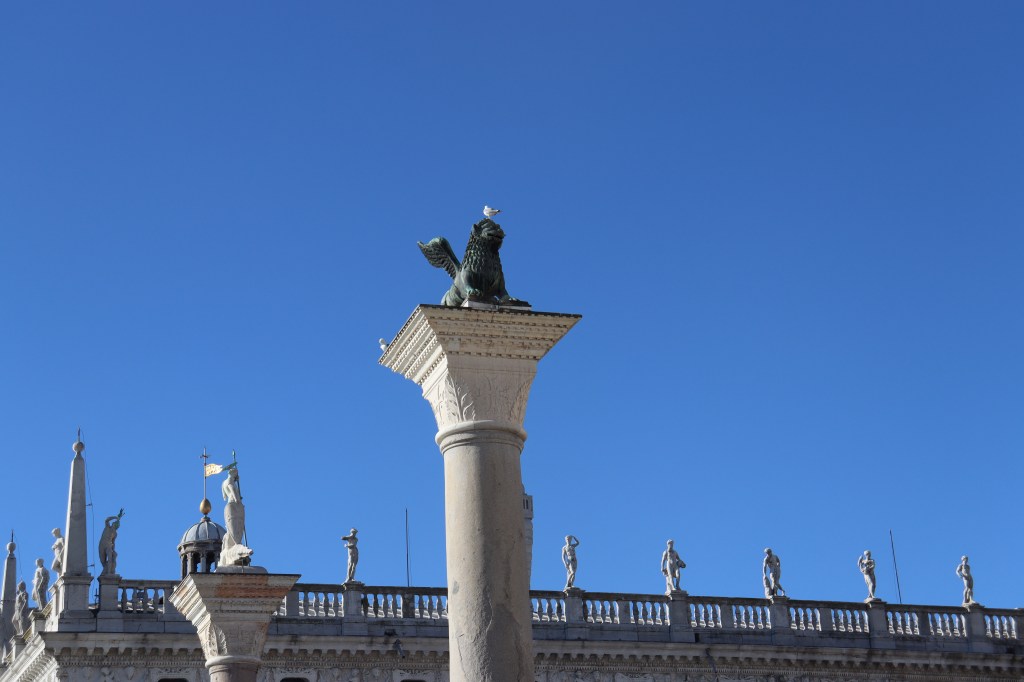
Needless to say it wasn’t quite like that – it was still quite busy, although not nearly as much as spring through to autumn. But the Venetians were warm and friendly, less harassed perhaps than at other times of the year, there were no queues for the big tourist sights (by closing time at Basilica San Marco we had the place practically to ourselves) and good restaurants had plenty of tables. It was well worth compromising on the weather to get the more authentic experience (it was chilly but we did have some bright sunny days) and although Venice is never ‘cheap’ you can definitely get more hotel for your money out of season. Here are a few of my holiday snaps!

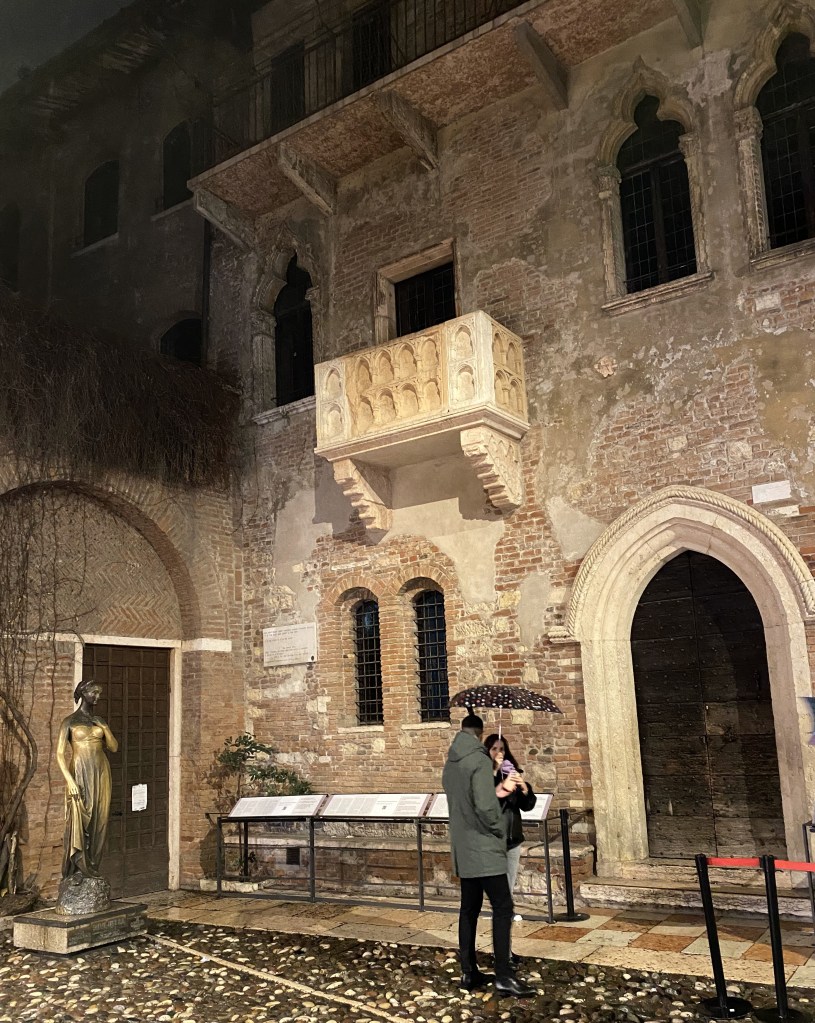
As well as beauty, culture, and fascinating history, Venice has a distinguished literary pedigree. Shakespeare set two plays in the city (Othello and The Merchant of Venice). He also set two plays in nearby Verona – Romeo and Juliet and The Two Gentlemen of Verona). We stopped for a night in Verona before heading to Venice – another truly beautiful and fascinating city – and you can visit ‘Juliet’s balcony’ (left). Scholars disagree on whether Shakespeare visited the Veneto but he certainly had a feel for the area and its stories.

A plaque in Verona commemorating Shakespeare’s connection to the city

Lord Byron, of course, famously spent a lot of time in Venice (he loved Italy), occupying a palazzo near San Marco, and referenced it in his poetry. In the nineteenth and early twentieth century American author Henry James wrote about his love of Venice, and John Ruskin wrote a three volume compendium on the art and architecture of Venice. More recently, the Russian American poet and philosopher Joseph Brodsky and American poet Ezra Pound are both buried in the island cemetery of San Michele in Venice. And finally one of my favourite books is set on the Lido – Death in Venice by Thomas Mann, also a brilliant film starring Dirk Bogarde.

So, a definite bucket list trip for me! I highly recommend Venice in the winter.