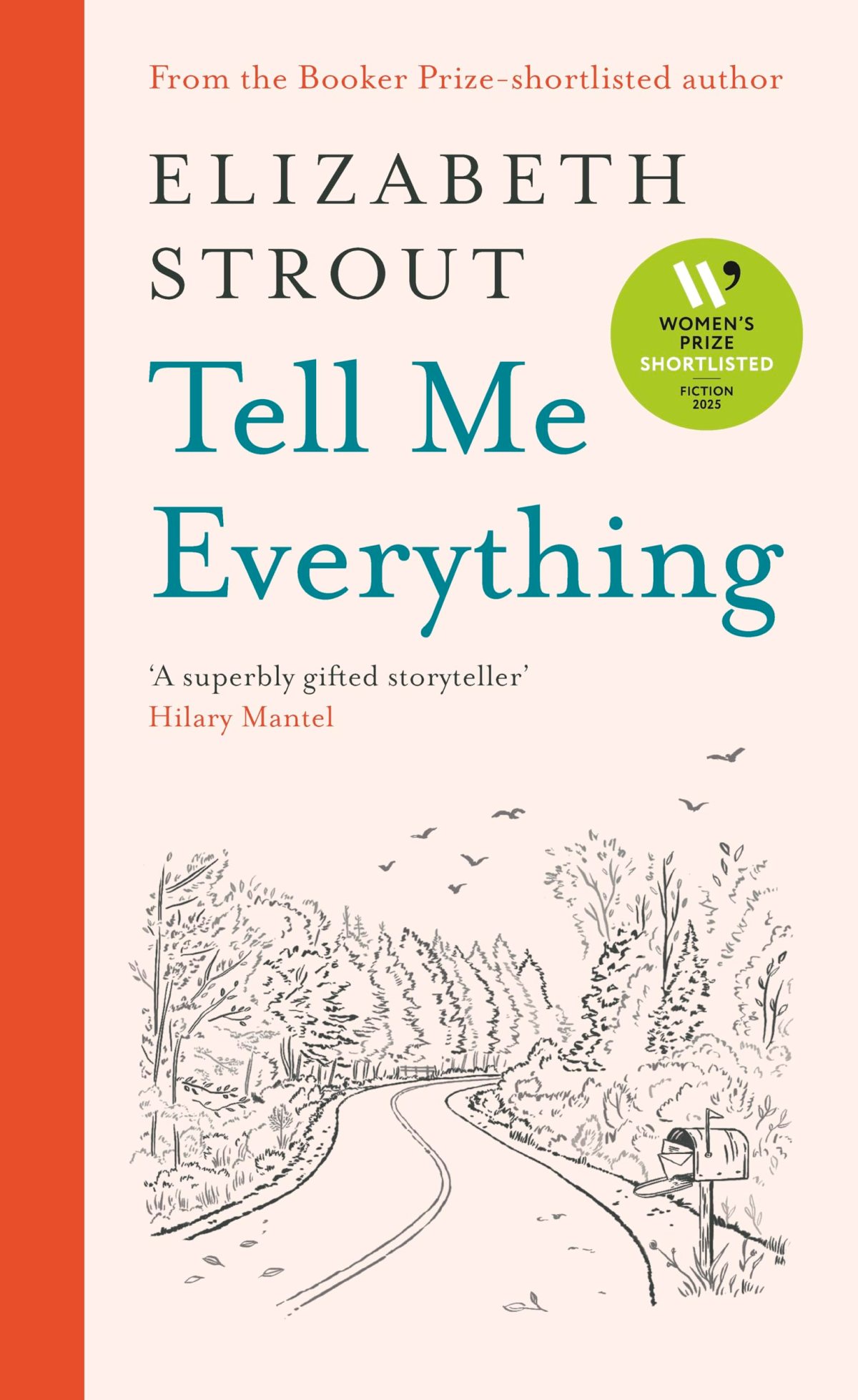
Elizabeth Strout is the most experienced of the authors shortlisted for this year’s Women’s Prize and a writer I admire. I have not read all of her work, but I love her style and reviewed Oh William! on this blog after it was shortlisted for the 2022 Booker Prize. Strout writes many of her books in series, and Tell Me Everything is book number five in her Amgash series (Oh William! was book number three). So, many of the same characters appear throughout the novels. She uses these characters in other novels too – for example, Olive Kitteridge appears in this book but she also has a book, in fact a two-book series, of her own! (Olive Kitteridge: A novel in stories and Olive, again). Some might not like this; it might seem that Strout is simply recycling, that she lacks ideas. I disagree. I think it takes huge authorial control and discipline to maintain characters, remember their personality traits as well as their personal histories, but it also enables the author to take a very deep dive into the nature of what it is to be human and to observe over a long period of time the way that a person evolves and also the ways in which they do not change.
There is a bit of debate online about whether Tell Me Everything, or indeed any of the other books, can be read and enjoyed in isolation. As I said, I have not read her work extensively, but I certainly enjoyed Tell Me Everything and it really makes me want to go back and read her other novels.
The central character in Tell Me Everything is Bob Burgess, a small-time lawyer and stalwart of the community in Crosby, Maine. This is quintessential Main Street America and, if nothing else, feels like an antidote to the more troubling vision of the United States that appears so often on our television screens these days. Bob spends most of his time on what we might call “pottering” until he is contacted out of the blue by a former school-mate who asks him to defend her brother, Matthew Beach, who stands accused of the murder of their mother Diana. Matthew is a lonely isolated man, probably neurodivergent, who lived with and cared for his sometimes cruel mother.
As Bob begins to investigate he uncovers secrets about the family, the past, with which he is linked of course, living in a relatively small community and having gone to the same school as Matthew’s sister, and events beyond Crosby which seem to come back to impact on the town and its inhabitants. The case is not easy for Bob – he seems to be one of life’s innocents and he is shocked and hurt, not only by what he uncovers, but also by turns of events which affect the people around him.
Bob shares many of his thoughts with his close friend Lucy Barton, central character in many of Elizabeth Strout’s novels, and through their discussions Strout is able to explore the central human questions and concerns that underlie both this case and other events going on around them. These other events include the serious illness of Bob’s brother’s wife, the professional challenges faced by Bob’s wife Margaret, the local minister, and Lucy’s relationship with her husband William, a man she once left due to his infidelity but who she now lives with again. There is also the Lucy Barton/Olive Kitteridge dimension; Olive lives in a retirement home but the two women strike up what appears to be an unlikely friendship, but after many get-togethers in which Olive shares lengthy stories about herself, her family and the many people she has known in Crosby, the two women find they have much in common – a deep interest in people.
Though in many ways this seems like an old-fashioned novel with mostly middle-aged people in a small town with small lives, Strout brings in some very contemporary problems – child abuse, the opioid epidemic and other addiction problems, poverty, and family differences causing irreparable conflict and damage. All of these very modern problems impact on the characters and events in this novel.
I loved this book and could not put it down. My book club was divided – which probably reflects how readers more generally feel about Elizabeth Strout. I accept that her books might be a bit “Marmite”! I also love the way Strout writes – it appears simple, but is deceptively so, perhaps the hardest kind of writing to actually do. And her dialogue, which makes up a very high proportion of the book, is so natural. Her observation of people is brilliantly acute.
Of all the books on the shortlist this was the one I enjoyed the most, I think, but I can see it may not be the most consequential and therefore not one of those that was likely to win despite the author’s reputation and stature.
I recommend it highly though.

 Julia's books