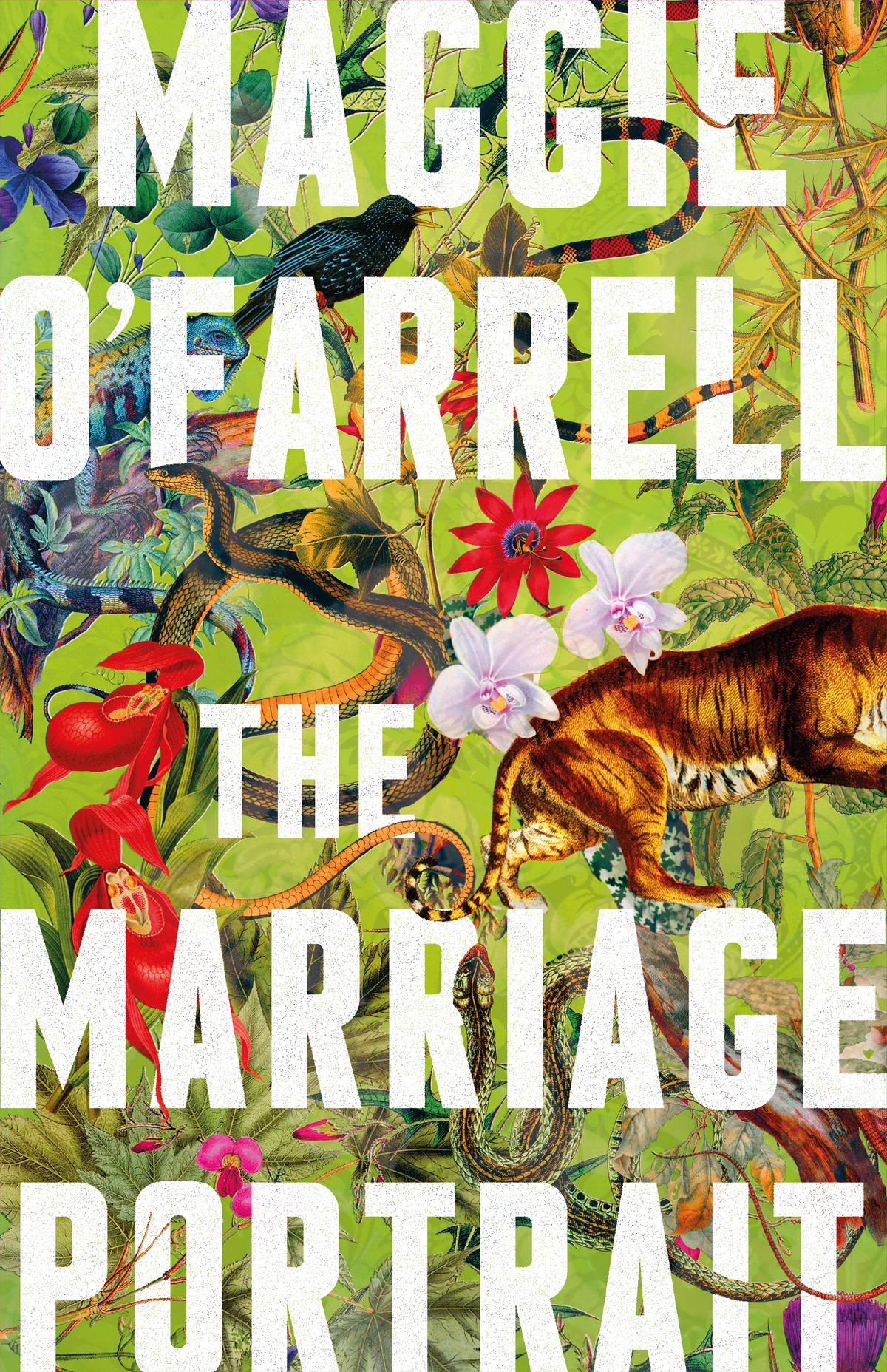
Women’s Prize shortlist review #3 – “The Marriage Portrait” by Maggie O’Farrell

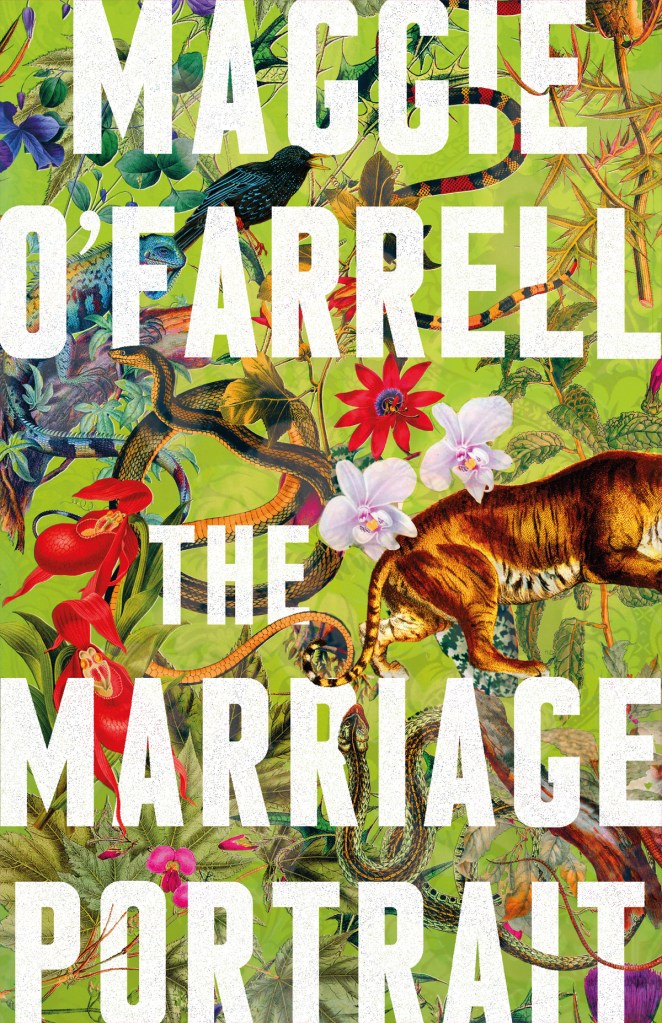
Maggie O’Farrell won the Women’s Prize in 2020 with her eighth novel, Hamnet. It would be quite a coup if she won the prize again in 2023 with her ninth novel. Hamnet is without doubt one of my favourite novels of recent years. Beautifully written, moving, and an astonishing subject. In The Marriage Portrait O’Farrell takes a somewhat similar approach: taking a real historical figure, about which very little is known, and inventing their back story. This time, O’Farrell takes us to 16th century Italy. 

The main character in the novel is Lucrezia de Medici who lived a short life from 1545-1561. She was the daughter of the then Duke of Florence and his noble Spanish wife. She was their fifth child, and is portrayed in O’Farrell’s novel as somewhat unruly. Little was really expected of her, apart from a decent marriage, but as the third daughter, she would not have been considered for the highest ranking match. Her brothers, of course, were schooled in the arts of ruling. Lucrezia is portrayed as sensitive, and passionate about art and nature. She is taught to paint, since she shows some aptitude for it and it at least keeps her out of trouble. Painting is the one activity in which she finds true happiness.

Lucrezia’s elder sister Maria is matched with the nobleman Alfonso, the heir to the Duke of Ferrara, but when Maria dies suddenly, Lucrezia is forced to step in as a substitute. The children’s nurse, Sofia, sensing Lucrezia’s horror at the prospect, manages to persuade the Duke to hold back from marrying his daughter off, on the basis that she is still a child and not yet begun to menstruate. There is only so long that Sofia can protect her charge, however, and at the tender age of 15, Lucrezia is married to Alfonso, who, by then, is Duke of Ferrara. 

Lucrezia is terrified to leave her family. Initially, she is taken to her husband’s country residence, the delizia, where, as Duchess, she enjoys a little more freedom than she had in Florence. Her husband Alfonso, is constantly preoccupied with matters of state and a schism in his own family and largely abandons her. It is clear, however, that her expected role is to bear heirs and Lucrezia endures the consummation of their marriage with fear and horror. 

When the couple return to court to begin married life proper, Lucrezia becomes increasingly aware of a more sinister side to her husband. It is clear that her initial fear of him was not simply girlish trepidation, but a deeper sixth sense. Very soon she begins to fear for her safety. 

The novel opens at a banquet, where Lucrezia is being fed various delicacies by Alfonso. It is 1561, the year that she died and Lucrezia tells the reader that she believes her husband wishes her dead. Thereafter, the novel flits back and forth between Lucrezia’s early childhood, giving a sense of how her character and her place in the household evolved, and 1560-61 and the progress of her brief marriage. 

Having enjoyed Hamnet so much, I was really looking forward to this book and treated myself to a signed hardback copy. It moves at a much slower pace than Hamnet and I found it quite difficult to get into at first. There is more scene-setting and building of character than there is plot, but then we are talking about a very short span of time in the life of a person who did not have very much to do with their days! About halfway through, once Lucrezia is married, I think it improved – the sense of threat builds, the insular nature of courtly life becomes more apparent, and Lucrezia’s isolation all add to the feeling of danger for her. Even those she might reasonably think of as ‘friends’ – her husband Alfonso, his sisters, the servants – all in fact represent a potential threat. Her only confidante is her ladies maid Emilia, but she is also powerless and vulnerable. It is only when a group of artists arrives to set about making a commemorative portrait  of her (the marriage portrait) that Lucrezia realises the deep peril of her situation. As the novel darkens, it improves.

I would recommend this novel although for me it did not have the powerful impact of Hamnet, but then it must be very difficult to follow something that brilliant.

Women’s Prize shortlist review #2- “Black Butterflies” by Priscilla Morris

My second book review from the Women’s Prize shortlist. Fire Rush set the bar high, but Black Butterflies is a cracker too! It’s the debut novel by Priscilla Morris and has garnered a lot of attention, being shortlisted for a number of prizes. Morris draws on her part-Yugoslav heritage for the subject matter of this novel and her intimate knowledge of Sarajevo and her feeling for the people of that city shine through. 

Set in 1992, at the time of the outbreak of the Balkan wars and in particular the devastating siege of the city of Sarajevo, the war is seen through the eyes of Zora Kovovic, an artist of Serb origin who teaches at the university and lives with her Bosnian journalist husband. Their daughter lives in England with her English husband and child, and Zora’s mother lives alone in a flat nearby.

The novel opens with Zora visiting her mother’s flat only to find that a coarse and rather frightening Bosnian family has moved in following the passage of a law that entitles them to occupy empty properties. Zora’s mother has been staying with her over the winter, recovering from illness. The sense of impending doom is clear, everything is about to change. Zora and Franjo, Zora’s husband, who is somewhat older than her, decide that he should leave Sarajevo and take her mother with him, for the safety of England. Zora says she will follow later, she feels a duty to her students and wants to keep an eye on both her mother’s and their own apartments, fearing that they will be taken over otherwise. She does not feel in any danger. She believes that the life they have in cosmopolitan, artistic Sarajevo, which feels like the Paris of the Balkans, could not possibly be under threat. 

Franjo and Zora’s mother leave and the situation in the city rapidly deteriorates as war between the ethnic groups in the former Yugoslavia escalates. Very quickly, bombs begin to drop, snipers in the hills surrounding the city,target its inhabitants and many are killed simply going about their daily business. Bodies begin to appear in the streets. The siege intensifies, there are power outages, food becomes scarce and eventually essential services are cut off – water, sewage, power and telephone lines. It very quickly becomes impossible for Zora to escape. 

Spoiler alert:

The novel follows the siege for a year, recounting in vivid detail the suffering of the people who chose to remain in the city. What is hardest for Zora is the loneliness. Without Franjo and her mother and no possibility of contacting them or her daughter, Zora is completely isolated. Her mental state is reflected in her art. When she is prevented from working at the university, she withdraws to her studio to paint obsessively, but when the building where her studio is housed burns down and she loses almost all her work, it is like she has been robbed of her very soul. This theme pervades the novel and is not only a powerful metaphor for Zora’s individual suffering, but also a measure of the cultured and refined nature of the community, contrasting with the crudeness and brutality of the soldiers who become the masters of the frightened city-dwellers. 

Zora’s apartment is in a small block and she and the other residents who elected to remain develop a powerful bond. They often share what little food they have, and find comfort in one another’s company. It feels like the only thing keeping them sane. Zora eventually escapes Sarajevo, with the help of her son-in-law, who manages to secure a press pass and counterfeit papers to get her out, but though she wants to be reunited with her family, she finds it difficult to leave her fellow Sarajevans and part of her wants to stay. The siege has changed her, changed all of them and they will never be the same again after the experiences they have shared. There is the sense that her loved ones will never truly be able to understand her ever again. 

This is a really powerful novel, which I loved, but which is absolutely heartbreaking at the same time. As a senseless war on the eastern side of the European continent rages once more, this reminder of the horrors of the Balkan war and the break up of the former Yugoslavia (indeed, tensions in that area seem to be re-emerging), we get a glimpse of what life is like for the innocent bystanders in times of war. Again, I listened to this on audio and it is skilfully narrated by Rachel Atkins.

Women’s Prize shortlist review #1- “Fire Rush” by Jacqueline Crooks

It’s been a busy few weeks with half term, travel away from home and the day job, so I have not been doing as much reading as I would have liked. This is especially disappointing given that I’d set myself the goal of reading the shortlist for this year’s Women’s Prize! I have been doing a fair bit of driving and running though so at least I’ve been getting through some of them on audio. There is nothing quite like the feel of a book in your hands, but, increasingly, I am finding audio is the way I access most of my reading. Are you finding this too?

Fire Rush by Jacqueline Crooks was the first of the shortlisted books that I picked up and I am so glad I chose the audio version. At its heart is a love for music, specifically dub reggae, and the interconnectedness of the music, the Caribbean culture, the London scene of the 1970s where the book is set, and the idea of music as salvation. Short excerpts of dub reggae are built into the audiobook at key moments and it gives an extra dimension to the text, characters and setting, as well as the pace and tension of the book. This is also not a musical genre I am particularly familiar with, so I definitely would not have ‘heard’ it if I had read the book in hard copy.

The book opens in 1978 in the south London suburb of Norwood, where twenty-something Yamaye lives with her indifferent and sometimes cruel father. Her life seems to be going nowhere and the bleakness of the moment – it was a period of economic stagnation, cultural wilderness and all against a racist backdrop – is tangible. Yamaye lives for music, dub reggae, and spends her weekends at an underground club in the crypt of a church with her friends, sassy Asase and white Irish girl Rumer. There is an ever-present sense of threat from the authorities and most of the characters have had a brush with the law at some point. There is also an ever-present threat of violence, from darker forces operating in this underground world. 

At The Crypt, Yamaye meets Moose, a craftsman who works with wood, particularly the teaks and mahoganies from the Caribbean where he is from and where his grandmother still lives. Moose and Yamaye embark on a love affair. He dreams of going back to Jamaica with her and living a free and peaceful life in the country. Yamaye has dreams too, of becoming a DJ, mixing tracks at reggae nights. 

Spoiler alert:

All their dreams are shattered, however, by two devastating events: Moose is killed in police custody and Asase is found guilty of murdering Yamaye’s friend and the owner of the record shop she frequents. Events turn quite dark and fearing that her life is in some danger, Yamaye escapes to Bristol where she spends time in a ‘safe house’ which proves to be anything but. She must make a second escape and flees this time to Jamaica, determined to track down Moose’s grandmother, to find out more about her roots, and specifically to try and connect with her late mother who died mysteriously in Ghana when Yamaye was a child. In Jamaica she finds a new lease of life, but also encounters new dangers that will lead her to a final reckoning with forces that want to harm her. 

This is a really powerful book which tells a fascinating story. Over a period of five years or so we watch Yamaye grow from being a timid and cowed young woman, oppressed in her own home, to one who finds her inner power through music, love and embracing her true cultural inheritance. 

I loved this book. It was both gripping and engaging from start to finish. The audiobook is brilliantly read by Leonie Elliott (the actress who plays Lucille in Call the Midwife) who manages the range of voices and accents with aplomb. This is an example of audio really adding to the experience of the book and I recommend it highly. 

At the Hay Festival 2023

I had a busy half term week, spending time with my children and some friends, and a glorious couple of days at the Hay Festival, so no time for blogging. I didn’t make it to Hay last year; with both my daughters doing important exams, I just felt I couldn’t be away from home at such a crucial time. So it was especially sweet to go back this year. I went for two days, staying overnight in a tent – I am NOT a camper! – at the official Hay campsite, which I felt was preferable to a B&B miles away. It was an experience. Perhaps the coldest night of my life. Hay on Wye is in quite an exposed position, with a cool breeze, even though the sun shined the whole time. Night time temperatures dropped to around 5 degrees, so it was not comfy, even beneath the many layers I had packed. The good value and the proximity to the festival site made it worthwhile though. I’m not sure what it would have been like if it had been raining.

I saw some really interesting presentations, very little on the fiction front this year, strangely. To be honest, I don’t think I picked the best days with regard to the programme of events. My fantasy is to spend the whole week there, to dip in and out, participate in some of the off-site events, perhaps do some of the walks in the area, but that will have to wait until I am free of the tyranny of the the school calendar! It’s also not cheap: drinks and meals on the site are expensive, so if you could self-cater somehow and take packed lunches it would be much more manageable.

Below are some of my photos from the event. If you’ve never been I highly recommend it. If travelling to Hay is not possible, you can watch many of the events on the Hay Player, which is very reasonable at £15 a year and gives you access to a huge back catalogue of events too.

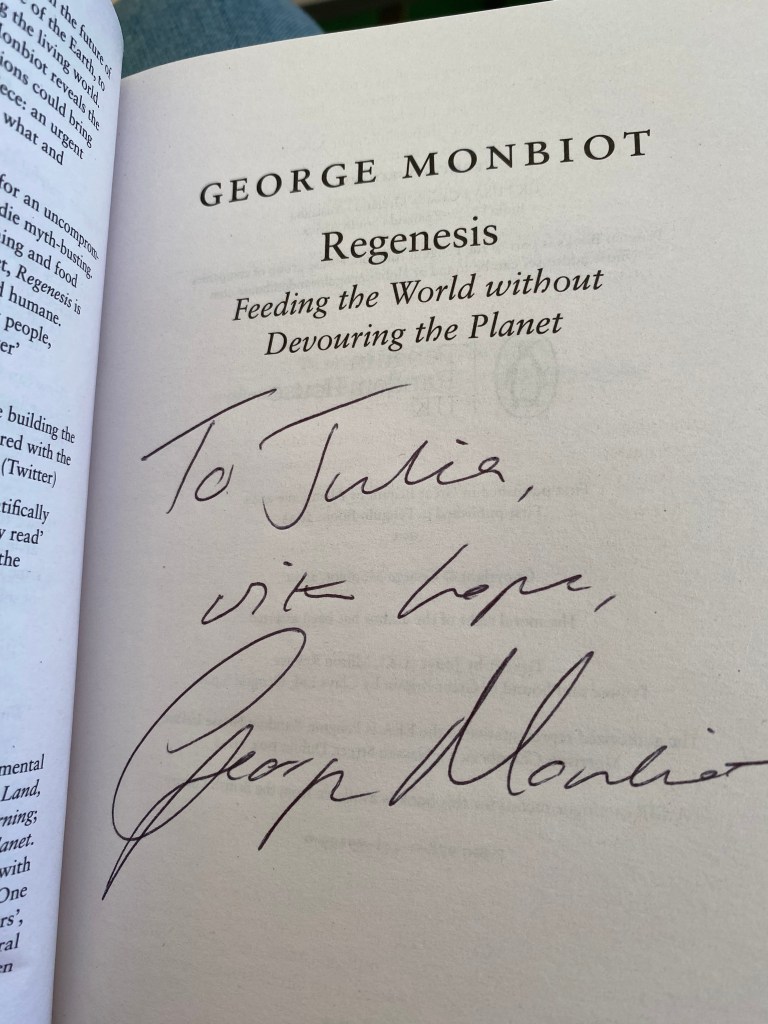
George Monbiot (journalist and climate activist) and Minette Batters (head of the NFU) discussing farming and the environment – a very heated debate!

On the few occasions when I have met famous people I have not been very good at it! They say you should never meet your heroes. This time I managed to mumble a few words of conversation in the brief encounter to get my book signed.

BBC colleagues Jeremy Bowen and Frank Gardner discuss their experiences in the Middle East
The Hay Festival at night when all the day’s crowds have gone

BBC correspondent Lyse Doucet gives the Christopher Hitchens memorial lecture, covering the future of journalism and the concept to truth in reference to AI. A panel of historians discusses how we represent history, particularly in reference to Britain’s stately homes, with the CEO of the National Trust.

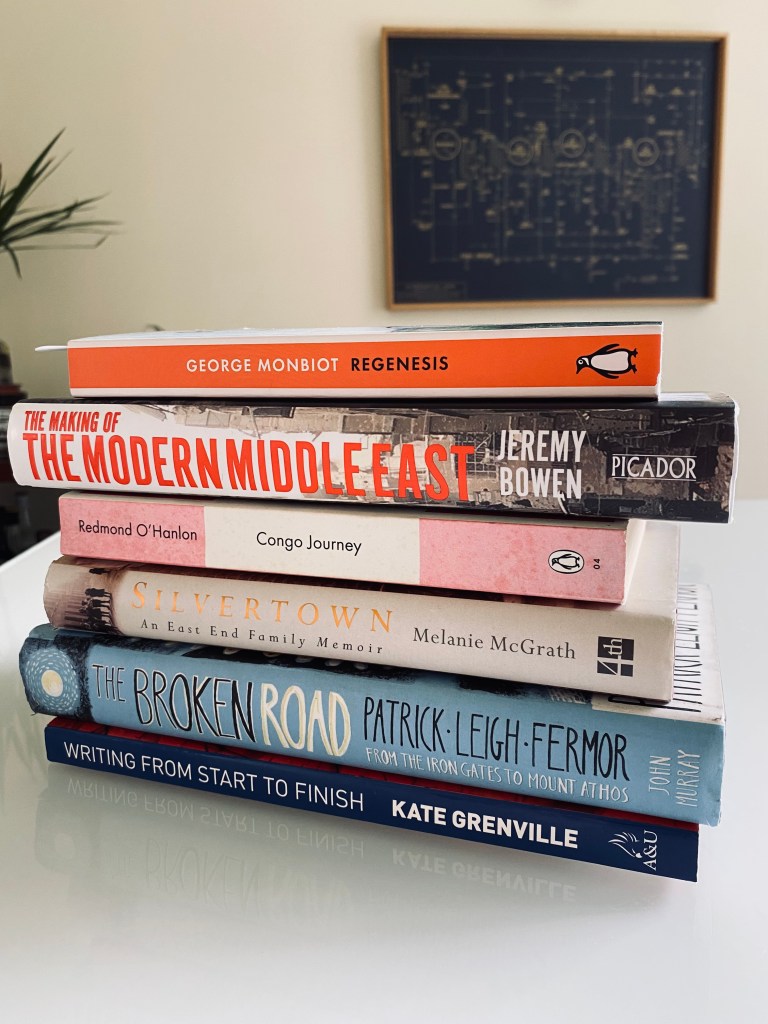
And of course, the obligatory book haul – another of the expenses at Hay! I believe I was quite restrained…

As usual, Hay 2023 was inspiring, fascinating, at times controversial and always stimulating.

Exhibition review – “Traces of Displacement” at The Whitworth, Manchester

As a writer (still aspiring!), I well understand the importance of ensuring my life is filled with rich cultural experiences. Obviously, as a book blogger, I probably read more than a lot of people I know, but I’m open to culture in its widest sense and will just as happily write about watching a piece of musical theatre as I am about watching a television drama. (Note to self: I’ve watched some great TV recently, must share on here.) I realised recently that I haven’t been to an exhibition in ages so I was delighted to find a very appealing offering at The Whitworth in Manchester, one of my favourite art galleries.

The Whitworth was founded in 1889, largely from a bequest in the will of Sir Joseph Whitworth, one of Greater Manchester’s greatest sons. He was born in Stockport and was a brilliant engineer, entrepreneur and philanthropist, leaving much of his fortune to good causes and for the founding of engineering scholarships.

The peaceful gardens at the back of The Whitworth’s prize-winning modern extension

The museum created in his name opened in 1908. Its red-brick Jacobean style of architecture is characteristic of many other buildings in the city. It closed for two years in 2013 when a massive modern extension was added, and reopened in 2015. The extension (left) was shortlisted for the Stirling Prize for architecture that year. It is quite simply a stunning building and worth visiting for this reason alone. It consistently appears in Manchester’s top ten most-visited attractions, and yet, whenever I have been there, it never feels full or overly busy. It is part of the University of Manchester and its collections include paintings, textiles, wallpapers and sculptures.

I have visited so many fantastic exhibitions here. The last one I saw, a few months ago, was a retrospective of the work of Althea McNish, one of the first Caribbean textile designers to achieve international recognition – an extraordinary feat for a woman of colour rising to prominence in Britain in the 1960s and ’70s. Seeing examples of her work, it is clear how far-reaching her influence was.

Traces of Displacement is the latest major exhibition at The Whitworth. The gallery has mined its own vast collection to bring together work which explores the immigrant experience, particularly those forced to leave the places they called home and seek sanctuary and safety in another place.

The stories are powerful: a series of watercolours, painted sparsely by Cecily Brown, shows people on small boats wearing lifejackets; particularly topical. Established artist Cornelia Parker is known for her art exploring human rights and her installation Jerusalem (Occupied Territory) reminds us of a longer-standing geopolitical crisis in that part of the world. A series of photographs showing cells at Colnbrook detention centre where asylum seekers await decisions or deportation, expose the further trauma of imprisonment that people who are fleeing often endure. Interestingly, these photos shows spaces and belongings only, not people or faces – crisps and snacks on a bedside table, laundry hanging over rails, and photos cut from magazines – reminding us of the small day to day things that we all have in common regardless of the colour of our skin or the clothes we wear. A powerful video installation tells the story of Iraqis fleeing their devastated country and certain persecution, and how they are forced to lie to obtain sanctuary.

A second strand of the exhibition explores themes of flight more widely. Long-forgotten exoduses, such as that which followed the Armenian genocide in 1915-16 and the occupation of Belgium in the first world war, remind us that refugees are not a modern phenomenon. Human flight from tragedy is not new. Nor is the instinct for self-preservation, to protect one’s family and to live free from persecution.

The exhibition does not seek to make political points, but it does seek to challenge the tendency to strip those seeking refuge of their status as humans with equal right to occupy this planet of ours and to express themselves, their cultural, religious or sexual identity. The tendency to dehumanise people seeking refugee status is a political choice and has become somewhat normalised in the toxic language used in current debate. For me, this exhibition seeks to redress that balance.

I recommend Traces of Displacement to anyone who can get to it before it finishes next January. The Whitworth is well worth a visit any time. Its first-floor glass-walled restaurant overlooking the park is excellent and the beautiful shop carries high quality products. It is truly a space for contemplation and inspiration that will nourish your soul.

Audiobook review – “Cleopatra and Frankenstein” by Coco Mellors

I’ve had my eye on this book for a while. It has been highly praised in the United States, winning lots of plaudits for its debut novelist Coco Mellors, and in the UK it was a Sunday Times bestseller. The blurb was tantalising; set in New York city it tells the story of a whirlwind romance and its consequences, and comparisons with Sally Rooney have been drawn. My book club liked the sound of it too. We mostly do audiobooks these days as we are busy ladies of a certain age with families and work, etc, and I downloaded it excitedly.

It is essentially a novel of character studies. Cleo is a twenty-something artist struggling to make ends meet in New York where she has a low-calibre job while making her art in her spare time. Cleo is troubled and drifting. She is British but feels no connection with her home country where she has no friends and very little family. Her mother died by suicide when she was in her final year at university. Her parents separated when she was young and her father remarried a ghastly woman and has a new family.

Cleo’s US visa is about to expire and she has no idea what she is going to do next when she meets Frank at a party. Frank is twenty years her senior and owns a successful advertising agency. The opening chapters focus heavily on their initial meeting and the intense chemistry between them, and the inevitability of their getting together. The opening is clever and satisfying to read while also telling us a lot about these two people. It sets the scene really well. Despite the age difference Cleo and Frank seem well-suited. It is tempting to say that Cleo is looking for a ‘father-figure’, but I don’t think that would be correct; she is looking for stability though. Her life experience also makes her older than her years. Frank also had a troubled upbringing, his mother was an alcoholic, and he says he has never met anyone like Cleo before. He is perhaps a little younger than his years. Needless to say, their relationship blossoms. The impending expiry of Cleo’s work visa creates a literary turning point in the plot of the novel. Frank asks Cleo to marry him in a kind of ‘what have they got to lose’ way and they have a quickie ceremony at City Hall, witnessed by an emotional hot dog seller.

So far so good, but for me, the book goes somewhat downhill from here. It is clear that the rest of the novel is going to be about their marriage – will they repent of having married in haste? 

Spoiler alert!

The next few chapters focus a lot on Cleo and Frank’s circle, rather than the couple themselves, and I felt I rather lost the two main characters here. Coco Mellors goes into detailed character portraits of their friends Santiago, Anders and Vincent, and Frank’s younger half-sister Zoe, and we meet Cleo’s father and his wife Miriam, who were cringingly two-dimensional for me. There were times when I wanted to give up on this book because I was so deeply irritated with the secondary characters. I found them lazy stereotypes and I could not fathom why we needed to know so much about them. My only conclusion is that they were there to tell us a bit about “life in New York city”, which I found a bit patronising. It all seemed like something out of Wall Street! Or they were there for padding, to take the focus off Cleo and Frank for a few months, the period during which they were relatively content with one another, until the author could legitimately turn to problems arising in their marriage after the first flush or romance. 

About half way through a further character is introduced. Eleanor is a forty year-old copywriter who goes to work in Frank’s agency. It is clear she is much more ‘ordinary’ than the ‘extraordinary’ Cleo (looks-wise) but there is something about her that attracts Frank’s attention. They share an easy companionability that contrasts with the more intense relationship he has with Cleo. Not unexpectedly, Frank and Cleo’s marriage begins spectacularly to disintegrate, as do the other characters in the book, in a kind of parallel decline. To be fair, the book gets better again from here, although I found the ending disappointingly predictable.

I’m really not sure about this book. It is well-written and I liked the characters of Cleo and Frank, and Eleanor. I disliked most of the others though and found the novel a bit unbalanced in that respect. It’s not a bad read, though it could be quite triggering for some, covering themes of suicide, addiction, and childhood trauma. 


My main complaint is that it seems to favour sensationalism over authenticity and other books I have read recently cover similar themes better (for example, any of Sally Rooney’s books and Sorrow and Bliss by Meg Mason). I came across an LA Times review which said that Cleopatra and Frankenstein read as though it had been written to be adapted for a Netflix series, and I think I probably agree.

Reading challenge book review – “All Quiet on the Western Front” by Erich Maria Remarque

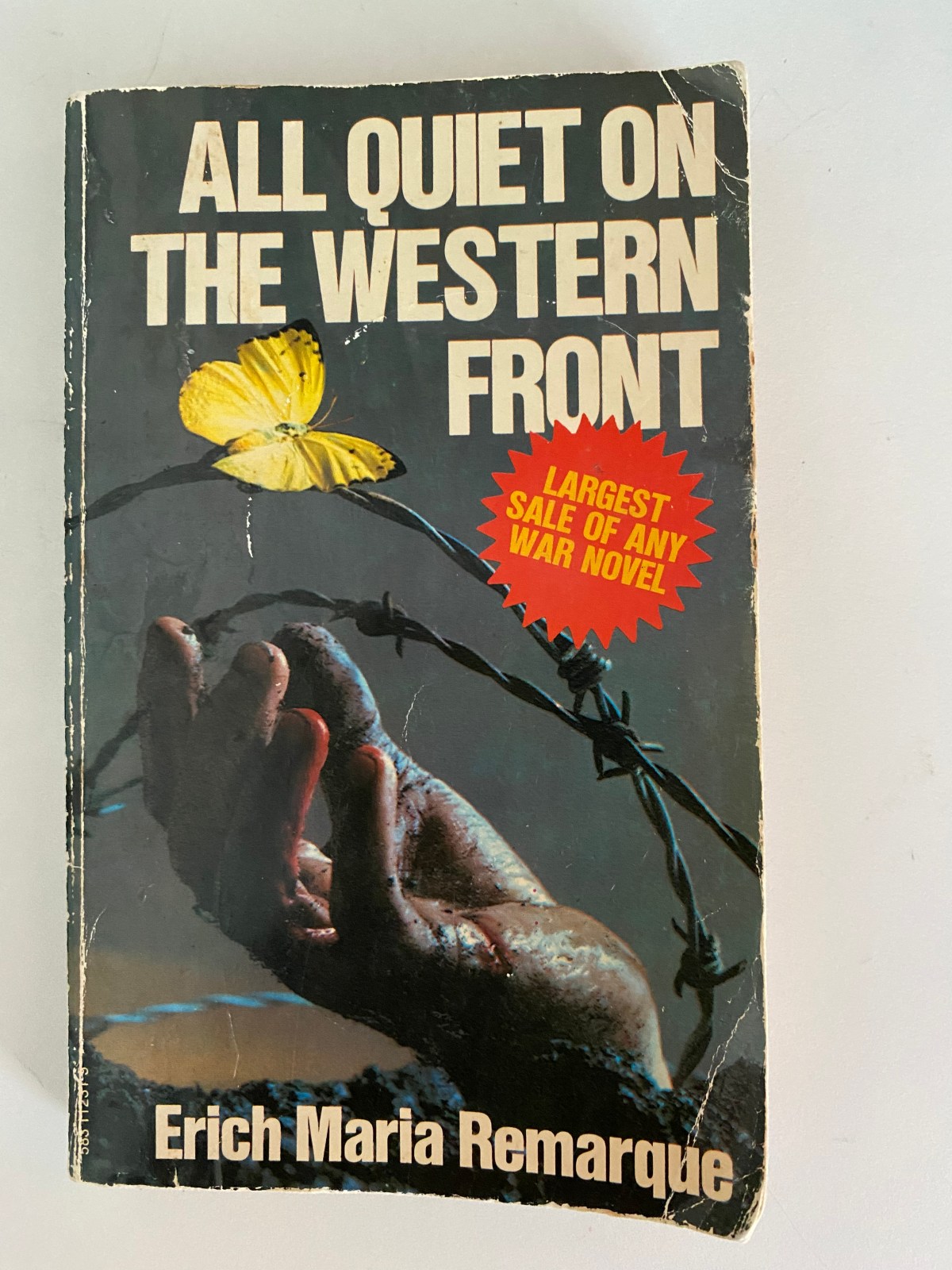
The April book in my ‘Trying not to be too challenging’ Reading Challenge for this year was All Quiet on the Western Front, the best-known novel by Erich Maria Remarque which draws on his experience as a German soldier in the First World War. First published in 1929, only ten years after the end of that war, it has become one of the most iconic novels about war, all the more poignant because it is written from the perspective of an ‘enemy’ fighter. The book was banned in Germany, where the National Socialists were capitalising on the villification of their country in defeat and felt the book made Germany appear weak. 

My copy is a well-thumbed 1977 reprint that came from my husband’s collection when we got together. I did try reading once before years ago, but as a mother of young children at the time it was just too much for me to bear. I suppose the horrors of yet another senseless and destructive war in Europe appearing in the daily news bulletins, plus the release of a film adaptation that did very well at the Oscars recently, meant the book caught my eye as I was browsing the TBR shelves this time. 

The central character and narrator of All Quiet on the Western Front is Paul Baumer, a young soldier at the Front, serving with other young men who, only weeks earlier, were his friends at the school they attended in a quiet German town. They were persuaded to sign up by their fervently patriotic schoolmaster Kantorek, who told them of glory to be had in serving their nation; their illusions are quickly shattered once they are posted to the Front. Parts of this book are very difficult to read. The vivid accounts of hideous deaths, of gruesome injuries, and of the trauma of enduring such terror, fear and physical pain are stomach-churning, but one is compelled to read almost from a sense of guilt that young men had to, often still have to, endure the horror while the rest of us sit at home in comfort or mourning. One cannot help but think of Ukrainian and Russian soldiers at this point.

Besides the accounts of trench warfare, what is equally shocking is how little progress either side seems to make in exchange for their losses. You have to ask how any of it could be called a victory. The pace of the book is also extraordinary: the periods of fierce and brutal conflict are short episodes of violent action amidst a wider tedium. Most of the soldiers’ time (those that survive the battles) seems to be spent doing very little, just trying to survive. Or in Paul’s case, thinking. The rations are poor and the food is often rank, the conditions are appalling – the descriptions of the ongoing battle to keep rats at bay at night is particularly awful – and no detail is spared in describing toilet habits, for example. 

When Paul returns home for a period of leave, the contrast between his life on the Front and that of civillians is stark. Distressingly, Paul feels that he can no longer relate to his family, that he must spare them the reality of war, but that in doing so he is a co-conspirator in concealing the truth. He cannot wait to get back to the Front, to be with those who can understand him, who share his experience. 

Paul survives almost the whole war, dying only weeks before its end, on a relatively calm day when the single line report from the military authorities read simply “In westen nichts neues” (translated as “All quiet on the Western Front”) from which the book takes its title. In reality, Paul could never have returned to his old life and his family, not after what he had seen and experienced. 

We are not youth any longer. We don’t want to take the world by storm. We are fleeing. We fly from ourselves. From our lives. We were eighteen and had begun to love life and the world; and we had to shoot it to pieces. The first bomb, the first explosion, burst in our hearts. We are cut off from activity, from striving, from progress. We believe in such things no longer, we believe in the war.

Paul, in All Quiet on the Western Front, Chapter 5

There have been two translations of the book into English; my edition will be the original by Arthur Wesley Wheen. The second was by Brian Murdoch in 1993. It is interesting that my edition does not include any credit to the translator. Nowadays, translation is considered almost an art in itself, bringing the out the intention and talent of the author to those unable to read books in their original language. 

I recommend this book highly. It is practically essential reading, though it is not an easy one. 


The next book for this challenge from my TBR shelf is The Bloody Chamber by the late great feminist author Angela Carter. I think I got this as part of a set of three books by her (along with Nights at the Circus and Black Venus) back in the day when I used to subscribe to a postal book club (remember those?) It’s another of those books I’ve been ‘meaning to read’ for years – at last an excuse!

Women’s Prize for Fiction shortlist

The shortlist for the 2023 Women’s Prize for Fiction was announced following much anticipation last week. The winner will be announced on 14 June, but it is one of those literary prizes where you suspect all of the finalists feel like winners due to the sense of warmth and inclusivity around it. This prize has really taken off in recent years thanks to some brilliant marketing activity. The team made fantastic hay out of the Covid lockdowns, running Zoom chats with shortlisted authors (and many hundreds of fans) where you really felt like you were part of the contest. All facilitated by the inimitable Kate Mosse, of course, the dynamic founder of the Prize. Unlike the Booker prize the Women’s Prize also has a sense of humility about it; it doesn’t confine itself to purely literary novels. This is a contest that celebrates the joy of reading in its widest sense, with podcasts, blogs and email newsletters that really keep you engaged.

This year’s shortlist of six books includes three debut novels and three from established authors.

Fire Rush by Jacqueline Crooks

This book has been getting a lot of attention. It is the author’s debut novel, though her short stories and non-fiction work have garnered praise. Set in 1970s London it tells the story of Yamaye, a young black woman and her relationship with the music she identifies with as part of her cultural inheritance, dub reggae. She meets and falls in love with Moose, but when their love affair ends, it triggers a search for identity and a personal transformation.

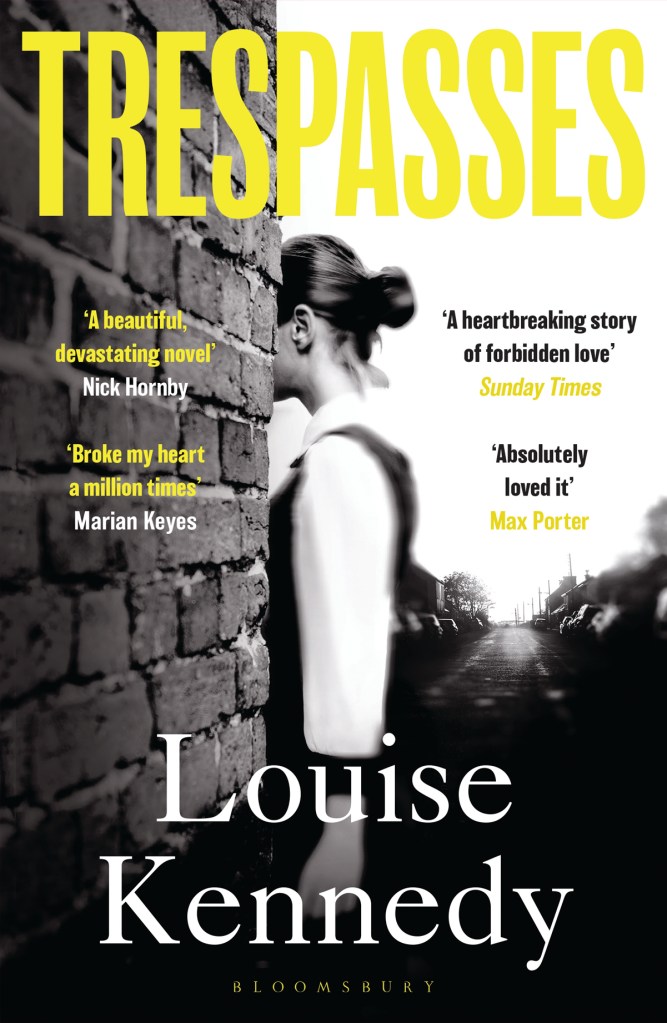
Trespasses by Louise Kennedy

Another author better known for her short stories, Irish writer Louise Kennedy’s novel is set in Belfast during the period known as ‘the Troubles’, a poignant moment to remember those terrible days as we mark the 25th anniversary of the Good Friday Agreement. It tells the story of primary school teacher Cushla navigating love and politics in the most challenging of circumstances. For most of us it is hard to imagine what it must be like to try and live an ordinary life surrounded by violence and threat but if the reviews are anything to go by, Louise Kennedy has pulled it off here.

Demon Copperhead by Barbara Kingsolver

Kingsolver’s 1998 best-selling novel The Poisonwood Bible remains one of the best books I have ever read – it had such a powerful impact on me. This literary giant needs no introduction and has both won and been shortlisted for the Women’s Prize before. Demon Copperhead is said to be her modern take on Dickens’s David Copperfield where a young man, born into poverty in Virginia tries to make his way in the world in a modern America beset by social problems and prejudice.

Black Butterflies by Priscilla Morris

Another debit novel, this one also set in against the backdrop of conflict, this time Sarajevo in 1992. As we watch the terrible events in Ukraine unfold day after day it is easy to forget that only thirty years another devastating war took place on the European continent and destroyed a country. This novel tells the story of Zora, an artist and teacher who must decide whether to flee their home or try to stay and defend their city against siege.

The Marriage Portrait by Maggie O’Farrell

Another author who needs no introduction, having won this prize a mere three years ago with her incredible novel Hamnet. This is her follow-up and is another work of historical fiction, this time set in Renaissance Italy. Sixteen year old Lucrezia has been married off to a powerful Duke, Alfonso, whom she believes plans to kill her. Powerless and alone she must try and save her own life. Based on a real person, it looks like Maggie O’Farrell has produced yet another literary gem.

Pod by Laline Paull

This looks to be the most unconventional book on the shortlist, where the central character is a dolphin. Afflicted by a form of deafness which isolates her within her family group, Ea survives a tragedy that kills other members of her family. Young and alone, she must navigate the treacherous oceans and multiple dangers. Exploring themes of family and belonging Pod also remninds us of the fragility of our natural environment and the impact humanity has had on other species.

Quite a shortlist! I would love to think that I might be able to get through them all before the winner is announced – six weeks and counting! I hardly know where to start.

Book review – “The Temporary Gentleman” by Sebastian Barry

A book currently on my TBR (soon!) list is the latest novel by Sebastian Barry, one of my favourite authors. Since reading Days Without End a few years ago, I have loved every one of his books that I have picked up and I am sure his latest will be equally special. I have particularly enjoyed the family saga approach he has taken to many of his novels. Listening to him speak at a recent online event (what a wonderful man, I adore him – he would be my fantasy dinner party guest), he talked about mining the resources of his own family and other families he was familiar with to find the powerful stories of ordinary people. For many Irish people, particularly those living in the first half of the last century, there are indeed powerful stories, and Barry gives a voice to the trauma and suffering that many experienced for multiple complex reasons.

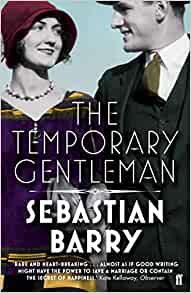
In The Temporary Gentleman, Barry tells the story of Jack, the third of the McNulty brothers (we heard the story of one in The Whereabouts of Eneas McNulty, and, more obliquely, Tom in The Secret Scripture). Jack is perhaps the son his mother was most proud of, for seemingly having made something of himself: leaving Sligo to go to university in Dublin, getting a profession as an engineer, and marrying the beautiful Mai Kirwan, daughter of the local doctor and therefore of a higher social standing than he might reasonably have hoped to achieve. 

When his father-in-law retires and Jack and Mai take up residence in the handsome family home, their seemingly perfect lifestyle (and marriage) begins to crumble. The root of the problem is Jack’s uncontrolled drinking and gambling habits which soon lead them into debt and shame. Worse, his neglect of Mai impacts on her mental health and she too enters a spiral of emotional decline.

The novel is told from Jack’s point of view. He is narrating his story while working as an engineer in Ghana. Here he is ‘the temporary gentleman’, with a servant, a status he feels he does not deserve. He looks back on his life, reflecting on events and in particular the impact of his choices and his behaviour on Mai. The pain and regret he experiences is palpable and Barry manages to explore this with compassion and a sense of shared trauma.

This is yet another powerful novel from Sebastian Barry. He explores similar themes to the other McNulty family novels, but with each individual’s story he gives it a new twist and a fresh perspective. I would love to go back and read the stories of the other two brothers again because each sibling is referred to as well as their partners. 

Highly recommended.

Reading challenge book review – “The Italian Girl” by Iris Murdoch

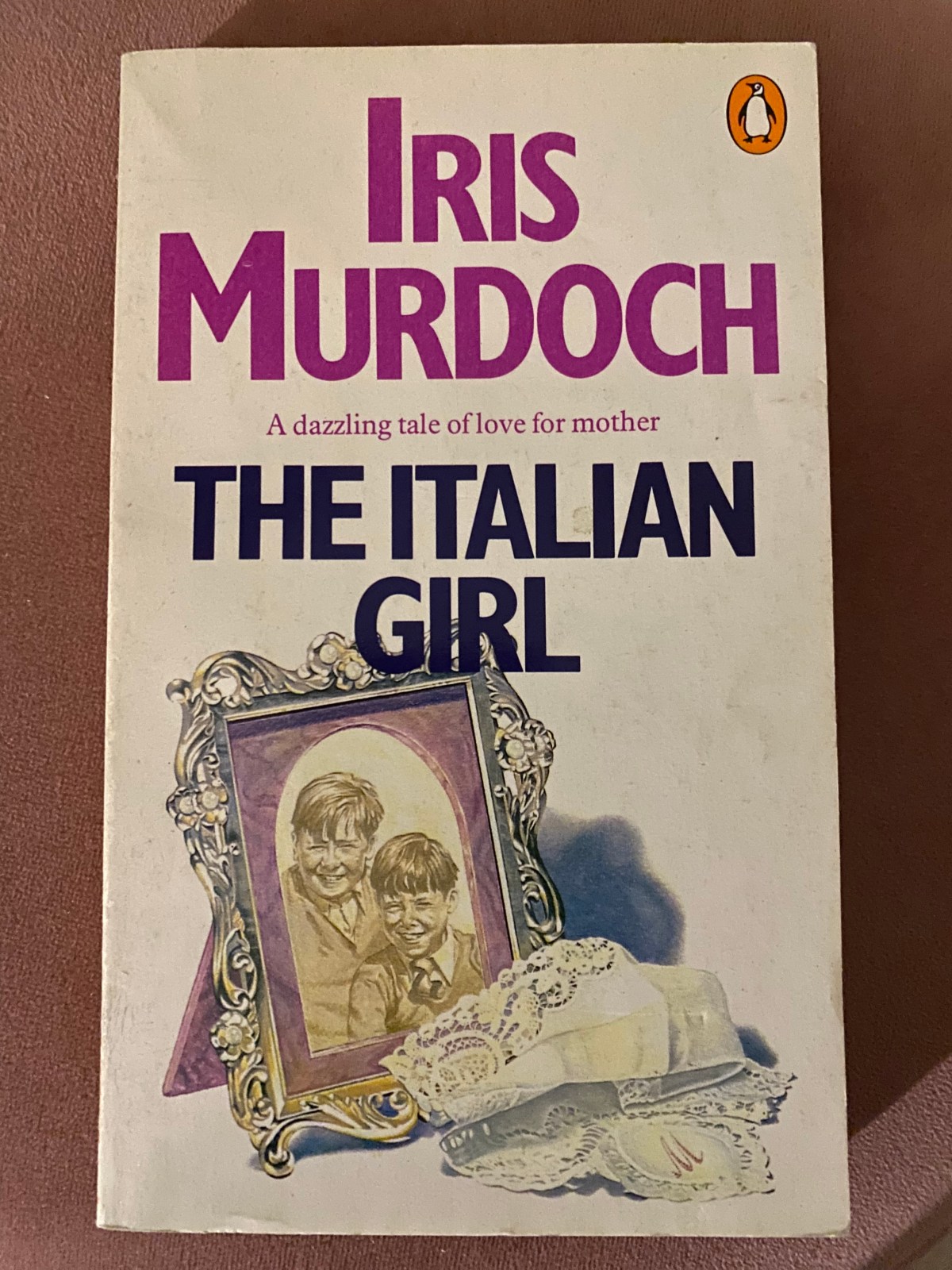
I chose this for my 2023 reading challenge that is not a challenge (I am not setting myself targets, just picking a neglected title off one of my book shelves). This is another book I appear to have bought in 1990, the year that I graduated from university. A fairly short little book that has been hanging around for 33 years! I am ashamed to say that I don’t think I have read anything at all by Iris Murdoch. I am sure she is one of those authors you think you know, or whose work you think you are familiar with until you try and remember which books of theirs you have read. 

Murdoch is considered one of the finest writers of the post-war generation. She was born in Ireland in 1919 to protestant British-Irish parents but moved to London when she was a baby. She attended both Oxford and Cambridge universities and was a philosopher as well as a writer of fiction and poetry. Her first novel, Under the Net, was published in 1953, and her nineteenth, The Sea, the Sea, won the Booker Prize in 1978. She died in 1999, two years after being diagnosed with Alzheimer’s disease. Her husband of more than forty years, John Bayley, cared for her and wrote a book about their life together, Iris: A Memoir of Iris Murdoch, which was made into a film in 2001 starring Jim Broadbent and Judi Dench. 

I’m afraid I cannot say that I much enjoyed The Italian Girl; reading a little more about Murdoch’s philosophy and about her writing in the style of novelists who explore their characters’ inner worlds and show them on a journey of transformation and redemption, I can ‘appreciate’ the work, much as a student of English literature might, but it was not an especially engaging experience. Perhaps I should have read it back in 1990 when I was fresh out of university! Perhaps I bought it because it was recommended to me by a lecturer, or something.

So what is wrong with The Italian Girl for the 21st century reader? Well, the most difficult thing was the sense of datedness. The writing style is  not actually showing its age too badly, so it is easy to forget that it is of a similar vintage to The Bell Jar, which I reviewed on here a couple of weeks ago. When one considers the events of the novel, it also feels remarkably modern: various extra-marital affairs, homosexuality, teenage pregnancy, and a rather bohemian setting. Perhaps that is why the staid conservatism seen particularly in the central character Edmund jars so much.

There is little in the way of a plot. Middle-aged Edmund returns to his mother Lydia’s home after her death, having been somewhat estranged from his family for some years. There he finds his brother Otto much declined – overweight, drinking heavily and having an affair with the young sister of his apprentice worker. Otto and his wife Isabel, who lived in the house with Lydia, live separate lives. Isabel keeps largely to her room. The Italian girl of the title is the maid, Maggie, the last in a long line of Italian housemaids that Lydia employed to care for her sons when they were little. Initially, Edmund gets them all  mixed up; Maggie barely has a distinct personality of her own. Edmund intends to escape what he sees as the suffocating atmosphere of the house as soon as he possibly can, once his mother’s funeral is over, but he gets sucked into the family’s drama – Flora (Isabel and  Otto’s daughter) announcing her pregnancy to him, and her intention to have an abortion, an idea that appalls him, then catching Otto and Elsa (the apprentice’s sister) in flagrante

It becomes clear that Edmund cannot escape, that he will need to go through some kind of transformation of his own, to leave behind his po-faced denial of his family’s reality, and, finally, to acknowledge that ‘the Italian girl’ is a real person, whose existence and influence cannot be denied.

I only had to make myself a little bit familiar with Murdoch’s philosophy to understand this book in a different way, but had I not done so, I think I might have thought the book somewhat tedious, the characters two-dimensional and the plot unremarkable. I fear I have become desensitised to subtle novels exploring the human condition. It is more akin to Virginia  Woolf than it is to, say, the story-telling of Isabel Allende.

I tend to feel that short books should be read slowly, and I certainly did that with The Italian Girl. I’m glad, because I have been able to absorb it and to reflect on it more than if I had read it in one speed-reading sitting. I have almost enjoyed it more in retrospect than I did whilst reading it.

I would like to read more of Iris Murdoch’s work, including her non-fiction and her poetry, but perhaps with an awareness that it could almost be classed as historical fiction now. I picked up a copy of The Severed Head recently in my wonderful local secondhand bookshop, Abacus Books in Altrincham, so perhaps I’ll give Iris Murdoch another go soon.

The next book in my reading challenge really is historical fiction – All Quiet on the Western Front by Erich Maria Remarque. Certainly no lack of action in this one.