This week I’d like to tell you about a book I read over the Christmas holidays. It was not a cheerful book, but it certainly made me reflect and think, as I am wont to do at that time of the year. I’m surprised it hasn’t received more attention as it is a beautiful, powerful and challenging exposition of an issue which is rarely out of the headlines: the movement of large numbers of people from North Africa and the Middle East to Europe.

Listeners to Radio 4’s PM news programme will be familiar with Emma Jane Kirby and her reporting on the migrant crisis in the Mediterranean. In her dispatches she has returned frequently to the tiny Italian island of Lampedusa, located about halfway between Sicily and north Africa (Tunisia and Libya). It has become infamous in recent years as the target destination for North Africans fleeing chaos, poverty, war and social disintegration in their own countries, and looking for a more settled way of life in Europe. Mostly, they flee on vessels that are barely seaworthy and thousands of people have died en route.
The book is written from the point of view of a local optician on the island who became deeply and personally embroiled in the crisis when he, his wife and six of their friends found themselves rescuing dozens of stranded and desperate migrants. They were on a sailing trip and were awoken early one morning by a noise they thought initially was coming from excited gulls. In fact the noises were human screams and cries. A flimsy boat, carrying possibly hundreds of people, was sinking and its occupants were drowning.
The eight friends set about a desperate rescue mission, pulling as many people as they could from the sea, dragging them onto their own small boat, and endangering its stability in the process. They rescued dozens before help finally arrived, in the form of the coastguard, who immediately ordered them to cease their mission, as they were putting their own vessel at risk of sinking, and to return to port. The friends do as they are told, bringing those they have rescued to safety on land. They are haunted, however, by the images of what they have witnessed at sea, the deaths of so many whom they did not, could not have, rescued.
The book is very short but it packs a mighty punch. It tells the human story behind the headlines, and this is what has been so powerful about Emma Jane’s reporting on the issue. Through its intense focus on the thoughts and feelings of one individual who played a direct part in saving the lives of so many, it brings to light, not the social and political challenges of this terrible and desperate phenomenon that is covered so extensively in our news, but the personal human catastrophe for those lost, and their loved ones, and those on the island of Lampedusa for whom the crisis is part of their daily life.
It’s the ordinariness that comes through; the optician lives a modest but happy life in a beautiful part of the world. He is not wealthy but he provides a valuable service to his community and wants for little. Like most of us. His small life is completely upended by the events of that terrible day, which is described in vivid detail. He, his wife and his friends are changed irrevocably by their experience and the latter part of the book is an account of how he is transformed.
It is a powerful piece of writing; with a journalist’s eye the author picks out the details which tell the story – for example, the incongruity of the donated clothing worn by the migrants at the reception centre. They have nothing and depend for everything on what people have given.
This book provides a powerful insight to one of the biggest news stories of our age, where the people involved are often objectified and dehumanised. Should be required reading for politicians.
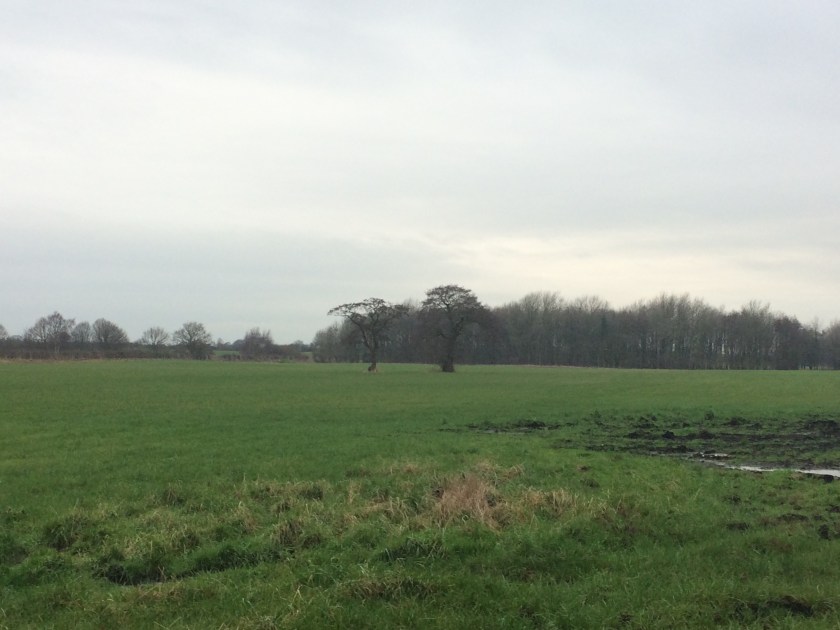 Parts of the country have been struck by a severe cold snap this last couple of days; on my walk yesterday I certainly felt the scenery was quite bleak. Yesterday was the end of Advent, twelfth night, and a natural end, for me, of a period of reflection: about the year that has gone and the one that is to come. In June last year I started this blog and I have loved posting every week about my reading and hearing from readers what you have enjoyed. In the past 12 months I have read over 30 books, the bulk of those since starting this blog, and that feels like quite an achievement. I hope to improve on that this year.
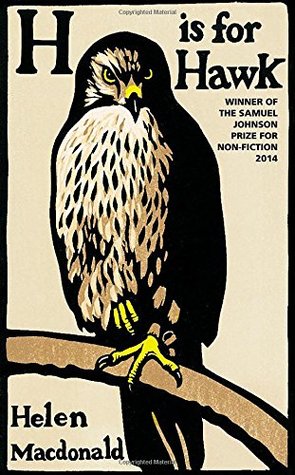 This book was a long slow read for me, but in a way that suits the type of book that it is. It is an account of bereavement. In that sense it bears reading over a long period because it covers a period of more than a year following the death of the author’s father.
 We have also completed a rather intense phase of building work in our house so I’m itching to get things back under control domestically. When thinking about this I was reminded of a book I picked up a couple of years ago called The Happiness Project by Gretchen Rubin. I’ll give you the sub-title which more or less sums up what the book is about:
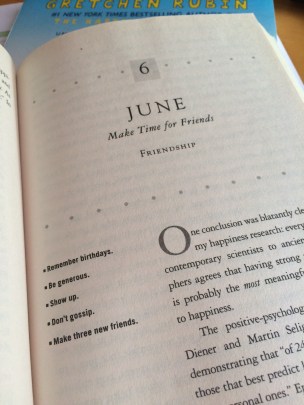 Other examples: June is a month to “Make Time for Friends” and September to “Pursue a Passion”. Her basic premise is that in order to implement change successfully you have to make things habitual. Once these habits are embedded in your lifestyle they are hard to break – for example, I manage to find 5-10 minutes each day to brush and floss my teeth, but found it really hard to find the same amount of time to drink enough water…until I got into the habit of drinking a glass at 10, 12, 2 and 4 o’clock each day. Sounds banal but it works.
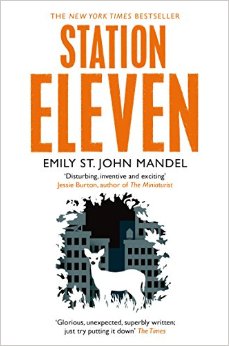 The book is set in Canada and the United States just 20 years after a catastrophic virus seemingly wipes out about 99% of humanity in a matter of days. The consequences of this are that, within a short space of time, electricity, running water and all the other basic services we take for granted, cease to exist. Vehicles are abandoned on motorways as their passengers leave their homes, to escape to…where? These people then die. Aircraft no longer fly and people are stranded pretty much wherever they happened to be at the moment the virus struck. And then mostly die. Whilst reading I recalled all those diseases in recent years that seemed to prefigure cataclysmic consequences (AIDS, Swine fever, SARS, Avian ‘flu, Ebola) fights which, for the most part, we eventually won; in this novel it is the disease (Georgian ‘flu) that prevails. And that’s scary.
 The author has quite a task managing this complexity: each of the four characters’ stories are told separately and in a non-linear way, but they are like pieces of a jigsaw gradually being pieced together until the overall picture becomes clear. The novel jumps back and forth in time and I found this quite difficult to follow. Also, for me, the drawing together of the strands was a little too contrived; it just did not seem entirely plausible that a tiny number of survivors could have such a connected past. I think this has been my problem with science-fiction generally (but perhaps I haven’t read enough); I get that you have to suspend disbelief but it’s too much for me when that means suspending credibility.
 There are so many books published that you may find people in your usual circle haven’t read the same things as you. But you will always find book review websites (whose authors would love you to post comments or engage in conversation, hint, hint!), or online reading communities, who have read your favourite most recent read. Sometimes, if I read a book I love (or loathe, though these are very few) I’m just bursting to talk about it with someone. I can always do that online.
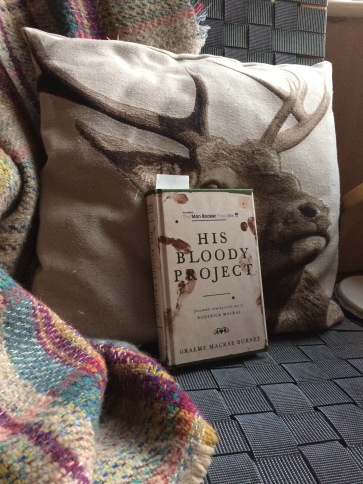 I have to say, though, that it’s a totally gripping story. Roddy Macrae is the 17-year old son of a crofter in a small village in the Scottish Highlands. The book begins with five short police statements from different witnesses who later testify in Roddy’s trial. They recount the incident, in August 1869, when Roddy murdered three other residents of the village: Lachlan Mackenzie, the village Constable and long-time foe of Roddy’s father, Mackenzie’s teenage daughter, Flora, and his young son Donnie. These witnesses observed Roddy walking through the village covered in blood and in addition to their account of the events they saw, they make observations on his character and background. Thus, there is little doubt that Roddy carried out the triple murder and the scene is set for an account of how these events came to pass.
 This is a novel about race in modern America where the white population seems to feel it has solved the problem of racism. Firstly, it abolished slavery and then set in place several pieces of legislation to reinforce racial equality. Unfortunately, this has not addressed a fundamental problem of disparity of outcomes between whites and blacks (or people of colour more widely), in academic achievement, income, social status, crime, you name it, the statistics paint a troublesome picture. The thesis of the novel is that, whilst white America is slightly uncomfortable with the facts as they stand, they can point to a number of black high achievers (not least the first African-American President) as evidence that they have done all they could. The under-achievement of the rest can be put down to, for example, their own fecklessness or problems of character.
 Autumn is becoming the new ‘new year’ for many people, lighter, brighter and generally a nicer time of year than January, which I’ve always felt was a really bad time to make resolutions and embark on new activities! On that theme, a lot of people I know are using October to make fresh starts or implement changes. For so many of us, transformation starts on the inside; if we have problems or issues we want to tackle or changes we want to make in our lives, it often means overcoming personal barriers – fears, phobias, addictions and the like – or building confidence in moving forward and realising dreams.
 I didn’t think that the words “life-changing” and “tidying” could belong in the same sentence in anyone’s world, let alone adding the word “magic” as well! Don’t get me wrong, like many people, I enjoy the buzz I get from a clean tidy space, it’s the cleaning and tidying bit I don’t like. Marie Kondo is a different kind of animal, but she is highly likeable because she doesn’t try to hide it. She confesses that when she was a child she loved tidying both her own and other people’s things, and devoured women’s magazines with all their cleaning and tidying tips.
 Julia's books