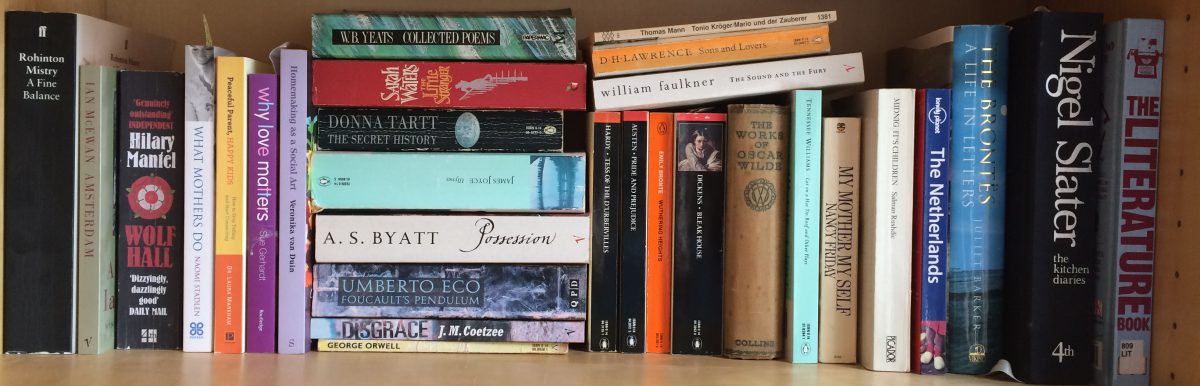
One of my objectives for the blog this year is to focus a lot more on children’s books. Those of you who read my posts regularly will know that I am passionate about children’s literacy and ensuring that, in this electronic age, reading remains an activity that all kids do. We know that reading improves a child’s mind in many ways, improves their vocabulary, writing skills, and academic outcomes, to name just a few of the benefits. But it’s still something that I know many parents struggle with. There are just so many distractions – for adults and children alike!
Books are also not cheap: you can expect to pay £6-7 for the average paperback, and often more for the hardback and picture books that are so vital when they are younger. A book every week or two is therefore a big ask for parents on a budget, especially if it comes with a bit of a risk – what if they don’t like it after 20 pages? Money wasted?
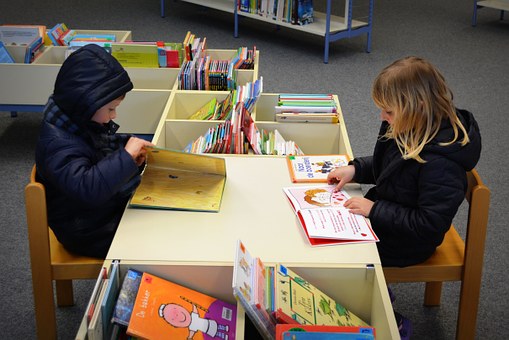
The answer for many is the public library. As we know, many local libraries are under threat, so it is a case of “use it or lose it”, I’m afraid. In my local borough, under 13s can borrow up to 20 books and four audiobooks at any one time. The loan period is 3 weeks and can be extended many times before you have to return (unless someone else has reserved the title). You can reserve books, search the online catalogue and renew online as well. What’s not to love? And all for free.
The only downside is fines – 6p per day per book for children, 15p for adults – so you need to keep on top of the due dates. However, my local library service sends emails a few days ahead of time to remind me what is due back when. It can be easy though if you build in a visit to the library every 2-3 weeks. I guarantee your kids will look forward to it and it’s time you get to spend with them, talking about, handling and looking at books.
I spent some time earlier this month scanning the new releases on my local library service online catalogue and picked up a few very interesting looking titles.

I’m going to be reviewing these over the next few weeks, starting with titles for primary school age children.
So, why not make it a goal to spend more time at the library with your children this year. Give it a try, there’s nothing to lose!
If you are a parent, what do you think are the biggest challenges to getting (and keeping!) your children reading?
If you have enjoyed this post, please subscribe to the blog by clicking on the ‘Follow’ button.


 The Disappearances by Emily Bain Murphy – suitable for 12-14 year olds
 Do You Speak Chocolate? by Cas Lester – suitable for 10-12 year olds
 Barefoot Books World Atlas by Nick Crane & David Dean (£9.99). I love the values and ethos behind Barefoot Books. Multi-cultural and humanitarian themes are present in everything they publish and their books can be valuable tools in combatting exclusion in our world and teaching children about kindness. This world atlas focuses on the interaction between environment and the communities and cultures of the world.
 Illumanatomy by Kate Davies and Carnovsky (£15.00). A superb large format book about the human body that goes into real detail. The illustrations are outstanding; when viewed with the special lenses provided you can see different parts of the body (skeleton, muscles, organs) and how they interact. Perfect for budding biologists!
 EtchArt: Hidden Forest by AJ Wood, Mike Jolley & Dinara Mirtalipova (£9.99). This is rather like those books in the colouring trend except the images you create are shiny and sparkly. The child uses the etching tool provided to produce glorious forest-themed pictures (there is also a sea-themed one available). Lovely, and nice and solid.
 Wreck this Journal by Keri Smith (£12.99). Yes, I know it’s not exactly a reading book (though there are plenty of words) there are writing and drawing opportunities. I actually love this series as I think they tap into teenagers’ anarchic tendencies, whilst also encouraging a degree of creativity. Here’s the 2017 offering and the cover is much nicer than previous editions. Good fun.
 A book I am particularly fond of is Alison David’s
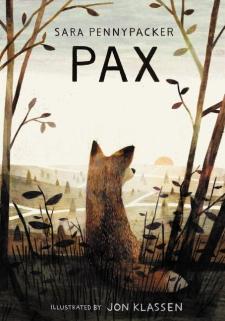
  The cover is lovely and there are a handful of illustrations in the book which are truly beautiful and very evocative. The apparent subject matter (animals) and the fact that it has some illustrations might put off some of the target readership (10-11 year olds, I would say), particularly the more advanced readers among them, who might think it is better suited to younger ones. The themes, however, are much more mature than you might think and may in fact be upsetting to more sensitive 9-10 year olds, say. It is perfect, therefore, for older primary school kids who are perhaps more reluctant readers who may find some of those thick volumes a bit daunting. At 276 pages, with a few pictures and nicely spaced typeface, this is a book where pages will be turned quite quickly; in my experience, this is a surprisingly important factor in many children’s enjoyment of a book!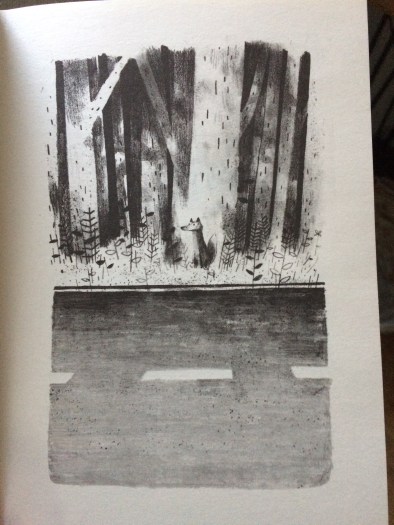

 Just Fly Away is the debut novel from 1980s brat-pack actor, turned award-winning director and author Andrew McCarthy. It tells the story of fifteen year old Lucy who discovers that she has a half-brother, the result of an affair her father had, living in the same town. Like No Filter it is a novel about secrets and lies, as Lucy escapes to Maine to live with her grandfather, himself estranged from the family, and to work through the confusion and torment her discovery has left her with.
 Finally, on a different topic, there is All the Things that Could Go Wrong by Stewart Foster which concerns the relationship between two boys, initially at loggerheads, who find common cause when they are forced to spend time together. Alex suffers from OCD and worries about everything. His condition is so severe that he rarely leaves home. Dan is angry, because his older brother Alex has left home and he feels lost. Initially, he takes it out on Alex, whom he perceives as weak and ineffectual, but the boys’ mothers force them together on a garden building project and the understanding that develops between is healing for both.
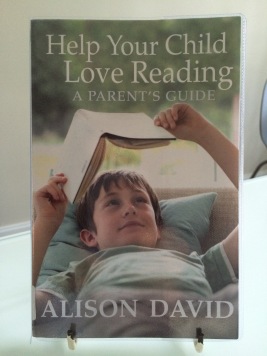
 If you are finding it hard to motivate your children to read you may find this little book helpful – Alison David’s


 This was the third book I read last term with the children’s book club at my daughter’s primary school. It was something of a risk as it’s not conventional either in its subject matter or its format. But having read
  Regular visitors to this blog will know that I am passionate about children’s literature. My children are part of the generation that grew up with Harry Potter. JK Rowling is one of my heroes, for a number of reasons, but primarily for all that she has done to get (and keep) children reading, particularly those who might otherwise not have done so. Harry Potter wasn’t the first literary character to bring wizarding and magic into children’s literary lives, however. The Snow Spider was first published 30 years ago and was a multiple award winner. It was originally published as a trilogy, but this anniversary volume has been issued as a stand-alone. I chose it for the book club I run at my daughter’s primary school.
 Time Travelling with a Hamster was the first choice of the book club, and what a joy it is. At the heart of the plot is a tragic event – a boy who loses his father at the age of eight – but the author handles this so deftly, acknowledging the huge emotional impact it will no doubt have had on such a young child, but also deploying humour and intelligence to help child readers deal with such a challenging topic. I think it shows a great respect on the part of the author for the maturity and strength of his young readership.

 Julia's books