A reflection on not buying books

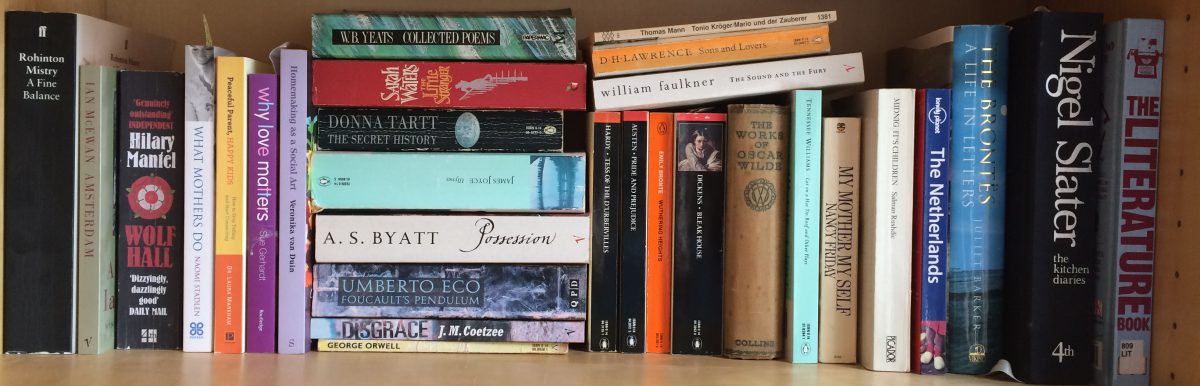
stack-of-books-1001655_1280

I’ve posted on here before about being a compulsive book-buyer – nothing wrong with that, you might say, there are worse habits! Despite my ‘piles’ giving me cause for consternation from time to time, because it’s another thing to feel guilty about ( I buy more books than I can hope to read, at this point in my life), I have reconciled myself to the condition. Firstly, I am happy to support authors, for the work they have done, even if it takes me a long time to get around to enjoying it. Secondly, I have three children of a certain age and, like most parents I know, am engaged in a constant struggle with small, shiny technological weapons! I consider the books that clutter (embellish?) my home to be my old-fashioned conventional arms, that will still be there when the devices run out of charge or become obsolete. There are sound reasons for having lots of books around.

That said, my March reading challenge was to take a book from my ‘to read’ pile and it made me profoundly aware of how many of my books I have not yet read, and ask myself why I still acquire more. So I decided that I would give up book-buying for Lent. I’m not religious, but I generally try and participate in Lent because I think it’s interesting to test oneself. Last year I tried giving up sugar, with mixed results, but I learnt a great deal, and I won’t be doing that again!

Unlike sugar, book-buying is a healthy thing, but it helped me look more to what I already have, instead of craving more, and within that lies a deeper message. I went into my local bookshop many times during the period of Lent (it also happens to be my coffee shop of choice), and I found it very difficult to resist the special offers, the ‘book of the month’, the attractive lifestyle books, but I did resist, and I am slightly richer for it.

2017-04-19 13.02.42

It meant that I went to my local library for a book I was keen to read (East West Street by Phillippe Sands, winner of this year’s Baillie Gifford non-fiction prize) and had a long overdue browse there. (The Trafford Libraries website is amazing – you can get almost anything!) It also meant that I turned back to my ‘to read’ pile (or the TBR pile, as other book bloggers call it) for more inspiration, which was also a rewarding exercise.


I had two semi-lapses: I bought a book as a birthday gift for a friend (We: A Manifesto for Women Everywhere by Gillian Anderson and Jennifer Nadel, yes, the Gillian Anderson!) which I’m tempted to read before giving it to her belatedly. I think I can allow that one! I also bought Stay with Me by Ayobami Adebayo; that one is harder to justify but it’s this month’s read for my book club so I didn’t think I could wait until after Lent.

I am now back in full book-buying mode again, and with all the literary prizes coming up in the next few months, there will be no shortage of credit card bashing. Having detoxed for a couple of months, however, I am more than ready for it!

Are you a compulsive book-buyer? I’d love to hear your thoughts about it.

If you have enjoyed reading this post, please subscribe to my blog, by clicking on the button below or to the right, depending on your device.
 

Getting your kids reading again

read-729719_1280I posted a video on Facebook Live last week that got a lot of reaction. The subject was how to get your children reading and it really seemed to strike a chord. I relayed the story of my teenage son who announced to me a couple of years ago that he didn’t really like books anymore. I was, and this is not an over-statement, devastated. My son is the eldest of three and I think it is fair to say that he had the best of me! Those of you with children will perhaps empathise with my experience that I found I spent less time reading with my second and third child, simply because I had less time and opportunity to do so. My eldest was read to every day virtually from birth, until at least the age of nine or ten. And I didn’t read to them out of some sense of duty that I ought to be doing it (like taking them swimming which, as a non-swimmer until very recently, I always found stressful), it was the thing I most loved doing. So, where did I go wrong, I asked myself, and what more could I have done?

Well, panic over, of course I didn’t do anything wrong; it was probably my son’s mini-rebellion, and if that’s the worst of it, then we’ll be doing pretty well. It was my teenager defining his own identity and his own interests and preferences. I think it was also a reaction against the academic pressure he perhaps felt under – once he started his GCSE courses, his whole life became about books. Why would he want to read for pleasure? I can identify with that; after I finished my English degree I couldn’t look at a work of fiction for months! There are so many competing demands on our children today, particularly in the teenage years, and multiple distractions, not least socialising, social media, computer games, television, etc. None of these are necessarily bad things, in moderation, but it’s easy to demonise them.

With all the pressure on young people today, I feel reluctant to add another ‘should’ to the pile of things they have to do. But I am also firmly of the view that reading can actually help in coping with the pressure:

  • reading at night can help you sleep, and many of our teenagers are chronically sleep-deprived
  • reading can help you relax
  • reading can create a space for reflection
  • reading can provide a safe, temporary retreat from the demands of everyday life

What’s not to love?

So, if there is a young person in your household who has turned away from reading, here are some tips to get them back into books:

  1. Don’t panic and don’t put pressure on them to read. It may be a ‘phase’.
  2. Don’t let them see you care too much – if it’s a rebellious act this will only reinforce their determination to do the opposite of what you want.
  3. Whatever they read, don’t judge their choices – even magazines and comics will help to get them back into a habit and they are not screens!
  4. Leave reading material lying around, such as newspapers, quality magazines, supplements, even leaflets. You could try leaving them open on pages covering issues that you know they are interested in, such as technology.
  5. Are you planning your Summer holiday? Leave a guide book around.
  6. Engage in conversation about anything they have read. Take an interest, discuss and listen without judgement.
  7. Model desired behaviours. How often do your kids see you reading? Someone wise once said that children listen to almost nothing you say but they watch everything you do.
  8. Be clever – if you are out and about with your kids, choose this time to pop into the bookshop or library to get what you need. Spend a few minutes browsing and observe what they do, which shelves they go to.
  9. Have a ‘screen off time’ in the household, or even a ‘reading’ or ‘quiet time’. It doesn’t have to be very long to begin with, even 10 minutes at the weekend is a start.
  10. Allow reading at the table!

I am happy to say that my son is now gradually getting back into books, thanks in part to being given lots of Amazon vouchers as Christmas and birthday gifts. He quite likes having the opportunity to order his own books, completely bypassing Mum and Dad’s scrutiny (don’t worry, we do look at what he buys!) and without needing to ask us to use our credit cards to order things for him.

Help your child img

For more tips and ideas you could look at Alison David’s Help Your Child Love Readinga fabulous little book I reviewed here a few months ago. I picked it up in my local library. It is divided up into different age groups, as your strategies may need to vary depending on the age of the child.


Good luck, and I’d love to hear how you get on, or if you have any other tips and suggestions.

If you have enjoyed this post, please follow my blog by subscribing. Thank you!

Finished at last!


Do Not Say We Have Nothing img

I cannot remember when it last took me so long to read a book. I started reading Do Not Say We Have Nothing in early January and finished it at the end of February. I toyed with giving up on it (as I blogged about here), but instead I took a couple of ‘breaks’ to read other books, which interrupted the flow for me a little, but also helped me to persevere. At over 460 pages it’s of a considerable length, but I’ve taken less time to read longer books. It’s a tremendous achievement, a work of scholarship, but I found it really hard-going. It was shortlisted for the Man Booker prize last year; I’ve read the other five and I have to say that although in some ways this is the ‘finest’ book, it was not, for me at least, the best read. It has also been longlisted for the Baileys Women’s Prize for Fiction, announced today.

I’m also finding it fiendishly difficult to review! It’s a book about China. It covers a period from the mid-1960s, when Mao’s Cultural Revolution was instigated, to the student protests in Tiananmen Square in 1989, the government’s military reaction to which resulted in several hundred deaths. These deaths, however, pale into insignificance when compared to the thousands, possibly millions who were tortured, killed and persecuted in the previous forty years under Communist rule. The great horror the author explores more closely in this book, however, is the obsessive annihilation of all ‘unauthorised’ culture.

The novel begins in Canada where 10-year old Marie lives with her mother. Marie’s father, we learn, committed suicide, leaving many papers and a mystery. Then Ai-Ming comes into their lives, a refugee from China whose links to Marie’s father are not clear initially. She is a troubled young woman, though at this stage we do not know why. Marie becomes close to Ai-Ming and with her she begins to uncover some of the mysteries lying within her father’s remaining effects, but Ai-Ming eventually disappears, leaving many unanswered questions. Marie sets out to uncover the full story of the connections between Ai-Ming’s family and her father and most of the book is a detailed first hand account of these events.

Ai-Ming’s father, Sparrow, was a gifted composer at the prestigious musical academy in Shanghai. Marie’s father, Jiang Kai, a little younger and a gifted pianist. The third key individual is Zhuli, Sparrow’s young cousin who lives with him and his parents because her own parents have been imprisoned in remote labour camps for crimes against the state. Zhuli is a prodigious violinist. For each of our three main protagonists, music not only dominates their life, but their whole being. The homogenisation of culture under Mao, the proscribing of musical performance and the condemnation of musicians as ‘bourgeois rightists’ has profound effects on their lives. The book is primarily about how each is affected, both the shared horror they feel, and the different paths they must each follow for self-preservation.

It is a profoundly moving book: the horrors of the time are recounted in breathtaking detail and the aims of the book are noble. The author paints a picture of how the Cultural Revolution, by denying the expression of a shared history through art, literature and music, and by prohibiting so much that was beautiful and valuable, was a programme of dehumanisation that exercised control by turning a mass of people into savages. There is no doubt that Madeline Thien is an extremely talented writer. However, I was only able to become really engaged with the book partway through; the first hundred pages or so just failed to move me at all. I found the transitions from 1990 Canada to 1960s China rather clunky; each time we were with Ai-Ming and Marie and just beginning to get to know them, we were suddenly drawn back to China and a set of random characters in whom I struggled to get interested. It was when Sparrow, Zhuli and Kai’s story came to the fore that I began to become more invested. Even then though there would be extremely long sections of the book telling us their story, without even a mention of Ai-Ming and Marie. Yes, the author ties everything up very cleverly at the end, but it rather rendered the Ai-Ming/Marie reflective device a bit redundant. I think it would have been just as good a story without involving these two at all.

So, a powerful and moving book, a necessary one perhaps, demonstrating the dangers of oppression, control and the regulation of art and culture, but a book that is hard-going at times.

Have you read this book? I’d be interested in your views

If you’ve enjoyed reading this post, please follow my blog by clicking on the ‘Subscribe’ button below or to the right, depending on your device, and if you do, thank you!

Thoughts on unhappiness

sad-505857_1280

My children and I are privileged. On every level. There is no doubt about it. Because we have a roof over our heads that we can afford to pay for, because we know where not just the next meal, but the one after that and the one after that are coming from, and because we can turn the heating up when there’s an unexpected cold snap, we are more privileged than many. And I don’t just mean those children fleeing war or who have lost their families, but many in our country, our city, or our town. And yet. And yet.

I read somewhere once that you are only as happy as your unhappiest child. And just now I have an unhappy child. A child who feels that nothing is going right for them, who feels there is pressure, who struggles sometimes in their social network. A child. One who is too young for this. A child who says that sometimes life is so hard they wish they could just hide away from it all. So no matter how good my life, no matter how well my other children are or are doing, I too am unhappy. I’d go through the pain of childbirth every day to take that pain away.

I was lucky to be a relatively successful child. I sailed through most things. I was disliked by some of the nastier kids in the neighbourhood, but I managed to avoid them, mostly. I thank my lucky stars I wasn’t bullied because I was a prime target for it (nice, timid, studious, spectacle-wearing), but I came through school largely unscathed. It was in young adulthood that the realities of the world hit me. When I realised that, hmm, life was tough. That it wasn’t all going to be plain sailing. That life wasn’t fair. And I was powerless to do anything about much of life’s injustice. It was only later I learned all I could do about it was just to be the best that I could be.

Mental nd emotional wellbeing have been a lifelong challenge for me, as for many people I know (most?). I admire and am fascinated by people who have a natural positive outlook, that sunny disposition, and I wish I knew how to get it. No. I wish I knew how to get it for my child. My question is, is it better for children to learn when they’re young that life is not fair and you just have to make the best of it? Does disappointment and heartache when you’re young help to build resilience when you’re older? I sometimes wonder whether a bit of disappointment, a reality check, when I was a kid, might have helped me cope better with it in adulthood. But maybe not.

More recently, I’ve learned how focusing on gratitude can help to build resilience and a positive mindset, so I practice this every day. And I know I have so much to be grateful for. Just recently I heard a single mother on the radio talking about the pain of having to put her severely disabled 12-year old into care because she could no longer cope. And, again, I thank my lucky stars, my guardian angels, or whatever force in the world is out there looking after me and mine, that I have a healthy, stable family. That said, the least empathic thing you can say to someone who is feeling low is to invite them to think of all the people who are worse off than they are.

I also read somewhere once that you get the children you need; maybe that divine force out there has gifted my children to me because I have within me the love to support and care for them, when unhappiness strikes. But today I feel ill-equipped and today I feel as unhappy as my unhappiest child.

 “Happiness, not in another place but this place, not for another hour but this hour”

As ever, I look to my books for help. The above quote from Walt Whitman is a call to embrace joy in the here and now, and is one of the techniques for being happy listed in a little volume I picked up in a bargain bookshop a while ago. A little book I keep to hand for times like this – How to be Happy by Anna Barnes.

I don’t think Whitman will mean much to my child at this point, but perhaps my job as a parent is to try and pass on some of my own hard-earned resilience to my child, who is still maturing, still growing, still learning.

It’s beginning to look a lot like Christmas…!

christmas-sack-964342_1280

I know a lot of people find it quite difficult to get into the swing of Christmas until quite late on. I find myself running around trying to get the kids sorted before the end of term (Friday, hurrah!), which, these days, is simply a case of shopping to order! Now that’s done, I can turn my mind to gifts for the grown-ups, which often require a bit more thought. So, if that’s you, or perhaps you have a Secret Santa at work, read on. Books are perfect presents because, rather like slow-release carbohydrates, the benefit lasts a bit longer. It may be a few weeks, even months, before your gift recipient picks up their book, but when they do, they will remember it came from you and it can often then spark a conversation that you may not otherwise have had.

So, if you’re looking for some ideas, here are a few titles that have caught my eye, both fiction and non-fiction.

xmas-3-1The Essex Serpent by Sarah Perry has been on my must-read list since I heard the author talking about it on BBC Woman’s Hour. (As an expatriated Essex girl, I’m also attracted to the fact that it is set in the county of my birth.) It is a historical novel set at the end of the nineteenth century and centres on the relationship between newly-widowed naturalist Cora Seaborne and local vicar William Ransome. The pair are in search of the truth about the eponymous serpent which local people believe exists and is a threat to their lives and their livelihoods. It looks like a fascinating tale and I can’t wait to read it. And the cover is gorgeous too!
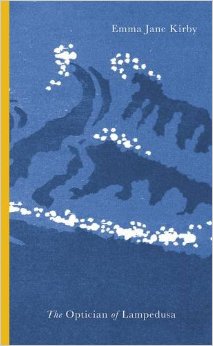


xmas-3-2The Optician of Lampedusa by Emma Jane Kirby. Listeners to Radio 4’s PM programme will be familiar with this journalist and her reports from southern Italy on the human tragedy behind the migrant crisis. She reported extensively on the story and did a number of interviews with a local optician on the island who was deeply affected by what he witnessed. The story is told through his eyes. It’s a very affecting as well as a humbling book that will make anyone look at their children and loved ones and thank the Lord they are warm and safe.


xmas-3-9Bedtime Stories for Grown-Ups by Ben Holden is a wonderful anthology of classic and modern short stories, just long enough to get you off to sleep, but not so long that you have to remember what has gone before. It taps into a wonderful childhood ritual and may encourage the more reluctant adult reader who fears committing to a whole novel! It’s probably not the sort of book that most people would buy for themselves so will make a great gift.


Biographies and Autobiographies are always a good option and there are usually plenty published at this time of year for you to choose from. Here are three that I’m quite excited about:

Johnny Marr’s autobiography Set The Boy Free will be in the stocking of someone I know – interesting for those of us who adored The Smiths. Muhammad Ali: His Life and Times by Thomas Hauser had great reviews and won awards when it was published in 2012, and has been relaunched in the light of the boxer’s death earlier this year. He was such an icon that it will be a fascinating read, even if you’re not a sports fan. Finally, another icon Get a Life: the diaries of Vivienne Westwood, an incredible woman with some incredible stories to tell. This is the published version of her online diary and has some amazing photos. It will remind anyone to live a little more!

A couple of books for geeks and clever clogs, that will also provide a bit of round the table discussion: Information is Beautiful by David McCandless, one for the coffee table and to dip into for fascinating facts, presented in the most interesting and engaging images and graphics. A great book for anyone fascinated by the information age. The GCHQ Puzzle Book, perfect for working through after Christmas dinner? Maybe not, but this will provide hours of entertainment for anyone who thinks they coulda been a spook!

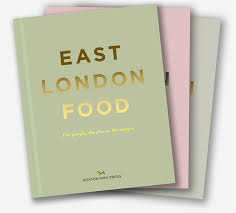
xmas-3-8Finally, one of my most popular recent blogs was about cookery books – it seems many of you agree with me that it is an important genre. There are gazillions to choose from at Christmas, many of which, I fear, will be quite mediocre. This one caught my eye, however, East London Foodthe people, the places, the recipes will be great for anyone who wants to be entertaining on trend in 2017. Independently published by Hoxton Mini Press it’s also available in three different colours to suit your gift recipient’s decor!
 

I hope that gives you a few ideas. If there are any other titles you’ve spotted that you think will make great gifts, I’d love to hear about them.

Happy Christmas shopping!

Finding sanctuary in reading

I have the builders in at the moment. If you’ve ever had building work done in your house, I’m sure you will be shuddering as you read this. The guys are very nice and pretty tidy, all things considered, but there is no doubt that it’s disruptive. This work (a loft conversion) has been in the planning for some time and I made sure to manage my own personal expectations about what I would achieve work-wise for the duration of the project. The continuous decision-making, tea-making and the noise and dust, have played havoc with my writing life; I’m currently working on a book, which picked up momentum at the start of the Autumn, but which this last couple of weeks has very much taken a back seat. And I’m struggling to get my book reviews written so I’ve got a couple of books that I’ve read recently which I’m dying to tell you about.

2016-11-16-15-34-36
My retreat awaits!

Funnily enough, though, the disruption has not affected my reading life. I set aside at least an  hour each day to read (as you would expect from any self-respecting book reviewer) and I’m actually finding that the amount I am reading is increasing in direct inverse proportion to how stressful the building work is! My reading spot, in the sunniest corner of the living room, seems far away from the chaos and I find I am able to completely switch off. It’s like my own little DIY retreat.

I’m currently reading His Bloody Project the Man Booker-shortlisted novel by Graeme Macrae Burnet. It’s set in a remote rural Scottish Highland community in the mid-19th century, and tells the story of a brutal triple murder carried out by seventeen-year old crofter, Roddy Macrae. The events, the atmosphere and the setting of the book could not be further away from my present daily concerns: have I got enough coffee in, how thick is that layer of dust on the TV and how many electrical sockets do I want? It’s a real page-turner too, and for that I am very grateful.

I’ll finish it in the next couple of days so hopefully I will be able to concentrate long enough at some point in the next week to pen a more thoughtful and helpful review of it!

I’d love to hear about what you’re reading at the moment and whether reading provides a form of escape for you too. 


Cookery books – a literary genre?

cookbook-761588_1280I have a friend with several shelves full of cookbooks and yet I know she rarely gets to use them. She and her partner both have full-time demanding jobs, three children and very busy lives, so why does she buy so many? I’m not quite as bad, my vice tends to be fiction, but we do also have quite a few cookery books, and yet we return to the same few recipes week in, week out.

The answer, of course, is that most families I know, rotate about 15-20 meals for most of the weekday refuelling stops (and in  houses with kids, that is usually what mealtimes are). Only occasionally do we get the time and opportunity to try out something new. My husband is an occasional (very good) cook and selecting a recipe, compiling the list, shopping and preparing the ingredients is a form of relaxation for him. In our household, though, I do the lion’s share of the cooking and all too often it is just another task to be completed. One of my daughters is a keen baker and a good experimenter so she likes recipe books (though vlogs and the internet are also a major source of ideas for her). I tend to go for the tried and tested things because on a midweek evening there is a low tolerance for failure!

So, if we’re not trying out all the recipes why do we buy so many cookbooks? Well, in this age of celebrity, TV chefs and their lives are as interesting to us as other Hollywood A-listers. How else does Gordon Ramsay’s daughter get her own TV cooking show centred around the family’s life in their holiday home in LA? Also, there are many more cookery shows on TV now, not just about techniques, but linked to all those other things we aspire to such as exotic travel; in our house we loved watching Gino’s Italian Escape and Rick Stein’s From Venice to Istanbul and bought both books.

I have two pet theories: firstly, reading cookery books has become the genre of choice for many time-poor adults. They are now incredibly visual, gorgeous to handle and to look at and the quality of the photography is as important as the quality of the recipe. The game-changer, I think, was Nigella’s How to be a Domestic Goddess from 2000. Nigella made cooking sexy! The book is visually stunning and the recipes are written in a very conversational style. Cooking is a narrative journey, not the usual soulless step-by-step instructions. Secondly, evidence shows we cook less than we have ever done but I think many of us aspire to cook more. Some of these cookbooks, like a lot of fiction, provide a form of escapism into a life where we do everything ‘better’, where we have friends over for spontaneous dinner parties every weekend, our kids eat all their veg and someone else does all the washing-up. We all know that real life isn’t quite like that!

So, here are the top cookbooks on our shelves, and note there are two lists – one for the books we use the most and one for the books I like to own!:

Most used:

2016-11-09-11-57-15
Dog-eared and falling apart
  1. Delia Smith’s Complete Cookery Course, first published in 1978. Still our primary source book for most of the basics.
  2. Fish: the complete guide to buying and cooking, by Mark Bittman, first published in 1994. My husband bought this after our first child was born when we realised that we wouldn’t be going out to eat so often so he’d better up his game! I’d been a lifelong vegetarian up to then, but started eating fish when I became pregnant. It is still the most used cookbook we have and it has only a handful of photographs.
  3. How to be a domestic goddess: baking and the art of comfort cooking by Nigella Lawson. A classic and the main reason my kids love baking.

Like to own:

2016-11-09-11-56-03
Pristine
  1. The Kitchen Diaries by Nigel Slater, published in 2005. I love Nigel, loved his column in The Observer, love his TV shows, love his gentleness. I love the way the book reads and is laid out, like a chronicle of his cooking life. But I’ve tried hardly any of the recipes….
  2. Economy Gastronomy: eat better and spend less by Allegra McEvedy and Paul Merret. I bought this after browsing through it in a friend’s downstairs loo (what does that tell you?!) I like the concept (cook a huge batch and then tweak it and turn it into several different meals) and we’ve tried a few of the suggestions, but not many. It feels like a big effort, but it’s a nice read.
  3. Hugh’s Three Good Things on a Plate by Hugh Fearnley-Whittingstall. Love Hugh, love the River Cafe, love the idea of the book, great pictures. Not tried many of the recipes and, browsing through it now, realise I should.


So, what are your favourites, to use and to own? Love to hear your thoughts and suggestions.

3.5/6 ain’t bad

The winner of the Man Booker prize 2016 is announced this evening. Here’s a reminder of the shortlist:

About a month ago I set myself the task of reading all six novels by the time of the announcement, but, alas, it seems that was a little ambitious! I have finished three of them though and am working my way through the fourth. I loved Hot Milk but was lukewarm about All That Man Is. I have reviewed both of these here already (see below). I have also completed Eileen, which I really enjoyed, and I’ll post a review of it here soon. I’m now part way through The Sellout, but to be honest I’m still waiting to decide whether I like it.

Based on what I’ve read so far, my favourite is the Deborah Levy. Hot Milk is a stunning literary achievement and I recommend it highly. It’s also thought-provoking to any woman with a mother! However, it’s not the most “Booker-ish” of novels (if you get me) and so I have a hunch that Madeleine Thien’s account of the relationship between a young Canadian girl and a refugee who has fled China following the events in Tianenmen Square, will win. It’s not that the others don’t have big themes (Levy and Szalay deal with questions of globalisation and migration, huge topics of our time, Moshfegh deals with abuse, self-abuse and personality disorders, and Beatty deals with the unresolved question of race in America), but from what I have heard about Do Not Say We Have Nothing it just feels like it may have the scale, the ambition and the gravitas of a winner.

So, just a few hours to find out if I’m right. Look out for my review of Eileen later in the week – it’s a corker of a novel!


I need a man!

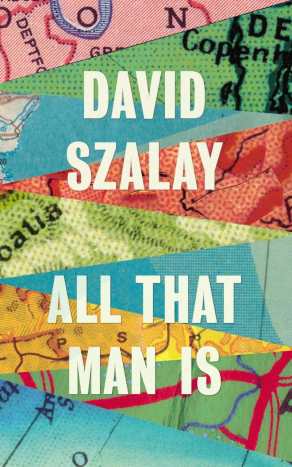
Truly, I do! I would like any many who has read David Szalay’s All That Man Is to give me their perspective on this book. It has been shortlisted for this year’s Man Booker Prize and I am working my way through that shortlist at the moment. This was my second read, and whilst I found it reasonably engaging, I also found myself saying at the end “And….?”

all-that-man-is-img

It is a book of nine parts and focuses on nine men, each at a different stage in life. In that sense, it is a book of nine stories. Each is set in a different part of Europe and each character is away from home, although ‘home’ is a fluid concept in the novel. It is a very international, very European, book.

As the reader progresses through the novel, the characters become older. So, we start with 17-year-old Simon in Part One, inter-railing with a school friend, and end with 73-year-old Tony in Part Nine. In between, there is young Frenchman Bernard, leading an aimless life, not sure what to do with his future, who takes a holiday in Cyprus; Hungarian security guard Balazs, who finds himself in London minding a young woman with whom he is in love, and who is being pimped as a high-end prostitute by her boyfriend; self-obsessed German linguist academic Karel, driving to Krakow with his Polish girlfriend, who tells him en route that she is pregnant; then we start on middle-age with Danish newspaper editor Kristian, bored by middle-class family life, but smug with the trappings of his career success; James a London-based property agent, looking to invest in apartments in ski resorts in Switzerland, preoccupied by how to make  more money; Murray, 52-year-old Scotsman, living in Croatia, conned out of what little he has by his own foolish ego; Aleksandr, suicidal Russian billionaire on the ropes, down to his last few hundred million after losing a court case against a rival; and finally, Tony, 73 year-old former diplomat, alone in his house in Italy in the winter. He has been ill and then has a car accident and is facing into old age with all its travails.

Continue reading “I need a man!”

A book about caring, love and self-love; abandonment and family chains

hot-milk-imgThis was the first book on my ‘read the Man Booker shortlist challenge’, which I set myself a couple of weeks ago. I really enjoyed it, but it’s a book that I will probably have to mull over in my mind for a while before I can really pin down what it’s all about, because it is operating on so many levels. I think that makes it the mark of a very fine piece of literature and the writing is sublime.

So, a plot summary: Sofia is in her mid-twenties, half-Greek, half-English. She is an anthropologist, but abandoned her PhD, primarily to care for her mother, Rose, and now works in a coffee shop. Rose is a hypochondriac; she no longer walks and claims not to have feeling in her feet. Her doctors have been unable to identify the cause of her illness, though she is on a cocktail of drugs to manage her symptoms. As a last resort, Rose has remortgaged her home in a last ditch attempt to find a diagnosis, by checking herself into an unconventional clinic in Almeria, southern Spain, under the care of the charismatic Dr Gomez.

Continue reading “A book about caring, love and self-love; abandonment and family chains”