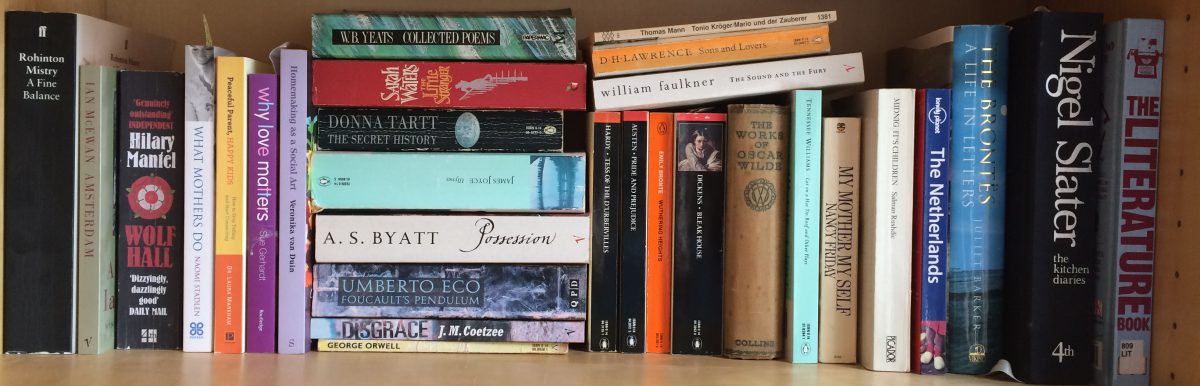

I’ve had a very long summer blogging break – the longest, I think, since I started blogging about a million years ago! It’s been another intense year in my household, not least because all three of my children were at fairly crucial points in their academic lives, and I felt that a complete break from the demands of my usual routine was in order. Like the school summer break of childhood, a chance to recharge the work and blogging batteries.
My break was extended by the unexpected and very welcome arrival of something resembling ‘summer’ last week, so I spent it prioritising getting outside, gardening and laundry – practically everything textile in my house has been through the washing machine!
The break was worth it. I went to Ireland to visit family as usual, but also managed to fulfil a long-held ambition of visiting the north west of the country. Despite having been to Ireland several times a year for more than two decades (with the exception of the Covid hiatus), I have never managed to venture as far as that. When I was at university studying for my Bachelor’s degree in English literature, I fell in love with the poetry of WB Yeats and always wanted to go to Sligo, the place where he spent much of his youth and which inspired so much of his work. His grave is also there, lying in the shadow of Ben Bulben, the distinctive mountain he revered and which was the subject of one of his final poems. Back then, Sligo seemed so far away.
My fascination with the county has been reawakened in recent years as I have grown to love the work of Sebastian Barry; Sligo is one of the settings he evokes so brilliantly in his novels. It was therefore a complete joy for me to go there this August. See some of my holiday snaps below. I also went to County Fermanagh in Northern Ireland ( a very much under-visited and very beautiful part of the world, which I encourage you to visit), and County Donegal, which I found even more beautiful than Sligo, if I’m honest.


Busy days on the beaches and highways of Donegal!


The colours of Donegal – they don’t call it the Emerald Isle for nothing!


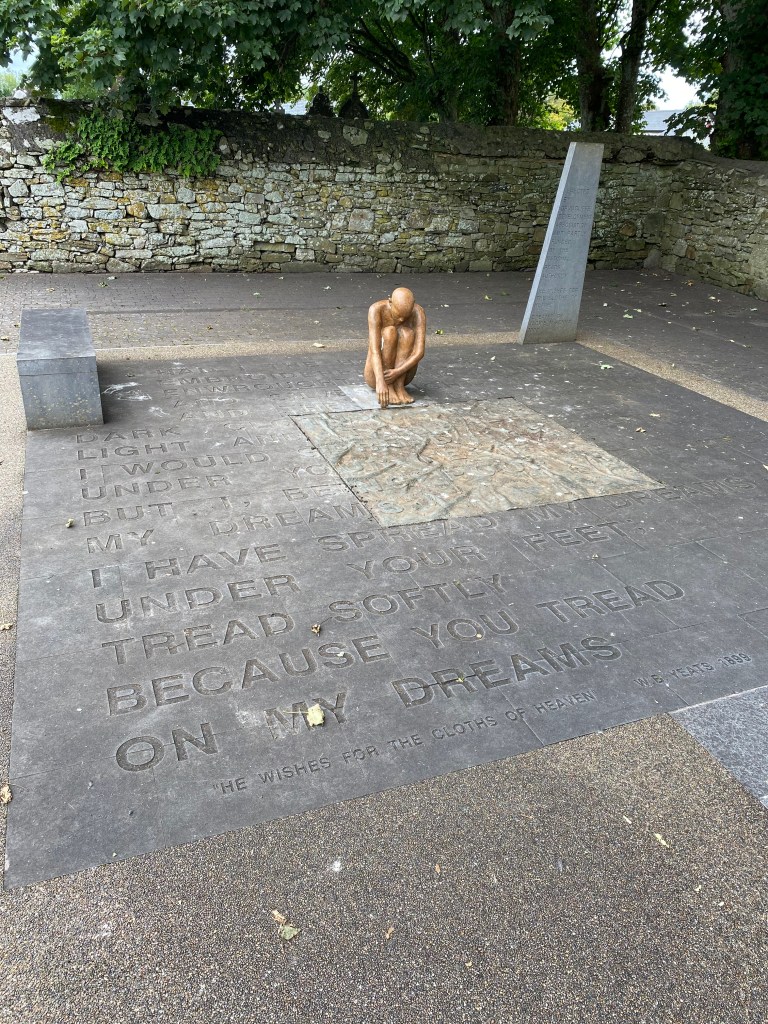
The grave of WB Yeats in Drumcliffe churchyard and a memorial which stands outside bearing the text of his poem ‘He Wishes for the Cloths of Heaven’


So, that was my slightly literary-themed sojourn in the north west of Ireland. I would encourage anyone to add this stunning part of the world to their travel bucket list.
And now thoughts turn to autumn, to new ventures and the year ahead (as I have written on here many times before I love the ‘back to school’ feeling and the sense of new beginnings it gives me). I am taking on a some major new training for my day job (so it really is back to school for me, as a mature student at university!) I have almost completed my second novel and will be submitting it to competitions, agents and publishers. And of course, I will keep reading as much as I can and blogging about my thoughts.
Enjoy the fruits of this very special time of the year!



 In Winter, Ali Smith examines the ideas through the dynamics of a family thrown unwillingly together at Christmas. Sophia lives alone in a large house in Cornwall. She was a successful businesswoman but, now late in life, finds herself alone, estranged from her sister, not knowing what is going on in the life of her only son in London, and navigating with despair some of the dehumanising aspects of modern life. When we meet her at the start of the book, she is communicating with what I can only describe as a hallucination of a child’s head, which floats about with her. To the reader, this seems surreal at first, but it gradually becomes merely a manifestation of Sophia’s mental state – her deep loneliness and her disconnection from normal life and society. Arthur, Sophia’s son will have similar hallucinations later in the book. Sophia goes about her Christmas Eve business in the town with sadness, recalling the once vibrant high street that is now a series of boarded-up shops, frustrated at being unable to withdraw money from her own bank account and the inability of the young man in the bank to appreciate or meet her needs as a customer – she has nostalgia for the days of the friendly bank manager.
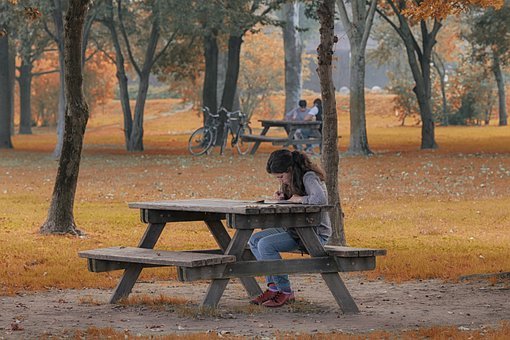
 I am fortunate to live in an area where we have more than our fair share of trees, of woodland and common land where I can walk, enjoy the fresh air and observe the changing of the seasons, truly one of the nicest things about living in northern Europe. The leaves seem to have been falling around me for some time, but I think the extremely dry weather over the summer caused this. Now, the leaves are visibly beginning to turn from green to various shades of red, yellow and brown and the scenery around me is taking on new vivid hues. In a couple of weeks it will be stunning.
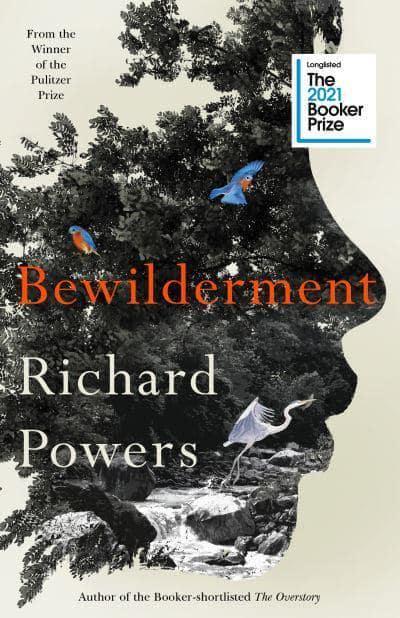
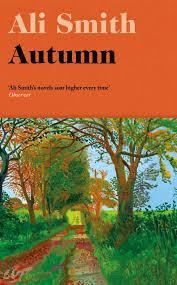 Ali Smith has said that she wrote this book very quickly in the aftermath of the EU referendum in the UK last year. As UK citizens will all understand by now, as we continue to reflect upon/reel over the events of Summer 2016, the outcome of that vote was about so much more than should Britain remain in or leave the European Union. That our social, cultural and political path in this country could be determined by a simple yes or no answer to that question now looks absurd. The election of Donald Trump to the US Presidency in November last year was another cataclysmic event, which provides the context to this novel. Ali Smith has, I believe, outside this book, nailed her political colours fairly firmly to the mast. (I’m not going to do that.) But what we are seeing now, I believe, is the response of artists and writers to the shock of last year’s events, and Autumn is for me, my first foray into a literary reflection.
 If you are finding it hard to motivate your children to read you may find this little book helpful – Alison David’s


 Julia's books