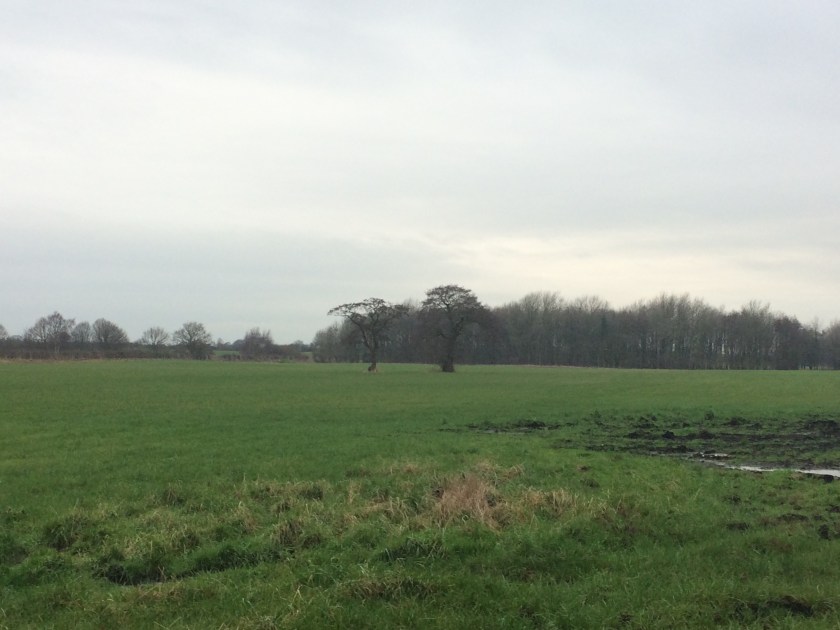
 Parts of the country have been struck by a severe cold snap this last couple of days; on my walk yesterday I certainly felt the scenery was quite bleak. Yesterday was the end of Advent, twelfth night, and a natural end, for me, of a period of reflection: about the year that has gone and the one that is to come. In June last year I started this blog and I have loved posting every week about my reading and hearing from readers what you have enjoyed. In the past 12 months I have read over 30 books, the bulk of those since starting this blog, and that feels like quite an achievement. I hope to improve on that this year.
My top five favourite reads last year were:
- A Little Life, by Hanya Yanagihara (shortlisted for the Man Booker and many other prizes in 2015)
- Hot Milk, by Deborah Levy (shortlisted for the Man Booker last year)
- All the Light We Cannot See, by Anthony Doerr (published 2014)
- The Green Road, by Anne Enright (shortlisted for the Man Booker in 2015)
- H is for Hawk, by Helen Macdonald (published in 2015)
My fifth choice was the book I was reading this time last year, when 2015 became 2016. I wrote a review of it ages ago, but haven’t posted it here yet, mainly, I think, because it just hasn’t felt right. It is a book for midwinter. And that is why I am choosing to tell you about it now.
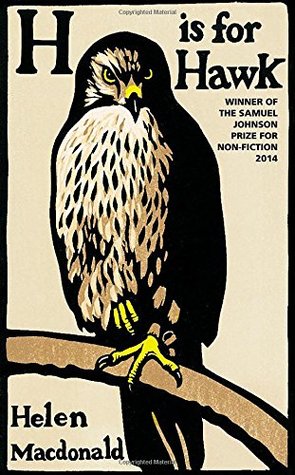 This book was a long slow read for me, but in a way that suits the type of book that it is. It is an account of bereavement. In that sense it bears reading over a long period because it covers a period of more than a year following the death of the author’s father.
It’s fascinating because it’s not a traditional account of loss; it’s about how a grieving daughter finds a coping strategy in the acquisition and training of a goshawk. Goshawks are hunting birds, rare in the wild in the UK. They have a long history in the tradition of falconry but, according to the author, are notoriously difficult to train. Helen Macdonald took up falconry in her childhood and this was a hobby she shared with her photographer father, who was, by her account, something of an introvert, a man who enjoyed his own company and loved the outdoors.
The book begins with an account of her father’s passing and its initial impact on the family. The rest of the book is about her journey in coming to terms with her grief. She acquires the goshawk and sets about training it, using as her guide a book published in the 1950s by an underachieving schoolmaster (T H White) who wrote of his own frustrations at trying to tame and train a goshawk; ultimately he failed and his goshawk escaped. Helen Macdonald encounters her own fair share of ups and downs (excuse the pun!) in her attempts to train her goshawk and this is an apt metaphor for her grieving process.
This book is not an easy read, but it’s ultimately a rewarding one. It won the Samuel Johnson Prize for non-fiction in 2014 and the Costa Book Award in the same year and has been highly acclaimed. It is an impressive achievement. Birds are not really my thing but I found it fascinating to learn about this creature. The accounts of the natural environment are stark – mostly nature is conveyed as hostile and barren, rather like the world of grief the author finds herself immersed in, and very like the goshawk, who is not at all a friendly or sympathetic character in this tale.
The emotions in this book are quite raw, so any reader who has experienced a recent loss themselves could either find it very cathartic or very painful. Grief is not objectified, we are there living it with the author.
I’d recommend this book. It’s a good one for long winter nights, but not for the beach.
If you have read H is for Hawk did you find it bleak or uplifting?
What were your top reads of 2016?
 My children’s Christmas stockings would be incomplete without at least one book – whether they want one or not! – and they can be sure that this family tradition will continue even when they are older. Call it my personal crusade. I am also the book-giver for all the little people in my family; with all their senses under assault at this time of the year, I love the idea of giving something that can provide a little space and calm, and a retreat into their own imaginations.
 This poem was first published in 1823, and is written by Clement C Moore. Despite its age, it is very accessible and is an absolute joy. We have been reading this to our kids on Christmas Eve since they were toddlers and they still look forward to it even though they are 10, 12 and 15! There are many versions available – ours is a rather quirky one (designed by William Wegman), where the models in the pictures are dogs dressed up! The pictures are key to the children’s enjoyment of it, so choose a version that is beautiful to look at and will become a family heirloom.
 There are so many books published that you may find people in your usual circle haven’t read the same things as you. But you will always find book review websites (whose authors would love you to post comments or engage in conversation, hint, hint!), or online reading communities, who have read your favourite most recent read. Sometimes, if I read a book I love (or loathe, though these are very few) I’m just bursting to talk about it with someone. I can always do that online.
 This is a novel about race in modern America where the white population seems to feel it has solved the problem of racism. Firstly, it abolished slavery and then set in place several pieces of legislation to reinforce racial equality. Unfortunately, this has not addressed a fundamental problem of disparity of outcomes between whites and blacks (or people of colour more widely), in academic achievement, income, social status, crime, you name it, the statistics paint a troublesome picture. The thesis of the novel is that, whilst white America is slightly uncomfortable with the facts as they stand, they can point to a number of black high achievers (not least the first African-American President) as evidence that they have done all they could. The under-achievement of the rest can be put down to, for example, their own fecklessness or problems of character.
 Autumn is becoming the new ‘new year’ for many people, lighter, brighter and generally a nicer time of year than January, which I’ve always felt was a really bad time to make resolutions and embark on new activities! On that theme, a lot of people I know are using October to make fresh starts or implement changes. For so many of us, transformation starts on the inside; if we have problems or issues we want to tackle or changes we want to make in our lives, it often means overcoming personal barriers – fears, phobias, addictions and the like – or building confidence in moving forward and realising dreams.
 I didn’t think that the words “life-changing” and “tidying” could belong in the same sentence in anyone’s world, let alone adding the word “magic” as well! Don’t get me wrong, like many people, I enjoy the buzz I get from a clean tidy space, it’s the cleaning and tidying bit I don’t like. Marie Kondo is a different kind of animal, but she is highly likeable because she doesn’t try to hide it. She confesses that when she was a child she loved tidying both her own and other people’s things, and devoured women’s magazines with all their cleaning and tidying tips.
 Julia's books