
This is my second Booker Prize shortlist review and I hardly know where to begin in writing about this novel. I don’t think anything I write could truly do it justice. It should be sufficient for me to just say “please read” and leave it at that. This book is a remarkable piece of work and I honestly felt in the presence of something great throughout. I listened to it on audio and the reading by Zimbabwean actress Chipo Chung was pure perfection – the range of voices and narrative tones she was able to deploy was outstanding. And you know when you listen to an audiobook and you feel like the narrator is reading it for the first time? Well, that is definitely not the case here; the narrator feels every word.
NoViolet Bulawayo is a new author to me but she is undoubtedly a literary heavyweight, being the first black African woman to have been shortlisted twice (her debut novel, We Need New Names, was shortlisted for the Man Booker in 2013). She was born in Zimbabwe, but completed her higher education in the United States.
Glory is political satire at its acerbic best. The novel is set in the fictional African country of Jidada (“with a da and another da”) and all the characters are animals. It opens at a rally where The Old Horse, the country’s elderly ruler who has been in place for decades since the War of Liberation from the colonisers, supported by his wife, Dr Sweet Mother, and other denizens, are celebrating their great achievements before the ‘people’. This is a lengthy section that exposes the ego, hypocrisy, untramelled power, and unlimited (and stolen) wealth that characterises the leadership. Jidada got rid of its colonial ruler, but got a tyrannical and autocratic leader in its place. The regime is cruel, murderous and corrupt. It is a thinly-disguised critique of Robert Mugabe and his followers in Zimbabwe. It is more than that, however, for it does not let so-called advanced nations off the hook. With its linguistic echoes of Trump and its suggestion that other governments are happy to turn a blind eye to what is happening in Jidada where it suits them, it implicates leaders well beyond the borders of Jidada for the cruel oppression of the population. It also takes to task the “clicktivists” who criticise from afar, largely to satisfy their own needs, but to very little tangible effect.
The nation eventually tires of The Old Horse and particularly his wife, and there is a military coup, led by Tuvius Shasha, the former Vice President. The Old Horse goes into exile. The situation for the country does not improve, however. The economy in fact worsens still further and discontent abounds. Enter Destiny Lozikeyi, a gentle female goat who fled her village many years earlier but who has now returned to search for her family and her history. She shows her fellow citizens how desperate their situation is and, slowly, a citizen-led uprising begins.
It would be easy to describe this novel as an African Animal Farm, as many indeed have already done. True, it does many of the same things, but it is borne of an entirely different tradition, I think, and to draw parallels between the two is to over-simplify. The writing in Glory is breathtaking – it is a linguistic tour de force. The precision of its attack is awesome as it deftly dismantles every pretence of democracy, fairness and good governance that the leaders of Jidada claim. Africa is not the only focus of the author’s laser-like gaze, however; in her observation of referenda that return 90% plus votes in favour of the leaders she wags a finger at every dictator currently on the planet and the hypocritical international order that often enables them.
I was blown away by this book. It is long, but worth every second. Highly recommended.




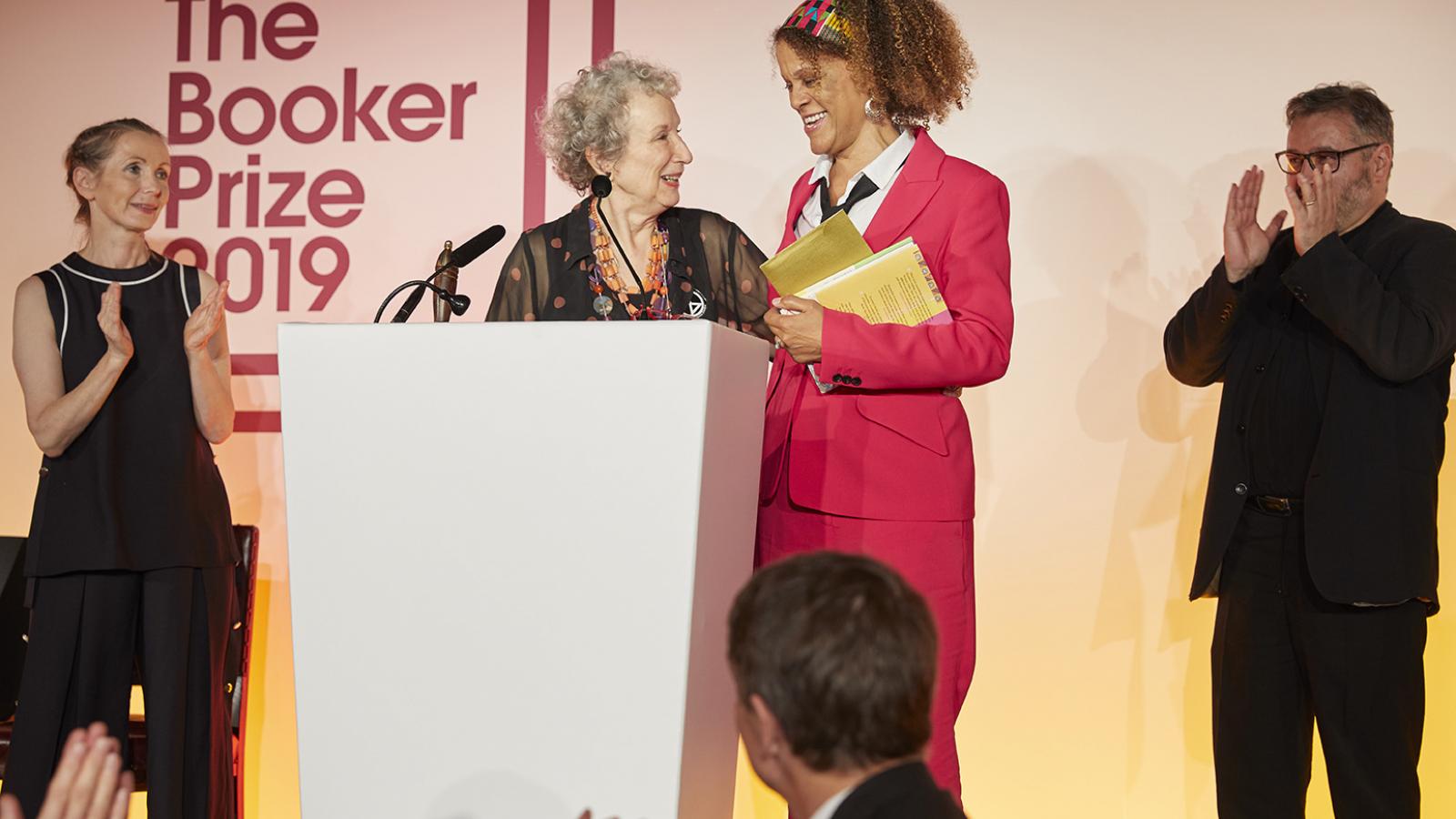 The Booker prize winner(s) were announced last week and for the first time in years, and against the explicit rules of the contest, the judges awarded the prize jointly to Margaret Atwood and Bernardine Evaristo. I have not read either book yet, though I am currently listening to The Testaments on the excellent BBC Sounds and enjoying it enormously, though it is extremely dark. There has been so much publicity around Atwood and The Testaments that I was wondering how on earth the Booker prize judges were going to be able to not award it to her! So, I think the judges probably made the right decision. By now, I would probably have worked my way through at least two thirds of the shortlist (I’ve never managed all six in the period between shortlist and winner), but, for obvious reasons, I have not read that much so far this year.
 It is somewhat and sadly ironic that I was reading Elif Shafak’s 10 Minutes 38 Seconds in This Strange World at the time of my mother’s death, a novel about a woman, Leila, an Istanbul prostitute known as Tequila Leila, who is brutally murdered in a back alley by street thugs. Rather than death being an instant occurrence, however, the author explores the idea of it as a transition from the world of the living to the ‘other’ (with a duration, for Leila, of ten minutes and thirty-eight seconds) during which time her whole life flashes before her. Leila’s life story is told through a series of recollections about her five closest friends, how and when she met them and what impact they have had on her life. We learn that Leila came from a relatively affluent family. Her father was anxious for heirs, but when his wife proved incapable of having any he took a second wife, Binnaz, a much younger woman from a lowly family, who gave birth to Leila. Binnaz was forced to give up the child to the first wife to bring up as if she were her own, whilst Binnaz, who never recovered mentally from the trauma of that event, was thereafter known to Leila as ‘Auntie’.
 Julia's books