Reflections on being a mother of girls

My elder daughter turned 13 recently. I find this fact quite extraordinary and I am filled with a new sense of responsibility. Getting three children this far has been something of a feat, of course (!), but I now feel as if I have the huge challenge of nurturing a young woman. I have an older son, but that seems different somehow. Perhaps that’s because I have never been a young man, but I do have experience of being a young woman, so I am profoundly aware of all the special ups and downs that life can present to girls.

girl-2480361_1920
A beautiful mother and daughter (this is not us!)
My daughter is strong, talented and determined. She is also loving, conscientious and kind, and experience tells me that this can make her vulnerable. The world has yet to fully come to terms with this potent mix of feminine powers, does not yet know how best to embrace it. It seems to me the world often seems to fear it. So, as a parent, as a mother, the conundrum is how to prepare my daughter for a world that may not be fully ready to receive her for all that she is and all that she can be, whilst also fostering her single-mindedness, encouraging her independent spirit and emboldening her to stay true to herself.

I recently read We should all be feminists by Chimamanda Ngozi Adichie (look out for the review next week). This was given to me by a friend as a birthday gift. It’s a fuller version of a speech the author gave to a TEDx conference in 2012. Its context is Nigerian society, but there is much here that we can all take on board in terms of how we bring up our children and the values we attempt to instil.

I have a particular conundrum in that I have for a long time been what is disparagingly termed a ‘full-time Mum’. I took the usual maternity leave with my first child (my son) and when I went back to work he went to nursery for four long days every week (we had no family nearby to support us), a fact which haunts me to this day. My job was challenging and I was 50 miles away, so it was a difficult time. When I became pregnant with my second child not only did it make little economic sense for me to continue working but I felt my higher education job was incompatible with our circumstances. There was no way I could be the kind of parent I wanted to be whilst being committed to my career, and with no back-up it seemed impossible. My husband’s job was senior, demanding and in a relatively male-dominated industry so there was little prospect, in reality, of a shared model. So when my daughter was born I took a career break. I had another child during that time and took seven years off, which ended with voluntary redundancy.

When I recount this story I find it quite hard to believe myself – I was always very ambitious, acquired a Bachelors and a Masters degree, had a good career where I was respected, have always been a feminist, and yet as far as my children are concerned Mummy stays at home. Mummy does work of course (I have run a small business, I write and I do some occasional work for a charity) but I don’t work long hours out of the house like Daddy does so the lion’s share of the household work also falls to me. I don’t feel unhappy with this and I don’t regret any of the decisions we made and if I could do it all again I would make the same choice to stop working (I only wish I’d been there for my son sooner and not put him in nursery), but I do worry about the kind of messages this sends to both my son and my daughters about gender roles. What kind of a role-model am I?

We should all be feminists and the small companion book Dear Ijeawele have given me much food for thought. One of the first suggestions in Dear Ijeawele is that a woman should be “a full person” and not be defined by motherhood. I think in the early years I allowed this to happen, although with three young children and a husband working away every week for a number of years I had little time to define myself any other way! However…that is changing now. As my children get older and can take more responsibility for themselves I am trying to strike a balance between being there for them, but also not being there always, if you see what I mean.

Suggestion number ten in Dear Ijeawele is to “be deliberate in how you engage with [your daughter] and her appearance”. Adichie is a beautiful woman who embraces her femininity. She is a face of No. 7 cosmetics, a fact for which she has been criticised and for which she makes no apology. I have always struggled with my femininity; I think it was handled clumsily and fearfully when I was a teenager (I don’t think I’m alone). Being feminine should not be incompatible with feminism, this much I believe, but I struggle with both my young daughters’ desires to wear make-up, for example. I feel very conflicted as I want them to be happy with their natural appearance, to know they are beautiful as they are, and not to feel influenced by the media that they have to look a certain way or that a certain beauty product is a ‘must-have’. I also worry about the pressure to wear revealing clothing, although, as Adichie says, we should never link appearance with morality.

With a teenage and a pre-teen daughter, these are all very urgent issues. I’m afraid when they were young they did play with dolls and much of their environment was pink, though trains, lego and other colours were available! I agree it is important not to provide gender-specific toys and to encourage breadth and variety. Mostly, my kids liked to paint, make things and play with water, and I never tried to stop the girls getting messy – they were worse in fact! But the issues seem to be weightier now, especially as their thoughts gradually turn to their futures and as sexuality begins to emerge. They hear the news and find that there continues to be a gender pay gap in society, that there is not parity of treatment between LGBTQ and straight people, and that women and girls continue to be abused and exploited more than their male counterparts.

There is much that we all still need to do.

I would love to hear your thoughts about raising girls in the 21st century. 

If you have enjoyed this post, please subscribe to my blog by clicking on the button below or to the right, depending on your device.


Children’s Summer Reading Challenge – Animal Agents

Last week I posted here about my July reading challenge, which was to go along to your local library and select a book. I couldn’t resist the appeal of three titles (as usual!) and found myself uncertain about which to tackle first (I decided on Evan Davis’s Post-truth: Why we have reached peak bullshit and what we can do about it in the end and I’m loving it!) This month’s challenge is linked with the annual Summer Reading Challenge aimed at  primary-age children, which is launched in libraries this weekend. So, if you have children or grandchildren it’s a cheap, rewarding and wholesome activity you can do with them.

Animal AgentsChildren these days have so many distractions which can take them away from reading; they seem to be so busy with out of school activities, have more homework than ever before and, of course, there are the digital distractions…don’t even get me started. But reading is such an important activity for them:

  • it supports their ability to sustain concentration, which, in a world of instant gratification and over-stimulation, is a crucial skill,
  • it is an aid to relaxation, by providing downtime, taking them away from social pressures,
  • it can help with their imaginative and creative development – good writers are usually good readers, and
  • it helps their literacy skills – time spent reading may be just as if not more valuable then learning about the rules of grammar and sentence structure (IMHO!). And is far more interesting.

Reading takes kids into new worlds, it helps them learn to be alone, another important skill in building their mental health resislience, and it gives them access to experiences that they don’t have in real life. The beauty of the Summer Reading Challenge is that all books count, so if you have a reluctant reader, they can still get rewards for non-fiction, reference books, science books, there is no judgement of their chosen material. This year, there is also an online link where kids can sign up, create a profile, review the books they’ve read, and generally share their thoughts. They can do it all here.

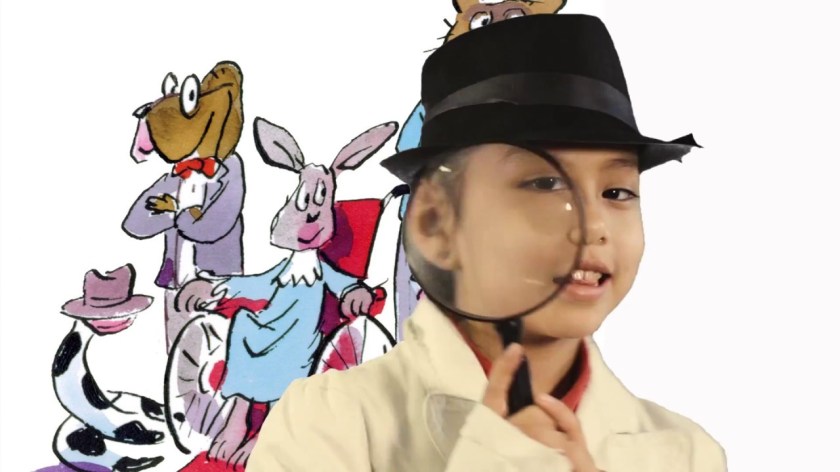
If you are reading this you are probably a keen reader yourself, so I don’t need to tell you about the benefits, of course. The trick is getting the reading habit embedded in our children’s lives from the outset, and that is where the Summer Reading Challenge is so good. This year’s theme is Animal Agents,  a group of crime-busting creatures, beautifully illustrated by Tony Ross (of Little Princess fame). The idea is that for each book children read they get a smelly sticker and a clue that will help them solve a mystery.

So, if you’re kids have or are about to break up for the summer holidays and you’re looking for something to fill in the gaps, get along to the local library and sign up. This is my last year at primary school so I hope my 11 year-old will embrace it, even if it’s just for old time’s sake!


How easy do you find it to keep your children reading as they get older?

If you have enjoyed this post, please sign up to follow my blog and let’s connect on social media.

#IBW 2017 – Independent Bookshop Week 24 June – 1 July

IBW 2017We’re all on a budget and we’re all busy, so why would you make the effort to go to an independent bookshop when, with a couple of clicks, you can get what you want from the comfort of your armchair and have it delivered, and probably for a discount on the jacket price? Well, as they say, use it or lose it!

The bigger they get the more powerful they become

Most of us would be uncomfortable with the idea of only one major supermarket or only one petrol station. We all recognise that competition means consumers get the best deal. If there were only one supermarket around, you would not see the BOGOFs, the price reductions, the CHOICE. Don’t get me wrong, I use A****n along with everyone else, but I try to spread my spending. And when you work it out, it usually is not that much cheaper. As for choice, well, I am plagued by daily emails recommending heavily-marketed titles to me, but what about the books that are not pushed my way, and the authors that have written them? There’s nothing qute like discovering something new, a title you haven’t heard about. Bookshops can give you those surprises.

If it’s cheap you value it less

Anything that is cheap and plentiful we tend to treat with less respect than something that is scarce or more expensive. In my household, cheap food is much more likely to go to waste or pass its ‘use by’, whereas we are undoubtedly more disciplined about expensive organic or free range products. I think the same is true of other items we consume in our households; if we’ve paid more for a book, we may be more inclined to value it.

You don’t get much buzz with a ‘click’

For me, there is nothing quite like the smell of a bookshop, or the pleasure of browsing the shelves, spending time properly choosing, reading the first couple of pages, feeling the weight of a book in may hands. An online purchase just does not give me that same experience. I know some people like to choose in the shop and then go home and buy online, to get the discount, but, really, for a book? If you’re there in the shop, you’ve made the effort to go there, is it really worth the one or two pounds you might save by buying  it online? And then you’ve to wait until it’s delivered!

Real-life independent bookshops provide an experience, and the good ones (and it’s mainly the good ones that have survived) often provide spaces for you to sit and read, or to hang out with your kids. A Saturday afternoon activity that will cost you less than a tenner! For a child this is exciting, and will encourage them to read much more than a brown package arriving through the post, two or three days later.

You are dealing with people who are passionate

It’s hard running a small shop in today’s often under-crowded high streets, but it’s even harder running an indie bookshop when you consider what they’re up against. Bookshop owners definitely don’t do it for the money! If you love books you have to love indie bookshops and for my money their passion, expertise and sheer tenacity deserve our support.

So, check out your nearest indie bookshop here and make an effort to take yourself along some time this week. You won’t regret it.

Do you live near a great indie bookshop? If so, give them a shout out here.

If you have enjoyed this post, please subscribe to my blog to read future posts.

‘The Weight of Water’ by Sarah Crossan – children’s fiction for June

Regular readers of my blog will know that I am a huge fan of children’s literature. I aim to read and review at least one children’s book every month, so here is my offering for May.

The Weight of Water imgThis was the third book I read last term with the children’s book club at my daughter’s primary school. It was something of a risk as it’s not conventional either in its subject matter or its format. But having read Time Travelling with A Hamster with them (which they loved) and The Snow Spider (which many of them were lukewarm about), I felt they were ready for the more complex themes and the quirky format. The kids in my book club are 10-11 and it’s well-known that children tend to like reading about characters who are a couple of years older. The central character in this book, Kasienka, is 13, so that fits, although some of the themes are quite mature. For example, she mentions her periods, puberty more generally and her feelings about a boy at school, which had some of my book club attendees sniggering! That could have been down to the group situation, however, and read alone or with a parent, this might actually be an opportunity to have a proper conversation with a child about such issues.

The book starts with Kasienka and her mother leaving Gdansk, Poland, with just a suitcase each. They are travelling to England to join Kasienka’s father, who left some months earlier. They are heading for Coventry, as they know he is somewhere in that city, but they have not heard from him for some time and have no address for him. There are clearly two things going on here: firstly, there is the immigrant experience, people leaving their home country in search of a better life, but there is the sub-text also of the mystery of the father’s departure and possible marital issues between Kasienka’s parents.

When Kasienka and her mother arrive in England they find themselves in a dingy bedsit, living amongst other immigrants, including Kanoro, a Kenyan doctor working as a hospital porter. Kasienka is placed in a local school, but is put down a year because of what are perceived to be her inferior language skills. She is resentful at this humiliation not only because she finds the schoolwork very easy, but also because she struggles to be accepted amongst the girls of her own age. Parents of teenagers will know there is usually quite a maturity difference between 13 and 11/12 so one can only imagine what it must have been like for Kasienka to be placed in this situation. There is a sense that the authorities at the school do not necessarily have her best interests at heart either, that perhaps they feel the additional demands placed upon them by immigrant pupils are a burden. There is a feeling that Kasienka is being made an example of.

Kasienka finds her relief in swimming, it is where she feels free and where she feels equal, and it is where she is able to prove herself to her enemies from school. It is also where she begins a relationship with a boy from school, William. There is some kissing here, which the kids in the book club found deeply amusing!

The second strand to the book is the search for Kasienka’s father. Her mother sets about the task with great energy, knocking on doors, marking off the streets on the map as they go. Kasienka is doubtful about this work and you sense early on that she realises long before her mother that her father does not want to be found and that they would be better off giving him up. They do eventually find him, with a new (English) partner and a baby. Kasienka then has to cope with her mother’s depression and despair. Things do work out in the end for them but the themes are clearly quite challenging. The book club coped well with it and particularly enjoyed the occasional minor swear word!

A word on the format, which is quite unique. It’s written in verse form, although it flows more like prose and each chapter is very short, with each topic covered as an extended poem. This makes it quite powerful. Here is an example of one of the early chapters, entitled ‘Mistaken’, when Kasienka is beginning to realise the scale of the challenge facing them in their new life:

“When Mama said

‘We’re going to England,’

I didn’t see myself

Alone.

I knew I’d be different,

Foreign.

I knew I wouldn’t understand

Everything.

But I thought, maybe, I’d be exotic,

Like a red squirrel among the grey,

Like an English girl would be in Gdansk.

But I am not an English girl in Gdansk.

I’m a Pole in Coventry.

And that is not the same thing

At all. “

I really enjoyed this book and my 11 year old daughter did too. It’s a good one for this age group so if you have a child transitioning from primary to secondary I’d recommend it for the holidays perhaps, particularly if you’re travelling abroad; it may help them to think about what it feels like to move to a foreign country.

#Top Ten tips for helping your teen with English Lit

read-515531_640Many households up and down the UK will be like mine this summer – tiptoeing around a teenager revising for their exams. In my household, my eldest is doing his GCSEs so this is our first experience of exams that really matter. It’s so hard for them and as a parent there is not a great deal you can do to help – which makes it hard for us too! At 16 they need to be working out their own best revision and study methods (definitely not the same as mine!) so although my heart is desperate to ‘help’ my head tells me that I need to step back and avoid interfering. Also, many of my son’s chosen subjects are areas I know very little about – Spanish, Russian – or have limited interest in – physics, electronics – or remember very little about – mathematics! So, beyond providing encouragement, food and drink, and making sure they’re getting enough sleep, what more can you do as a parent?

One area I can help with is English literature. It also happens to be the subject in which my son has least confidence (how? why?).  It’s difficult isn’t it – I have a degree of knowledge and expertise and can geneuinely help my child, but at the same time I don’t want to undermine my son’s confidence, or indeed alienate him, by coming across as some sort of expert, or for him to feel self-conscious with me. You know how sensitive teens can be!

So, I have given a great deal of thought in recent weeks as to how I can best help my son with his English Lit revision. Here are my top ten tips:

  1. Get to know their set texts yourself – feel it with them! I have re-read Michael Frayn’s Spies and re-acquainted myself with The Merchant of Venice this year. It has been very pleasurable for me and I’m hoping that some of my enthusiasm will rub off.
  2. Get hold of an audio or video version of the books – they need to know the texts well so there is nothing to lose by watching or listening to the texts being performed or read. I got a free audiobook of Spies with an Audible trial and borrowed  a DVD of The Merchant of Venice from the library. They may well have watched DVDs at school but it will do no harm to re-watch.
  3. Discuss the texts with them – have conversations with them about the books and talk enthusiastically. They don’t have to be big set-piece conversations, you could have a 10 minute chat over dinner or in the car, which will be more memorable to your teen than a sit-down ‘session’.
  4. Read through their English notes – identify the key themes their teacher has directed them to learn about and understand these yourselves. You could also buy study notes booklets or there are various websites which give you textual study guides, such as the BBC’s GCSE Bitesize.
  5. Test them on examples from the text – it’s absolutely key that they can provide evidence for points they make – they have to illustrate with examples from the text. So, from Spies, I might ask for three examples of Keith’s controlling and bullying behaviour towards Stephen. It comes back to knowing the text really well, so if they can’t remember, re-read/listen/watch extracts to make sure they can recall the examples.
  6. Make a plan for yourself – I find that my conversations with my son are best done in shortish informal bites rather than scheduled sessions. He is more relaxed and therefore more responsive. It’s all a cunning ruse, however, because I have my own plan about what to discuss with him and when.
  7. Set questions for them – if you’re busy, work and have other children, helping your teen to revise can seem like an additional chore. So, if you find that on some days you simply don’t see them much, or there isn’t time for your revision chat, set them a question to answer. This will also give them practice in writing about their texts.
  8. Teach them how to mindmap – as a grown-up you will know how mind-mapping can be a great tool for committing things to memory or exploring an idea, even for the least visual among us. If they haven’t done mindmapping yet at school, get them a big piece of paper (flipchart or some old wallpaper) and a marker pen and do it with them. It can be done for themes as well as for plot and character (they MUST get the basics right so make sure they know all the key characters and how to spell their names correctly). Stick these on their bedroom wall, be creative, print out pictures or draw the characters, use different coloured pens.
  9. Help them to memorise quotes – it’s always useful to have a few key quotes up your sleeve so help them identify some (eg the “Hath not a Jew eyes…” speech from Merchant of Venice) and test them.
  10. Finally, praise. Your job now is building confidence.


If you have any other tips for helping your teen with English Lit revision I’d love to hear them. In the meantime, best of luck!

If you have enjoyed this post, I’d love for you to follow my blog by clicking on the link below or to the right, depending on your device.

A nice book for kids for the holidays

xmas-1-2Regular visitors to this blog will know that I am passionate about children’s literature. My children are part of the generation that grew up with Harry Potter. JK Rowling is one of my heroes, for a number of reasons, but primarily for all that she has done to get (and keep) children reading, particularly those who might otherwise not have done so. Harry Potter wasn’t the first literary character to bring wizarding and magic into children’s literary lives, however. The Snow Spider was first published 30 years ago and was a multiple award winner. It was originally published as a trilogy, but this anniversary volume has been issued as a stand-alone. I chose it for the book club I run at my daughter’s primary school.

It’s set in Gwynedd, rural Wales, where our central character, nine year-old Gwyn Davies, lives on a farm with his parents. It starts on the morning of Gwyn’s birthday with his grandmother, the eccentric Nain, giving him five gifts: a brooch, a broken wooden horse, a yellow scarf, a piece of seaweed and a tin whistle. It turns out that these rather unusual tokens are in fact a kind of test, designed to determine whether Gwyn has inherited the magical powers that run in the family line but which have now missed several generations.

We learn that Gwyn’s birthday is usually a quiet and fairly sombre affair because it is the anniversary of his elder sister’s disappearance, four years earlier. Bethan went out in search of a pet lamb belonging to her little brother, after he begged her to do so, and never returned. Gwyn’s father blames Gwyn for his beloved daughter’s disappearance and has since become a cold and distant figure in his son’s life.

Gwyn soon finds that he does indeed possess certain magical powers and each of the gifts given to him by Nain has an individual significance, a power he must explore and learn about. The first sign he receives is when the brooch becomes a delicate and beautiful silver spider, Arianwen. The spider becomes his guide and companion throughout the rest of the book and on his journey of self-discovery. The broken horse unleashes some malevolent forces that Gwyn must learn to control – this is a very high-action chapter! The yellow scarf, which had belonged to his sister and was the only sign of her left on the hills after she vanished, attracts Bethan back into the family’s life, but in an abstract way; Eirlys is introduced about halfway through the book when she arrives at Gwyn’s school, apparently an orphan. She lives with a family in the village, but after becoming trapped in a storm finds herself spending some days with Gwyn and his family. Eirlys clearly reminds Gwyn’s father of his missing daughter and her presence brings about a softening in his relationship with his son.

The children in the book club had mixed feelings about The Snow Spider. Some did not like it at all – one even abandoned it! For others I think it was perhaps rather gentler than their usual reading, with not quite enough “action”. Compared to many of the books published today it has a certain innocence that I confess made me rather nostalgic! I loved the sense of place; rural Wales, with all its traditions of myth and magic is beautifully evoked, and the characters are well-drawn and familiar.

The recommended age group for this book is 8-12 years, but I feel it would probably work best for children at the younger end of that spectrum, and it’s a lovely one to read aloud together; some of the keener children in the book club raced through it (it’s quite short) and I think this may have compromised their enjoyment. I think it also helps to have an adult to discuss the book with as it deals with some challenging themes, not least the disappearance of a child. Gwyn’s relationship with his parents, particularly his father, is quite a tricky issue, as is the question of acceptance by peers (once Gwyn’s ‘visions’ become playground gossip, he is teased by some of the other children). Also, Gwyn’s discovery of his magic after his 9th birthday is, I think a metaphor for puberty and adolescence, which may resonate with children approaching double figures.

It is a lovely book that I think quieter, perhaps more thoughtful children will enjoy, or children who like to read with an adult. But it isn’t Harry Potter!

Thoughts on unhappiness

sad-505857_1280

My children and I are privileged. On every level. There is no doubt about it. Because we have a roof over our heads that we can afford to pay for, because we know where not just the next meal, but the one after that and the one after that are coming from, and because we can turn the heating up when there’s an unexpected cold snap, we are more privileged than many. And I don’t just mean those children fleeing war or who have lost their families, but many in our country, our city, or our town. And yet. And yet.

I read somewhere once that you are only as happy as your unhappiest child. And just now I have an unhappy child. A child who feels that nothing is going right for them, who feels there is pressure, who struggles sometimes in their social network. A child. One who is too young for this. A child who says that sometimes life is so hard they wish they could just hide away from it all. So no matter how good my life, no matter how well my other children are or are doing, I too am unhappy. I’d go through the pain of childbirth every day to take that pain away.

I was lucky to be a relatively successful child. I sailed through most things. I was disliked by some of the nastier kids in the neighbourhood, but I managed to avoid them, mostly. I thank my lucky stars I wasn’t bullied because I was a prime target for it (nice, timid, studious, spectacle-wearing), but I came through school largely unscathed. It was in young adulthood that the realities of the world hit me. When I realised that, hmm, life was tough. That it wasn’t all going to be plain sailing. That life wasn’t fair. And I was powerless to do anything about much of life’s injustice. It was only later I learned all I could do about it was just to be the best that I could be.

Mental nd emotional wellbeing have been a lifelong challenge for me, as for many people I know (most?). I admire and am fascinated by people who have a natural positive outlook, that sunny disposition, and I wish I knew how to get it. No. I wish I knew how to get it for my child. My question is, is it better for children to learn when they’re young that life is not fair and you just have to make the best of it? Does disappointment and heartache when you’re young help to build resilience when you’re older? I sometimes wonder whether a bit of disappointment, a reality check, when I was a kid, might have helped me cope better with it in adulthood. But maybe not.

More recently, I’ve learned how focusing on gratitude can help to build resilience and a positive mindset, so I practice this every day. And I know I have so much to be grateful for. Just recently I heard a single mother on the radio talking about the pain of having to put her severely disabled 12-year old into care because she could no longer cope. And, again, I thank my lucky stars, my guardian angels, or whatever force in the world is out there looking after me and mine, that I have a healthy, stable family. That said, the least empathic thing you can say to someone who is feeling low is to invite them to think of all the people who are worse off than they are.

I also read somewhere once that you get the children you need; maybe that divine force out there has gifted my children to me because I have within me the love to support and care for them, when unhappiness strikes. But today I feel ill-equipped and today I feel as unhappy as my unhappiest child.

 “Happiness, not in another place but this place, not for another hour but this hour”

As ever, I look to my books for help. The above quote from Walt Whitman is a call to embrace joy in the here and now, and is one of the techniques for being happy listed in a little volume I picked up in a bargain bookshop a while ago. A little book I keep to hand for times like this – How to be Happy by Anna Barnes.

I don’t think Whitman will mean much to my child at this point, but perhaps my job as a parent is to try and pass on some of my own hard-earned resilience to my child, who is still maturing, still growing, still learning.

The Curious Incident of the Dog in the Night-Time at the Lowry

curious-incident-img

I was lucky to get a ticket for this performance at The Lowry in Salford last week. The play  has been a huge success for the National Theatre company in London and is currently on tour. You will  no doubt have heard of the book by Mark Haddon, which was published in 2003, and was a Costa Book of the Year and winner of the Guardian’s children’s fiction prize. Ostensibly written for a YA readership, it’s nonetheless a powerful read for adults.

The central character, Christopher Boone, has Asperger’s Syndrome, which means he operates at a very logical, ordered and predictable level. He struggles to make sense of emotion, finds social relationships very challenging and interprets his world in a very literal way. At the start of the story Christopher lives with his father and we are told that his mother has died of a heart attack. The dog of the title belongs to Christopher’s neighbour, Mrs Shears, and when the dog is found dead one morning, stabbed with a garden fork, he sets out to uncover the identity of the dog’s killer. His research does not generate the hoped-for answers but instead raises more questions for both Christopher and the audience. It also causes tension between Christopher and his father, who plainly wants him to cease his investigation. Christopher is completely incapable of interpreting the possible causes of his father’s stress and backing off from the task of finding the dog’s killer, but we as the audience, begin to see that there is more to this incident than meets the eye, and that people (Christopher’s father, the neighbours) are hiding something.

Eventually, Christopher searches his father’s bedroom and finds a stack of letters addressed to him from his mother, who is not in fact dead, but alive and living in London. Feeling that he can no longer trust his father he decides his only option is to go and find her and to live with her in London. What both the book and the stage play do so brilliantly is to convey the sense that logic and intelligence alone are not sufficient to navigate your way in the world. Christopher is a brilliant mathematician (he is doing his Mathematics ‘A’ level at his specialist school at 16) but getting from Swindon to London on a train, and then using the Underground to travel to north-west London, is a near-impossible task. For someone with Christopher’s condition, the noise, the crowds, the proximity of people to one another, are overwhelming. The stage direction is brilliant at conveying the sensory overload and also the extent to which the day to day humdrum interactions that most of us take for granted are utterly baffling to someone whose brain works at an entirely logical level; figurative language is hard for him to comprehend, and some of the most basic instructions and conventions cause him enormous confusion and therefore distress.

I had forgotten elements of the plot when I went to see the play, which was nice because it kept a bit of the dramatic tension for me. It would still have been highly enjoyable even if I had recalled the ending, however. The staging is superb, demonstrating cleverly how Christopher can only function in an ordered, boundaried environment where there is certainty and dependability. The dialogue and acting were also tremendous, with elements of humour, and there is great empathy for Christopher. His condition is dealt with not just sensitively, but triumphantly – it is the ‘normal’ adults around him whose shortcomings are exposed.

I went alone, but really wished I’d taken my 16 year-old son (who has read the book) and/or my 12 year-old daughter, both of whom would have enjoyed it. I think younger teenagers will be able to identify more readily than adults with the confusion of modern life, the challenges inherent in just getting from A to B when you have no experience of it, and the incomprehensibility of the codes that adults use to communicate with one another when they are afraid to use more direct language. The recommended age is 11+.

The run at the Lowry was short, just a week, but the production remains at the Gielgud Theatre in London and is on a UK tour until the end of September. Catch it if you can, it’s fantastic.

How are you getting on with your reading challenge?

2017-01-25-13-03-10

I know many people are following reading challenges at the moment – it’s becoming very popular. Not to be left out, I set my own at the beginning of the month, which you can find here  if you’d like to join me. I know, however, that many busy book-loving parents don’t get as much time to read as they would like, so my challenge was about reading deeper – enjoying, embracing, rekindling the reading passion – rather than reading more.

January’s challenge was to read a book with a child (or simply to read out loud if you don’t have a child to hand). This month I have been reading two books with my youngest daughter, who is now 10. First of all we read Time Travelling with a Hamster by Ross Welford, which I reviewed here last week. We have also been reading Black Beauty by Anna Sewell.

My daughter is still young enough that reading together is something we do regularly, although we are not in the habit of doing it as much as we ought to for the purposes of school (oops!). Partly because, well, the usual, life is just full, but also because now that she is in Year 6 and a pretty good reader, we just don’t need to as much, so it’s slipped off our agenda somewhat. It just happens, doesn’t it? One minute you’re reading ‘Spot’ every bedtime, the next you realise your kids have hardly looked at a non-textbook for months.

Doing it regularly this month, however, has been a joy. For both of us. It was so lovely when we were reading a particularly dramatic section in Time Travelling with a Hamster where it was so tense she begged that we keep reading because she didn’t think she’d be able to sleep without knowing what happened next! Needless to say, I gave in, even though we’d gone way beyond official bedtime as I was pretty keen to find out if they escaped too!

Time Travelling with a Hamster, is a brilliant book, so if you haven’t got hold of it for your 9-12 year olds yet, you must. It was the first book in my daughter’s primary school book club, which I run, so I felt I was cheating slightly, putting it down for my January challenge. So, we’ve also been reading Black Beauty. I remember reading this when I was my daughter’s age and it’s been wonderful coming back to it as an adult. It has brought back so many happy memories from my childhood, not just from reading the book, but that wonderful television series. Do you remember the music? If you click here it will take you to a youtube clip of the opening and closing credits – watching it made me cry, it’s such a lovely piece of music, particularly the end theme with the choir. And that beautiful horse! It’s from 1972 so the TV show must have prompted me to read the book, as I would have been only 4 at the time. So, TV can be a good thing sometimes!

I hope you are enjoying reading with your child this month. I’d love to hear about it.

If you haven’t started yet, it’s not too late – maybe choose something together this weekend? You don’t have to finish by the end of January; we’re pretty relaxed about that sort of thing here at myfamilyandotherbooks.com!


Reading Heaven for kids

I’ve recently started running an after-school book club at my youngest daughter’s primary school; I am a passionate advocate of enhancing children’s access to and enjoyment of books, perhaps because reading gave me so much as a child and in a sense has shaped everything I have done in my life. It can bring particular benefits to less well-off, less confident and less academic kids, and children’s authors in recent years have embraced this wholeheartedly. There are some truly fantastic titles out there for children at the moment – I wrote about some of them in a couple of blogs I published before Christmas.

time-travelling-with-a-hamster-imgTime Travelling with a Hamster was the first choice of the book club, and what a joy it is. At the heart of the plot is a tragic event – a boy who loses his father at the age of eight – but the author handles this so deftly, acknowledging the huge emotional impact it will no doubt have had on such a young child, but also deploying humour and intelligence to help child readers deal with such a challenging topic. I think it shows a great respect on the part of the author for the maturity and strength of his young readership.

When we meet him, Al is 12. His mother has remarried and the family now lives with Steve, with whom Al has almost nothing in common, and his teenage daughter Carly, who is openly hostile. The other main character is Grandpa Byron, Al’s grandfather on his father’s side, with whom he has a warm and loving relationship. Grandpa Byron is a wonderful, larger-than-life, eccentric character, a perfect foil to his rather serious and conservative grandson.

For his 12th birthday Al is given a hamster (whom he calls Alan Shearer, to please Steve, who is a football fan and always trying to involve Al in his hobby). He is also given a letter from his father, written before he died. In the letter, Al’s father makes a huge request: he wants him to travel back in time, using a time machine he had invented before he died, to when Al’s father was a boy. Pye (Al’s father) had a go-kart accident, also when he was 12, which left a fragment of metal lodged in his brain. It is this fragment of metal that will later cause a brain haemorrhage that will kill Pye at the age of 40. Therefore, if Al can just prevent the go-kart accident happening, he will effectively be saving his own father’s life. Naturally, it doesn’t quite go to plan, and this is why the hamster is important. I don’t want to tell you anymore because it’s a cracking story that had me on the edge of my seat (and staying up far too late with the light on!).

There are some big themes in here: loss of a parent, step-families, mixed-race families, bullying, social awkwardness, as well as time-travel, of course, and some of the science around it! But the author handles these so skilfully that I don’t think it is too much for slightly older primary school-age children. The kids in my book club are 10 and 11 and are loving it. Although it’s quite a long book, it’s a fairly quick read because the pace is pretty fast. Events spiral very quickly. There are one or two chapters dealing with ‘the sad stuff’, but these are short and well-contained, and the pace of the action means the reader won’t dwell on them too long. Rest assured, the ending is a satisfying one for readers of all ages!

I heartily recommend this book for children 10-13. It’s also a good one for adults if you’re following my 2017 reading challenge! (January’s challenge is to read a book with a child)

Go back

Your message has been sent

Warning
Warning
Warning
Warning

Warning.