The latest in YA books – books for teens

Last week, I blogged about some of the interesting new children’s titles that had caught my eye. In recent years, YA fiction has rightly developed as a genre apart from younger children’s fiction, and there are some fantastic young writers out there catering for the needs of this age group. Most adults would accept I think that the pressures on teenagers these days are numerous and new, and for many parents navigating this unknown terrain can be challenging and worrying. In the same way that children’s literature can help our little ones work through some of their fears and worries (from the monster under the bed to the impending arrival of a sibling), so YA fiction can help teenagers deal with the issues they face, when they may feel their parents just don’t understand.

Here are a few of the titles that have attracted me.

No Filter


Irish writer Orlagh Collins’s story No Filter covers traditional teen territory, that of first love. It tells the story of Emerald who comes from a privileged background, and appears to enjoy an outwardly perfect life. Then Emerald discovers her mother unconscious on the bathroom floor and her world begins to fall apart. She is sent off to stay with her grandmother in Ireland for the summer, where she meets Liam, and begins to reevaluate what’s important.


Just Fly AwayJust Fly Away is the debut novel from 1980s brat-pack actor, turned award-winning director and author Andrew McCarthy. It tells the story of fifteen year old Lucy who discovers that she has a half-brother, the result of an affair her father had, living in the same town. Like No Filter it is a novel about secrets and lies, as Lucy escapes to Maine to live with her grandfather, himself estranged from the family, and to work through the confusion and torment her discovery has left her with.


all the things that could go wrongFinally, on a different topic, there is All the Things that Could Go Wrong by Stewart Foster which concerns the relationship between two boys, initially at loggerheads, who find common cause when they are forced to spend time together. Alex suffers from OCD and worries about everything. His condition is so severe that he rarely leaves home. Dan is angry, because his older brother Alex has left home and he feels lost. Initially, he takes it out on Alex, whom he perceives as weak and ineffectual, but the boys’ mothers force them together on a garden building project and the understanding that develops between is healing for both.


I hope one of these might be of interest for your teenager. Better still, take them along to the library or bookshop and let them choose something themselves.

I’d love to hear what your teens are reading just now. 

If you have enjoyed this post, please follow my blog and let’s connect on social media.

Book Review: “Eleanor Oliphant is Completely Fine” by Gail Honeyman

Eleanor Oliphant is what we would politely describe as quirky. She lives a fairly isolated lifestyle, seeing no friends or relatives. She lives alone in a flat where she was placed by Social Services after leaving the care system. She is a creature of habit, wearing identical clothes each day, and following habitual daily and weekly routines. She works, in the accounts department of a design company, but her lowly position seems out of kilter with her high intelligence. There is nothing especially remarkable about her quirkiness (apart from the fact that she drinks two bottles of vodka every weekend), but her habits mark her out from the usual crowd. In particular she eschews social interaction, is cool, often hostile, to her co-workers, looking down on them, never wears make up or gets her hair cut. She appears to others as someone who doesn’t make an effort, but through Eleanor’s eyes we observe some of the absurdities of ‘normal’ life and there are some real laugh-out-loud moments, for example, when Eleanor goes for a makeover at the department store.

Eleanor OliphantEleanor communicates poorly with others, being rather too literal and pedantic for most people to tolerate and is therefore unable to form effective relationships.  At first, she is not an easy character to love, except that we as readers know a couple of things about her that her workmates do not, and which make us more sympathetic to her. Firstly, we know she drinks herself into oblivion at the weekends: as a reader we are bound to ask what she is trying to escape from. Second, there is Eleanor’s mother, with whom she speaks every Wednesday evening; “Mummy” is controlling, manipulative, cruel, nasty. Eleanor is an adult and yet there is something disturbing about the way she always refers to her parent as a child would (never ‘Mum’ or ‘my mother’). The fact that Eleanor also receives regular monitoring visits from social workers tells us that there is something dark in Eleanor’s past that has contributed to her present quirkiness, but we are not told what.

Two incidents in Eleanor’s life set off a cascade of events that will alter her life immeasurably. First, she encounters and develops a teenage-like crush on a musician. He is the lead singer in a band, well-known in the Glasgow area, lives locally and Eleanor has a remote connection with him as he attended school with a work colleague’s brother. Eleanor decides that the musician is the one she wants to spend the rest of her life with. She fantasises about a romance with him and ultimately marriage. Emboldened by conversations with Mummy, who is all in favour of “the project” (whilst also questioning Eleanor’s worth), she tasks herself with contriving to meet him, including visiting his apartment block, and sets about buying new clothes and improving her appearance, to bring herself up to the standard she anticipates he would expect from a partner.

The second incident is the collapse of an elderly man in the street. The old man is immediately attended to by Raymond, not a co-worker but someone she recognises as working in the same building, and he involves Eleanor and commands her help. Between them, Eleanor and Raymond manage to give the man first aid and call an ambulance. After this, Raymond draws Eleanor into an unplanned friendship. It doesn’t seem to be something that either of them is seeking, particularly. Indeed at first Eleanor is very cool towards Raymond, looking down upon his smoking, his eating habits, his text-speak and what she sees as his lazy dressing habits. But he is warm and patient with her and the friendship evolves. Through Raymond, Eleanor gets a glimpse of what ‘normal’ life and ‘normal’ family relationships can be, with all their faults.

The action takes place over a few months and the pace is measured and authentic. It is ultimately a novel about mental illness, triggered by trauma in Eleanor’s case, and as the story unfolds, and we learn more about Eleanor’s past, so her present, tightly ordered life, held together so flimsily by a set of rigid habits, begins to fall apart. This unravelling may be painful for some readers. The novel echoes that tendency we all have to say we’re ‘fine’ even when we’re not, and Eleanor learns, the hard way, what ‘fine’ means, and how to use that word honestly on her path to healing. There are some dark moments but there is also humour, particularly in the drawing of Eleanor’s character. I found myself laughing both with her and at her, which was, I must confess uncomfortable in the context of later revelations, and caused me to reflect on how we as a society react to those who do not present with an ‘average’ or ‘easily-fit-innable’ personality.

Gail honeymanThis is Gail Honeyman’s first novel and it is a stunning achievement. A thoroughly enjoyable read. In an era where poor mental health, social isolation and dysfunctional relationships seem to have reached epidemic proportions, this novel is both an examination of one person’s particular circumstances and an antidote. Highly recommended.

Have you read this book? What did you think?

If you have enjoyed this post, I’d love for you to follow my blog and for us to connect on social media.

The latest in children’s literature

It was the Autumn Equinox yesterday, exactly halfway between the shortest and longest days, when the hours of daylight and the hours of night are the same. From now until Christmas, the nights will begin to draw in. It’s a while before you notice it fully, of course and I always find that as the leaves on the trees begin to turn and fall and the temperatures cool, I actually feel a burst of energy and an increased desire to get out for walks and enjoy nature. It’s as if I only realise what I have when it starts to go and then I want to make the most of it! Yes, that certainly sums up part of my personality!

Regular readers of this blog will know that I am passionate about children’s literature and getting, correction, KEEPING kids reading – don’t they all love to be read a story when they’re little?! When and why does that stop? I spent hours in libraries when my kids were little, but I struggle to keep my 11, 13 and 16 year old children into their books. I’m not going to moan about screens; they are as inevitable a part of young people’s lives as food and drink, and, frankly, now mine all have pretty independent lives, I quite like the reassurance their mobile phones give me.

Help your child imgIf you are finding it hard to motivate your children to read you may find this little book helpful – Alison David’s Help Your Child Love Reading – which I’ve reviewed here and plugged many times, because it contains practical advice and will not chastise you for allowing them screen time.

I love the title and the cover photo – it’s not an instruction guide on how to make them do something against their will, but how to embrace one of the most joyful and stress-relieving habits there is. And with the shocking news this week about how many of our young girls experience depression, reading is a hobby that all of our children can benefit from. So as life for those of us in the northern hemisphere gradually returns to the indoors, there is no better time to revive a reading habit. As is my regular wont, I’ve picked out a few children’s books that have caught my eye recently.

Pax by Sarah Pennypacker (age group 8-12 years) was published last year, but seems to be getting a lot of publicity at the moment. It has a beautiful cover and is the story of a boy’s friendship with a fox. I’m really keen to read this one. Birthday Boy by David Baddiel (age group 9+) looks like being another smash hit in this genre for the comedian turned children’s author. Published earlier this month it considers the question, what if it was your birthday every day? Be careful what you wish for is the message! A Place Called Perfect (age group 8-12 years) by Helena Duggan concerns Violet and her family who move to the town of Perfect, where everyone has to wear glasses to stop them going blind and where nothing is quite (as perfect) as it seems.

Most primary school age children are fairly easy to manage and get reading; it’s those pesky teens who present the biggest challenge! I’ll give you some ideas for this age group next week.

Happy reading!

Do you have any children’s books to recommend?

If you have enjoyed this post, please follow my blog for weekly thoughts and book reviews. 


Autumn resolutions

back-to-school-1622789_1920

January is never a great time of year for me – I’m not good with the cold, dark days of winter so it’s pointless me making New Year’s resolutions. In contrast, Autumn is, for me, the perfect time of year to reflect and think about the future. As a mother of three school-age children, my life is, in any case, dominated by the term time calendar, and there is something about the feeling of newness (shoes, pencil cases, planners, etc), the fresh start and the enthusiasm (yes, really, even the kids are usually excited to get back) that screams hope. Outside it’s the time of year associated with decay, when the blooms in the garden are starting to fade, the leaves on the trees begin to turn brown and fall, and the nights are definitely drawing in. In a funny way, though, I find this reassuring. It makes me feel that everything is in the right place, the natural order of things is safely on track, and that is a comfort to me in this era of accelerated climate change.

Big MagicSo, September is my month of choice for resolutions. My reading challenge this month is to read a self-help book and after a bit of indecision I’ve decided on Big Magic: Creative Living Beyond Fear by Elizabeth Gilbert. It’s actually been on my list of books to read for some time, but seems particularly appropriate now as my main resolution is to complete at least a third of the book I am writing by half term (and hopefully another third by Christmas). I’ve been tinkering with it for months, and made some good progress with Camp NaNoWriMo in July, but I feel really focused now and am keen to capitalise on my motivation.
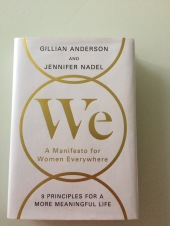
2017-07-26 20.42.01Before the summer break I also read WE: A Manifesto for Women Everywhere by Gillian Anderson and Jennifer Nadel and it caused me to reflect on the time and care I give to myself. I think it’s true to say that, as a mother, when you have young children you can often put yourself and your needs at the bottom of the priority list, well after the rest of the family. Ultimately, this often takes a great toll. Now that my children are older, (all at secondary school as of this week, my eldest now in sixth form), I find myself not so much with more time, but definitely with more mental space to tend to my own needs, pursue some of my own passions and award myself more respect. So, I am re-reading WE, slowly and deliberately, a little each day, and working through the exercises.

As a Mum I feel I have for years ricocheted between feelings of resentment at the extent of my ‘self-sacrifice’ and guilt at not doing or being enough! I hope that over the coming weeks the reading and the exercises will help to shift my mindset more towards contentment, resilience, and gratitude – the Holy Grail! I don’t find it particularly difficult to change my habits, get a better eating or fitness regime, etc, but mindset change is much harder. Wish me luck!

Are you one of those who prefer to make their resolutions in September rather than January?

If you have enjoyed this post, I would love for you to follow my blog by clicking on the button below or to the right (depending on your device).

The Top 10 things I love about Lisbon

So, our wonderful holiday in Portugal has come to an end. After a week of rest and relaxation on the Silver Coast (near Obidos) we headed for a few days in the country’s capital, Lisbon, a city I have been wanting to visit for years. It did not disappoint. More compact and lower key than some other European capitals it comes in at number nine on TripAdvisor’s top European destinations, ahead of the likes of arguably more famous places like Amsterdam, Venice, Florence and Edinburgh. Excluding our arrival and departure days, we were there for four full days, and there was far more to do than we could squeeze in. The high August temperatures (mostly exceeding 30 degrees Celsius during the day) and the peak time crowds made sightseeing more challenging than it might be at other times of the year, which perhaps slowed us up a bit. Other people (and those without kids) might be able to pack more in. We were not in a hurry (we are determined to go back again anyway!) and spent a lot of time just watching the world go by in cafes, bars and restaurants. Here are the top 10 things I love about Lisbon:

1. The views

IMGP0029

Lisbon is a city of hills. There are many opportunities to get a higher perspective of the city and the surrounding area, including plenty of  well signposted Miradouros (viewpoints).

2. Castelo de Sao Jorge

2017-08-20 13.34.46This ancient fortress up on a hill is a potted Portugese history lesson. It’s fabulous and from here you can get a panoramic view of the city. You take the antique Tram 28 to reach it. Aside from the main site I recommend the tour of the ancient archaeological area (above, where they have found evidence of habitation as far back as the Iron Age) which is generally under-attended, and is fascinating because you get to see and understand exactly how people have lived in and used the fortress over the centuries.

3. Museu de Farmacia

2017-08-22 22.01.29

Quirky museum by day, bar and restaurant by night with some fab cocktails (both with and without alcohol), imaginatively served. See above, #Elixir, #Oxymetazol, Vinho Verde (see 6), and we-won’t-rip-you-off-by-making-you-buy-bottled-water H2O (see 4).

4. It’s relatively good value

I grew up in London, but haven’t lived there for 20 years now. When I go back as a visitor I am struck by the hugely inflated prices compared to the rest of the country. Sadly, this is true of many major cities. Lisbon, indeed, Portugal as a whole, does not fleece its tourists. Long may it last. Food, drinks, travel, entry prices all seem reasonable, even in the light of Sterling’s weakness against the Euro.

5. The Waterfront

We took many an evening stroll along the waterfront, where there was a great buzz. The stunning Praca do Comercio (above right) looks majestically out over the River Tejo. It lies at the foot of the area of Chiado, the main shopping and commercial hub of the city.

6. Vinho Verde

The so-called Portugese ‘green wine’ is very drinkable indeed, and ridiculously cheap for the quality!

7. Cascais

Golden beaches are less than half an hour by train (for 2 Euro!) from the city centre. The husband took the two girls for the day and had a fantastic time. A great escape if the sightseeing is getting too much!

8. Fish

To see? At the amazing Oceanarium on the Expo site to the north of the city – did you know that a cuttlefish looked like this?

IMGP0048

To eat? Fantastic fish is served everywhere, and Mr Cuttlefish is very tasty as well as cute! Cacilhas, a suburb of the city just a short hop across the river seems to be almost entirely made up of fish restaurants.

9. Pastellaria

If you have a sweet tooth, expect to be well-supplied in Portugal. From the delicious Pastel de Natas (ubiquitous small custard tarts) to Macarons (below) you will find much to choose from in the many small cafes and bakeries serving fine coffee and cakes.

2017-08-20 18.00.00

10. The people

Portugese people are warm, kind, laid-back and welcoming. The language is very different to Spanish and most visitors will not have even a smattering of Portugese, I suspect (though it’s a fascinating language and I’m determined to learn a little before I go again). The natives don’t seem to mind, however, and most speak excellent English. Lisboans seem quietly proud of their city and so they should be. As such, they are delighted to help you and keen that you as a visitor should have a great experience in their city.

If you have been to Lisbon I would love to hear what your highlights were. 

If you have enjoyed ths post, I would love for you to follow my blog by clicking on the ‘Follow’ button below (or to the right, depending on your device).


On holidays in Portugal

I’m on my holidays with the family in Portugal. It’s a lovely country: the people are warm and laid-back, the food is wonderful, it’s a seafood-lover’s paradise. The weather where we are, north of Lisbon on what is known as the ‘Silver Coast’, is warm and sunny, with Atlantic breezes keeping the temperature below the more intense numbers you get on, say The Algarve – mid-30s Celsius is tough on a fair-skinned Brit! When you have to take your holidays in August (school!) you have to think carefully about where you go. It’s so much more expensive before you even arrive and popular locations can be jam-packed, unbearable with children. Our location here in Portugal feels perfect just now. 


The beach is stunning, vast and empty, and the ocean majestic, though cold even to paddle in for me and mostly too much undertow for swimming.

Since we arrived on Saturday I have finished reading The Power, the Bailey’s Prize-winning novel by Naomi Alderman. 

I wasn’t bowled over by it I’m afraid, but will post a review in a couple of weeks. 

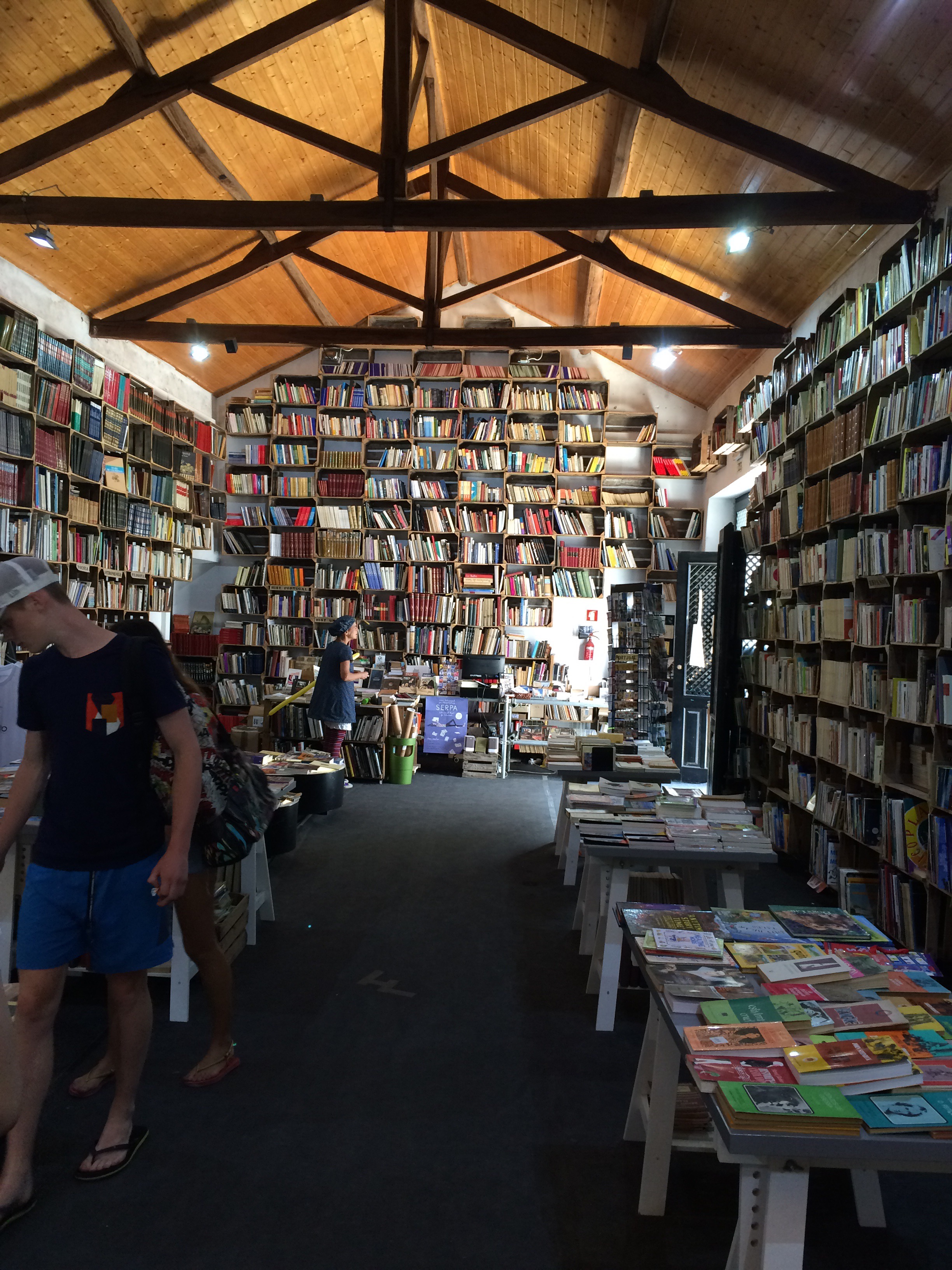
We are staying close to the beautiful town of Obidos, which has designated itself, rather fortuitously for me, ‘City of Literature’! My book-seeking antennae were out and we found two amazing bookshops. 


The first was a secondhand bookshop that also incorporated an organic food market – what’s not to love! Look at what I picked up from the English shelf: 


Plenty of Manchester references here I expect!

The next bookshop was in a converted church and had the most amazing structure of wooden shelving which doubled as stairs and a mezzanine. 


Beautiful isn’t it?

Reading-wise I’m currently enjoying  Lisa McInnerney’s The Blood Miracles, which is so far matching the quality of her first novel The Glorious Heresies

I hope you are also enjoying the holiday season and that you’re getting plenty of R&R (reading and relaxation) in!

Reflections on being a mother of girls

My elder daughter turned 13 recently. I find this fact quite extraordinary and I am filled with a new sense of responsibility. Getting three children this far has been something of a feat, of course (!), but I now feel as if I have the huge challenge of nurturing a young woman. I have an older son, but that seems different somehow. Perhaps that’s because I have never been a young man, but I do have experience of being a young woman, so I am profoundly aware of all the special ups and downs that life can present to girls.

girl-2480361_1920
A beautiful mother and daughter (this is not us!)
My daughter is strong, talented and determined. She is also loving, conscientious and kind, and experience tells me that this can make her vulnerable. The world has yet to fully come to terms with this potent mix of feminine powers, does not yet know how best to embrace it. It seems to me the world often seems to fear it. So, as a parent, as a mother, the conundrum is how to prepare my daughter for a world that may not be fully ready to receive her for all that she is and all that she can be, whilst also fostering her single-mindedness, encouraging her independent spirit and emboldening her to stay true to herself.

I recently read We should all be feminists by Chimamanda Ngozi Adichie (look out for the review next week). This was given to me by a friend as a birthday gift. It’s a fuller version of a speech the author gave to a TEDx conference in 2012. Its context is Nigerian society, but there is much here that we can all take on board in terms of how we bring up our children and the values we attempt to instil.

I have a particular conundrum in that I have for a long time been what is disparagingly termed a ‘full-time Mum’. I took the usual maternity leave with my first child (my son) and when I went back to work he went to nursery for four long days every week (we had no family nearby to support us), a fact which haunts me to this day. My job was challenging and I was 50 miles away, so it was a difficult time. When I became pregnant with my second child not only did it make little economic sense for me to continue working but I felt my higher education job was incompatible with our circumstances. There was no way I could be the kind of parent I wanted to be whilst being committed to my career, and with no back-up it seemed impossible. My husband’s job was senior, demanding and in a relatively male-dominated industry so there was little prospect, in reality, of a shared model. So when my daughter was born I took a career break. I had another child during that time and took seven years off, which ended with voluntary redundancy.

When I recount this story I find it quite hard to believe myself – I was always very ambitious, acquired a Bachelors and a Masters degree, had a good career where I was respected, have always been a feminist, and yet as far as my children are concerned Mummy stays at home. Mummy does work of course (I have run a small business, I write and I do some occasional work for a charity) but I don’t work long hours out of the house like Daddy does so the lion’s share of the household work also falls to me. I don’t feel unhappy with this and I don’t regret any of the decisions we made and if I could do it all again I would make the same choice to stop working (I only wish I’d been there for my son sooner and not put him in nursery), but I do worry about the kind of messages this sends to both my son and my daughters about gender roles. What kind of a role-model am I?

We should all be feminists and the small companion book Dear Ijeawele have given me much food for thought. One of the first suggestions in Dear Ijeawele is that a woman should be “a full person” and not be defined by motherhood. I think in the early years I allowed this to happen, although with three young children and a husband working away every week for a number of years I had little time to define myself any other way! However…that is changing now. As my children get older and can take more responsibility for themselves I am trying to strike a balance between being there for them, but also not being there always, if you see what I mean.

Suggestion number ten in Dear Ijeawele is to “be deliberate in how you engage with [your daughter] and her appearance”. Adichie is a beautiful woman who embraces her femininity. She is a face of No. 7 cosmetics, a fact for which she has been criticised and for which she makes no apology. I have always struggled with my femininity; I think it was handled clumsily and fearfully when I was a teenager (I don’t think I’m alone). Being feminine should not be incompatible with feminism, this much I believe, but I struggle with both my young daughters’ desires to wear make-up, for example. I feel very conflicted as I want them to be happy with their natural appearance, to know they are beautiful as they are, and not to feel influenced by the media that they have to look a certain way or that a certain beauty product is a ‘must-have’. I also worry about the pressure to wear revealing clothing, although, as Adichie says, we should never link appearance with morality.

With a teenage and a pre-teen daughter, these are all very urgent issues. I’m afraid when they were young they did play with dolls and much of their environment was pink, though trains, lego and other colours were available! I agree it is important not to provide gender-specific toys and to encourage breadth and variety. Mostly, my kids liked to paint, make things and play with water, and I never tried to stop the girls getting messy – they were worse in fact! But the issues seem to be weightier now, especially as their thoughts gradually turn to their futures and as sexuality begins to emerge. They hear the news and find that there continues to be a gender pay gap in society, that there is not parity of treatment between LGBTQ and straight people, and that women and girls continue to be abused and exploited more than their male counterparts.

There is much that we all still need to do.

I would love to hear your thoughts about raising girls in the 21st century. 

If you have enjoyed this post, please subscribe to my blog by clicking on the button below or to the right, depending on your device.


August reading challenge: a book with a summery cover

Last month I ticked off my July reading challenge pretty quickly, having skipped through Evan Davis’s Post-truth: Why we have reached peak bullshit and what we can do about it fairly quickly after a train journey.

2017-08-05 11.14.50

This month, mindful that we are in the middle of the holiday season, the challenge is to choose a book, the cover of which is reminiscent of summer. (Whilst I definitely do not judge a book by its cover, I’m afraid I’m a sucker for the book that jumps off the shelf and grabs my attention!) Between the Baileys Prize in June and the Man Booker longlist in July, I’ve bought quite a lot of books recently, so I thought I’d dig through my not insubstantial pile of unread books purchased over the years for inspiration.

2017-08-05 07.34.39I have chosen On Chesil Beach by Ian McEwan, which was published in 2007. I suspect it has been languishing unread on my shelf for a number of years! The cover is, arguably, not particularly summery, showing a young woman walking along Chesil Beach in Dorset, at what looks like dawn, but could possibly be twilight. For those of you unfamiliar with Dorset, Chesil beach is a unique natural feature of the area. Geographically, it is known, I believe, as a tombolo. It is a 20 mile stretch of shingle beach that lies in a long, fairly straight line from Abbotsbury (near the swan sanctuary) to the Isle of Portland in Dorset. Whilst it is connected to the land at each end, it sits apart from the main beach along its length, creating  a kind of lagoon which is a haven for bird life.
Dorset is one of my favourite counties of England. I wouldn’t say I have spent lots of time there, I have been maybe four or five times, but each time I’ve visited I have found it the most beautiful, fascinating and interesting place. It is also deeply connected with my literary life. I am a huge admirer of Thomas Hardy and a few years ago, following a horrible relationship breakdown, I spent the most wondrous and life-affirming fortnight cycling around the county, visiting many of the towns, villages and monuments which appear in Tess of the D’Urbervilles and other Hardy novels. Jane Austen also has connections with Dorset, and who could forget The French Lieutenant’s Woman, a wonderful book, set in Lyme Regis, possibly the loveliest seaside town in the world.

Dorset also has many fascinating geographical and historical features; you can go fossil-hunting in Charmouth, and there are of course, the incredible cliffs at West Bay, made famous as the site of the murder of Danny Latimer in the TV series Broadchurch. The beaches are spectacular, my favourite is the beautiful, horseshoe-shaped Lulworth Cove. As I write this, I am reminiscing about a wonderful week we had there with the children two of three years ago, and aching to go back, even though the weather was typically British!

So, I will look forward to reading this book, as I set off on a short trip to Dublin later today to visit my in-laws.

What books remind you of summer?

If you have enjoyed this post I would love for you to subscribe to my blog by clicking on the link below or to the right (depending on your device). 


Children’s Summer Reading Challenge – Animal Agents

Last week I posted here about my July reading challenge, which was to go along to your local library and select a book. I couldn’t resist the appeal of three titles (as usual!) and found myself uncertain about which to tackle first (I decided on Evan Davis’s Post-truth: Why we have reached peak bullshit and what we can do about it in the end and I’m loving it!) This month’s challenge is linked with the annual Summer Reading Challenge aimed at  primary-age children, which is launched in libraries this weekend. So, if you have children or grandchildren it’s a cheap, rewarding and wholesome activity you can do with them.

Animal AgentsChildren these days have so many distractions which can take them away from reading; they seem to be so busy with out of school activities, have more homework than ever before and, of course, there are the digital distractions…don’t even get me started. But reading is such an important activity for them:

  • it supports their ability to sustain concentration, which, in a world of instant gratification and over-stimulation, is a crucial skill,
  • it is an aid to relaxation, by providing downtime, taking them away from social pressures,
  • it can help with their imaginative and creative development – good writers are usually good readers, and
  • it helps their literacy skills – time spent reading may be just as if not more valuable then learning about the rules of grammar and sentence structure (IMHO!). And is far more interesting.

Reading takes kids into new worlds, it helps them learn to be alone, another important skill in building their mental health resislience, and it gives them access to experiences that they don’t have in real life. The beauty of the Summer Reading Challenge is that all books count, so if you have a reluctant reader, they can still get rewards for non-fiction, reference books, science books, there is no judgement of their chosen material. This year, there is also an online link where kids can sign up, create a profile, review the books they’ve read, and generally share their thoughts. They can do it all here.

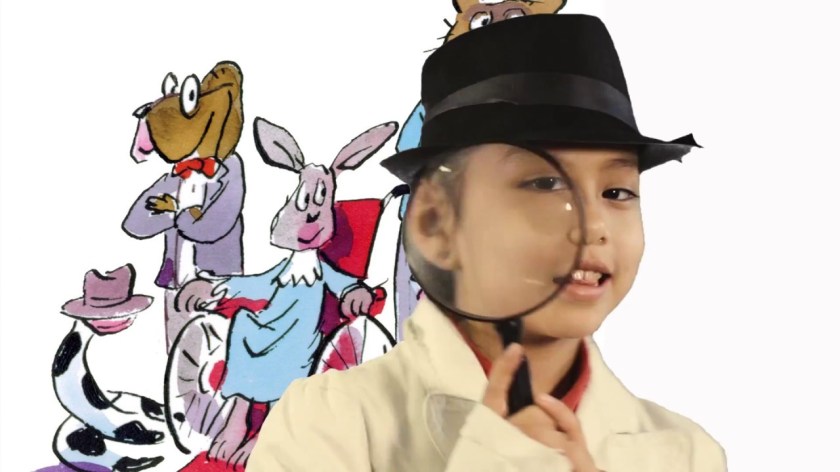
If you are reading this you are probably a keen reader yourself, so I don’t need to tell you about the benefits, of course. The trick is getting the reading habit embedded in our children’s lives from the outset, and that is where the Summer Reading Challenge is so good. This year’s theme is Animal Agents,  a group of crime-busting creatures, beautifully illustrated by Tony Ross (of Little Princess fame). The idea is that for each book children read they get a smelly sticker and a clue that will help them solve a mystery.

So, if you’re kids have or are about to break up for the summer holidays and you’re looking for something to fill in the gaps, get along to the local library and sign up. This is my last year at primary school so I hope my 11 year-old will embrace it, even if it’s just for old time’s sake!


How easy do you find it to keep your children reading as they get older?

If you have enjoyed this post, please sign up to follow my blog and let’s connect on social media.

‘The Weight of Water’ by Sarah Crossan – children’s fiction for June

Regular readers of my blog will know that I am a huge fan of children’s literature. I aim to read and review at least one children’s book every month, so here is my offering for May.

The Weight of Water imgThis was the third book I read last term with the children’s book club at my daughter’s primary school. It was something of a risk as it’s not conventional either in its subject matter or its format. But having read Time Travelling with A Hamster with them (which they loved) and The Snow Spider (which many of them were lukewarm about), I felt they were ready for the more complex themes and the quirky format. The kids in my book club are 10-11 and it’s well-known that children tend to like reading about characters who are a couple of years older. The central character in this book, Kasienka, is 13, so that fits, although some of the themes are quite mature. For example, she mentions her periods, puberty more generally and her feelings about a boy at school, which had some of my book club attendees sniggering! That could have been down to the group situation, however, and read alone or with a parent, this might actually be an opportunity to have a proper conversation with a child about such issues.

The book starts with Kasienka and her mother leaving Gdansk, Poland, with just a suitcase each. They are travelling to England to join Kasienka’s father, who left some months earlier. They are heading for Coventry, as they know he is somewhere in that city, but they have not heard from him for some time and have no address for him. There are clearly two things going on here: firstly, there is the immigrant experience, people leaving their home country in search of a better life, but there is the sub-text also of the mystery of the father’s departure and possible marital issues between Kasienka’s parents.

When Kasienka and her mother arrive in England they find themselves in a dingy bedsit, living amongst other immigrants, including Kanoro, a Kenyan doctor working as a hospital porter. Kasienka is placed in a local school, but is put down a year because of what are perceived to be her inferior language skills. She is resentful at this humiliation not only because she finds the schoolwork very easy, but also because she struggles to be accepted amongst the girls of her own age. Parents of teenagers will know there is usually quite a maturity difference between 13 and 11/12 so one can only imagine what it must have been like for Kasienka to be placed in this situation. There is a sense that the authorities at the school do not necessarily have her best interests at heart either, that perhaps they feel the additional demands placed upon them by immigrant pupils are a burden. There is a feeling that Kasienka is being made an example of.

Kasienka finds her relief in swimming, it is where she feels free and where she feels equal, and it is where she is able to prove herself to her enemies from school. It is also where she begins a relationship with a boy from school, William. There is some kissing here, which the kids in the book club found deeply amusing!

The second strand to the book is the search for Kasienka’s father. Her mother sets about the task with great energy, knocking on doors, marking off the streets on the map as they go. Kasienka is doubtful about this work and you sense early on that she realises long before her mother that her father does not want to be found and that they would be better off giving him up. They do eventually find him, with a new (English) partner and a baby. Kasienka then has to cope with her mother’s depression and despair. Things do work out in the end for them but the themes are clearly quite challenging. The book club coped well with it and particularly enjoyed the occasional minor swear word!

A word on the format, which is quite unique. It’s written in verse form, although it flows more like prose and each chapter is very short, with each topic covered as an extended poem. This makes it quite powerful. Here is an example of one of the early chapters, entitled ‘Mistaken’, when Kasienka is beginning to realise the scale of the challenge facing them in their new life:

“When Mama said

‘We’re going to England,’

I didn’t see myself

Alone.

I knew I’d be different,

Foreign.

I knew I wouldn’t understand

Everything.

But I thought, maybe, I’d be exotic,

Like a red squirrel among the grey,

Like an English girl would be in Gdansk.

But I am not an English girl in Gdansk.

I’m a Pole in Coventry.

And that is not the same thing

At all. “

I really enjoyed this book and my 11 year old daughter did too. It’s a good one for this age group so if you have a child transitioning from primary to secondary I’d recommend it for the holidays perhaps, particularly if you’re travelling abroad; it may help them to think about what it feels like to move to a foreign country.