Audiobook review – “The Lamb” by Lucy Rose

I am still working my way through the Booker shortlist so no further reviews to offer there at this point in time, so I’d like to share with you, a book I listened to on audio a few months ago. This is the first novel from young writer Lucy Rose (although she has a number of short film credits to her name) and I feel sure it will not be her last. I understand that this book falls into the sub-genre of fem-gore and I can’t think of anything I have read that is quite like it. 

The novel is set in a small town in Cumbria. The era is not specified; it seems contemporary, but there is an air of datedness about the setting that suggests somewhere left behind, or even timeless, removed from the modern world of technology. The story centres on the relationship between Margot, whose age is not stated, but who seems pre-adoloescent, and her Mama. There is no father – he disappeared a long time ago. Margot and her mother live in a remote rural location close to the woods in a dilapidated cottage. They live an isolated life although Margot does go to school – she walks to the main road to pick up the school bus. The bus driver is one of the few people outside of the home that Margot has any meaningful interactions with. He clearly has some concerns about Margot and her home life. Margot has one school friend. 

Quite early on in the book it becomes clear why Margot’s Mama wishes to live away from prying eyes; she has cannibalistic urges and fulfils these by luring lone wanderers from the woods (whom she terms “strays”), and killing and eating them. The descriptions are graphic, not for the faint-hearted, but powerful and vivid. Mama is a damaged individual – she has devastating mood swings and is unable to care for her daughter. She is neglectful both physically and emotionally. But of course, Margot knows no different and loves her mother. She seems to have a sense that their lifestyle is unusual, and Mama instils in her a deep suspicion of the outside world which compels her to maintain secrecy about their lives. 

There is a sense that the state of affairs cannot continue indefinitely. One day, a “stray” called Eden arrives at the house. Initially, Mama plans to kill her, just like all the others, but Eden seems to have a hold over Mama. Tensions arise in the three-way relationship between Margot, her Mama and their visitor. Margot’s approaching adolescence also threatens to upset the hitherto peculiar equilibrium of the household and a point is reached where action must be taken.

This is a startling but utterly compelling novel. It is violent, graphic, sexually explicit and very dark, but the psychological horror makes it a real page-turner. The main characters of Margot, Mama and Eden are powerfully drawn and convincing even though their actions beggar belief. Even the minor characters, like the bus driver, add real depth to the story. 

We read it in my book club and all loved it. The audiobook is brilliantly read by Emma Rydal who brings some very special qualities to her narration.

Highly recommended.

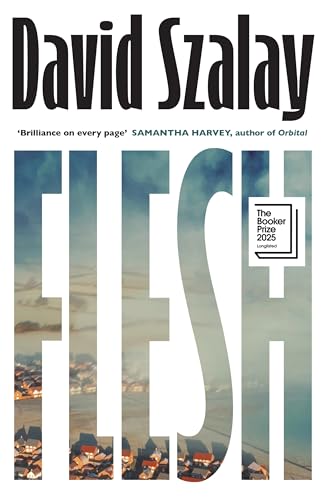
Booker shortlist review #3 – “Flesh” by David Szalay

This was the fourth book that I read from this year’s Booker shortlist (this post is entitled number three because I read The Land in Winter back in February) and it is the title that won the prize. This book is undoubtedly better (in my humble opinion) than The Rest of Our Lives and more compelling than The Loneliness of Sonia and Sunny, although I’m not sure I prefer it to The Land in Winter. It is David Szalay’s second attempt at the Booker, his 2016 novel All That Man Is having been shortlisted previously. This review does not contain significant spoilers, but it is a tough one to review without giving away a little of the events. 

The novel centres on one main character, István, and follows the ups and downs of his life. We first meet him as a teenager in a small town in Hungary where he lives with his mother. István is on the cusp of sexual maturity and, not untypically, feels himself alone, different from other boys around him. When one of his classmates arranges an initiatory sexual encounter for him with a willing girl he at first seems to believe that this will launch him into a world he so desperately wants to belong to – the sexually experienced – but it goes embarrassingly wrong and he finds himself further isolated. From there he falls into the arms of a neighbour – a woman in her forties – with whom he embarks on a journey of sexual discovery. Events will soon spiral out of control, however, and will lead István to the first ‘down’ in his eventful life.

A few years later István is in the military, and serves in Iraq, where he distinguishes himself. His life finally seems to be ‘up’ although his experiences leave him with PTSD. After the army, more disappointing sexual encounters follow and then a lack of direction and meaning until István finds himself in London where he is employed as a security guard in a nightclub. Late one night, whilst heading home after his shift, István intervenes in a street mugging and saves a man’s life. The man, ageing, but still active as a businessman running a high-end protection services agency, takes István under his wing. This will set István on another upward trajectory that will take him into the worlds of high finance and the English upper classes. 

There is a lot going on in this novel – we follow the path of István’s life from the moment things start happening for him (as a boy in Hungary), to, really, a point when things stop happening for him. A period, I am guessing, of about 40 years. The novel is almost picaresque; it reminded me a little of the 1975 Stanley Kubrick film Barry Lyndon (starring Ryan O’Neal as the eponymous character) – a brilliant film if you haven’t seen it. The central character is not a bad person, in many ways he is highly sympathetic and someone who has a lot of love to give, but he also is blighted by a handful of bad decisions and some unforeseeable misfortunes. István, like Barry Lyndon, will experience tremendous highs and very deep lows. Sex is also a common theme and whatever stage István finds himself at, there is a sexual situation to match – sometimes this is part of the bad decision and sometimes it shows István at his most tender, some of his finest moments are in his intimate encounters with women.

Szalay’s writing style in this novel is spare, and the dialogue is particularly interesting, particularly authentic in its perfunctoriness, which, alongside the pretty fast-paced plot, makes it quite a fast read. I can see why it won the Booker – it is quite the novel of our times and with this particular writing style (so antithetical to Kiran Desai’s Indian epic) it seems to encapsulate the short attention span culture, the Instagram-worthy outer life but beneath which lies deep darkness. István lives in an era and a continent never more densely populated and yet as a man he finds himself so often alone.

This is a good read and I recommend it.

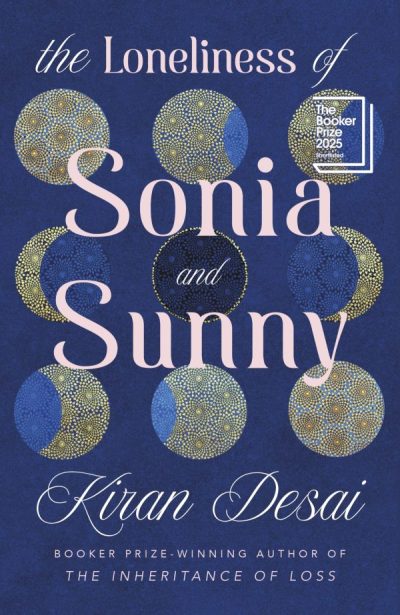
Booker shortlist review #2 – “The Loneliness of Sonia & Sunny” by Kiran Desai

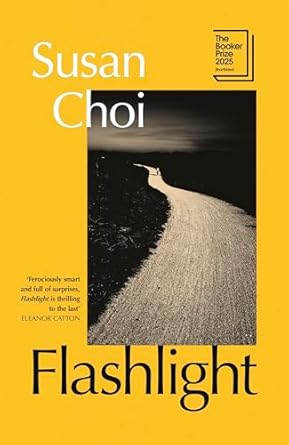
This was the longest of the books shortlisted for this year’s Booker Prize. At almost 700 pages it was nearly half as long again as the next biggest, Susan Choi’s Flashlight (464 pages). I do enjoy a long book – the longest ever Booker shortlisted novel was Lucy Ellmann’s Ducks, Newburyport (2019), a book I loved and the stream of consciousness style of which suited its length. This book, I am not so sure.

The two main characters are Sonia and Sunny, Indian immigrants living in the United States. Sonia has recently graduated from college in Vermont. She wants to be a novelist but lacks motivation and application. At the start of the novel she is in a relationship with a much older man, an established and renowned artist who evades commitment and who exploits her youth, beauty and biddable nature. 

Sunny is the only child of a widowed mother, and is working as a journalist with the Associated Press in New York, dreaming of his big break but struggling to make an impact. He is in a long-term relationship with his American girlfriend, but when he meets her parents, the gulf between them and their respective cultures becomes clear. 

Sonia and Sunny’s family backgrounds are illustrated in detail and a powerful and rich canvas is painted by the author, drawing out the importance of tradition in Indian culture, but also the rapidity of change in that society. Sonia and Sunny’s grandparents, for example, are firmly in the past and struggle with the new realities whether this is in relation to public administration, marriage traditions or technology. Their parents’ generation straddles the past and the present and all are still trying to work out how to navigate the new realities. 

Sonia and Sunny represent the Indian dream, trying to establish themselves in the west, and make a career which matches their academic credentials but always rubbing up against hostile attitudes to immigrants and shaken by the culture clashes. They are first made aware of each other in the most traditional Indian way when Sonia’s grandfather approaches Sunny’s grandfather (a chess-playing companion) to try and arrange a meeting between the two. Sunny’s family goes through the motions of promising to introduce them whilst privately regarding the approach with contempt given the social gap between the two families.

It will be some time later that Sonia and Sunny meet in person, in India, for Sonia’s grandfather’s funeral. Will they strike up a romance, ironic, given their respective families’ attempt to match/eschew them? Or have they become far too American for such arrangements?

The real irony of the situation is expressed in the title of the book – both young people are lonely, in relationships of their own choosing which not only fail to fulfil them on either a romantic or a cultural level, but which verge on toxic. In the case of both of them, their partners cannot connect with their Indian cultural sensibilities, or even their immigrant sensibilities.

I did enjoy this book, but with caveats. I have loved many an Indian epic novel – I count Rohinton Mistry’s A Fine Balance and Vikram Seth’s A Suitable Boy among my all-time favourite reads – but this one did not quite do it for me. I do think the background cast of characters, Sonia and Sunny’s extended families, was important in portraying modern India, what has changed and what hasn’t, but there were times when the level of detail felt too much. Towards the end, for example, the account of Sonia’s father’s illness and his experience of his treatment, felt unnecessary. And the lengthy chapters with Elon, Sonia’s artist lover, also felt drawn out more than was necessary; or perhaps it just felt that way to me because he was so ghastly! I’m afraid I do think some judicious editing was called for. 

The author handled all the many complex themes – loneliness, disillusion, the problem of the outsider, the clash of cultures, and the transformation of the vast nation of India – with aplomb, but I do think the narrative could have been tightened. 

The book is an achievement that is worth a read, but it would not have been winner-level for me. I listened to it on audio and it was beautifully read by Sneha Mathan.

Booker shortlist review #1 – “The Rest of Our Lives” by Ben Markovits

The winner of this year’s Booker Prize was announced last week and it was David Szalay’s Flesh. It was this author’s second attempt, having been nominated for All That Man Is in 2016 – the year I started this blog. That was also the first year I set myself the goal of reading all the novels on the shortlist – I don’t think I managed it that year either! (I have no idea how on earth the judges manage to get through so many books – they must have to forego all other meaningful activity for months!) When this year’s shortlist was announced a month or so ago I gave myself a fifty percent chance of getting through the shortlist before the announcement.


Well, predictably, I only got through half the books in time (I already had Andrew Miller’s The Land in Winter under my belt), although I did manage to get through Anita Desai’s The Loneliness of Sonia and Sonny, all 700 pages of it, which has to be an achievement in itself. 

The first book that I decided to tackle was Ben Markovits’s The Rest of Our Lives – according to the blurb it was about a man in mid-life whose children are leaving home to go to college and so it seemed to chime with some aspects of my life right now. I also noted that the author is a lecturer in creative writing at Royal Holloway, University of London, where I did my own undergraduate degree in English, so, a happy coincidence.

The central character is Tom, an academic in law, in his fifties, living in New York city with his wife Amy. It is clear that Tom has reached a state of disillusionment with his life. Amy had an affair some years earlier and it is clear that their marriage has never really recovered from this shock. Tom has been waiting until their children have left home before leaving his wife. Tom and Amy’s elder child Michael is at college in California, and when their daughter Miri goes to college in Pittsburgh, Tom drives her there and the moment of reckoning arrives. 

The journey to Pittsburgh is long – around seven hours (which makes my 3 hour journeys to drop my kids off seem pathetic!). After delivering Miri, Tom decides to keep going, not to go back to New York. He tells Amy that he is going to visit an old pal who has been seeking his advice on a legal matter. He keeps driving. 

In the background we learn of Tom’s health complaints, a swollen face every morning that no doctor has yet been able to diagnose satisfactorily. A friend of mine recently described middle age as being like ‘sniper’s alley’ when it comes to health – you can eat well, exercise, avoid smoking or drinking too much, do all the right things, and yet some nasty disease might still get you. It’s true, and one becomes acutely aware of this in middle age. We learn of Tom’s professional disappointments, never having quite attained the goals he hoped he might. He revisits a number of old friends and finds the relationships are not quite how he imagined. What will Tom do with the level of mediocrity he finds himself in?

This is a road trip novel where the central character goes on a journey of self-examination. This could be a cliche if it was not handled extremely well. And I’m afraid that, for me, it was not handled extremely well. I found the author’s writing style languorous and dull. The ending was abrupt and it felt like the author had just got rather bored with his story and decided to stop. The characters lacked spark. The most interesting character for me was actually Michael’s girlfriend Betty, although I am not sure what purpose she served in the novel, except to show Tom how things might have been if he’d made some different choices.

This was not a bad novel, but I find it quite hard to believe that it was considered Booker shortlist-standard, especially a shortlist that omits Chimamanda Ngozi Adiche’s Dream Count

Unfortunately, I find this book difficult to recommend. 

Audiobook review – “Women of a Certain Rage” by Georgie Hall

Last week I posted a non-fiction book review of a somewhat high-brow, very serious and political book (Prisoners of Geography) that left me feeling, yes, better informed about world affairs and the historical origins of certain persistent conflicts, but also rather gloomy. I now have something rather different to offer. I listened to this book in the summer too and it was much more fun. Definitely not high-brow, but that’s the great thing about reading there is a book for literally every mood! Georgie Hall’s Women of a Certain Rage probably falls into the genre of “chick-lit” and so is unlikely to be read by anyone other than women of a certain age, but it could do with being read by others too, to give them an insight of what is to come or what their partners or mothers might be going through. 

Eliza is a middle-aged mother of three living near Birmingham in central England – her eldest son Joe is at university, her middle daughter Summer is a teenager at college and her youngest, Edward is at school and is neurodivergent. Eliza has been married to Paddy for more than twenty years. They met in London when both were young and carefree and Eliza was starting out on her career in acting, full of dreams and ideals. Now in middle age, Eliza finds herself at a crisis point: her relationship with Paddy seems to have reached something of a stalemate and she feels she is becoming increasingly irrelevant to her children. Furthermore she and Paddy are part of the sandwiched generation – still looking after kids, but also with ageing and increasingly dependent parents, and in conflict with siblings over who should take responsibility. 

At the start of the book, Eliza is verbally abused by a lorry driver who calls her a “mad old bat” and she has a sudden realisation that for women, as they age and as youthful attractiveness fades, they become either invisible, irrelevant or a target. Eliza is then further unsettled by the attentiveness of an Italian restaurant owner. When he begins to pursue her, seemingly in the hope of having an affair with her, it causes her to re-evaluate her marriage. 

Paddy and Eliza are not well-off and Paddy’s passion is his narrowboat, a family treasure which has huge sentimental value due to the connection it brings him with his parents. When financial pressures threaten to take the narrowboat away from them, Eliza decides to take drastic action which will force her to dig deep into all her resources and resilience. 

Eliza is a warm and likeable character, struggling to navigate her way in a world that no longer seems to value what she has to offer. Going through the menopause throws her into a physical and emotional maelstrom which will expose all the fault lines in her life, her marriage and her family. Any woman in their forties or fifties will recognise at least some of what Eliza is going through; even if not the menopause, the challenges of a long marriage, teenage children and financial pressures will resonate. I thoroughly enjoyed this book and felt invested in Eliza and her journey. Yes, some of the characters are predictable and two-dimensional, but I liked how some of the relationships develop, especially that between Eliza and Paddy, Eliza and her siblings, and with her daughter Summer (although she was deeply irritating at times, a bit of a caricature). A fun, easy read.

I listened to it on audiobook and it was read energetically by Rachel Atkins. Recommended. 

Book review – “Dream Count” by Chimamanda Ngozi Adichie

I posted earlier in the week about this year’s Booker Prize shortlist and one of the books I was surprised not to see on the list (it did not even make the longlist) was the latest (and for me long-awaited) novel by Nigerian author Chimamanda Ngozi Adichie. So surprised was I by this oversight that I even double checked the eligibility criteria – was it published within the time frame? It was indeed and I remain very puzzled. It is hard to believe that it is twelve years since Adichie published her last novel Americanah, though in the intervening period she has written some shorter form non-fiction works. She and her partner have a young family so presumably she has been focusing on raising her children and she also lost both her parents and has written about her grief at these events.

Well, it was, in  my opinion,  worth the wait because she has well and truly hit a very rich seam once again with this, her fourth novel. Dream Count reflects on the dilemmas facing women today, on the choices between career and family, on the unreliability of too many men, on cultural clashes, on food, on the Covid 19 pandemic, on loneliness and fulfilment, on Africa and on inequality. 

The novel traces the story of four women – Chiamaka, who comes from a wealthy Nigerian family, her cousin Omelogor, a brilliant financial analyst and sometime academic, Chiamaka’s friend Zikora, a lawyer, and her long-time housekeeper in the US Kadiatou. The novel opens with Chiamaka’s story at the time of the Covid 19 pandemic when she finds herself stranded in the US, only able to communicate with family via internet video calls, as happened with so many of us. Chiamaka is a travel writer, who has had only moderate success, but her family’s wealth means she has no real need to work. There is pressure from her family to marry and have a family, however. Chiamaka is a romantic and the novel recounts some of her many relationships, but the men in her life invariably fall short either of her ideals of marriage or in terms of their character. 

Omelogor is a self-made woman, highly intelligent and extremely able from a young age she became a financier in Nigeria and made her fortune by taking her own share of the corrupt profits she helped her unscrupulous bosses cream off the state. A modern day Robin Hood-ess she sets about redistributing funds to less fortunate, less educated women in her community, women trying to support their families by setting up small businesses. Latterly she takes a sabbatical in the US and becomes a researcher into internet pornography and how this impacts on men’s perceptions of women and how they conduct themselves in relationships.

Kadiatou is Chiamaka’s housekeeper in the US. A deeply caring woman who left Nigeria at the behest of a man who promised to marry her. She has a daughter to whom she is devoted. Kadiatou becomes embroiled in a high-profile sexual assault case which closely resembles the true story of Nafissatou Diallo, a maid at a luxury New York hotel, and Dominique Strauss-Kahn, Director of the IMF, in 2011. The author references this case in her afterword. In her exploration of Kadiatou’s assault, the author explores the perennial problem of power imbalance and how the law and the media are stacked against immigrants, women and poorer people.

The fourth main character is Zikora, close friend of Chiamaka and Omelogor, a lawyer who also experiences family pressure to marry and start a family, but who again, finds herself let down by inadequate men, but also, sadly, a distant mother. 

The novel alternates between the different women’s perspectives, exploring their back stories, their thoughts, their preoccupations and their dreams. ‘Dream count’ seems to refer to the different sexual and romantic relationships and encounters they have, the good, the bad and the really ugly. Thus the term ‘dream’ becomes one that is loaded with irony and with cultural perceptions (a partner may appear ideal, dream-like, from the outside, but there are usually problems and inadequacies that make them unsuitable or unacceptable to these women). In their different ways none is prepared to settle for a second-best. 

There is so much to love in this novel. I listened to it on audio and was delighted that the opening part of Chiamaka is read by the author. Her voice is smooth and rich and filled with the nuance that only she, as the author, could understand. Thus she brings expression that makes listening even more of a pleasure. If I had read this as a book I feel sure I would have been turning the corner on every other page, defacing it with hundreds of underlinings and notes because the language and the expression are so powerful. 

It is the best post-pandemic novel I have read to date and a book I highly recommend. 

Booker Prize shortlist 2025

The shortlist for this year’s Booker Prize was announced recently, an event which more or less passed me by. I have been so busy with my day job recently (and will continue to be for the next few weeks) that my reading, writing and blogging have fallen badly by the wayside. I have a long break in November, however, and I am determined to get some balance back in my life.

In the nine years since I have been writing this blog I have endeavoured each year to read through the shortlist in time for the announcement of the winner. I think most years I get through all the books (even if it takes me months!), but I think I have only once managed to get to the end by the time of the winner announcement, and only called it right on one occasion also (with the very memorable Shuggie Bain, winner in 2020).

This year’s shortlist is made up of experienced novelists. I am familiar with the work of half of them – Kiran Desai, a previous Booker winner (2006, The Inheritance of Loss) is the daughter of legendary Indian novelist Anita Desai, who wrote Fasting, Feasting, which I read many years ago and which was also shortlisted for the Booker Prize. David Szalay, wrote All That Man Is which was shortlisted for the Booker in 2016 (the year I started blogging). And Andrew Miller whose book The Land in Winter I read a few months ago in my book club and have already reviewed it on here – so I have one under my belt!

Some of the books are exceedingly long – Flashlight comes in at just under 500 pages and The Loneliness of Sonia and Sunny a whopping 700 pages! I am not quite sure where to start; I think The Rest of Our Lives by Ben Markovits speaks to me most at this point – the opening line of the blurb is “What’s left when your kids grow up and leave home?” Kind of where I am in life!

This year’s Prize is distinguished also by its interesting judging panel, which includes Sex and the City actor Sarah Jessica Parker, and authors Kiley Reid and Ayọ̀bámi Adébáyọ̀, both of whose work I have reviewed on here. The judging panel is chaired by veteran bestselling author Roddy Doyle.

So, what chance do I give myself of finishing even half these novels by 10th November when the winner is announced? Let’s say 50/50!

Happy reading!

Book review and travels in Vienna – “When the World Was Ours” by Liz Kessler

I read this book at the end of the summer. It is set partly in Vienna, where we went for our family holiday in July, though that is not why I read the book, or why I went to Austria! Pure coincidence. When the World Was Ours is actually a book for young people, or what is often called ‘middle grade’ fiction, but that should not deter any adult from buying it – I was gripped from start to finish and absolutely loved it. 

The book opens in Vienna in the mid-1930s at the birthday celebration of nine year-old Leo. Leo’s father has taken him to the city’s ferris wheel for a treat, along with Leo’s two very close friends Max and Elsa. There they meet an English couple, a dentist and his wife, who are in town for a conference and afterwards the couple and all the children are invited back to Leo’s family home for Sachertorte, the iconic Austrian dessert. 

The three children are inseparable, firm friends; Elsa’s main dilemma is which of the two boys she will marry when they grow up! But timing is everything, and as political events around the children develop, it is clear that they will not be unaffected by the fascist takeover of the city and country by Hitler and his army. Leo is Jewish, as is Elsa. Max is not. This will create a wedge between them as Leo and Elsa’s families must navigate the new environment; should they stay or should they try and escape? Meanwhile, for Max, the challenge is rather different. Always a more timid boy, somewhat in Leo’s shadow, he finds there are expectations upon him once his father begins to rise up the Nazi ranks, which it is not clear he will be able to meet.

I do not want to say more about the plot of the novel as it is a critical part of the enjoyment of the book. There is a gloomy inevitability about many of the events, however, as you might expect. It is a compelling read, with chapters alternating between the perspectives of each of the children.
The characters are well-drawn and the writing has a graceful simplicity that suits the subject-matter, the primary intended audience and the gravity of the events. It is plain without being patronising and I felt it was an authentic portrayal of the voices of the individual children.

I had the great pleasure to meet the author and discuss the book with her as she lives in the north west of England, not far from me. She came to our book club and was very generous with her time and her thoughts. As is stated at the beginning of the book, there are autobiographical elements as it is based on her own family history. This adds even more poignancy to the story and is a timely reminder that fascism and authoritarianism must never again be allowed to take hold. The consequences are intolerable.

Vienna

It was by sheer coincidence that my family went on holiday to Austria this summer. We have been skiing there a number of times  in the last couple of decades, but it is many years since I have been there in the summer. We spent a few days in Vienna and then travelled west to Schladming, normally a ski resort but a walker’s paradise in the summer, and where the hills were most definitely alive – verdant, green, lush and beautiful. 

Before I went I looked up ‘famous Austrian writers’ because I found I could not think of any! The list did not include many that I had heard of apart from Arthur Schnitzler, who wrote the novella Eyes Wide Shut, famously adapted for the screen by Stanley Kubrick and starring Nicole Kidman and Tom Cruise, and the poet Rainer Maria Rilke. Austrian culture is perhaps better distinguished by its eminent composers and artists, such as Mozart, Schubert, Strauss, Haydn and Klimt.

Vienna is truly one of the must-see capitals of Europe, however, not least because of its historical significance and its closeness to eastern Europe; Bratislava, the capital of Slovakia, is less than one hour’s drive away and the mighty Danube runs through both cities. Vienna is a stunning city, beauty on every corner, and it even gives its name to a particular kind of patisserie – Viennoiserie! Needless to say we sampled much of what it had to offer on this front, frequenting many coffee houses, including the famous Cafe Central, where Sigmund Freud is said to have hung out, and the Hotel Sacher, which claims the Sachertorte as its own. 

Had I read When the World Was Ours before going to Vienna, I would certainly have headed for the vast green space to the east of the city where the Riesenrad, the giant ferris wheel, still stands – next time!

Women’s Prize shortlist review – “Fundamentally” by Nussaibah Younis

This is my final review of all the titles on the Women’s Prize shortlist, the winner of which was announced weeks ago! It has taken me ages to get through them all, I can’t believe it. Have I suddenly become very slow at reading? I have been working a lot of evenings which means prepping in the afternoon and then getting home late, crossing over with my usual reading times, so guess what has been put to one side? I’ve also been reading multiple books at once and am still slogging my way through Proust! Doesn’t matter, I suppose. There are no prizes for most books read, although the nagging notifications on my Goodreads account, telling me I’m behind on this year’s reading goals, make me feel like a bit of a reading failure, which is ridiculous!

Fundamentally is another debut novel, and I learn from Wikipedia that the author Nussaibah Younis went to a grammar school in the town where I live – small world! She went on to university in Oxford and is now based in London, but had a career in international relations, specialising in Iraq. She was brought up Muslim but describes herself as no longer religious. I am recounting this because there are significant autobiographical elements in Fundamentally, something which seems fairly obvious even if you did not know the author’s background. Similar, in that respect to Aria Aber’s Good Girl. That does not make the novel less good, or less worthy of being shortlisted, of course, but you wonder if the author has a limited range or if they are simply honing their craft by writing about what they know. Apparently, Younis is working on her second novel, so we will find out.

The central character and first person narrator in Fundamentally is Nadia Amin, a young British Asian woman who was brought up a Muslim but has rejected her faith, following, among other things, a complicated relationship with her overbearing mother. As a young adult she pursued a hedonistic lifestyle in London alongside her university studies. She gained a PhD which led to a prized lectureship. She also had an open relationship with another woman Rosie, but when this breaks down, she decides to escape by applying for a United Nations special posting running a rehabilitation programme for former ISIS brides in Iraq. Nadia is running away and she knows it, all the while hoping that Rosie will change her mind. 

Arriving in Iraq, Nadia realises quickly how naive she has been – the scale of the task is huge. The women she is working with in the camp are not the group of malleable, self-effacing, grateful subjects she envisaged. Rather they are complex, varied, traumatised and with ideas of their own. One young woman has a particular impact on Nadia: Sara, a Londoner who was lured to ISIS at the age of 15. In her, Nadia sees shadows of herself. Despite warnings from her colleagues, Nadia involves herself closely with Sara’s case, perhaps too closely, until events spiral out of her control. This is the central plot of the novel – how the relationship between Nadia and Sara resolves and the journeys that both women go on as a result of what they learn from each other. 

The other aspect of the novel is exploring the role of the UN and other agencies in former war zones and developing countries. With her background, the author is highly qualified to write about this. There is a mixture of fondness and criticism – the people working in the field are largely very dedicated but operating in highly complex environments, trying to square the needs and aspirations of governments (good and bad), officials, and those they are meant to be helping. There is both comedy (the bureaucratic somersaults that have to be performed to get anything done), sadness (at the inevitable waste, duplication and corruption) and nuance – not every person in need is objectively “good” all of the time. Rather like democracy, the UN comes across in this novel as far from ideal but perhaps better than the alternatives. 

I really enjoyed Fundamentally – there are a few cliches and some characters are inadequate and two dimensional (Geordie ex-soldier Tom was one I found particularly grating) but it is a great story. The ‘ISIS brides problem’ is difficult and complicated at every level but it deserves to be seen in all its complexity rather than in the lazy homogenised way it is often portrayed. I listened to it on audio and the actor, Sarah Slemani, handles the wide range of voices (and accents) remarkably well. 

Recommended

Women’s Prize shortlist book review – “All Fours” by Miranda July

This book has caused quite a stir in literary circles and is possibly the most remarkable and unusual books that made it to the Women’s Prize shortlist. There was quite a lot of sex on the shortlist this year – an intense lesbian relationship in The Safekeep, the book that won the prize, as well as sex as exploration and rebellion in Good Girl and as relief from the pressures of a confined life in Fundamentally. But All Fours is pretty much all about sex and one woman’s search for her fundamental sexual core as she enters a new phase of her life.

The book is first person narrated and our central character (unnamed) is a moderately successful filmmaker and writer who enjoys a modicum of fame but has never fully lived up to the promise that her one really popular work suggested. She is in her 40s and now lives in LA with her partner Harris and their young child Sam. Her life has become somewhat routine and her relationship has settled into a loving but comfortable and predictable dynamic. She has a close bond with her child; as a baby they almost died following a very rare pregnancy complication where a foetus would normally die, and the event resonates throughout her life. 

As a gift to herself, the narrator, supported by her partner, decides to go on a road trip to New York, where she will spend time in a fancy hotel and enjoy a writing retreat to make some headway on her current project. Soon after she sets off from home, however, she decides to make a detour and finds herself at a motel, a mere half an hour from her home. At a car rental showroom she finds herself deeply attracted to one of the employees, Davey, a young married man whose wife, Claire, is an aspiring interior designer. 

What happens next is inexplicable to both the reader and the narrator who finds herself drawn along a strange path where she sets about to transform her dingey motel room, with Claire’s help, into something resembling a boutique Parisian hotel room. She also seduces Davey and the two embark on an unusual, intense, sexual relationship. All the while, the narrator, lies to Harris and Sam, telling them first about the road trip and second about New York. 

During her sojourn at the motel, the narrator undergoes a deep exploration of her life and her soul. With Davey she explores all parts of her sexual self. To say this is a ‘menopause novel’ is too simplistic, but the narrator’s age (forty-five) and her anticipation of the change that she fears is about to swallow her, undoubtedly drives the crisis she is experiencing. There is an Alice in Wonderland quality to the novel – she disappears into a kind of time warp, where collisions with her real life (calls with Harris and Sam) jar and seem unreal. She is at once desperate to be with them again, to have the reassurance of their stability, but also desperate to escape, tortured by the thought that life has nothing more to give her sexually. 

The novel is explicit as well as at times being very dark and at times very funny. The narrator is very self-aware but also very unknowing about herself, which is why she needs to go on this journey – both literal and metaphorical. Once she leaves the motel, one thing is for sure – her life will never be the same again. 

I really enjoyed the book. The sex is very graphic but pretty well done – I only recall cringing once or twice which is not much given that there is a lot of it! It’s also a really challenging book – as it sets out to question the ordinary lives most of us lead and it’s difficult not to ask yourself, is this enough? So it may be an uncomfortable read for some. It gives the middle finger to Trump-era America with its gender fluidity and libertarian approach to sex and sexuality; it may be far too “woke” for some, but I consider that a plus. 

A brave book and an interesting choice for the Women’s Prize shortlist – that said, it could not really have been left off it.