Book review – “North Woods” by Daniel Mason

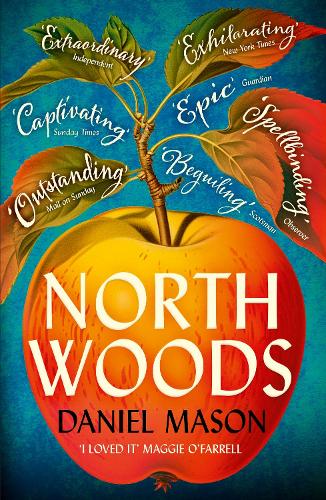
This novel crossed my radar last year when I was seeing it everywhere. I am a sucker for a good cover and the first edition cover (a cougar sitting on a hillside) would have passed me by but later editions feature a beautiful apple with leaves and vibrant colours and it definitely caught my eye! So I was delighted when one of my book club companions suggested it. It is a work of historical fiction set in New England, something else that attracted me as it is a part of the world I know quite well, having spent a few months there as a student. The author, Daniel Mason, has published five novels previously and is both a writer and a medical doctor – his scientific background brings an extra dimension to the work. 

I learn lots of new things through reading, but I am delighted to have learned that this is an “epistolary novel” (something that I’m afraid my English Literature degree did not teach me!), told through a series of media – letters, diary entries, newspaper reports, as well as conventional narrative. It makes for great variety for the reader although the structural device was not universally praised by critics. It provides an interesting way of dealing with the different historical periods covered by the novel. 

The novel’s location is a property in Massachusetts (both the house and its land) and the characters are the many people who have occupied it since it was first settled by an English immigrant. Retired English soldier Charles Osgood emigrates to the new world in the 1700s and cultivates an orchard on the property. He sets about creating a special apple variety, named after himself, as a way of making his mark on the world. His wife dies and he must bring up his twin daughters alone, but is determined to pass on his knowledge of apples in order that they continue his work.

The two women inherit the property after their father’s death and so the house falls to a new generation, but history is not in the gift of those who have passed to determine and under their stewardship, the property begins its steady path to decline. The sisters are preternaturally close and when a suitor begins to woo one of them, the other cannot allow this to stand. Their unusual relationship and the events of their lives foreshadow later tragedies that will befall the various occupants: a gentleman conducting a scandalous illicit relationship, the lonely wife of a businessman disturbed by visions, and the schizophrenic loner who seems to have a profound connection to the property’s past history.

It is not only the human occupants who enjoy the author’s attention; we learn of a cougar taking up residence in the wilderness that the property becomes, and the reproduction of insects in the decaying woodland. I enjoyed these bits less, preferring the human characters and their life dilemmas, but I appreciated the depth of the author’s scientific knowledge. 

I thoroughly enjoyed this novel and personally I liked the variation in the ways of telling – I felt these created a good sense of the different time periods being explored. I listened to the book on audio and there were many different voices used for the various characters which helped to create an ensemble feel. It is also a deeply philosophical novel – Charles Osgood thought he was creating a place in history, but within a few generations his beloved orchard is derelict, built over and forgotten and apple varieties have diminished to a fraction of what was available in the past. The businessman envisions a presidential retreat for the house, but this is never realised and the house becomes broken and dangerous. Individual human lives have only minimal significance and nature will take over in some form. 

I’m afraid I did not like the ending. It did not seem true to the rest of the book to me. I liked how the ‘spirits’ of the past were ambiguous throughout the novel, but the ending seemed to take a particular stand on this that I could not subscribe to – I cannot say more than that without giving too much away. I recommend the book for the journey rather than the destination! 

“Labyrinth” by Kate Mosse

You have got to admire Kate Mosse – in addition to being a best-selling author (with thirteen novels, non-fiction and plays to her name) she co-founded the Women’s Prize for Fiction, has been honoured twice (with an OBE and a CBE), has won a clutch of highly respected awards and appears regularly on screen and radio. It makes you wonder how she gets time to write because her books are not short! Despite Kate Mosse being on my radar for a long time (and I would describe myself as a fan of hers) I am ashamed to say I had not read any of her books – I guess I thought that medieval mystery wasn’t for me. But I was prompted to pick up Labyrinth after I was invited to put a question to her on BBC Radio’s World Book Club. I was in the middle of the Booker shortlist at the time and was somewhat daunted to note that it was almost 700 pages long (and about 18 hours on audio)!

It is almost twenty years since Labyrinth was first published and the book has been a sensation, selling almost 900,000 copies – astonishing. And a million readers are not wrong – it is a titanic novel, gripping, accessible, with a remarkable attention to detail and extensively researched. I just cannot believe I am so late to this particular party.

The novel opens on an archaeological site in south-west France, where Dr Alice Tanner, working as a volunteer (because she is a friend with one of the dig’s leaders), inadvertently strays off the permitted boundary of the dig and into a cave where she discovers two skeletons. She is severely reprimanded; the police must be notified, not least because they are trying to solve the suspected murder of two missing persons, and they promptly force work to be halted. When a powerful lawyer, infamous in the judicial community, becomes involved, events take a darker turn. 

This part of the novel is set in the early 2000s, but then switches to the early 1200s in Carcassone (though Mosse uses traditional Occitan references and language throughout. This language was widely spoken in the Languedoc region at the time, but suppressed by northern invaders who conquered territories in the south). The young noblewoman, 16 year-old newlywed Alais, daughter of Bertrand Pelletier, a key advisor to the head of the Cite (Carcassone), Viscount Trencavel, considers her life in the chateau where she lives. She is free-spirited but under the yoke of her scheming older sister, the constraints placed upon women of the time and now as a wife. 

We learn that Bertrand Pelletier (and some of his friends and allies) is the guardian of certain key spiritual books and objects which together contain the secrets of the Holy Grail. When he believes his life is threatened he entrusts these to his younger daughter, not realising the grave danger that this places her in. Meanwhile civil war is erupting, with the brutal warlords of the north seeking to suppress the Cathar movements in the south and taking the land of the southern noblemen under the pretence of protecting the established church. Alais must use all her wits to keep the books safe. 

Alice Tanner has unwittingly stumbled on the Grail secrets and, like Alais, this makes her a target too. The novel tells the parallel stories of both women as they attempt to work out the significance of the treasures they have been trusted to guard and to escape those who want them for themselves and who have no regard for their life, and would, in fact, rather see them dead. 

The book is a genuine page-turner, managing to tell its complex historical narrative in profoundly human terms. It is a book about power, money, greed and religion, and the conflicts that these things give rise to, as ever they will. But it is also about the power of love, between parents and children, between friends and comrades, and about the endurance of faith. The research is quite remarkable and I learnt a lot about the period and about this part of France, which I have visited on a few occasions but had very limited knowledge of. The author’s love of the Languedoc is clear. Indeed, she says that it was the purchase by her and her husband of a property in the area in the 1980s that first sparked her interest. 

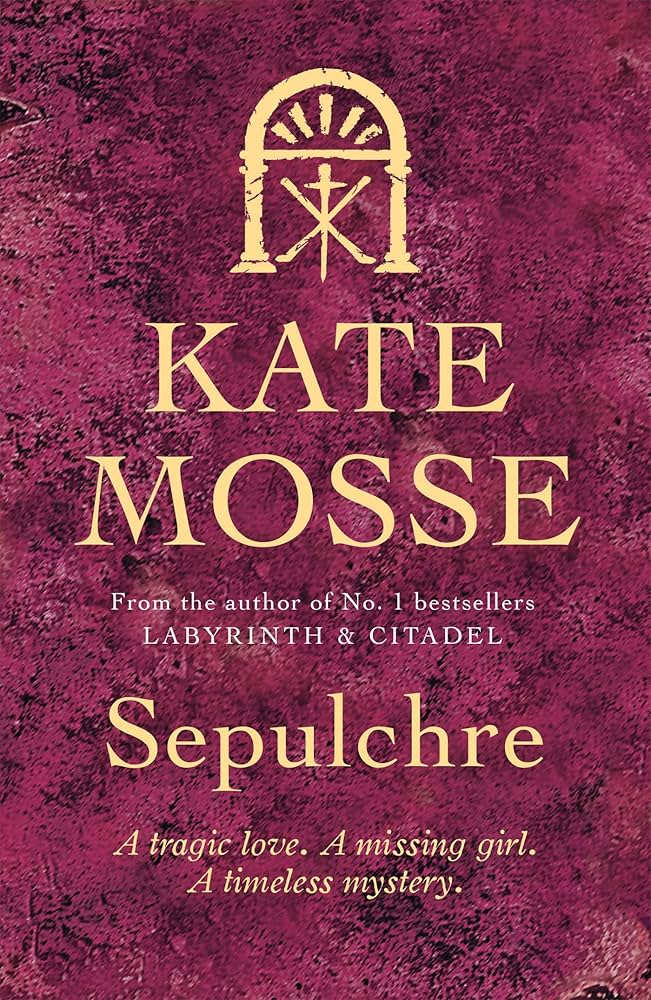
Labyrinth is the first in Mosse’s Languedoc trilogy, and after finishing it, I promptly sought out book number two, Sepulchre, which I also enjoyed. I’ll post my review of that one soon!

Highly recommended.

Crime fiction – Val McDermid

Crime fiction is not one of my favoured genres, although whenever I have read any I generally enjoy it. I have really enjoyed dipping into Agatha Christie (I’ve reviewed Murder on the Orient Express, Death on the Nile and The ABC Murders on here and I really enjoyed Betty Boo by Argentinian author Claudia Pineiro, whose work I’d really like to get more into.

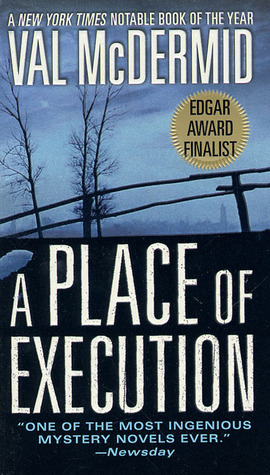
I have a lot of time for Val McDermid; she’s so interesting and entertaining, very funny when she appears on literary panel shows or festival events and just seems like a great ambassador for her profession. I decided over the summer that I really needed to sample some of her writing so I listened to the audiobook of A Place of Execution, one of her earlier works, published in 1999.

Review – A Place of Execution

The central character is George Bennett, an up and coming young detective in the Derbyshire force in the 1960s, somewhat disliked by a few of his colleagues due to his having received a university education, rather than coming up through the ranks. He is put on a very disturbing case involving the disappearance of a young girl, Alison Carter, from the small isolated village of Scardale. Many of the inhabitants of the village are members of the same family and the missing girl is in fact the step-daughter of one of the more well-to-do residents, Philip Hawkin, informally known as ‘the squire’ and very much considered an outsider. Although he has family connections to the village and inherited the manor house he now lives in with Alison’s mother Ruth, he grew up in the south and is not well-liked.

George and his assistant, Tommy Clough, encounter resistance in their investigations and George has a powerful sense of something not being right but he cannot put his finger on why. There is evidence of Alison having been harmed, perhaps sexually assaulted, but even though a thorough search of the vast rural area is conducted, no body is found and the case goes cold. This part of the novel is set in 1963 when the infamous Moors murders took place in Greater Manchester and there are references to the missing children in that case, as the respective forces share information to try and tease out common leads, but none are found.

Years later, journalist Catherine Heathcote, sets out to write a book about the famous unsolved case, and seeks out the now elderly George Bennett. As she digs deeper, however, she uncovers more than she bargained for, and when George suddenly writes to her and says that she must not publish and he can no longer cooperate with her in the work, she is dumbfounded.

I found this a brilliant novel and I was hooked. I could not work out what was going on and then at some point I thought I’d cracked the case, but I hadn’t! the plotting is superb. The characters are also all very authentic and well-drawn. It is no surprise to me that this book won awards and plaudits and was shortlisted for some prestigious prizes.

After reading this book, I encouraged my book club to read a Val McDermid novel. She has written so many so we searched for a ‘Top 10’ online and Past Lying was recommended.

Review – Past Lying

I listened to this novel on audiobook too and I found it to be much less interesting and somewhat more cliched. Published in 2023 and the seventh in McDermid’s Karen Pirie series (the name of the detective) it is set in Edinburgh during the Covid pandemic. Detective Karen Pirie is the head of the Historical Cases Unit at the Leith station, and is supported by two more junior colleagues, one of whom she now finds herself in a ‘bubble’ with in the apartment of Karen’s current boyfriend Hamish, who is spending lockdown in the Highlands making hand sanitiser.

Karen’s assistant Jason is contacted by a librarian at the national library who is in the process of cataloguing the archive of the famous now-dead crime writer Jake Stein, and has found an unpublished manuscript the circumstances of which bear a strong resemblance to an unsolved murder, that of a young student in Edinburgh some years earlier. With nothing better to do in the lockdown, Karen and her colleagues set about following up leads, going in whichever direction their investigative noses take them. They slowly uncover a complex story of literary rivalry and foul play, lust and betrayal. All perfect ingredients for a good crime novel, but for me there was something missing.

There are parallel stories in the novel too, as indeed there are in A Place of Execution, the personal lives of the characters. And Karen’s back story has some drama – her long-term partner was killed a couple of years before (in a previous novel, I believe) and she is still grieving, while working out what Hamish means to her. There is also a refugee story, another theme which appears in an earlier Karen Pirie novel, but the author does not draw out any connections between the case and this side story, which begs the question what then is it for? I wasn’t hooked in the same way as I was with A Place of Execution and when I thought I’d worked out what was going on I was eagerly awaiting a twist, but none came, so the ending of the book just felt anti-climactic.

I have found subsequently that other reviewers have been lukewarm about this book, so I’m puzzled as to why it was recommended as one of McDermid’s top ten; earlier books in the Karen Pirie series seem to have garnered much greater praise, such as A Darker Domain, published in 2009.

So, a mixed experience with Val McDermid. She has many more books in her oeuvre, and legions of her fans can’t be wrong, so I am sure I will trial a few more and hope I find them more satisfying, like A Place of Execution.

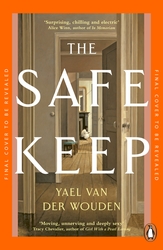
Booker shortlist review #6 – “The Safekeep” by Yael van der Wouden

Winner of the Booker prize 2024

This is my sixth and final review of this year’s Booker Prize shortlist. The winner was announced a couple of weeks ago so I didn’t quite get all my reviews in before the big day! The prize went to Samantha Harvey’s Orbital which is a worthy winner in my view and it is interesting that the Chair of judges said the decision of the panel was unanimous. It feels like it was a book for this moment, when we seem to be on the cusp of something big globally and could all do with stepping back and looking at the world from a different perspective. If only!

The Safekeep is one of the longer books on the shortlist and that’s partly why I left it until last to read. It is also the debut novel of its Dutch author (the first from the Netherlands to be shortlisted I believe) and is a very impressive piece of work. It is set in the rural east of the country, bordering Germany, in 1961 and the central character is Isabel, a young single woman living alone in the house formerly occupied by her and two brothers (Hendrick and Louis) and their mother. The mother is now dead and Isabel is still clearly deeply in grief. She is obsessive in trying to preserve the house and all its contents, even broken fragments of crockery that remind her of her mother. She creates an inventory of the contents when she believes that the maid Neelke is covertly taking items away. Isabel is an anxious and paranoid woman.

In many ways she has every right to be anxious; she sees herself as the only custodian of their parents’ legacy. Her older brother Hendrick escaped the small town as soon as he could, preferring to live in the city with his boyfriend, and the younger brother Louis is an irresponsible womaniser. He will also inherit the property when its official owner (Uncle Karel, who obtained the house for his sister during the war) dies. Isabel will be homeless without any means of supporting herself, a fact which they all seem to brush over. Isabel is lonely, isolated and grieving.

When Louis invites his siblings to meet his new girlfriend Eva (whom Isabel views with disdain at their very first meeting) and then installs her in the house when he has go to England to work for the summer, Isabel is furious and desperate. To make matters worse, Louis gives Eva their mother’s old room, which Isabel has treated almost as a shrine, and cannot understand why his sister is so affronted. Over the course of the summer, the development of Eva and Isabel’s relationship will transform their lives. 

It is hard to say more about this book without revealing the significant plot twist. It took me a while to warm to any of the characters: Louis is insufferable and selfish, Hendrick is bitter and Isabel is uptight and unreasonable. Eva, initially, seems dull and insipid. But the book is about Isabel’s transformation and her coming to terms with loss. She has lived in the shadow of her mother, her brothers, the war (which would still have been fresh in everyone’s memory in 1961) and not been allowed to be herself or even acknowledge who she is and what she stands for. It is also a book about memory, and legacy, and the importance and value of “things”, what we hold on to when our life feels outside of our control. There are some significant sex scenes which felt a bit cringey – the portrayal of the intensity was powerful but they went on too long and were overdone for me. I also listened to this on audio and found the reader not great, almost to the point of distracting, so I’d recommend reading the book on paper. The book is undoubtedly a powerful debut, however, and I look forward to what more this author has to offer in the future. 

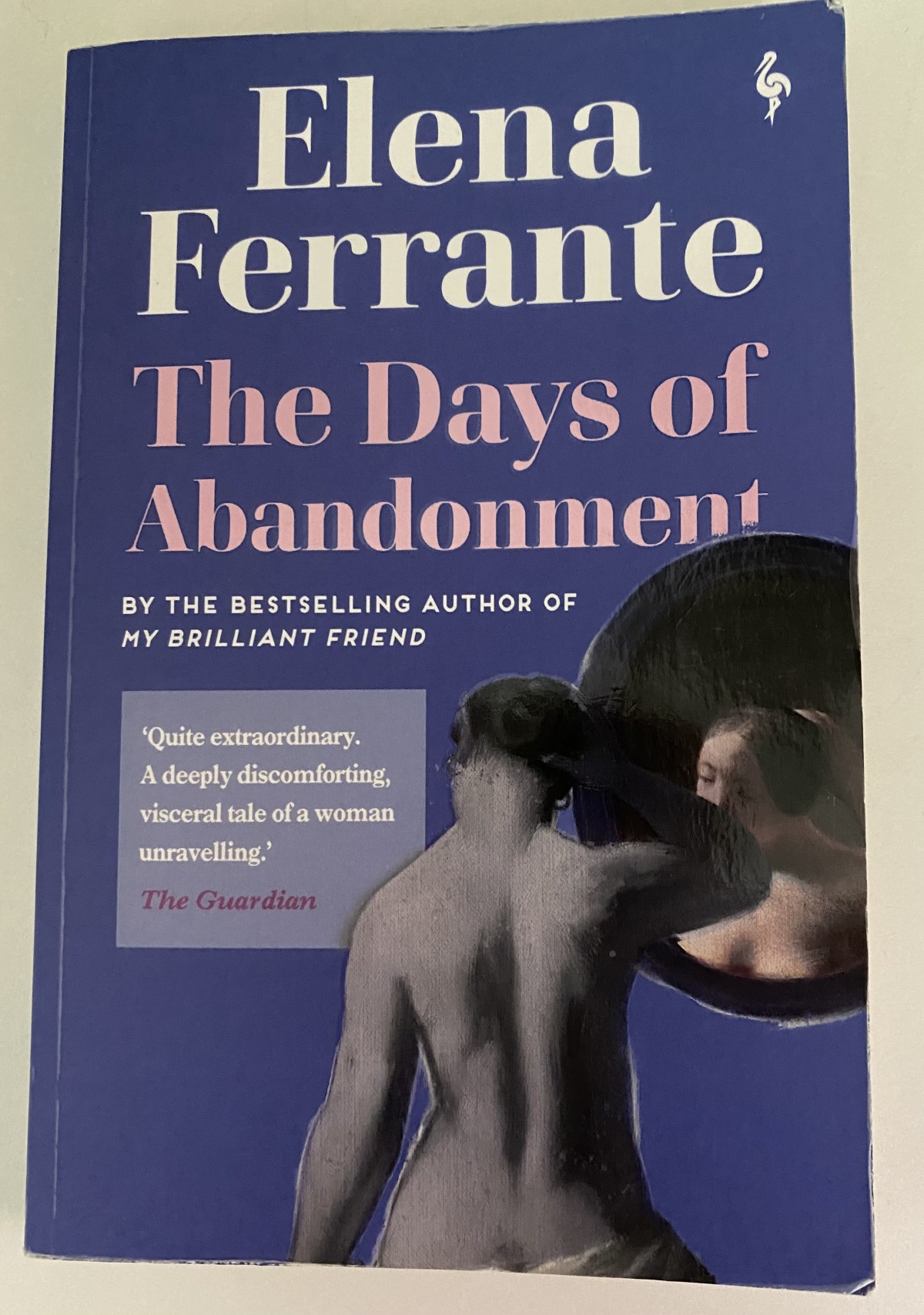
Book review – “The Days of Abandonment” by Elena Ferrante (And my 500th post!)

Last week I posted a blog reviewing two powerful books about new motherhood that I had read over the summer. During the holidays I also read The Days of Abandonment which I picked up at the Oxfam secondhand bookstall at the Hay Festival earlier this year. Ferrante’s Neapolitan novels (My Brilliant Friend, The Story of a New Name, Those Who Leave and Those Who Stay, and The Story of the Lost Child) are world-renowned, deservedly so, and I have reviewed most of them on this blog. They were published between 2011-15 so this novel, published in 2002 (first English translation by Europa Editions in 2005) is a good decade earlier in her writing career, and was only her second novel, her first having been published much earlier in 1992 (though the English translation actually came later, in 2006).

The Days of Abandonment covers another life-changing event in the life of a woman, a mother of young children – in the very first sentence of the book, the narrator announces “One April afternoon, right after lunch, my husband announced that he wanted to leave me.” The line is devastating in its simplicity and the juxtaposition of the routine domestic scene (“we were clearing the table; the children were quarreling as usual in the next room, the dog was dreaming, growling beside the radiator.”) with a piece of news so catastrophic and yet delivered so casually, sets the scene brilliantly and foretells the rest of the novel. One must not forget of course, that this is a translation from the original Italian and it is clear here that Ferrante had not only found her powerful authorial voice, but also a brilliant translator who would go on to translate her other works, Ann Goldstein.

Olga, the narrator, is a woman in her mid to late thirties and she has been married to Mario for 15 years. When he first gives her the news, she has difficulty taking it seriously and thinks he just needs reminders of how good their home life is, but then he admits that there is another woman and Olga is horrified to learn that she is the daughter of a friend and is very young, barely an adult. As realisation of the ending comes to her, the downward spiral begins. 

When Mario leaves, Olga’s mental state becomes increasingly precarious and her behaviour erratic. She is barely able to care for her young family, her two children and the family dog, and not at all able to support the children emotionally through this dramatic change in their circumstances. Olga must seek work to support them, she must attend to matters that were previously Mario’s responsibility, basic domestic tasks like walking the dog, paying utility bills and arranging household repairs. She is a capable and intelligent woman and yet she seems incompetent at basic tasks in her state of mental and emotional breakdown.

Olga’s interior world is fertile ground for Ferrante who explores themes of women’s place in marriage and their vulnerability, male fecklessness, and social expectations of the sexes even in modern society. At times the novel is a very hard read, inexorably bleak, and I felt intensely the injustice of Olga’s situation, her helplessness and her trauma. I found I needed to read it in small episodes. Like Soldier Sailor and Matrescence, which I reviewed last week, it is visceral and it is deeply feminine. 

This book might need a trigger warning – it took me right back to break ups I’d had in my twenties (pre-children and before I’d met my husband!), a long time ago, and I recognised Olga’s pain – this is not a book for the broken-hearted! For Ferrante admirers, however, it is a must-read. 

My 500th post!

I discovered last week by chance that this is my 500th blog post! I have been blogging since June 2016 – goodness hasn’t the world changed a lot in the that time? In my eight years of blogging I have read and reviewed over 300 books – not bad I think. This blog has probably made me read more than I ever have since university and that is reason enough to do it. It’s fitting that this milestone should be represented by Elena Ferrante, one of my favourite authors of the last few years, whose work really speaks to me. I only wish I could read it in the original Italian.

I am not the most prolific blogger and I have learned that it is much harder to cultivate a following than you would think, but I also feel the bookblogging world is a generous space and I get to have some bookish conversations with like-minded folk about books I have loved. So thank you to anyone who reads this or has read and commented on any previous post of mine.

So, forgive me for allowing myself a little bit of self-pride at this point and thanks to all of the other book lovers out there for helping to create this lovely corner of the blogosphere!

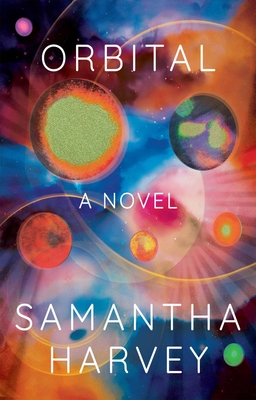
Booker shortlist book review #3 – “Orbital” by Samantha Harvey

I have to confess that I wasn’t looking forward to reading this book. I find I have zero interest in space. Super-telescopes, yes okay, but rockets and astronauts? No. I feel it’s all a colossal waste of money, pure hubris. Sometimes, blurbs don’t give much away in terms of what a book is about and I tend to avoid reading reviews of books I plan to review myself, lest I be influenced, so coming to this book has been a very pleasant surprise.

The book is set in an international space station, with six astronauts of varying nationalities, on a single day where their craft makes sixteen circumnavigations of the earth. The group is there primarily for research purposes but their days are curiously languid; they have mice and plants in laboratories, but they too are lab animals, their body’s responses to the conditions of space being monitored. To what end? The novel explores the minute details of their everyday life: eating, hygiene, games they play to pass the time, their waking thoughts and their dreams whilst asleep, and the routine is made poetic. The prosaic details give us an insight into what aspects of life make our existence special and meaningful. What is the point of food if it is only nutrition? What about taste and texture? I think this gets to the heart of my problem with the ambition of some of those currently engaged in space exploration – who wants to live on a spaceship or another planet if it means we lose the pleasures of a beautiful meal, or fresh fruit, breaking bread with loved ones, a hot bath?

And I think that is where this novel is coming from; setting it in space means the author can take a step back and provide a panoramic view of the earth and our lives on this fragile and beautiful planet. The astronauts admire the earth from a distance and express a child-like wonder at the oceans, mountain ranges, weather systems and natural phenomena, echoing their own childhood ambitions about going into space.

This novel is also about what it means to be human and in that sense is deeply political and speaks to our time. Borders are not visible from space. The authorities attempt to create borders in space – the Russians have their own toilet – but away from earthly politics, none of the astronauts take this too seriously. They share stories and find they have much in common. One of the astronauts, a Japanese woman, loses her mother while she is on her tour of duty on the space station. There is no question of her returning for the funeral or other rituals that follow death. And it is the absence of that connection to what makes us human that is the most painful.

I loved this book. It is very short, less than 150 pages, but every word seems deliberately and carefully chosen. The prose is beautiful and spare and in its conciseness packs an incredible punch.

Highly recommended and must be a contender for the winner.

Books about new motherhood – 2 reviews

In my ‘day job’ I work with new parents and parents-to-be, mostly new mothers, supporting them both as they approach birth and in the transition to their new lives with a baby. It is work that I love and have been doing for quite a while now. I also believe it is a role that is increasingly necessary as maternity services and parent support services in the UK are at the lowest ebb I can remember and much worse than when my children were born. Coupled with the mental ill-health epidemic that we seem to be facing, I rather feel that new parents, and new mothers in particular, are having a very tough time.

One of the reasons I have blogged so little in the last few months is that I have been doing additional studying for my work and I came across the first of the two books reviewed below (Matrescence) in the course of this study. It had been on my radar anyway, since it was longlisted for the Women’s Prize for Non-fiction earlier this year, but was on our course reading list. The second book is a novel and was shortlisted for the Women’s Prize for Fiction, but it was coincidence that I happened to read both around the same time.

Matrescence by Lucy Jones

Jones has been a writer and journalist for most of her working life, mostly in the fields of science and nature; her second book, Losing Eden: why our minds need the wild, published in 2020, was longlisted for the Wainwright Prize. But it is this account of her parenting journey that has really captured mainstream attention. ‘Matrescence’ is a beautiful word that Jones seems on a mission to bring to the forefront of public attention since it captures the physical, emotional and spiritual transformation that people undergo when they give birth to children. Yes, fathers and co-parents change too, but not nearly as much as mothers. There has been some fascinating research published recently in the US that has looked at the actual way the human brain changes during pregnancy and in the early months of motherhood. The brain seems to stand-down certain areas and functions that it is assumed will be less necessary such as the bits that do tasks, remember things and organise, and boosts the emotional centres, the bits that will make us fall in love with our infant and therefore help assure its survival. Fascinating. But hard in the modern world. 

The author’s journey is a very personal one and there were bits that made me bristle (she is critical of pretty much everyone) and I felt a bit personally attacked, having worked in this field for more than 10 years. But there is no doubting that it is meticulously researched and powerfully written. She bemoans the lack of ceremony around the ‘passing into’ motherhood which is particularly the case in western industrial society, and about the failure to both understand what the role really entails and the lack of support. I cannot agree more with this. Where I had more of a problem is where the author seems to believe there is a conspiracy of silence around what it’s really like to give birth and to mother a baby. I don’t think I do agree entirely; I am not sure most people are really ready to hear it plus it is deeply personal and subjective. I do think there is a case for a more open discussion but this would be inconvenient in a western capitalist society where we need to (quite literally) buy into a fantasy, so it probably won’t happen.

Whether you are a parent or not, this book bears reading not least because of how the author brings her knowledge and expertise about the natural world into her writing. Each chapter is prefaced with a snapshot of a reproductive or young-rearing phenomenon from nature, that reminds us we are just creatures on this earth.  And that is pretty thought-provoking. 

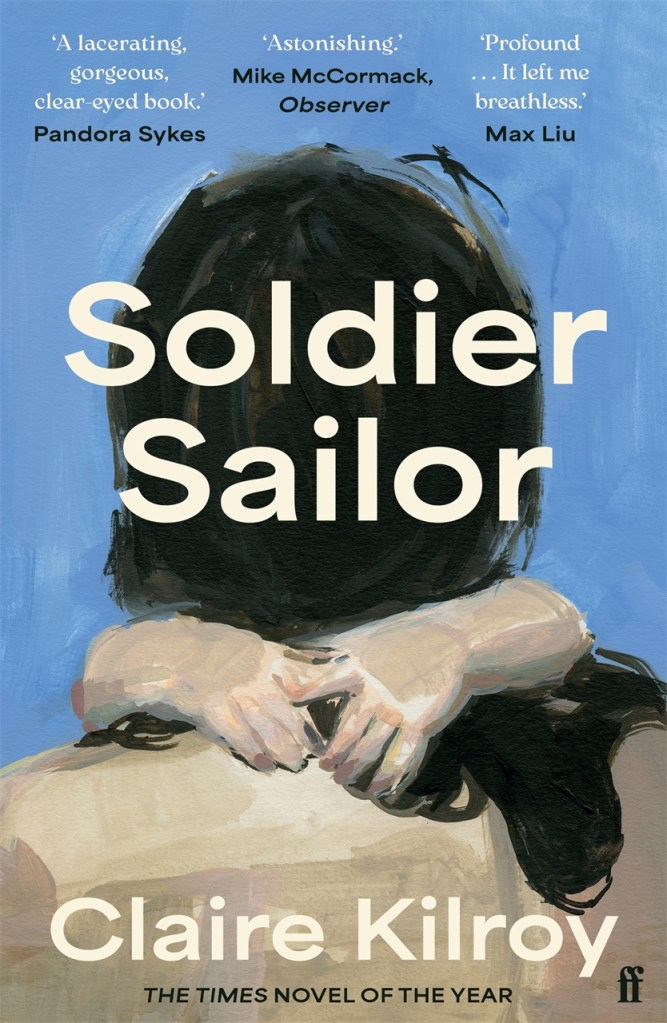
Soldier, Sailor by Claire Kilroy

Matrescence might be the notes that accompany Soldier Sailor so it is fascinating that they should have come out at around the same time. Where Jones is research, science, rage and manifesto, Kilroy is visceral. It is a first-person narrative which is rambling, confused, devoted, passionate and lost. There are no names here, they are unimportant; all that exists is the mother (Soldier) and her baby (Sailor), practically one, almost interchangeable. It’s her and him against the world, and particularly against the husband, who has no clue what is going on. He is a man who at times she loves and hates in equal measure, because her life (the mother life) is changed beyond recognition, and his has not. She cannot hate the child who has caused this transformation so she must rail against the child’s father, a person she no longer recognises and with whom she finds she must learn a new way of being if their relationship is to endure.

There are times when this book is almost unbearable. There are times when it is hard to tell what is real and what is not, distorted by her fevered state of mind. Things that seem real are turned on their head later on. Like the meeting with an old friend from student days in a playground, now a father of four whose wife, who has the greater earning power, works full-time. His experience is the same but different, the flip side of hers, and his balance and calm represent a degree of hope to her that things might one day become normal. Or was the encounter just the work of her imagination, giving her the strength to continue when she has not an ounce of mental or physical energy left and her whole world seems to be falling apart?

There are parts of this book that most mothers would recognise – I certainly felt a frisson at some of the emotions Soldier expressed, they were familiar. But there are other parts, rather like the personal parts of Jones’s account of her mothering journey, that are not universal and it would not be right to think that they are. 

It is a powerful read that has garnered a great deal of attention and whilst this book did not win the Women’s Prize this year it has achieved many other accolades, including The Times novel of the year.

Both of these books offer perspectives on motherhood and parenting that are long overdue and both have affected me deeply. Working with people on the transition to parenthood, these books provide a rich resource on the themes of changing identity and how society needs to change to support people on this journey. It is a journey that most of us go through but which many of us are poorly prepared for. That needs to change.

3 non-fiction book reviews

A couple of weeks ago I posted about some of the books I had been reading during my unintended blogging sabbatical, three fiction titles I had enjoyed. I’ve also been reading quite a bit of non-fiction and here are three I’d like to share with you.

When the Dust Settles by Lucy Easthope

This was one of my book club reads. Published in 2022 it is a memoir from one of the country’s foremost disaster experts. This was a profession that I confess I had never really thought about or even knew existed, although after reading this book, that feels like a stupid thing to say. Easthope and her colleagues manage the clear-up after natural and man-made catastrophe, their primary focus being the retrieval, preservation, cataloguing and retention of human remains, from tiny fragments, such as pieces of bone where DNA testing can help to establish identity and ownership, to items of clothing or belongings. Easthope cares passionately about her work and empathises deeply with the loved ones of victims, for whom she sees her role as being part of the grieving process. Easthope writes candidly (and at times this can be challenging) about her role in many significant disasters such as 9/11 in New York city in 2001, to the Lac-Megantic rail disaster in Canada in 2013. She also has much to say about disaster planning in the UK, drawing from her experiences of working with flood victims in Yorkshire and the Covid-19 pandemic. It is fascinating reading. Easthope is a talented writer and also weaves in her personal story, the smaller tragedies in her own life, such as her husband’s near-death and her recurrent miscarriages. This is both a highly personal memoir but also a reflective piece of work about the lessons she has learned (and the many lessons governments fail to learn) about handling disaster. Whilst this is not a book for the faint-hearted, it is a highly-engaging and important read.

How They Broke Britain by James O’Brien

To say I enjoyed this book immensely is probably to come out about my political leanings (for which I make no apology, by the way, but not something I make a big deal about on this blog). I saw James O’Brien give a talk at this year’s Hay Festival (alongside the Financial Times journalist Peter Foster, who was also promoting his own book What Went Wrong with Brexit and What We Can Do About It) and bought both books. It is written in O’Brien’s trademark discursive style and each of the culprits in the tragi-comedy gets a chapter of their own. There are all the faces you would expect to see – Boris Johnson, Dominic Cummings, Nigel Farage and Liz Truss – plus a few you might not, and may not even have heard of such as Paul Dacre, Matthew Elliott (who?) and Jeremy Corbyn. O’Brien is excoriating about the role of each of his culprits in the dumbing-down of public discourse, on the commercialisation of thought, and how each has in their own unique way (sometimes wittingly, sometimes not) corrupted public life. His central thesis is “Shame on you!” which regardless of your politics, is hard to disagree with. I found one or two of his points stretched credulity for me, but only a little. When you see it all written down, page after page of it, it is deeply troubling and it is clear that a lot of painstaking cleaning-up work needs to be done (Lucy Easthope?)

Strong Female Character by Fern Brady

This was another of my book club reads and one that I had mixed feelings about. I should also say that I listened to it on audio, and it was read by the author and this may have affected my view. Fern Brady is a comedian and she is autistic. She did not receive a diagnosis until she was well into adulthood and this memoir is her account of growing up in Scotland with the condition. She writes about her difficult time at various schools, her struggles with her parents (who seem to have found her behaviour difficult to cope with) and the challenges of going to university. It is at times laugh out loud funny and at others deeply upsetting; she has clearly had some rough times. Her accounts of finding herself homeless, experiencing abuse and unable to navigate social relationships well are heartbreaking. This is hard to write but there were also parts where I found my sympathies did not lie with her. For example, her parents come out pretty badly and that felt unfair, especially when I did some research afterwards about her background and upbringing – it does not seem to have been as bleak as it came across to me. Also, the reading was sometimes vulnerable, sometimes bombastic, even boastful. It drew some general conclusions about ‘people with autism’ from the standpoint of her personal experience. From my own experience of the condition I don’t think it was always right.

All three were very good reads that I recommend highly. I’d love to hear what you thought if you have read any of them.

3 fiction book reviews

Having done so little blogging over the last few months I’ve built up quite a backlog of reviews, even though my reading rate has not been that impressive, if I’m honest. I’ve been listening to more audiobooks than I have been reading actual books and I’ve worked through quite a few on my travels and whilst running, so I’d like to tell you about three that I have particularly enjoyed.

The Shadows of London by Andrew Taylor

I love Andrew Taylor’s Marwood and Lovett books and have reviewed them all on here, from the very first Ashes of London to the most recent The Royal Secret. I get very excited each time I see there is a new one out and I listened to this, the sixth instalment, in the spring. For fans of the series, it has all the things you want and love – the courtly intrigue, the meticulous historical research, the same lovable and not so lovable characters, and a thread of continuity that makes you feel you are back with an old friend. This latest novel steps up to deal with sexual exploitation, by cruel and powerful men using powerless women to achieve their ambitions. In an afterword the author writes of how current scandals (referencing Harvey Weinstein, Jeffrey Epstein and others) gave him the inspiration to look back and explore the issue from a historical perspective. It is sobering to realise how little has changed. For fans of this series, the chemistry between the two leading characters is one of the main draws, and in this novel, the author rewards our patience!

Anxious People by Frederik Backman

This was another audiobook I thoroughly enjoyed. It is hard to say too much about it because the joy of it is in the twisty plot, the serial revelations and the about-turns that catch the reader on the hop. This is a book which is not at all what it seems. The novel opens with the police trying to solve a hostage drama. Six strangers who have all come to view an apartment are thrown together when a failed bank robber holds them captive. We first encounter them when the police are interviewing each of them to ascertain the sequence of events that led to the robber evading capture, despite the building being surrounded. Each of the hostages appears unhelpful, irritating and deeply frustrating and I must admit that in the first few chapters I fell into the trap of thinking that the book was going to be long-winded with poorly-drawn characters. Oh how wrong I was! As well as having a fiendishly clever plot the book is a wonderful study of six (plus!) fragile adults, none of whom is quite what they seem. Brilliant! And I will definitely be going back to this author for more.

Lessons in Chemistry by Bonnie Garmus

This book was heavily marketed when it was published in 2022 – it had a profile in almost every bookshop I entered and was widely advertised in the print media. Its author also gained a lot of attention for publishing her first novel in middle age. She deserves credit – it’s a good read and has been made into a film starring Brie Larson. Set in the 1960s its central character is Elizabeth Zott, mother to Madeline and presenter of a popular television cookery show, Supper at Six. The show is unusual in that it emphasises the chemistry involved in cooking and the labour and skills required in running a home. This soon gets Elizabeth into trouble, however, as the last thing TV executives want is a show that inspires female viewers to self-actualise! The novel tells us how Elizabeth got to this point. Highly intelligent and driven she was denied the chance to do a PhD, exploited by her male colleagues at the research institute where she worked and sexually assaulted. She falls in love with her colleague Calvin Evans, a brilliant and highly-regarded academic, despite herself and her life looks to be heading in a certain direction. But then events turn her world upside down. This is a great read, sure it’s cliched in parts, but it’s fantastic entertainment and exposes some of the very real hardships talented women faced not so very long ago.

Looking at the above reviews I am struck at how my reading seems to have involved some escapism – perhaps the challenges of my work and domestic life meant that I fell back onto modern popular fiction as a bit of nourishment for the soul! And if that’s not what reading is for, then I don’t know what is.

I’d love to hear if you have read any of the above and if so what you thought of them.

Audiobook review – “Misery” by Stephen King

Whether or not you have read any of his work, most people will have heard of Stephen King and could probably name one or two of his books. And anyone who dabbles in writing, whether or not they have actually read any of his books, will have some admiration for the American author, a man committed to his craft, who shares his insights humbly and widely, and who is both prolific and highly regarded. Surely a giant of American letters.

In a writing career spanning half a century, King has published more than sixty-five novels (that’s more than one a year!), several non-fiction books, hundreds of short stories, screenplays, and even graphic novels. His first novel, Carrie (published in 1974), sold a million copies in paperback and became a bestseller when it was adapted for the screen in 1976, launching the career of Sissy Spacek in the title role. His next two novels, published in 1975 and 1977 are also seminal works – Salem’s Lot and The Shining. Both won awards and both were made into highly successful screen adaptations, the latter starring Jack Nicholson, of course, in what is arguably one of his finest performances. 

All of this and I have never picked up a Stephen King book. My first boyfriend when I was a teenager was a huge Stephen King fan and I never much cared for his literary tastes, being much more into the classics at that stage in my life! I’ve also largely avoided the horror genre, disliking the films (I can barely watch most of them) and therefore assuming the books would not be for me. There is however, horror, and there is horror. So, I was open-minded when I suggested to my book club that we tackle a Stephen King. We picked Misery because we could watch the film as well, and it secured an Oscar in 1990 for Kathy Bates in the role of Annie Wilkes – its funny how I have a memory of her acceptance speech. We listened on audio, because that is our thing, and we all agreed it was read brilliantly by Lindsay Crouse. 

The plot of the novel is simple: Paul Sheldon is a successful author who, after completing the draft of his latest, and what he believes to be his best, novel, Fast Cars, decides to drive from the remote hotel where he normally likes to write, to Los Angeles. It is winter, the weather is poor and he has a serious accident, crashing his car in Colorado near the small town of Sidewinder. His upturned vehicle is discovered by local woman Annie Wilkes, who lives alone on her small isolated farm. Annie retrieves the badly injured Paul from the wreckage of his car and takes him to her house. She is a qualified nurse and keeps a wide range of medications at home. Paul wakes up to find himself in her spare bedroom, his broken legs splinted and his wounds treated. He is initially grateful to her for saving his life, a fact which she reminds him of frequently, and is only slightly curious as to why she has not taken him to hospital or brought in a doctor.

During his unconscious phase, it is clear that Annie searched his belongings and discovered his identity. She knows him well because she is his “number one fan” – an avid reader of the historical novels featuring a Victorian orphan Misery Chastain, which have been responsible for bringing Paul fame and fortune, but which he has grown to loathe because of their lack of literary merit. The latest novel in the series is about to be published, which means Annie is in an excited frenzy, and it will be the last because Misery dies, although Annie does not yet know this.

As the days pass and Paul’s condition improves he becomes increasingly concerned as to why Annie will not let him notify his friends and family and his agent of his whereabouts, or why she will not let him see a doctor. He begins to doubt her excuses about the severity of the weather. Things take a dramatic turn for the worse when Annie gets hold of the newly-published book Misery’s Child. She is enraged to find that her heroine dies, accusing Paul of murdering her. To make matters worse, she reads the manuscript of Fast Cars and considers it worthless filth. Her reaction finally convinces Paul that he is her prisoner and Annie’s behaviour becomes increasingly unpredictable and violent. Annie acquires an ancient typewriter from the thrift shop in town and sets Paul the task of writing another manuscript in which Misery is restored to life, though she insists that the story must be “fair” – credible and not by magic. Most distressingly, she also makes Paul burn the manuscript (the only one) of Fast Cars, page by page on a barbecue. 

The rest of the novel concerns the psychological battle of wills going on between Annie and Paul. He is vulnerable, weak and disabled and she exercises power over him, not least actually locking him up. She also gets him hooked on opiate painkillers, effectively enslaving him. Annie is prone to bouts of deep depression, perhaps she is bipolar, and occasionally disappears for days at a time, sometimes leaving him without food or pain relief. Paul plots escape and sabotage but his efforts are mostly unsuccessful and simply make Annie worse. There are moments of extreme violence in the book, but not as much as you would expect for a horror novel – the horror here is mainly psychological. But the threat of horror is ever-present. King gets us into the mind of the prisoner, not knowing from one day to the next whether his captor will kill or torture him, or whether today she might be nice and bring him ice cream. The reader is kept in a constant state of alert. In some ways it is exhausting, but is definitely utterly compelling. 

I was surprised at just how much I enjoyed this book. We enjoyed the film less, although it is a very good effort and well-acted, mainly I think because it is just too short, leaves out too much, and brings in additional characters who do not feature in the novel. I fear I might have started with the best of King by reading Misery, but I will definitely read more. 

Highly recommended.