Book review – “Night Watch” by Jayne Anne Phillips

Do you ever find yourself seemingly out of step with the general consensus and wondering “is it me?”, thinking you must have missed something? I have had that experience twice recently. Last week my husband and I went to see the newly released film Black Bag, a spy thriller set in London, and starring Cate Blanchett and Michael Fassbender as a married couple working for the British secret service. Now, I love both these actors and was excited to see the movie, especially as Fassbender seems to be very selective about what he does these days (his last movie, The Killer, released two years ago was superb). But, honestly, it was quite mediocre. Disappointing. It was short, poorly edited, the characters were two dimensional, the plot opaque and the script weak. I read one lukewarm newspaper review but, apparently, reception by critics has been largely positive – according to Rotten Tomatoes it received an average rating of 8.2/10. I’m baffled. 

I have a similar feeling about Night Watch, the Pulitzer Prize winning novel by Jayne Anne Phillips. It was my book club choice for last month and I had not completed it by the time we met. I just found it quite slow and never felt motivated to read it. I almost gave up but my friends convinced me it was worth finishing. Set in the 1870s in the United States it follows the fortunes of a twelve year old girl ConaLee and her mother Eliza, a woman who has been deeply traumatised by sexual abuse and has been mute for many months. Eliza has born three children by her abuser, a boy and further boy and girl twins. ‘Papa’ is a former civil war soldier, who fought on the Confederate side, and has been brutalised by his experience. When Eliza is living alone with ConaLee he and a fellow runaway come across their small homestead and he rapes Eliza for the first time. She fights back as best she can and he goes away but he returns and this time makes the homestead, and Eliza, his own.

ConaLee’s father is a man who grew up with Eliza in her family home. He was a servant, an orphan taken under the wing of another servant, mother figure Dearbhla, an Irish immigrant and a strong and resourceful woman who will become vital to Eliza and ConaLee. Eliza and the boy fall in love, for which he will be severely punished, but eventually run away together and Eliza gives birth to their daughter ConaLee. He then goes off to fight for the union side in the civil war and is lost to them.

When we meet ConaLee and her mother, Papa is taking them to the Trans-Allegheny Lunatic Asylum in West Virginia. Having grown tired of the family he now has and Eliza’s state of mind, he plans to abandon them there. The asylum is a forward thinking institution run by Dr Story, nephew of the founder, who, based on his Methodist religion, had very specific ideas about how to treat the mentally ill – with exercise, routine, fresh air, good food and talking therapy. 

The book then sets out the back stories of each of the characters and the plot of the novel becomes clearer. It explores the terrible effects of the war, particularly on the women and is detailed and graphic in some of the scenes. A large part of the novel also explores Dr Story’s philosophy behind the methods used at the asylum. It is a place of peace and tranquility where inmates and staff are treated with respect and kindness, and where Eliza finally might be able to recover from her trauma in a place of safety. 

I did find the book lacked momentum, however. I usually like non-linear time frames, but I found the jumping back and forth between characters and life stages, not so much confusing as frustrating because it meant the pace was constantly shifting. I also found there was very little connection between outside and inside the asylum. I did not really see the point of knowing so much about the methods in the asylum. I’m not sure what that setting added to the story other than that it was a plot device. Yes, it was a place of safety for people who were damaged and previously unsafe, but it also had its vulnerabilities, as will become clear. I liked the character of Dearbhla, but, again, she seemed under-used – I’m not really sure what she was for. And, for me, the story was just not strong enough. And I was really annoyed by the omission of quotation marks to indicate dialogue – why? It made it tricky to read sometimes.

The critics loved this book, mostly, and in addition to winning the Pulitzer Prize, it was shortlisted for a number of other awards, so, as with Black Bag, I am left wondering what I am missing. I note that the New York Times took a less positive view which makes me feel less of an outsider! I’d love to know what others thought of this book. I would struggle to recommend it, if I’m honest.

Books out this spring

It really does feel that at long last there is a bit of a change in the air. I am spring cleaning my bookshelves at the moment – always a very challenging task. Books that I have forgotten I owned, books I might want to re-read (someday!) and books that I am ready to let go of, either because they deserve to find a new home or because I am accepting I will almost certainly never get around to them! And I need to make some space for the new titles coming out this season. A few have caught my eye and I thought I would share them with you.

I have been enjoying a lot of non-fiction in recent months and I find that I feel more excited by this genre’s new books than the fiction, to be honest.

Everything is Tuberculosis by John Green

A few years ago I read a book about tuberculosis by science writer Kathryn Lougheed and found it absolutely fascinating. My paternal grandfather died of the disease in London in 1940 just days before his second child (my dad) was born, and I was drawn to this book as I was trying to find out more about my family history. This book comes at a flexion point I think, as I was reading in the newspaper just this week of fears that cases of this terrible condition are likely to rise in the coming months and years following the withdrawal of US aid to developing countries. In our globalised world, we should not expect to be able to contain the disease within national boundaries (as we found with the Covid 19 pandemic) so it will be no surprise to see cases increase in the global north.

Story of a Murder by Hallie Rubenhold

Hallie Rubenhold caught the attention of the literary world with her bestselling book The Five about the women who were the victims of the infamous Victoria London serial killer Jack the Ripper. Her new book, released at the end of March, gives the same treatment to another famous murder case. In 1910, a London doctor, Hawley Crippen, murdered his wife Belle Elmore, a music hall performer. In this book, Rubenhold applies her research and detective skills to uncovering the story of how a group of Belle’s friends helped bring the killer to justice, and shady associates who may also have had a role. The book has been highly praised and its publication is much anticipated.

Maternity Service by Emma Barnett

I am an avid listener to the BBC Radio 4 morning news programme Today, and Emma Barnett is one of its main presenters. She is a broadcasting tour de force and made her name with some spectacular interviews on Radio 5 Live, and changed the face of another Radio 4 stalwart show Woman’s Hour. She is a campaigner for many feminist causes and is a high profile mother of young children who speaks passionately about the challenges of juggling motherhood and a career. As I work with new mothers I am very interested in what she has to say on the topic.

So, that’s the non-fiction, what of the fiction?

Dream Count by Chimamanda Ngozi Adichie

Published just a week or so ago and immediately longlisted for the Women’s Prize, this is the much anticipated new novel from Chimamanda Ngozi Adichie, her first in a decade. I love her work – her book Half of a Yellow Sun about the Biafran war is one of my favourite books of all time – and have reviewed her recent non-fiction books on here. This will be top of my TBR list for spring.

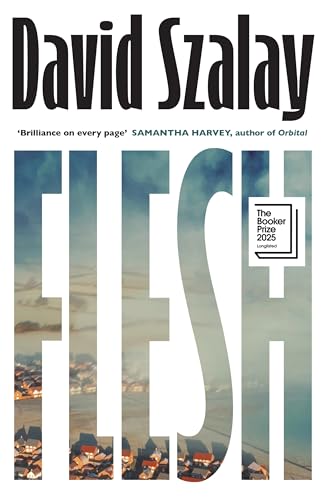
Flesh by David Szalay

Szalay’s 2016 novel All That Man Is was one of the first books I reviewed on this blog, after it was shortlisted for the Booker Prize that year. It wasn’t my favourite on the shortlist but I did enjoy it and found it interesting to read men’s perspectives on life’s dilemmas. Flesh follows the life of a young Hungarian boy as he moves from his small town to the ranks of the super-rich in London. With so much toxic masculinity in the world just now I feel this might be an important read.

The House of Barbary by Isabelle Schuler

This is said to be a feminist re-telling of the legend of Bluebeard which interests me as this myth has crossed my path a couple of times in recent years, also as a feminist re-telling. First in the non-fiction book Women Who Run With Wolves by Clarissa Pinkola Estes, and second in Angela Carter’s collection of short stories The Bloody Chamber. The book is a re-imagining of a number of brutal myths and the opening story (which gives the book its title) concerns the Bluebeard tale. I have not heard of Isabelle Schuler so I am interested to read her treatment of this story.

So, that lot should keep me occupied for a little while!

What books are you looking forward to reading this spring?

Audiobook review – “The Women” by Kristin Hannah

This was one of my book club’s favourite reads of 2024. It had not crossed my radar at all (one of my friends suggested it) but was a New York Times bestseller last year. The novel is broad in scope and while the central theme of the novel is the much-overlooked role of women nurses in the Vietnam war, it is essentially a story of a life and draws in other themes and events in its sweeping timescale.

The central character is Frances ‘Frankie’ McGrath, whom we first meet as a young woman from an affluent background, a military family, in southern California. It is the 1960s and the expectation is that young Frances will do her duty and make a good marriage. There is a family party to celebrate the fact that her brother (with whom she is very close) has enlisted and is about to go off to Vietnam to fight for his country, following in the footsteps of his father and many other men in the family. There is a wall of honour in the family home covered with portraits of the various family members who served in the military. At this stage, the war still seems like an honourable endeavour for America, taking a moral stand against communism.

An intelligent woman with little else to do, Frances decides to follow in her brother’s footsteps and enlist, as a nurse. She expects, rather naively, that her parents will be proud of her, but their reaction is furious and ashamed. This is clearly not the sort of thing the women in the family do. Under a cloud of antipathy, Frances undergoes her short period of training before being transferred to a field hospital in Vietnam. Frances’s sheltered life has done nothing to prepare her for what she will face there. Soon after her arrival she experiences her first emergency with casualties being brought in from the field, horrific death and injury, inclement weather, power cuts, scarce resources. It is a very rude awakening and Frances spends her first few days in complete shock. She is supported by the two women friends she makes there, fellow nurses Barb and Ethel. 

Frances undergoes a rapid transformation – not least from Frances to Frankie – she grows up, she learns to drink, smoke, fall in love and adapt to her new role and wholly new environment. The portrayal of the war and the conditions is visceral and the author handles it deftly. Writers and film makers do nig hold back on the horrors of war nowadays, as they might once have done, and the very particular horrors of Vietnam have been thoroughly explored, but it bears repeating. It is far in the past now (so much so that this book is considered historical fiction) but it is good to be reminded of the dangers inherent in hubristic over-confidence and who ultimately pays the price for the failure.

Beyond the war, when Frankie returns to the US, it becomes a more personal story. She battles with romantic betrayal, rejection by her parents, the loss of her beloved brother and denial by the American public of her part in the war. This is Kristin Hannah’s central mission with this book – for years, the role of women was completely overlooked. Most did not know that women had served and what they had been through. When Frankie returns and finds that the US public has turned against the war and that the pacifists partly blame the service personnel, she takes up the cause of veterans. Disillusioned, lost and alone we follow Frankie’s recovery and rehabilitation as she searches for new meaning in her life.

This book has been widely praised although some reviewers have described it as overly-long. I did feel that the second half of the book was a little more laboured and lacked the force of the Vietnam sections. Yes, there is much to say about the way veterans were treated both by American society and by their government when they came home, but this story is separate from the ‘women’s role’ that was the opening rationale for the story. That said, I did enjoy the book, it does stretch credulity a little, but it is a page-turner nonetheless.

Recommended.

Book review – “Sepulchre” by Kate Mosse

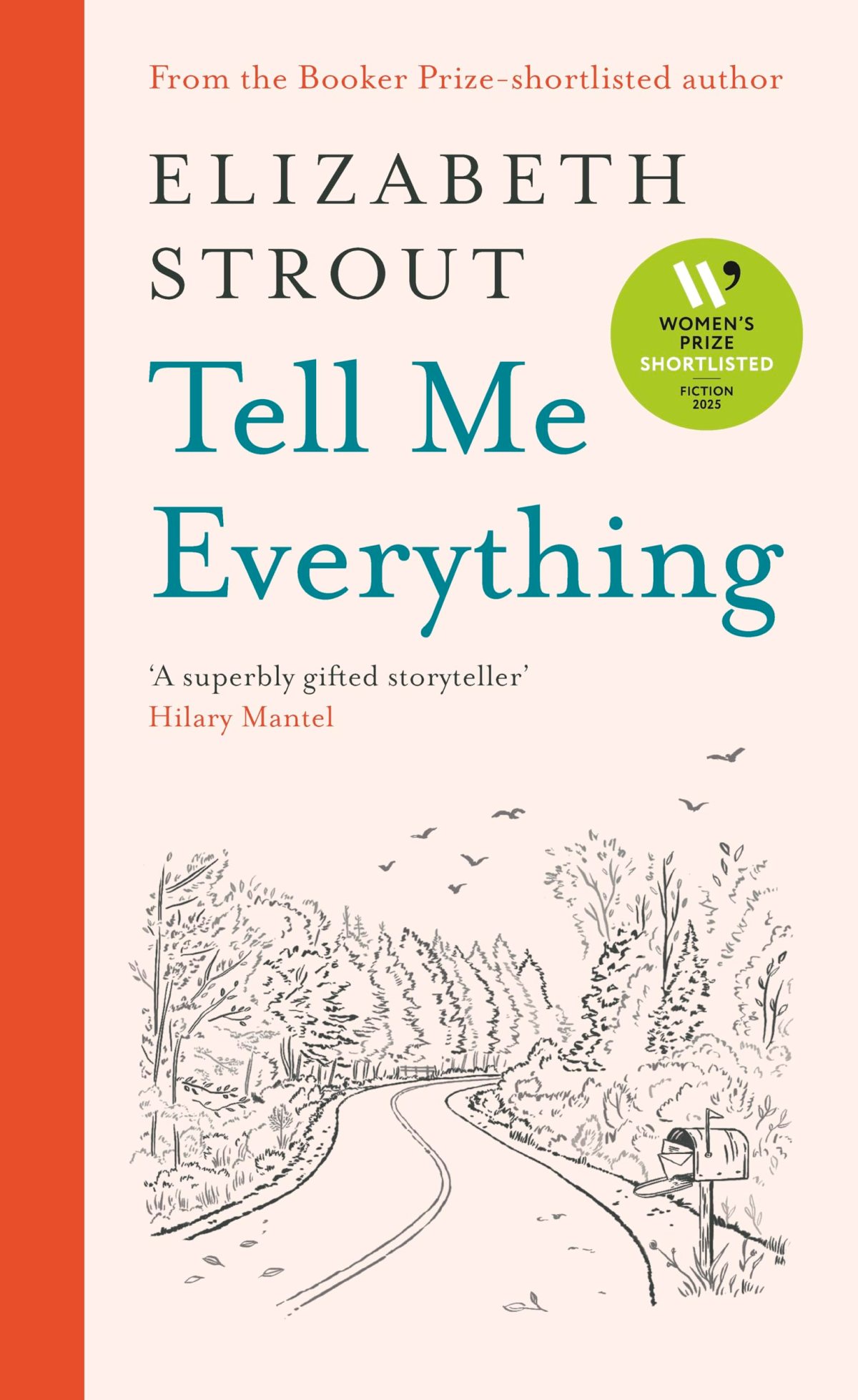
I read this book over the New Year holiday and I thought it would be fitting to publish my review today as the 2025 Women’s Prize for Fiction longlist has just been published. Only a handful of the books on the list have crossed my radar – Elizabeth Strout seems to be a regular on prize shortlists at the moment and her latest book Tell Me Everything has made the longlist. Yael van der Wouden’s book The Safekeep, which I reviewed after it was shortlisted for the 2024 Booker Prize is also there. But perhaps most interestingly, Chimamanda Ngozi Adichie’s long-anticipated new novel Dream Count has made the longlist – the book was only published today – that’s timing!

Kate Mosse was of course the founder of the Women’s Prize (formerly the Orange Prize) which is now in its 30th year. She is an extraordinary woman. Labyrinth, the first book in the Languedoc trilogy, of which this book, Sepulchre, is also a part, was published twenty years ago and Mosse is currently touring with a one-woman show, sharing her secrets about the book.

So, what of Sepulchre? I was eager to get to this novel having so thoroughly enjoyed Labyrinth. The third instalment, Citadel, is on my TBR list. Labyrinth has been an international bestseller, translated into more than forty languages. Sepulchre is a little less well known, I think, and the novels can be read and enjoyed in isolation, although for me, having read Labyrinth, deepened my understanding of the themes explored in the second novel. 

Sepulchre follows a similar structural premise to Labyrinth – two women whose lives are intertwined in ways that we as readers do not know about but which will emerge as the narrative progresses. The author tells their stories in parallel, using the technique of the contemporary character uncovering details about the life of her distant predecessor. In this novel, the two women are Leonie Vernier, from the late 19th century, and Meredith Martin from the present day.

Leonie is a young woman living in Paris with her mother and brother. There is a sense of threat in the air, both from social and political upheavals of the time (one of the opening scenes is of a violent uprising in a theatre) and because of some mysterious business that Anatole, Leonie’s brother, is involved in. A shady character, Victor Constant, enters their lives and it is clear that he bears some ill will towards the family, particularly Anatole. When it is suggested that the siblings go to Rennes-le-Bains (a town about 50km south of Carcassonne, which is where the connections with Labyrinth begin) to visit their widowed aunt, a young woman who was married to their late uncle, it is in large part to enable Anatole to evade the attention of Victor Constant. 

In Rennes-le-Bains, at the remote mansion the Domaine de la Cade, the siblings enjoy a relaxed time with Isolde their aunt and begin to experience a quieter life away from Paris. Leonie explores the grounds of the Domaine although she experiences a disturbing supernatural event in an abandoned chapel in a densely wooded area in the grounds (further links to Labyrinth). She paints, sews, explores the town and makes friends with some of the local gentry, including Audric Baillard, an intellectual and someone to whom Leonie is curiously drawn. Audric, of course, appeared in both time periods in Labyrinth

The modern-day character is Meredith Martin, an American writer, teacher and musician, who arrives in France ostensibly on a research trip for a book she is writing about Claude Debussy (whom we meet earlier in the novel as he is a neighbour of the Vernier family in Paris), but also in search of information about a French musician ancestor, about whom she knows very little. She was adopted after her young and troubled mother died. Whilst in Paris she has a tarot reading which takes her to Rennes-le-Bains. She stays at a country house hotel (the former Domaine de la Cade) and becomes enmeshed in the personal family difficulties of Hal, whose father has recently died in mysterious circumstances, and whose uncle now stands to control the entire business of the hotel where the two brothers were partners. 

The plot of the novel is complex and clever. Mosse manages to draw out the connections between the two womens’ stories whilst making each one uniquely interesting and separately gripping. The scenes of denouement in both stories are powerfully told without melodrama or sentimentality and I found myself gripped by events, eager to read ‘just one more page’ to find out what happens next! Her control of the story is masterful. There is a wide range of characters although I’m afraid I did not think that some of these were as complex or as well-drawn as those in Labyrinth. Victor Constant, for example, felt like a pantomime villain at times. This does not detract from the overall effect, however, which is of a talented writer with a passion and feel for her subject, completely in command of the narrative. 

I am looking forward to picking up the final instalment of the trilogy, Citadel and devouring that one too!

Audiobook review – “The Land in Winter” by Andrew Miller

It is late February and the weather has turned very cold, and very windy. The winter solstice is long past and the meteorological start of spring is only a little over a fortnight away, but in much of the UK right now there is the stark reminder that the winter is not yet done with us. Thus it was in Britain in the winter of 1962/63, a particularly harsh year where snow lay in deep drifts as late as mid-March. This is the setting of Andrew Miller’s tenth novel, a study of two couples, four individuals, trapped by the weather, as well as by social expectations, class and their own caged personalities. 

Eric Parry is the local doctor in a village in south-west England. He is married to Irene and they live in an attractive cottage on the outskirts of the village. Across the field from their home is a farm run by Bill Simmons. Bill is from a humble background but is Oxford-educated, and is a man who aspires to expand his farm, currently dairy-based with a single sullen bull, to something more modern and efficient and on a more industrial scale. He is married to Rita, a colourful but troubled woman, who has a past life in the bars and clubs of Bristol which she can never quite escape. The two women strike up an unlikely but easy friendship when they find that they are both pregnant and at around the same stage. In the 1960s in Britain young women were taught little about sex, married life and pregnancy and there is a kind of welcome relief in being able to compare notes. 

There is no such chemistry between Bill and Eric; they meet at a Christmas party that Irene hosts but it is clear that not only do they hail from different worlds, but that they are also prisoners of their background. What they have in common, however, is a profound sense of disappointment, of hopes dashed, a feeling that they will never be able to create the kind of life that they might have hoped for. At the start of the book this is not the case for the two women, Irene and Rita; they have hope, the optimism that comes with the burgeoning of new life inside them, although, as we will later discover, for Rita this brings back memories of past trauma. 

As Christmas passes and the familiar January gloom sets in, the snow lies ever deeper. The characters, having been thrown together initially, find themselves going in different directions, emotionally and geographically: Bill must visit his unrefined but cash-rich father to ask for money and Rita revisits past haunts and acquaintances in Bristol in an attempt to exorcise her demons. Eric and Irene become increasingly estranged and on a journey to visit her parents Irene becomes trapped on a broken down train and must take shelter in a nearby school for the blind where she is overwhelmed by a sense of isolation.

The breakdowns in the relationships and the individuals are slow, as life in the winter slows, almost to a frozen halt. We observe the gradual decline in slow motion. This is a powerful novel about the human condition that hits you almost without you realising it. The coldness of the world the characters inhabit is both the literal cold of the frozen landscape and the spiritual chill of England in the 1960s where status, the necessity of observing strict social rituals and behaviour and emotional illiteracy caused so much human misery. 

This was the perfect book for January and I listened to it on audio, read very well by the author. Recommended.

Book review – “North Woods” by Daniel Mason

This novel crossed my radar last year when I was seeing it everywhere. I am a sucker for a good cover and the first edition cover (a cougar sitting on a hillside) would have passed me by but later editions feature a beautiful apple with leaves and vibrant colours and it definitely caught my eye! So I was delighted when one of my book club companions suggested it. It is a work of historical fiction set in New England, something else that attracted me as it is a part of the world I know quite well, having spent a few months there as a student. The author, Daniel Mason, has published five novels previously and is both a writer and a medical doctor – his scientific background brings an extra dimension to the work. 

I learn lots of new things through reading, but I am delighted to have learned that this is an “epistolary novel” (something that I’m afraid my English Literature degree did not teach me!), told through a series of media – letters, diary entries, newspaper reports, as well as conventional narrative. It makes for great variety for the reader although the structural device was not universally praised by critics. It provides an interesting way of dealing with the different historical periods covered by the novel. 

The novel’s location is a property in Massachusetts (both the house and its land) and the characters are the many people who have occupied it since it was first settled by an English immigrant. Retired English soldier Charles Osgood emigrates to the new world in the 1700s and cultivates an orchard on the property. He sets about creating a special apple variety, named after himself, as a way of making his mark on the world. His wife dies and he must bring up his twin daughters alone, but is determined to pass on his knowledge of apples in order that they continue his work.

The two women inherit the property after their father’s death and so the house falls to a new generation, but history is not in the gift of those who have passed to determine and under their stewardship, the property begins its steady path to decline. The sisters are preternaturally close and when a suitor begins to woo one of them, the other cannot allow this to stand. Their unusual relationship and the events of their lives foreshadow later tragedies that will befall the various occupants: a gentleman conducting a scandalous illicit relationship, the lonely wife of a businessman disturbed by visions, and the schizophrenic loner who seems to have a profound connection to the property’s past history.

It is not only the human occupants who enjoy the author’s attention; we learn of a cougar taking up residence in the wilderness that the property becomes, and the reproduction of insects in the decaying woodland. I enjoyed these bits less, preferring the human characters and their life dilemmas, but I appreciated the depth of the author’s scientific knowledge. 

I thoroughly enjoyed this novel and personally I liked the variation in the ways of telling – I felt these created a good sense of the different time periods being explored. I listened to the book on audio and there were many different voices used for the various characters which helped to create an ensemble feel. It is also a deeply philosophical novel – Charles Osgood thought he was creating a place in history, but within a few generations his beloved orchard is derelict, built over and forgotten and apple varieties have diminished to a fraction of what was available in the past. The businessman envisions a presidential retreat for the house, but this is never realised and the house becomes broken and dangerous. Individual human lives have only minimal significance and nature will take over in some form. 

I’m afraid I did not like the ending. It did not seem true to the rest of the book to me. I liked how the ‘spirits’ of the past were ambiguous throughout the novel, but the ending seemed to take a particular stand on this that I could not subscribe to – I cannot say more than that without giving too much away. I recommend the book for the journey rather than the destination! 

“Labyrinth” by Kate Mosse

You have got to admire Kate Mosse – in addition to being a best-selling author (with thirteen novels, non-fiction and plays to her name) she co-founded the Women’s Prize for Fiction, has been honoured twice (with an OBE and a CBE), has won a clutch of highly respected awards and appears regularly on screen and radio. It makes you wonder how she gets time to write because her books are not short! Despite Kate Mosse being on my radar for a long time (and I would describe myself as a fan of hers) I am ashamed to say I had not read any of her books – I guess I thought that medieval mystery wasn’t for me. But I was prompted to pick up Labyrinth after I was invited to put a question to her on BBC Radio’s World Book Club. I was in the middle of the Booker shortlist at the time and was somewhat daunted to note that it was almost 700 pages long (and about 18 hours on audio)!

It is almost twenty years since Labyrinth was first published and the book has been a sensation, selling almost 900,000 copies – astonishing. And a million readers are not wrong – it is a titanic novel, gripping, accessible, with a remarkable attention to detail and extensively researched. I just cannot believe I am so late to this particular party.

The novel opens on an archaeological site in south-west France, where Dr Alice Tanner, working as a volunteer (because she is a friend with one of the dig’s leaders), inadvertently strays off the permitted boundary of the dig and into a cave where she discovers two skeletons. She is severely reprimanded; the police must be notified, not least because they are trying to solve the suspected murder of two missing persons, and they promptly force work to be halted. When a powerful lawyer, infamous in the judicial community, becomes involved, events take a darker turn. 

This part of the novel is set in the early 2000s, but then switches to the early 1200s in Carcassone (though Mosse uses traditional Occitan references and language throughout. This language was widely spoken in the Languedoc region at the time, but suppressed by northern invaders who conquered territories in the south). The young noblewoman, 16 year-old newlywed Alais, daughter of Bertrand Pelletier, a key advisor to the head of the Cite (Carcassone), Viscount Trencavel, considers her life in the chateau where she lives. She is free-spirited but under the yoke of her scheming older sister, the constraints placed upon women of the time and now as a wife. 

We learn that Bertrand Pelletier (and some of his friends and allies) is the guardian of certain key spiritual books and objects which together contain the secrets of the Holy Grail. When he believes his life is threatened he entrusts these to his younger daughter, not realising the grave danger that this places her in. Meanwhile civil war is erupting, with the brutal warlords of the north seeking to suppress the Cathar movements in the south and taking the land of the southern noblemen under the pretence of protecting the established church. Alais must use all her wits to keep the books safe. 

Alice Tanner has unwittingly stumbled on the Grail secrets and, like Alais, this makes her a target too. The novel tells the parallel stories of both women as they attempt to work out the significance of the treasures they have been trusted to guard and to escape those who want them for themselves and who have no regard for their life, and would, in fact, rather see them dead. 

The book is a genuine page-turner, managing to tell its complex historical narrative in profoundly human terms. It is a book about power, money, greed and religion, and the conflicts that these things give rise to, as ever they will. But it is also about the power of love, between parents and children, between friends and comrades, and about the endurance of faith. The research is quite remarkable and I learnt a lot about the period and about this part of France, which I have visited on a few occasions but had very limited knowledge of. The author’s love of the Languedoc is clear. Indeed, she says that it was the purchase by her and her husband of a property in the area in the 1980s that first sparked her interest. 

Labyrinth is the first in Mosse’s Languedoc trilogy, and after finishing it, I promptly sought out book number two, Sepulchre, which I also enjoyed. I’ll post my review of that one soon!

Highly recommended.

Crime fiction – Val McDermid

Crime fiction is not one of my favoured genres, although whenever I have read any I generally enjoy it. I have really enjoyed dipping into Agatha Christie (I’ve reviewed Murder on the Orient Express, Death on the Nile and The ABC Murders on here and I really enjoyed Betty Boo by Argentinian author Claudia Pineiro, whose work I’d really like to get more into.

I have a lot of time for Val McDermid; she’s so interesting and entertaining, very funny when she appears on literary panel shows or festival events and just seems like a great ambassador for her profession. I decided over the summer that I really needed to sample some of her writing so I listened to the audiobook of A Place of Execution, one of her earlier works, published in 1999.

Review – A Place of Execution

The central character is George Bennett, an up and coming young detective in the Derbyshire force in the 1960s, somewhat disliked by a few of his colleagues due to his having received a university education, rather than coming up through the ranks. He is put on a very disturbing case involving the disappearance of a young girl, Alison Carter, from the small isolated village of Scardale. Many of the inhabitants of the village are members of the same family and the missing girl is in fact the step-daughter of one of the more well-to-do residents, Philip Hawkin, informally known as ‘the squire’ and very much considered an outsider. Although he has family connections to the village and inherited the manor house he now lives in with Alison’s mother Ruth, he grew up in the south and is not well-liked.

George and his assistant, Tommy Clough, encounter resistance in their investigations and George has a powerful sense of something not being right but he cannot put his finger on why. There is evidence of Alison having been harmed, perhaps sexually assaulted, but even though a thorough search of the vast rural area is conducted, no body is found and the case goes cold. This part of the novel is set in 1963 when the infamous Moors murders took place in Greater Manchester and there are references to the missing children in that case, as the respective forces share information to try and tease out common leads, but none are found.

Years later, journalist Catherine Heathcote, sets out to write a book about the famous unsolved case, and seeks out the now elderly George Bennett. As she digs deeper, however, she uncovers more than she bargained for, and when George suddenly writes to her and says that she must not publish and he can no longer cooperate with her in the work, she is dumbfounded.

I found this a brilliant novel and I was hooked. I could not work out what was going on and then at some point I thought I’d cracked the case, but I hadn’t! the plotting is superb. The characters are also all very authentic and well-drawn. It is no surprise to me that this book won awards and plaudits and was shortlisted for some prestigious prizes.

After reading this book, I encouraged my book club to read a Val McDermid novel. She has written so many so we searched for a ‘Top 10’ online and Past Lying was recommended.

Review – Past Lying

I listened to this novel on audiobook too and I found it to be much less interesting and somewhat more cliched. Published in 2023 and the seventh in McDermid’s Karen Pirie series (the name of the detective) it is set in Edinburgh during the Covid pandemic. Detective Karen Pirie is the head of the Historical Cases Unit at the Leith station, and is supported by two more junior colleagues, one of whom she now finds herself in a ‘bubble’ with in the apartment of Karen’s current boyfriend Hamish, who is spending lockdown in the Highlands making hand sanitiser.

Karen’s assistant Jason is contacted by a librarian at the national library who is in the process of cataloguing the archive of the famous now-dead crime writer Jake Stein, and has found an unpublished manuscript the circumstances of which bear a strong resemblance to an unsolved murder, that of a young student in Edinburgh some years earlier. With nothing better to do in the lockdown, Karen and her colleagues set about following up leads, going in whichever direction their investigative noses take them. They slowly uncover a complex story of literary rivalry and foul play, lust and betrayal. All perfect ingredients for a good crime novel, but for me there was something missing.

There are parallel stories in the novel too, as indeed there are in A Place of Execution, the personal lives of the characters. And Karen’s back story has some drama – her long-term partner was killed a couple of years before (in a previous novel, I believe) and she is still grieving, while working out what Hamish means to her. There is also a refugee story, another theme which appears in an earlier Karen Pirie novel, but the author does not draw out any connections between the case and this side story, which begs the question what then is it for? I wasn’t hooked in the same way as I was with A Place of Execution and when I thought I’d worked out what was going on I was eagerly awaiting a twist, but none came, so the ending of the book just felt anti-climactic.

I have found subsequently that other reviewers have been lukewarm about this book, so I’m puzzled as to why it was recommended as one of McDermid’s top ten; earlier books in the Karen Pirie series seem to have garnered much greater praise, such as A Darker Domain, published in 2009.

So, a mixed experience with Val McDermid. She has many more books in her oeuvre, and legions of her fans can’t be wrong, so I am sure I will trial a few more and hope I find them more satisfying, like A Place of Execution.

Booker shortlist review #6 – “The Safekeep” by Yael van der Wouden

Winner of the Booker prize 2024

This is my sixth and final review of this year’s Booker Prize shortlist. The winner was announced a couple of weeks ago so I didn’t quite get all my reviews in before the big day! The prize went to Samantha Harvey’s Orbital which is a worthy winner in my view and it is interesting that the Chair of judges said the decision of the panel was unanimous. It feels like it was a book for this moment, when we seem to be on the cusp of something big globally and could all do with stepping back and looking at the world from a different perspective. If only!

The Safekeep is one of the longer books on the shortlist and that’s partly why I left it until last to read. It is also the debut novel of its Dutch author (the first from the Netherlands to be shortlisted I believe) and is a very impressive piece of work. It is set in the rural east of the country, bordering Germany, in 1961 and the central character is Isabel, a young single woman living alone in the house formerly occupied by her and two brothers (Hendrick and Louis) and their mother. The mother is now dead and Isabel is still clearly deeply in grief. She is obsessive in trying to preserve the house and all its contents, even broken fragments of crockery that remind her of her mother. She creates an inventory of the contents when she believes that the maid Neelke is covertly taking items away. Isabel is an anxious and paranoid woman.

In many ways she has every right to be anxious; she sees herself as the only custodian of their parents’ legacy. Her older brother Hendrick escaped the small town as soon as he could, preferring to live in the city with his boyfriend, and the younger brother Louis is an irresponsible womaniser. He will also inherit the property when its official owner (Uncle Karel, who obtained the house for his sister during the war) dies. Isabel will be homeless without any means of supporting herself, a fact which they all seem to brush over. Isabel is lonely, isolated and grieving.

When Louis invites his siblings to meet his new girlfriend Eva (whom Isabel views with disdain at their very first meeting) and then installs her in the house when he has go to England to work for the summer, Isabel is furious and desperate. To make matters worse, Louis gives Eva their mother’s old room, which Isabel has treated almost as a shrine, and cannot understand why his sister is so affronted. Over the course of the summer, the development of Eva and Isabel’s relationship will transform their lives. 

It is hard to say more about this book without revealing the significant plot twist. It took me a while to warm to any of the characters: Louis is insufferable and selfish, Hendrick is bitter and Isabel is uptight and unreasonable. Eva, initially, seems dull and insipid. But the book is about Isabel’s transformation and her coming to terms with loss. She has lived in the shadow of her mother, her brothers, the war (which would still have been fresh in everyone’s memory in 1961) and not been allowed to be herself or even acknowledge who she is and what she stands for. It is also a book about memory, and legacy, and the importance and value of “things”, what we hold on to when our life feels outside of our control. There are some significant sex scenes which felt a bit cringey – the portrayal of the intensity was powerful but they went on too long and were overdone for me. I also listened to this on audio and found the reader not great, almost to the point of distracting, so I’d recommend reading the book on paper. The book is undoubtedly a powerful debut, however, and I look forward to what more this author has to offer in the future. 

Book review – “The Days of Abandonment” by Elena Ferrante (And my 500th post!)

Last week I posted a blog reviewing two powerful books about new motherhood that I had read over the summer. During the holidays I also read The Days of Abandonment which I picked up at the Oxfam secondhand bookstall at the Hay Festival earlier this year. Ferrante’s Neapolitan novels (My Brilliant Friend, The Story of a New Name, Those Who Leave and Those Who Stay, and The Story of the Lost Child) are world-renowned, deservedly so, and I have reviewed most of them on this blog. They were published between 2011-15 so this novel, published in 2002 (first English translation by Europa Editions in 2005) is a good decade earlier in her writing career, and was only her second novel, her first having been published much earlier in 1992 (though the English translation actually came later, in 2006).

The Days of Abandonment covers another life-changing event in the life of a woman, a mother of young children – in the very first sentence of the book, the narrator announces “One April afternoon, right after lunch, my husband announced that he wanted to leave me.” The line is devastating in its simplicity and the juxtaposition of the routine domestic scene (“we were clearing the table; the children were quarreling as usual in the next room, the dog was dreaming, growling beside the radiator.”) with a piece of news so catastrophic and yet delivered so casually, sets the scene brilliantly and foretells the rest of the novel. One must not forget of course, that this is a translation from the original Italian and it is clear here that Ferrante had not only found her powerful authorial voice, but also a brilliant translator who would go on to translate her other works, Ann Goldstein.

Olga, the narrator, is a woman in her mid to late thirties and she has been married to Mario for 15 years. When he first gives her the news, she has difficulty taking it seriously and thinks he just needs reminders of how good their home life is, but then he admits that there is another woman and Olga is horrified to learn that she is the daughter of a friend and is very young, barely an adult. As realisation of the ending comes to her, the downward spiral begins. 

When Mario leaves, Olga’s mental state becomes increasingly precarious and her behaviour erratic. She is barely able to care for her young family, her two children and the family dog, and not at all able to support the children emotionally through this dramatic change in their circumstances. Olga must seek work to support them, she must attend to matters that were previously Mario’s responsibility, basic domestic tasks like walking the dog, paying utility bills and arranging household repairs. She is a capable and intelligent woman and yet she seems incompetent at basic tasks in her state of mental and emotional breakdown.

Olga’s interior world is fertile ground for Ferrante who explores themes of women’s place in marriage and their vulnerability, male fecklessness, and social expectations of the sexes even in modern society. At times the novel is a very hard read, inexorably bleak, and I felt intensely the injustice of Olga’s situation, her helplessness and her trauma. I found I needed to read it in small episodes. Like Soldier Sailor and Matrescence, which I reviewed last week, it is visceral and it is deeply feminine. 

This book might need a trigger warning – it took me right back to break ups I’d had in my twenties (pre-children and before I’d met my husband!), a long time ago, and I recognised Olga’s pain – this is not a book for the broken-hearted! For Ferrante admirers, however, it is a must-read. 

My 500th post!

I discovered last week by chance that this is my 500th blog post! I have been blogging since June 2016 – goodness hasn’t the world changed a lot in the that time? In my eight years of blogging I have read and reviewed over 300 books – not bad I think. This blog has probably made me read more than I ever have since university and that is reason enough to do it. It’s fitting that this milestone should be represented by Elena Ferrante, one of my favourite authors of the last few years, whose work really speaks to me. I only wish I could read it in the original Italian.

I am not the most prolific blogger and I have learned that it is much harder to cultivate a following than you would think, but I also feel the bookblogging world is a generous space and I get to have some bookish conversations with like-minded folk about books I have loved. So thank you to anyone who reads this or has read and commented on any previous post of mine.

So, forgive me for allowing myself a little bit of self-pride at this point and thanks to all of the other book lovers out there for helping to create this lovely corner of the blogosphere!