The theme for August for my Facebook Reading Challenge was a ‘beach novel’. It seemed an obvious theme to choose, with it being peak holiday season, and we’ve had some serious and challenging books over the last few months so I thought something light and easy was in order. I was on holiday myself, in Jersey, which I posted about last week and whilst there wasn’t much time spent on a beach (it was quite an active holiday, so actually there wasn’t even that much reading done!) it was a great book to dip in and out of on the flight, in the evening after dinner or in the occasional quieter moments.
 The book concerns two women, Rosemary, an 86 year-old widow, and Kate, a 26 year-old journalist, and how they are brought together by chance when the Brixton lido is threatened with closure. Their relationship evolves as together they mount a campaign to keep the pool open, drawing in other local people and reviving a community spirit that everyone involved thought had been lost. In some ways the two women could not be more different: Rosemary is nearing the end of her life, now alone having lost her beloved husband, and has lived in this area of South London all her life. Kate, on the other hand, is young and bright, and has moved to the city from Bristol to begin her journalistic career on the local paper. Kate too, though, is lonely; unlike Rosemary she has not lost anyone, but she has not found anyone either, and she grapples with panic attacks, anxiety and low self-esteem. She shares a house with a number of similarly isolated flatmates, none of whom she knows, and stays alive thanks to ready meals.
When Kate is asked by her editor to cover the planned sale of the Lido by the local council to a property developer who wants to build a tennis court over it for the private use of residents of its luxury flats, she meets Rosemary who begins to recount to her the special significance of the Lido in her life. Not only that, Rosemary, a former children’s librarian, places it in the context of the decline of the sense of community in the area and how local people are being denied opportunities to come together, to play a part and to be involved. Rosemary’s story captures Kate’s imagination and she enters into full-on campaigning mode, setting up a petition, social media groups, and the story becomes a regular feature in the local newspaper.
Kate and Rosemary also begin to develop a close friendship; Kate starts to swim regularly and take care of herself more and this gives her a new energy and new coping strategies to help her deal with her feelings of anxiety. It also initiates Kate into the community and she finds a new circle of friends. For Rosemary the campaign and the friendship help her come to terms with the loss of her husband and when both women at different points have particularly bleak moments, the other is there to pick them up.
This book does exactly what it promises: it’s a heart-warming story, with strong themes around community values, friendship and companionship. It also deals with the taboo issue of depression as it affects a young woman, who has her whole life ahead of her and “should” be living a great life, and an elderly woman, a group whose mental health is so often neglected.
This wasn’t the ‘finest’ novel I’ve read all year, but it was one of the most charming and fitted the bill perfectly for a straightforward and honest summertime read.
Recommended.
What sort of books do you like to read on holidays?
If you have enjoyed this post, I would love for you to follow my blog. Let’s also connect on social media.
 I’m a big fan of audiobooks as a way of passing otherwise dead time in a more constructive way – for me it’s car journeys, or whilst exercising. It might also be while you’re waiting for swimming lessons to finish or at the supermarket. You have to choose your titles carefully though, because it’s not just about what you listen to, but the narrator is really key to the enjoyment. For example, audiobooks I have enjoyed have been Holding, narrated brilliantly by the author Graham Norton, Frankenstein, narrated by Derek Jacobi and 1984, narrated by Andrew Wincott (Adam from The Archers). Their reading styles enhanced my enjoyment. A title I enjoyed less because of the narration was The Girl on the Train, where I felt the male voices were not done well.
 I have recently finished listening to The Story of a New Name by Elena Ferrante, Book Two in her Neapolitan Novels series. I have listened to and reviewed here, Book One,
 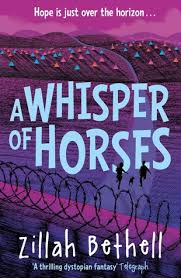 The novel is set in Lahn Dan, you’ll recognise the pun, but the place described in the book will be unfamiliar; it is practically a separate city-state within England, encircled by the ‘Emm Twenty-Five Wall’ that none of the inhabitants dare cross (told that there is only a deserted wilderness on the other side anyway). This is a time after ‘the Gases’ (a reference to climate change), the ‘Tems’ has deteriorated to a muddy flat and only the rich are able to live in the ‘crystal towers’ that afford them some natural light and allow them to live above the pollution layer. In a nod to Aldous Huxley’s Brave New World there is a strict hierarchy in the society: at the bottom are the Pbs, who do most of the work, then slightly higher up are the Cus, the professional classes, but true power lies only with the Aus. Give the child a prize who spots that these are chemical symbols and what this says about the social order! Lahn Dan is run by ‘the Minister’ a distant and slightly mythical figure, not unlike Big Brother, whose orders are carried out by Mordecai and his Secret Police. It all has echoes of 1984.
 The story begins near Aylesbury where the spivvy disgraced engineer Dr Absolom is trying to sell ‘mechanicals’. These are child robots which were initially created to perform tasks that society no longer wanted humans to do. We learn some vague details about how the experiment got out of hand when some rogue scientists tried to instil their creations with a soul. This was considered a step too far and laws were put in place to limit the capabilities of these creations, and, in particular, to forbid the building of adult-sized mechanicals. The environment we are observing, however, appears somewhat lawless, and it is clear that Absolom is operating on the margins and that there is a black market in mechanicals.
 The central character is Jaz, a 12 year-old girl who is in Year 7 at secondary school. She is dyslexic, doesn’t care too much for school (“Boring!”) and lives with her Mum and three older brothers, their Dad having left shortly after Jaz was born. Jaz is a bit of a rebel with a big heart. She struggles a bit at school, she comes across as someone who finds it difficult to deal with the mainstream demands of sitting still, concentrating, and not least the focus on reading and writing; there does not seem to be much allowance made for her dyslexia. She also struggles a bit with friendship issues, having jealous feelings towards another girl who she feels is going to ‘steal’ her best friend Lily. So we see Jaz is a bit insecure too.
 Julia's books