It’s over a year since I started this series of posts and it seems a particularly good week to be picking them up again. It is half term in my area, as I think it is across most of the country, and with so many entertainment options closed, play dates banned, travel plans abandoned and family visits off the agenda, parents may be at their wit’s end wondering how to entertain their children. Oh, and the weather is not that great either! Books come into their own at a time like this, especially when accompanied by hot chocolate after a walk kicking the leaves or collecting conkers. My kids still love this kind of stuff even though they are teenagers. So, if you are thinking about adding to your children’s library or looking for some classics to get them into this half term holiday, here is my list of suggestions for 6-8 year olds. I have posted previously about books for younger ones.
Regular readers of my blog will know that I am passionate about children’s books and my approach to children’s reading is rather like my approach to parenting – as a parent you are not raising kids, you are raising the world’s future adults (decision-makers, carers, teachers, leaders) – no pressure there then! – and building a good reading habit is not just about entertaining or educating them, it’s about fostering a habit that will serve them their whole lives. The mental health benefits of reading are well-known (and I have written about them on here many times) – it’s relaxing, it reduces stress, helps sleep, etc, etc. There is nothing not to like about reading. And it might just be the cheapest activity your children engage in! Libraries may not be too accessible at the moment, but secondhand bookshops are and, like most retailers on the high street, are crying out for your business.
My last post on this topic looked at books for 4-7 year olds and I emphasised the fact that at that age, there may well be some precocious readers who can cope with chapter books (particularly at the older end of the spectrum), but they still benefit hugely from pictures. By the time we get to the 6-8 year olds they are generally moving out of the ‘infant’ and into the ‘junior’ stages at school (or years two to three in more modern parlance!). They are also taking tests at the end of year two, and moving from Key Stage 1 to Key Stage 2, so there is a bit of a step change.
Between the ages of six and eight, your child will probably be moving onto wordier books, perhaps with some chapters and definitely still with pictures. You will also notice the books getting slightly smaller and feeling a little cheaper (and hopefully they are a little cheaper!). They are more likely to be books your children read once, rather than repeatedly. They will read much more independently BUT, and this is a big one, they will STILL, yes STILL benefit from being read to – being read to, is not just about the text, the vocabulary and the ability to read, it’s about so much more: one to one time with a loved one, physical closeness and shared interest.
Many books for this age group, as I say, are likely to be read once or a couple of times, but still there are some classics for this age group, which will be ‘keepers’. Please also note that many of these books have some wonderful film and TV adaptations that can supplement the reading. Here are my suggestions:
1. The Secret Seven (1949) by Enid Blyton – the first in a fifteen book series. I know there are plenty of Blyton detractors, but I guarantee this is one that the grandparents will love reading with them!
2. Horrid Henry (1994) by Francesca Simon – the first in a twenty-five book series. NB: the film adaptation of this is possibly one of the worst films I have ever seen, so avoid!
3. The Sheep-Pig (1983) by Dick King-Smith – the book upon which the film Babe was based
4. The BFG (1982) by Roald Dahl


5. Charlotte’s Web (1952) by EB White
6. Pippi Longstocking (1945) by Astrid Lindgren – several books in the series
7. The Worst Witch (1974) by Jill Murphy – first in a series of eight books
8. The Wind in the Willows (1908) by Kenneth Grahame – surely no children’s library is complete without this book?
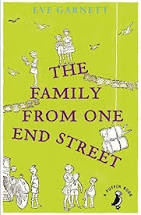
9. The Family from One End Street (1937) by Eve Garnett – one of the earliest examples of social realism in children’s literature
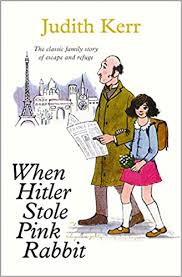
10. When Hitler Stole Pink Rabbit (1971) by Judith Kerr
All of the above provide a starting point, of course, and even as I finish typing there are authors and titles popping into my mind that are not listed. But you have to start somewhere!
What would you add to my list of classic books for 6-8 year olds?

 This sounds slightly like an up-to-date Stig of the Dump to me. Central character Landfill lives the life of a wild creature. He has contact only with animals and one other human, Babagoo, who says he has brought him up from a seed. Babagoo wants to protect Landfill from ‘Outside’ and from the unpredictable other humans about whom he paints a fearful picture. Landfill goes along with this until one day he spies a she-wolf giving birth to her cubs. He realises that animals do not come from seeds and wonders what else Babagoo may have lied to him about.
 Kid Normal and the Shadow Machine by Greg James and Chris Smith
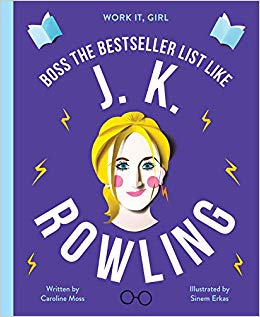 Work It Girl: Boss the bestseller list like J K Rowling by Caroline Moss and Sinem Erkas
 Joe Quinn’s Poltergeist by David Almond, illustrated by Dave McKean
 The Quiet at the End of the World by Lauren James
 How Not to Lose It: Mental Health Sorted by Anna Williamson and Sophie Beer
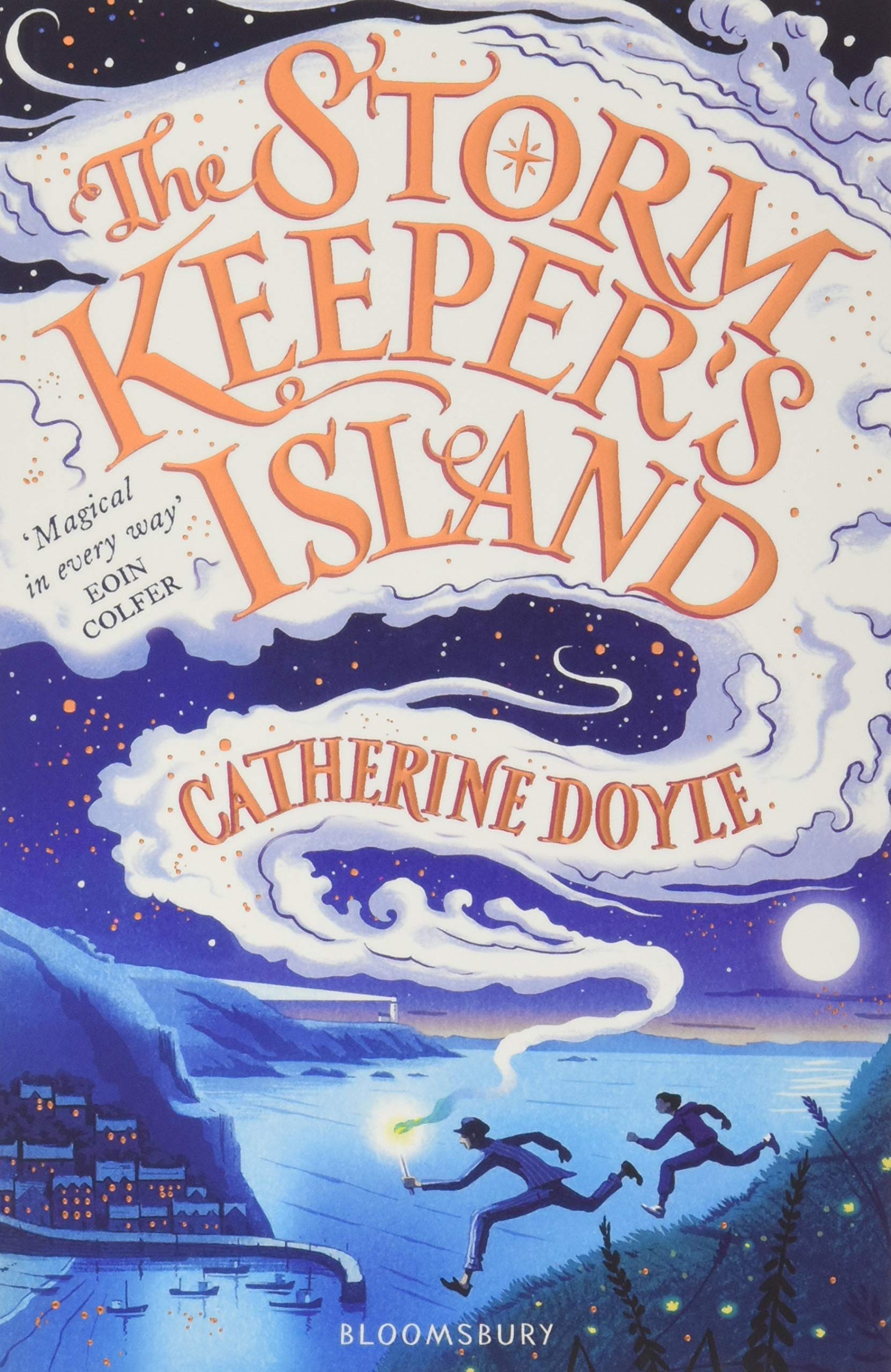 This month, I would like to recommend Catherine Doyle’s The Storm Keeper’s Island, published last year by Bloomsbury, as a fantastic choice for any young people you know who like modern adventure stories where the good guy wins. Catherine Doyle is a young writer (just 29 years old) and has published several YA novels already; The Storm Keeper’s Island is her first novel for what is called the “middle grade”, ie about 9-12 years, and it was a barn-storming debut, winning several prizes and accolades from established authors in this genre. A second novel, following the further adventures of the main character Fionn Boyle, is planned for this summer and I would expect it to feature heavily in recommended holiday reading lists in advance of the Summer Reading Challenge.


 Julia's books