Last Autumn I set myself a challenge to read the full Man Booker Shortlist 2016 (six books). I didn’t manage all of them before the winner, Paul Beatty’s The Sellout, was announced. I planned to complete and review the final one on my list (Do Not Say We Have Nothing by Madeleine Thien) this week, but I’m afraid I haven’t finished it; it is taking me an inordinate amount of time to get through!
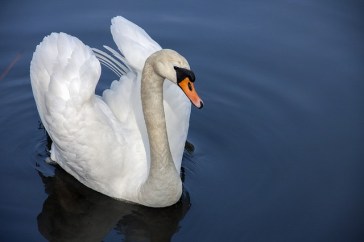 Now, dear reader, this blog is rather like the proverbial swan – whilst it may look smooth and effortless to you on the surface, the planning (reading, idea generation, social media, writing, etc) that goes on behind the scenes is like a military operation! Well, not exactly, but, you know, I do plan my reading, aim to bring you a book a week and try to blog twice a week. And this book has totally blown my schedule! You know what it’s like when you’ve got a busy day planned either at home or at work…and you hear the words “Mum, I’ve just been sick!” and you know your day is irretrievably banjaxed. Well, that’s how I feel.
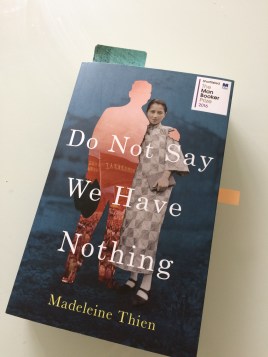 Do Not Say We Have Nothing, broadly speaking, is about China after the revolution, what it was like living under the dictatorship of Mao Tse Tung and about the hardships endured by the population, particularly by artists and intellectuals, in an era when culture was heavily proscribed. I have had a lifelong fascination with China, have read very widely about this enormously diverse and culturally rich nation, so I should be loving it. But I’m not! And I’m barely halfway through! I took a break from it this week and read Love, Nina by Nina Stibbe (which I’ll be reviewing soon), and that book is at the very opposite end of the literary spectrum – light, fun, quick to read. Many people probably would have given up by now. After all, a book, particularly a long one, is a huge investment is it not? I rarely give up on a book – I gave up on White Teeth by Zadie Smith a few years ago after a couple of false starts, but I have always planned to go back to it. My rationale for continuing with Do Not Say We Have Nothing is as follows:
- I’ve already sunk several hours into it
- I keep thinking that it’ll get more enjoyable
- It seems a worthy book, so I feel I ought to finish it
- I set myself the challenge to complete the shortlist and I can’t let one book make me fail.
Reasons 2 and 4 are the most compelling. So, I will carry on to the bitter end and hope that a turn of the plot will make it all worthwhile. I’ll keep you posted!
Do you give up on a book if you’re not enjoying it?
If you’ve already read this book, I’d love to hear your thoughts on whether you think it’ll be worth it in the end. Is it just me?


 Time Travelling with a Hamster was the first choice of the book club, and what a joy it is. At the heart of the plot is a tragic event – a boy who loses his father at the age of eight – but the author handles this so deftly, acknowledging the huge emotional impact it will no doubt have had on such a young child, but also deploying humour and intelligence to help child readers deal with such a challenging topic. I think it shows a great respect on the part of the author for the maturity and strength of his young readership.


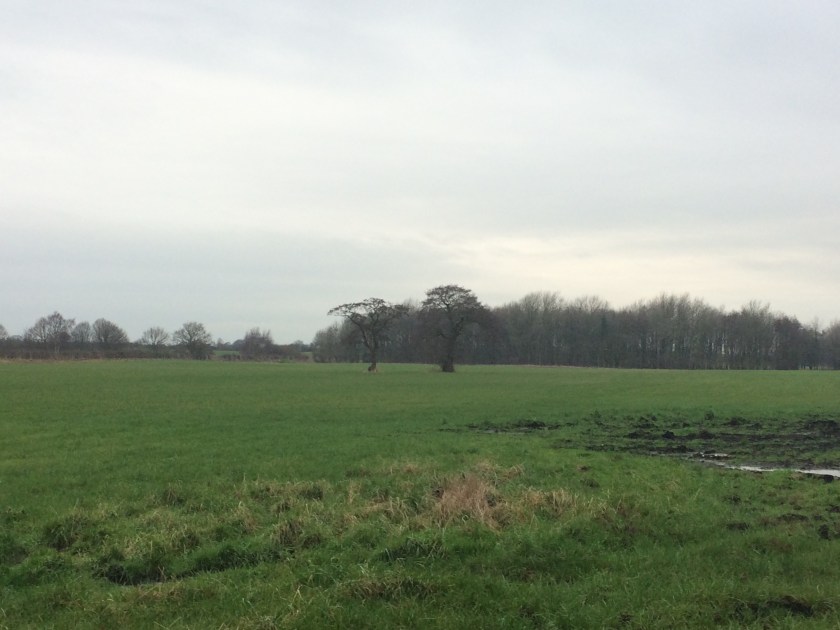 Parts of the country have been struck by a severe cold snap this last couple of days; on my walk yesterday I certainly felt the scenery was quite bleak. Yesterday was the end of Advent, twelfth night, and a natural end, for me, of a period of reflection: about the year that has gone and the one that is to come. In June last year I started this blog and I have loved posting every week about my reading and hearing from readers what you have enjoyed. In the past 12 months I have read over 30 books, the bulk of those since starting this blog, and that feels like quite an achievement. I hope to improve on that this year.
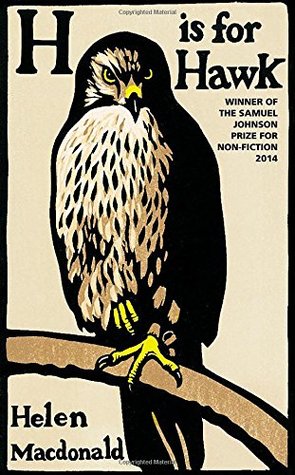 This book was a long slow read for me, but in a way that suits the type of book that it is. It is an account of bereavement. In that sense it bears reading over a long period because it covers a period of more than a year following the death of the author’s father.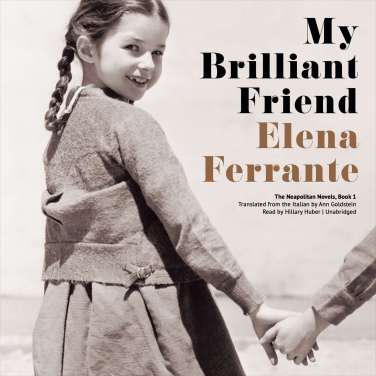

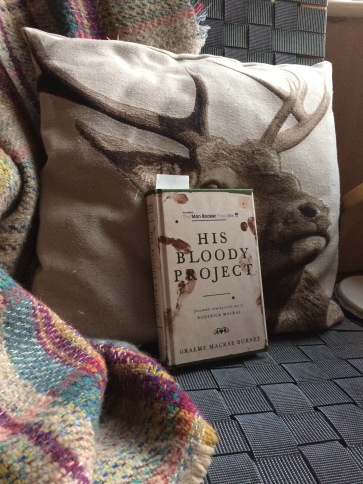 I have to say, though, that it’s a totally gripping story. Roddy Macrae is the 17-year old son of a crofter in a small village in the Scottish Highlands. The book begins with five short police statements from different witnesses who later testify in Roddy’s trial. They recount the incident, in August 1869, when Roddy murdered three other residents of the village: Lachlan Mackenzie, the village Constable and long-time foe of Roddy’s father, Mackenzie’s teenage daughter, Flora, and his young son Donnie. These witnesses observed Roddy walking through the village covered in blood and in addition to their account of the events they saw, they make observations on his character and background. Thus, there is little doubt that Roddy carried out the triple murder and the scene is set for an account of how these events came to pass.
 Julia's books