The annual Oscars ceremony takes place this weekend – Sunday evening Los Angeles time, or the early hours of Monday morning BST. I will not be staying up to watch although it’s hard not to want to look at all the outfits on display on the red carpet! I am always curious about the fate of those films based on books, usually the ‘Best Adapted Screenplay’ category, although often a film that started out as a book makes it to the main ‘Best Picture’ category. This is especially the case this year, where four of the five nominees are also up for the big prize. There is only one big name book, however, in the ‘Best Adapted Screenplay’ category, and that is Dune, itself a remake of the 1984 film.
So here is my round-up of the ‘films based on books’ that have been nominated for awards this year.
Dune (based on the novel of the same name by Frank Herbert)
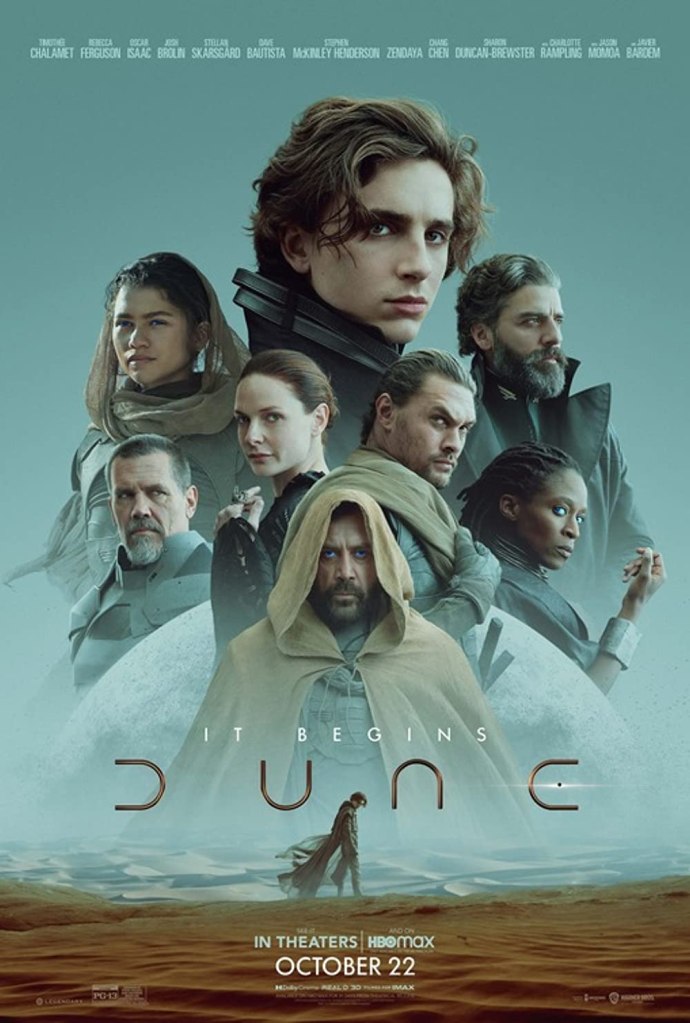

Herbert’s 1965 epic science fiction novel has become a classic of the genre. Set in some future time, society has regressed to a near-feudal set-up, where various factions control different regions and planets. A valuable commodity, ‘Spice’, is controlled by one family, but is necessary for all, not least to facilitate interstellar travel. Dealing with themes of religious factionalism, political intrigue as well as the environment, the parallels with the 20th/21st century world are obvious. The book is the first instalment of the Dune saga. A film was made by David Lynch in 1984 with mixed results (I had forgotten that it starred Sting). This 2021 version, with its stellar cast (including Timothee Chalemet, Zendaya, and Javier Bardem) and $165m budget, seems to have been more successful.
The Power of the Dog (based on a novel of the same name by Thomas Savage)


Thomas Savage wrote his novel in 1967 about two brothers, George and Phil Burbank, who take over the running of the family ranch in Montana. They have very different personalities, and ambitions and the tension between them reaches a climax when George brings home a wife and her teenage son. The novel gained greater attention when it was republished in 2001, Annie Proulx regarding it as a work of art. Director Jane Campion received a copy of the novel and decided to adapt it. It stars Benedict Cumberbatch, Kirsten Dunst, Jesse Plemons and newcomer Kodi Smit-McPhee.
Drive My Car (based on a short story of the same name by Haruki Murakami)

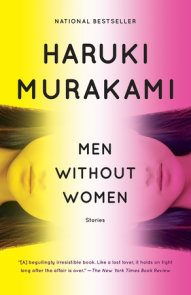
If Dune is based on the biggest book, Drive My Car is probably drawing on the biggest-name author, multi-award winning Haruki Murakami, writer of such classics as Norwegian Wood and 1Q84. This Japanese production is also up for ‘Best International Feature’ and, the big one, ‘Best Picture’. The film is a road-movie centred on a newly-widowed film director attempting to direct a production of Uncle Vanya in Hiroshima, while grappling with personal grief. It’s based on a short story from Marukami’s collection entitled Men Without Women.
The Lost Daughter (based on the novel of the same name by Elena Ferrante)


Another big name author, and one of my favourites, this psychological drama centres on the relationship between two women, a middle-aged academic, Leda (Olivia Colman) and a young mother, Nina (Dakota Johnson). The two women meet on a beach in Greece when Nina’s young daughter Elena, briefly goes missing and is found by Leda. The meeting causes Leda to reflect on her own struggles mothering her two daughters. This film also has an all-star cast; in addition to Colman and Johnson it includes Paul Mescal (of Normal People renown) and Jessie Buckley.
Of the above, I have seen only The Power of the Dog and The Lost Daughter, both of which are available on Netflix. I absolutely loved both! I’m not a huge fan of sci-fi so I probably won’t watch Dune, although my daughters both loved it (they are teenagers and big fans of Chalemet!) Drive My Car is most definitely on my To Be Watched list. They would all be on my TBR list, I think – I’d even challenge myself with Dune.
So, let’s see which one wins!
 The time span of the novel is the duration of Tish’s pregnancy, during which time the couple’s two families set about trying to free Fonny, liaising with his lawyer and pulling together all the money they can to pay Fonny’s legal costs. The lion’s share of this task falls to Tish’s family, who see it as their duty to support their daughter and the father of their grandchild. Fonny’s family, on the other hand is divided; his mother and sisters are deeply confused, ambivalent and disturbed by events effectively disown him. Fonny’s father does engage, supported by Tish’s father, but it is clear he is not really strong enough to cope with the pressure. It falls to Tish’s family to take charge and her mother, Sharon even goes to Peurto Rico, to where the raped woman has fled, to appeal to her to change her testimony, the suspicion being that Fonny was simply served up to her by corrupt police officers. As Tish’s pregnancy progresses, so we follow the legal machinations, the financial pressures faced by all concerned, the effect of prison on Fonny, the artistic soul tortured by his incarceration, and the toll that events take on both families.


 This year, literary references are a little thinner on the ground, but I want to tell you about a couple that have caught my eye. My children were on their half term holiday last week and I took my youngest daughter (aged 10) to see Hidden Figures. It is based on a true story, but the film was inspired by a book of the same name by Margot Lee Shetterly. You will no doubt have seen the trailers, but, to summarise, it tells the story of three exceptionally talented mathematical minds whose contribution to the US space programme in the 1960s went largely unacknowledged…because they were African-American women working at a time when racial segregation was still in place. It is a remarkable story, very moving and very well told.
 Julia's books