Women’s Prize shortlist review – “Fundamentally” by Nussaibah Younis

This is my final review of all the titles on the Women’s Prize shortlist, the winner of which was announced weeks ago! It has taken me ages to get through them all, I can’t believe it. Have I suddenly become very slow at reading? I have been working a lot of evenings which means prepping in the afternoon and then getting home late, crossing over with my usual reading times, so guess what has been put to one side? I’ve also been reading multiple books at once and am still slogging my way through Proust! Doesn’t matter, I suppose. There are no prizes for most books read, although the nagging notifications on my Goodreads account, telling me I’m behind on this year’s reading goals, make me feel like a bit of a reading failure, which is ridiculous!
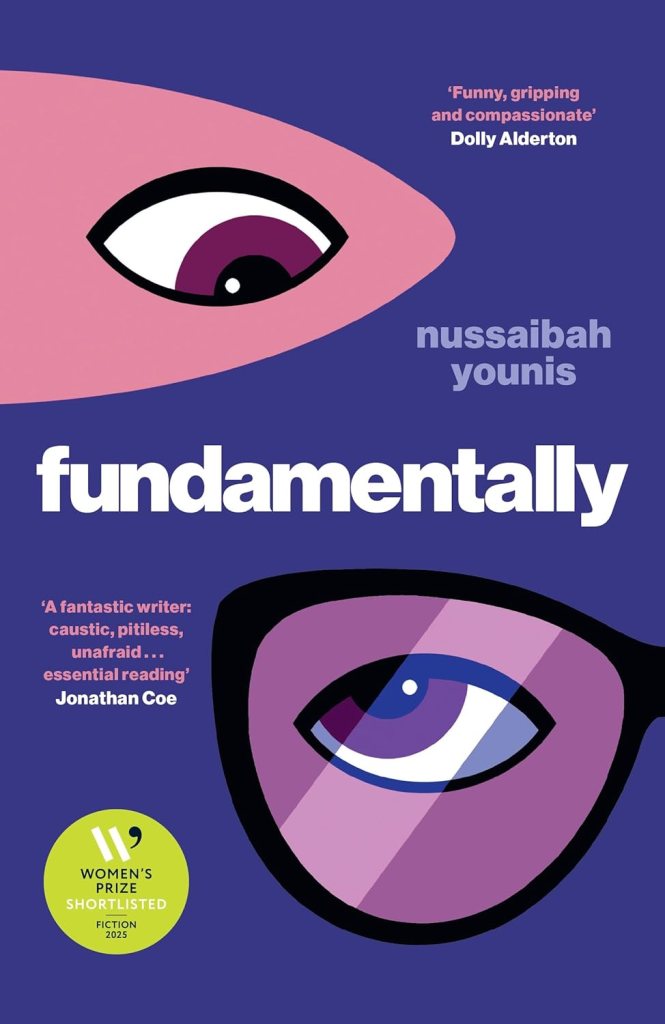
Fundamentally is another debut novel, and I learn from Wikipedia that the author Nussaibah Younis went to a grammar school in the town where I live – small world! She went on to university in Oxford and is now based in London, but had a career in international relations, specialising in Iraq. She was brought up Muslim but describes herself as no longer religious. I am recounting this because there are significant autobiographical elements in Fundamentally, something which seems fairly obvious even if you did not know the author’s background. Similar, in that respect to Aria Aber’s Good Girl. That does not make the novel less good, or less worthy of being shortlisted, of course, but you wonder if the author has a limited range or if they are simply honing their craft by writing about what they know. Apparently, Younis is working on her second novel, so we will find out.

The central character and first person narrator in Fundamentally is Nadia Amin, a young British Asian woman who was brought up a Muslim but has rejected her faith, following, among other things, a complicated relationship with her overbearing mother. As a young adult she pursued a hedonistic lifestyle in London alongside her university studies. She gained a PhD which led to a prized lectureship. She also had an open relationship with another woman Rosie, but when this breaks down, she decides to escape by applying for a United Nations special posting running a rehabilitation programme for former ISIS brides in Iraq. Nadia is running away and she knows it, all the while hoping that Rosie will change her mind. 

Arriving in Iraq, Nadia realises quickly how naive she has been – the scale of the task is huge. The women she is working with in the camp are not the group of malleable, self-effacing, grateful subjects she envisaged. Rather they are complex, varied, traumatised and with ideas of their own. One young woman has a particular impact on Nadia: Sara, a Londoner who was lured to ISIS at the age of 15. In her, Nadia sees shadows of herself. Despite warnings from her colleagues, Nadia involves herself closely with Sara’s case, perhaps too closely, until events spiral out of her control. This is the central plot of the novel – how the relationship between Nadia and Sara resolves and the journeys that both women go on as a result of what they learn from each other. 

The other aspect of the novel is exploring the role of the UN and other agencies in former war zones and developing countries. With her background, the author is highly qualified to write about this. There is a mixture of fondness and criticism – the people working in the field are largely very dedicated but operating in highly complex environments, trying to square the needs and aspirations of governments (good and bad), officials, and those they are meant to be helping. There is both comedy (the bureaucratic somersaults that have to be performed to get anything done), sadness (at the inevitable waste, duplication and corruption) and nuance – not every person in need is objectively “good” all of the time. Rather like democracy, the UN comes across in this novel as far from ideal but perhaps better than the alternatives. 

I really enjoyed Fundamentally – there are a few cliches and some characters are inadequate and two dimensional (Geordie ex-soldier Tom was one I found particularly grating) but it is a great story. The ‘ISIS brides problem’ is difficult and complicated at every level but it deserves to be seen in all its complexity rather than in the lazy homogenised way it is often portrayed. I listened to it on audio and the actor, Sarah Slemani, handles the wide range of voices (and accents) remarkably well. 

Recommended

Women’s Prize shortlist book review – “All Fours” by Miranda July

This book has caused quite a stir in literary circles and is possibly the most remarkable and unusual books that made it to the Women’s Prize shortlist. There was quite a lot of sex on the shortlist this year – an intense lesbian relationship in The Safekeep, the book that won the prize, as well as sex as exploration and rebellion in Good Girl and as relief from the pressures of a confined life in Fundamentally. But All Fours is pretty much all about sex and one woman’s search for her fundamental sexual core as she enters a new phase of her life.

The book is first person narrated and our central character (unnamed) is a moderately successful filmmaker and writer who enjoys a modicum of fame but has never fully lived up to the promise that her one really popular work suggested. She is in her 40s and now lives in LA with her partner Harris and their young child Sam. Her life has become somewhat routine and her relationship has settled into a loving but comfortable and predictable dynamic. She has a close bond with her child; as a baby they almost died following a very rare pregnancy complication where a foetus would normally die, and the event resonates throughout her life. 

As a gift to herself, the narrator, supported by her partner, decides to go on a road trip to New York, where she will spend time in a fancy hotel and enjoy a writing retreat to make some headway on her current project. Soon after she sets off from home, however, she decides to make a detour and finds herself at a motel, a mere half an hour from her home. At a car rental showroom she finds herself deeply attracted to one of the employees, Davey, a young married man whose wife, Claire, is an aspiring interior designer. 

What happens next is inexplicable to both the reader and the narrator who finds herself drawn along a strange path where she sets about to transform her dingey motel room, with Claire’s help, into something resembling a boutique Parisian hotel room. She also seduces Davey and the two embark on an unusual, intense, sexual relationship. All the while, the narrator, lies to Harris and Sam, telling them first about the road trip and second about New York. 

During her sojourn at the motel, the narrator undergoes a deep exploration of her life and her soul. With Davey she explores all parts of her sexual self. To say this is a ‘menopause novel’ is too simplistic, but the narrator’s age (forty-five) and her anticipation of the change that she fears is about to swallow her, undoubtedly drives the crisis she is experiencing. There is an Alice in Wonderland quality to the novel – she disappears into a kind of time warp, where collisions with her real life (calls with Harris and Sam) jar and seem unreal. She is at once desperate to be with them again, to have the reassurance of their stability, but also desperate to escape, tortured by the thought that life has nothing more to give her sexually. 

The novel is explicit as well as at times being very dark and at times very funny. The narrator is very self-aware but also very unknowing about herself, which is why she needs to go on this journey – both literal and metaphorical. Once she leaves the motel, one thing is for sure – her life will never be the same again. 

I really enjoyed the book. The sex is very graphic but pretty well done – I only recall cringing once or twice which is not much given that there is a lot of it! It’s also a really challenging book – as it sets out to question the ordinary lives most of us lead and it’s difficult not to ask yourself, is this enough? So it may be an uncomfortable read for some. It gives the middle finger to Trump-era America with its gender fluidity and libertarian approach to sex and sexuality; it may be far too “woke” for some, but I consider that a plus. 

A brave book and an interesting choice for the Women’s Prize shortlist – that said, it could not really have been left off it.

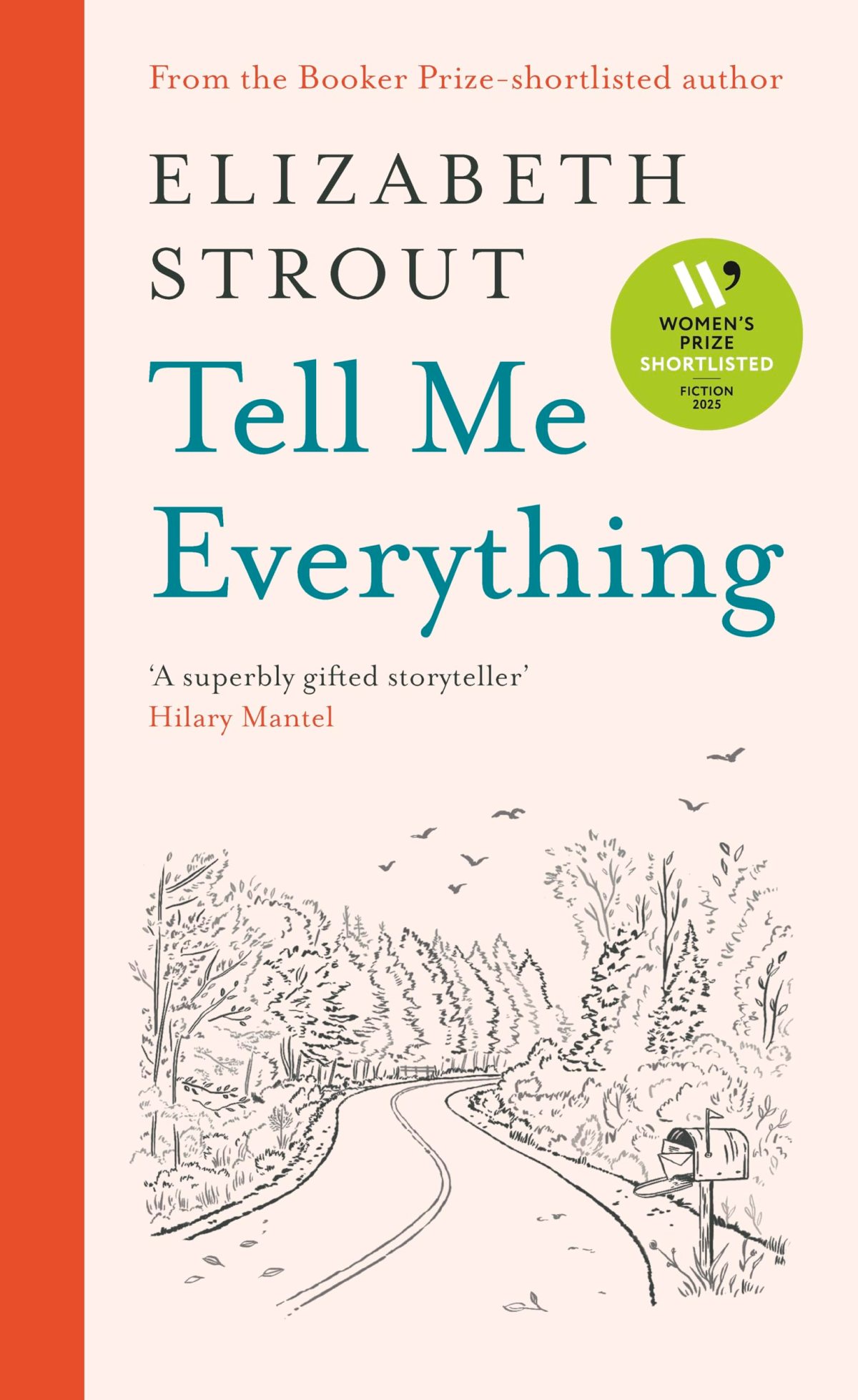
Women’s Prize shortlist book review – “Tell Me Everything” by Elizabeth Strout

Elizabeth Strout is the most experienced of the authors shortlisted for this year’s Women’s Prize and a writer I admire. I have not read all of her work, but I love her style and reviewed Oh William! on this blog after it was shortlisted for the 2022 Booker Prize. Strout writes many of her books in series, and Tell Me Everything  is book number five in her Amgash series (Oh William! was book number three). So, many of the same characters appear throughout the novels. She uses these characters in other novels too – for example, Olive Kitteridge appears in this book but she also has a book, in fact a two-book series, of her own! (Olive Kitteridge: A novel in stories and Olive, again). Some might not like this; it might seem that Strout is simply recycling, that she lacks ideas. I disagree. I think it takes huge authorial control and discipline to maintain  characters, remember their personality traits as well as their personal histories, but it also enables the author to take a very deep dive into the nature of what it is to be human and to observe over a long period of time the way that a person evolves and also the ways in which they do not change.

There is a bit of debate online about whether Tell Me Everything, or indeed any of the other books, can be read and enjoyed in isolation. As I said, I have not read her work extensively, but I certainly enjoyed Tell Me Everything and it really makes me want to go back and read her other novels. 

The central character in Tell Me Everything is Bob Burgess, a small-time lawyer and stalwart of the community in Crosby, Maine. This is quintessential Main Street America and, if nothing else, feels like an antidote to the more troubling vision of the United States that appears so often on our television screens these days. Bob spends most of his time on what we might call “pottering” until he is contacted out of the blue by a former school-mate who asks him to defend her brother, Matthew Beach, who stands accused of the murder of their mother Diana. Matthew is a lonely isolated man, probably neurodivergent, who lived with and cared for his sometimes cruel mother. 

As Bob begins to investigate he uncovers secrets about the family, the past, with which he is linked of course, living in a relatively small community and having gone to the same school as Matthew’s sister, and events beyond Crosby which seem to come back to impact on the town and its inhabitants. The case is not easy for Bob – he seems to be one of life’s innocents and he is shocked and hurt, not only by what he uncovers, but also by turns of events which affect the people around him. 

Bob shares many of his thoughts with his close friend Lucy Barton, central character in many of Elizabeth Strout’s novels, and through their discussions Strout is able to explore the central human questions and concerns that underlie both this case and other events going on around them. These other events include the serious illness of Bob’s brother’s wife, the professional challenges faced by Bob’s wife Margaret, the local minister, and Lucy’s relationship with her husband William, a man she once left due to his infidelity but who she now lives with again. There is also the Lucy Barton/Olive Kitteridge dimension; Olive lives in a retirement home but the two women strike up what appears to be an unlikely friendship, but after many get-togethers in which Olive shares lengthy stories about herself, her family and the many people she has known in Crosby, the two women find they have much in common – a deep interest in people. 

Though in many ways this seems like an old-fashioned novel with mostly middle-aged people in a small town with small lives, Strout brings in some very contemporary problems – child abuse, the opioid epidemic and other addiction problems, poverty, and family differences causing irreparable conflict and damage. All of these very modern problems impact on the characters and events in this novel.

I loved this book and could not put it down. My book club was divided – which probably reflects how readers more generally feel about Elizabeth Strout. I accept that her books might be a bit “Marmite”! I also love the way Strout writes – it appears simple, but is deceptively so, perhaps the hardest kind of writing to actually do. And her dialogue, which makes up a very high proportion of the book, is so natural. Her observation of people is brilliantly acute.

Of all the books on the shortlist this was the one I enjoyed the most, I think, but I can see it may not be the most consequential and therefore not one of those that was likely to win despite the author’s reputation and stature.

I recommend it highly though.

Women’s Prize shortlist book review – “Good Girl” by Aria Aber

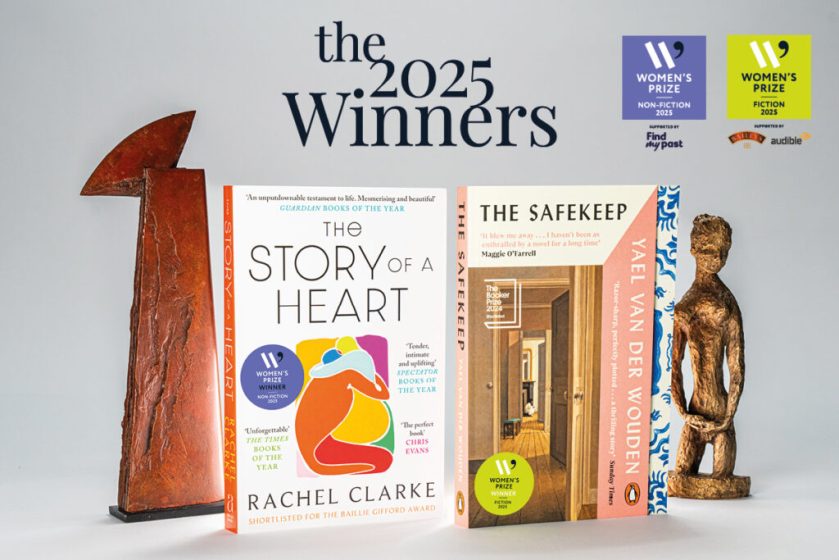
It was good to see the Women’s Prize garnering lots of attention again this year – it really is coming into its own as a literary event. The non-fiction winner, Rachel Clarke’s The Story of a Heart was covered in a piece on BBC Radio 4’s Today programme the morning after, while the fiction winner, The Safekeep by Yael van der Wouden, was not even mentioned. There was a bit of press interest however in the author’s acceptance speech comments about being intersex and the challenges she has faced throughout her life as a result of that, mostly the prejudice she has encountered. She also advocated for transgender people in the speech. It is worth watching and you can see it here. I do always feel the Women’s Prize ceremony is a little bit scrappy – surely they can get a bigger venue, or more organised stage appearances!

I am not sure I will read The Story of a Heart – whilst it has been described as uplifting and life-affirming, I think I might find it too emotionally challenging. It tells the true story of a heart transplant from a nine year-old girl, Kiera, who had died in a car accident, to a young boy Max, facing imminent heart failure due to a viral infection, and who needed a new heart to survive. The book is about the journey of both families.

I reviewed The Safekeep when it was shortlisted for the Booker Prize last year. I enjoyed the book very much, but I did not feel it was the finest book on the list. The Women’s Prize on the shortlist was somewhat different in character. I have so far read three of the other five books and whilst it has not been my favourite so far, I can see why it was chosen.

Good Girl by Aria Aber

I am going to start my reviews of the shortlist with Good Girl by Aria Aber. I think I am right in saying that Aria Aber is the youngest of the shortlisted authors and this is her debut novel. Aber is based in the US but was born and raised in Germany to Afghan immigrant parents and therein lies the rub for me – the novel reflects many of the details of her own upbringing. The central character Nila is a young woman, an art student, a talented photographer, but who has gone off the rails somewhat. Her parents were refugees from Afghanistan and have struggled to integrate in Berlin. The family lives in a run-down suburb of the city in a poorly maintained apartment block with hundreds of other immigrants who are not welcomed by the locals. The spectre of Nazism is never far away from their lived experience. Nila’s mother is dead, passing away suddenly as a middle aged woman who never fulfilled her potential; she was medically trained but her status was never accepted by the German authorities. Nila’s father simply does not know how to “be” in this society that is so alien to him, where his status as the male head of the household is neither recognised or valued, and where he is unable to get work fitting his standing. His outlet is to bully his wife and daughter.

Amidst all this ‘othering’, the unhappy home life and prejudice at school, Nila finds relief in Berlin’s underground music scene. In the clubs she is able to forget her Afghan heritage (her parents told her she should be proud, but she just feels shame and wants to hide it) and her problems at school. Instead she can lose herself in techno music, dancing, drugs and sex. On one of these nights she meets Marlowe Woods, an American writer, somewhat older than her, still dining out on past success but whose star is very much descending. His disillusion finds common cause with Nila’s hopelessness and the two strike up an intense but complicated relationship. 

I struggled to find very much to like about any of the characters in the novel. Nila is a vulnerable and troubled young woman and it is clear to see why she behaves the way she does. It is also a difficult read in the sense that the immigrant experience does not seem to have improved and the challenges of integration affect young people the most. I found it difficult to work out with Nila, what was a kind of ‘nihilism of youth’ and what could be attributed to the specifics of her situation. Parts of the novel felt like they were an angry young person who was simply rebelling and for me that was not particularly interesting. I did not like Marlowe at all, I thought he was just a creep, and I also felt the ending was a little weak. 

So, hmm, not my favourite.

I have also read The Persians, which has acquired an additional resonance for me in the light of recent events in Iran, and I felt, as far as the immigrant experience goes, this was far more cleverly and subtly done. I’ll review that next time. 

The Womens’ Prizes 2025

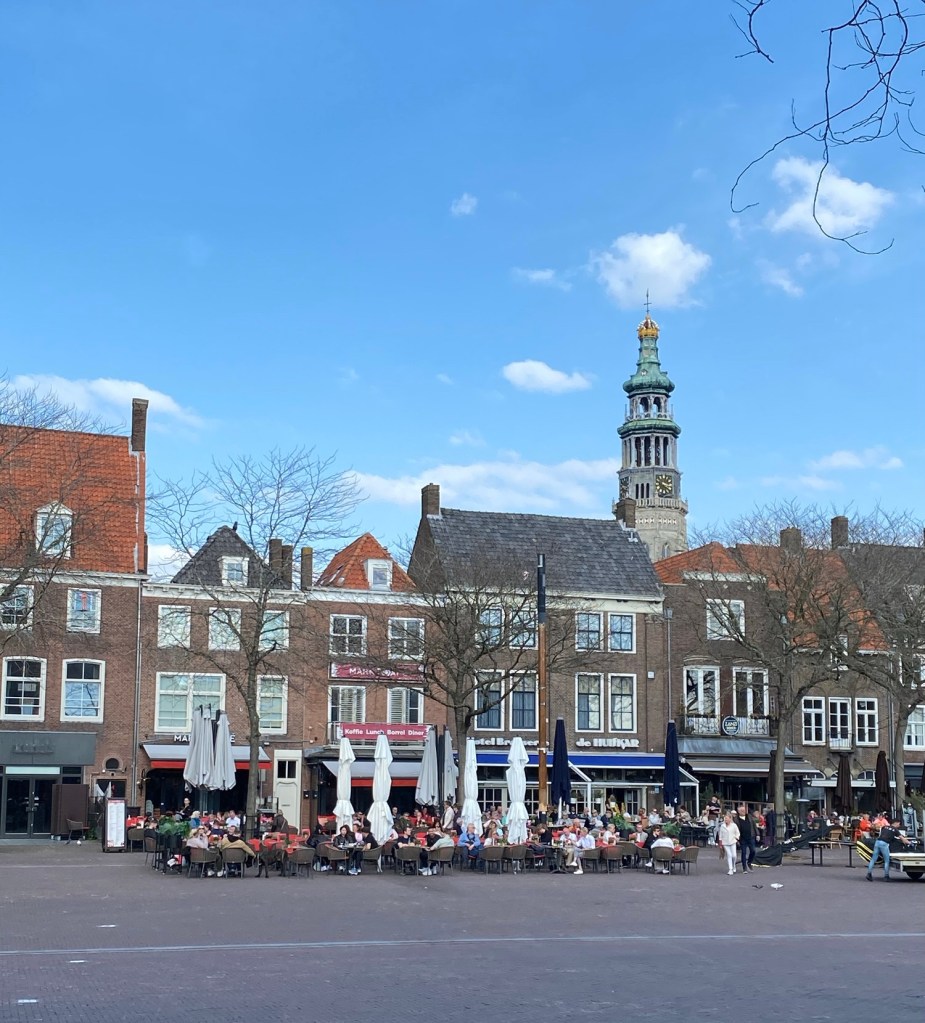
I’ve had a little blogging hiatus these last few weeks, and, unfortunately, a bit of a reading hiatus, never desirable. The day job and kids coming home from university for the Easter break have cut short my time. We also had a a short holiday in our beloved Zeeland, which was relaxing but full.

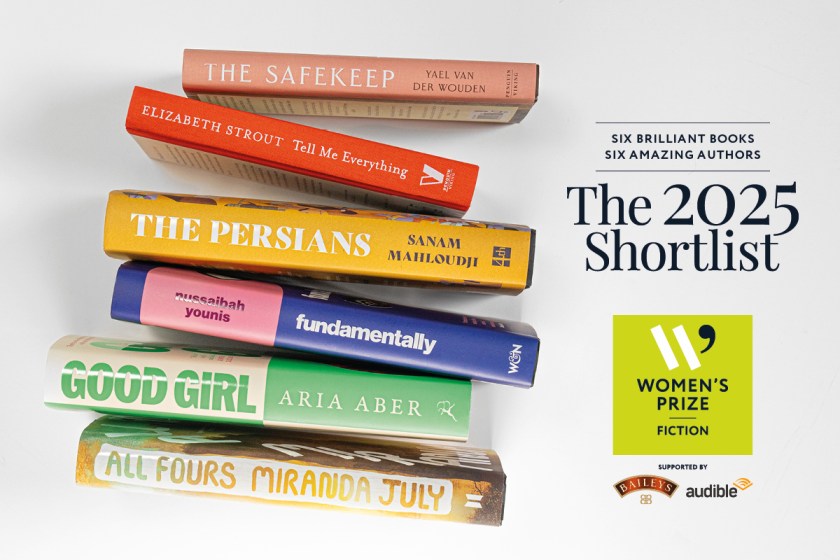
While I was away, this year’s Women’s Prize for Fiction shortlist was announced, and a very interesting selection it is. It was a big surprise to me that Dream Count, the long-awaited new novel by Chimamanda Ngozi Adiche (I flagged this as one of the highlights among new books out this spring, just a couple of weeks ago) did not make the shortlist. A further surprise was that Yael van der Wouden’s Safe Keep, shortlisted for the Booker Prize last year, did make it. I enjoyed Safe Keep but it didn’t feel like a prize-winning novel when I read it last autumn.

Elizabeth Strout’s latest novel Tell Me Everything has also made the shortlist. She is an author I admire hugely, having shot to literary stardom quite late in life and has been fairly prolific these last few years. She has definitely found her groove. The other four novels on the shortlist are by authors I have not come across before: Sanam Mahloudji’s The Persians about a family split by the revolution in Iran and trying to make a life in America looks fascinating. Miranda July’s All Fours about a woman approaching middle age who decides to leave her family and try and forge a new identity for herself, has received a lot of attention.

Nussaibah Younis’s Fundamentally is also about a woman escaping her life, this time to become a UN worker in Iraq and developing an unlikely friendship with a young ISIS bride. Finally, Aria Aber’s Good Girl is about Afghan teenager Nila, living in Berlin with her migrant family, also trying to make a new life for herself away from the impoverished suburbs where she grew up, and finding that the grass may not be greener on the other side.

A very interesting selection that perhaps speaks to the times we are living through right now. I’m not sure where to start!

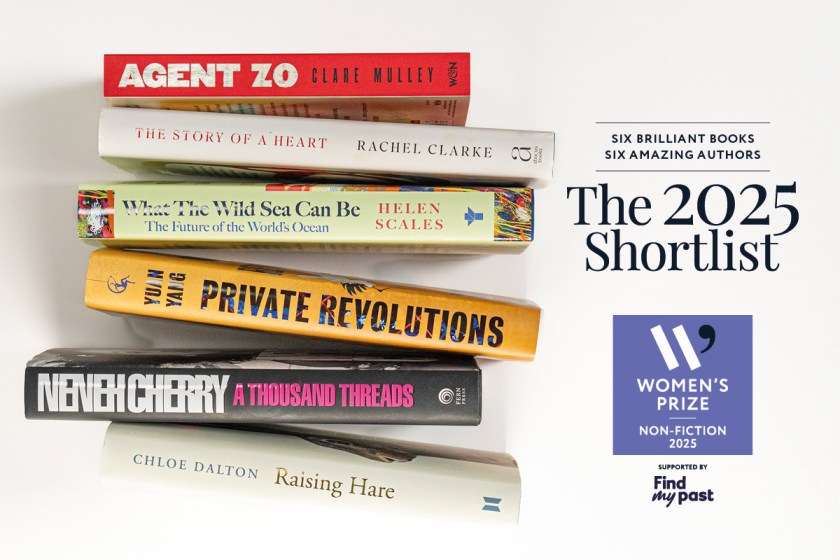
The Women’s Prize non-fiction shortlist is also out. A few of the books included had already caught my eye: Neneh Cherry’s autobiography A Thousand Threads, Chloe Dalton’s account of raising a baby hare Raising Hare, and Rachel Clarke’s The Story of a Heart, a true account of an organ donation from one child to another – this might be a really tough read. The other shortlisted books are:

  • What the Wild Sea Can Be: the future of the world’s oceans by Helen Scales – promising to be an awe-inspiring account of the wildlife on our watery planet and what we can do to protect it.
  • Private Revolutions – coming of age in a new China by Yuan Yang, the first Chinese-born British MP.
  • And finally Clare Mulley’s Agent Zo: the untold story of courageous WW2 resistance fighter Elzbieta Zawacka, the only female member of the Polish elite special forces.

The winners of both prizes will be announced on 12th June – about 8 weeks to read 12 books!