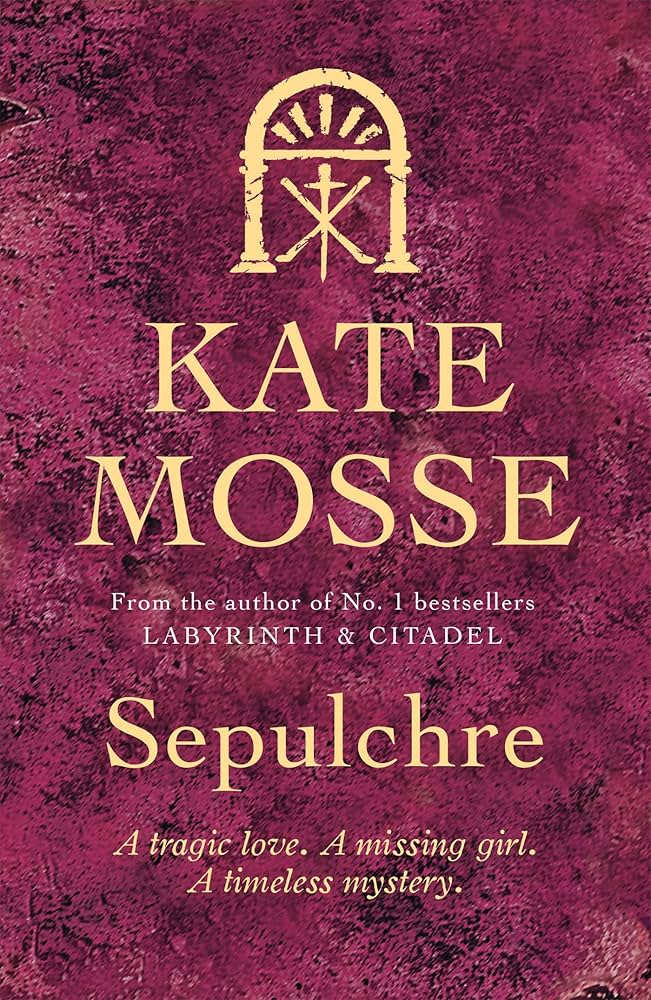
Book review – “Sepulchre” by Kate Mosse

I read this book over the New Year holiday and I thought it would be fitting to publish my review today as the 2025 Women’s Prize for Fiction longlist has just been published. Only a handful of the books on the list have crossed my radar – Elizabeth Strout seems to be a regular on prize shortlists at the moment and her latest book Tell Me Everything has made the longlist. Yael van der Wouden’s book The Safekeep, which I reviewed after it was shortlisted for the 2024 Booker Prize is also there. But perhaps most interestingly, Chimamanda Ngozi Adichie’s long-anticipated new novel Dream Count has made the longlist – the book was only published today – that’s timing!

Kate Mosse was of course the founder of the Women’s Prize (formerly the Orange Prize) which is now in its 30th year. She is an extraordinary woman. Labyrinth, the first book in the Languedoc trilogy, of which this book, Sepulchre, is also a part, was published twenty years ago and Mosse is currently touring with a one-woman show, sharing her secrets about the book.

So, what of Sepulchre? I was eager to get to this novel having so thoroughly enjoyed Labyrinth. The third instalment, Citadel, is on my TBR list. Labyrinth has been an international bestseller, translated into more than forty languages. Sepulchre is a little less well known, I think, and the novels can be read and enjoyed in isolation, although for me, having read Labyrinth, deepened my understanding of the themes explored in the second novel. 

Sepulchre follows a similar structural premise to Labyrinth – two women whose lives are intertwined in ways that we as readers do not know about but which will emerge as the narrative progresses. The author tells their stories in parallel, using the technique of the contemporary character uncovering details about the life of her distant predecessor. In this novel, the two women are Leonie Vernier, from the late 19th century, and Meredith Martin from the present day.

Leonie is a young woman living in Paris with her mother and brother. There is a sense of threat in the air, both from social and political upheavals of the time (one of the opening scenes is of a violent uprising in a theatre) and because of some mysterious business that Anatole, Leonie’s brother, is involved in. A shady character, Victor Constant, enters their lives and it is clear that he bears some ill will towards the family, particularly Anatole. When it is suggested that the siblings go to Rennes-le-Bains (a town about 50km south of Carcassonne, which is where the connections with Labyrinth begin) to visit their widowed aunt, a young woman who was married to their late uncle, it is in large part to enable Anatole to evade the attention of Victor Constant. 

In Rennes-le-Bains, at the remote mansion the Domaine de la Cade, the siblings enjoy a relaxed time with Isolde their aunt and begin to experience a quieter life away from Paris. Leonie explores the grounds of the Domaine although she experiences a disturbing supernatural event in an abandoned chapel in a densely wooded area in the grounds (further links to Labyrinth). She paints, sews, explores the town and makes friends with some of the local gentry, including Audric Baillard, an intellectual and someone to whom Leonie is curiously drawn. Audric, of course, appeared in both time periods in Labyrinth

The modern-day character is Meredith Martin, an American writer, teacher and musician, who arrives in France ostensibly on a research trip for a book she is writing about Claude Debussy (whom we meet earlier in the novel as he is a neighbour of the Vernier family in Paris), but also in search of information about a French musician ancestor, about whom she knows very little. She was adopted after her young and troubled mother died. Whilst in Paris she has a tarot reading which takes her to Rennes-le-Bains. She stays at a country house hotel (the former Domaine de la Cade) and becomes enmeshed in the personal family difficulties of Hal, whose father has recently died in mysterious circumstances, and whose uncle now stands to control the entire business of the hotel where the two brothers were partners. 

The plot of the novel is complex and clever. Mosse manages to draw out the connections between the two womens’ stories whilst making each one uniquely interesting and separately gripping. The scenes of denouement in both stories are powerfully told without melodrama or sentimentality and I found myself gripped by events, eager to read ‘just one more page’ to find out what happens next! Her control of the story is masterful. There is a wide range of characters although I’m afraid I did not think that some of these were as complex or as well-drawn as those in Labyrinth. Victor Constant, for example, felt like a pantomime villain at times. This does not detract from the overall effect, however, which is of a talented writer with a passion and feel for her subject, completely in command of the narrative. 

I am looking forward to picking up the final instalment of the trilogy, Citadel and devouring that one too!
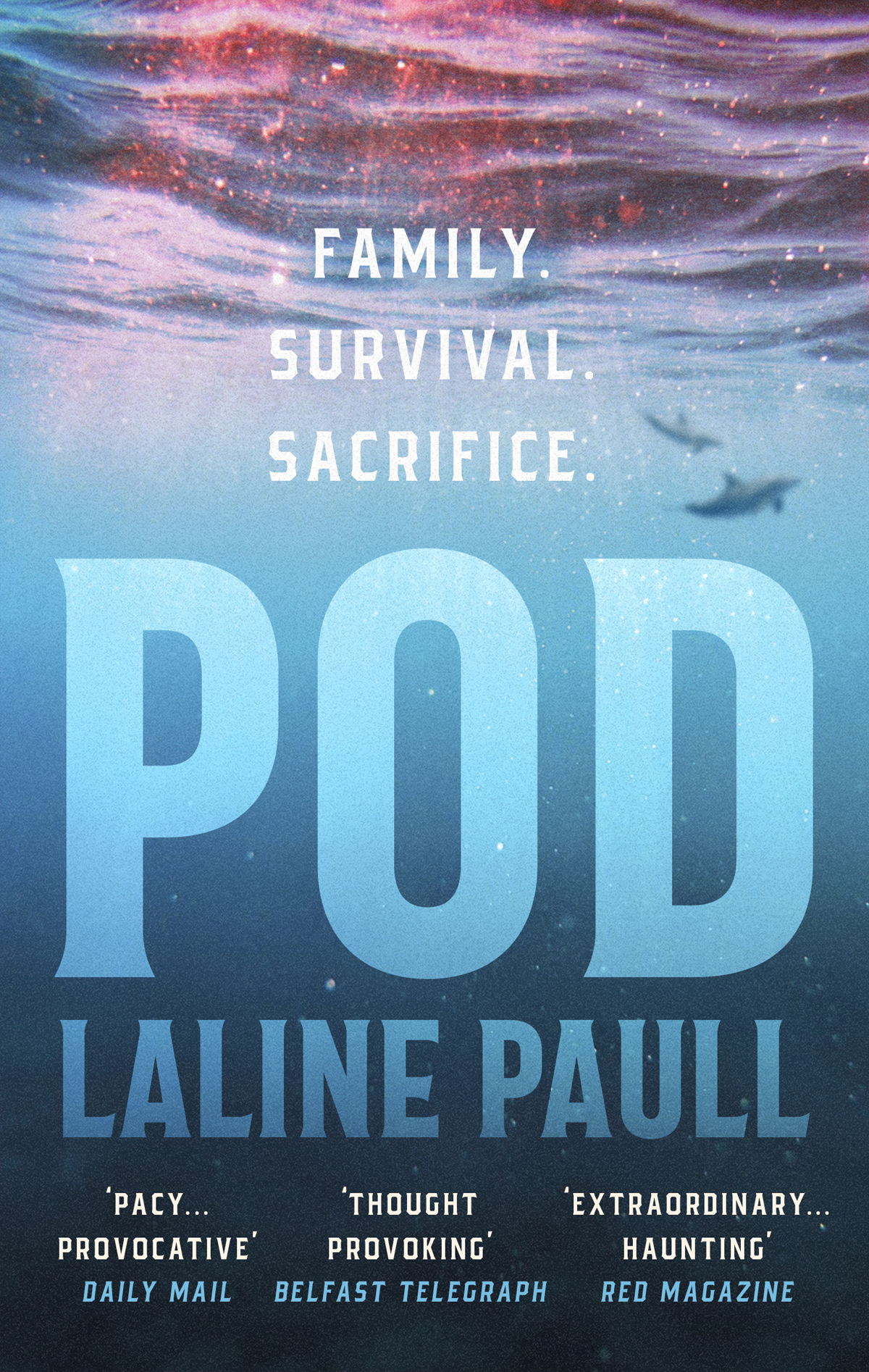
Women’s prize shortlist book review #6 – “Pod” by Laline Paull

I have at last completed this book, which is the final one I read on the Women’s Prize shortlist for this year. The publisher’s blurb describes it as “An immersive and transformative new novel of an ocean world – its extraordinary creatures, mysteries, and mythologies – that is increasingly haunted by the cruelty and ignorance of the human race.” Its main character is Ea, a dolphin who makes the difficult decision to leave her pod, believing that her disability (a form of deafness that prevents her from performing the special ‘spinning’ rituals unique to her kind) has made her responsible in large part for a tragedy that struck the pod and resulted in the death of her mother.

I was attracted by the theme of a marine world threatened and disturbed by the crisis facing our oceans. I hoped it might explore this profoundly important theme, one of the most critical issues facing the human race today, in a unique and innovative way. I thought it might be interesting to deal with it from the perspective of sea creatures and was curious about how the author might deal with that without it becoming trivial or childlike. Well, the answer is that she introduces strong violence and an erotic dimension. The characters have names and they communicate. They also operate in communities and there are both inter and intra-species rivalries. The communities are ordered in hierarchies and often these hierarchies are brutal. In the pod of dolphins that Ea joins for example, or rather is captured and forced into, there is a strong male leader who has his own harem, and rape and sexual exploitation are part of life for the younger female members. 

I cannot summarise the plot of the novel any further than this because, in truth, I’m not actually sure what it was all about! I have never watched Game of Thrones, but you would have to have been living under a rock these last few years to be unaware of it. Well, I think Pod might be a literary, dolphin version of Game of Thrones! I dislike writing negative reviews, I’d rather not post a review at all (except I am also a completer-finisher and have to finish all six reviews of the Women’s prize shortlist!), but I am afraid I really struggled to finish this book. Yes, it is well-written, yes it is imaginative and yes it is certainly unusual, but for me, it just didn’t work. I didn’t really care for any of the characters, mainly because I didn’t feel I could connect with them. They were animals, but they spoke, but some understood each other and others did not. It felt incoherent, confused and confusing. The descriptive passages, such as the accounts of rape and of full-blown underwater battles, were powerful in their way, but I was unable to see these in my mind. I struggled to envision the world the author was trying to create.

I wonder if science fiction fans might find this book more engaging than I did. Perhaps followers of this genre might be better than me at stretching credulity, buying into a landscape completely unfamiliar. I’m not sure. I have read science fiction that I felt was more successful than this novel. 

I’d be keen to hear from anyone else who has read this book, would love to hear your views, because I really feel like I have missed something with this novel. I did not read it consistently, which was perhaps part of the problem and perhaps why it felt inconsistent. But unfortunately, I did not feel motivated to read it, it just did not capture my interest. I was relieved to get to the end! Hmm, such a shame when a book does not work for a reader.

Women’s Prize book review #5 – “Demon Copperhead” by Barbara Kingsolver

I had a strange reading summer – rather than go sequentially through the various titles I planned to read, I was juggling half a dozen or so simultaneously. It sort of worked – I had different books for different moods – but it meant that it took me a long time to get through each one. Hence, it’s taken me a while to get through all six books on the Women’s prize shortlist. Demon Copperhead felt like a fairly constant companion. I listened to it on audio and it’s long. But that was okay, because it’s stunning and I didn’t want it to end. You know when you get one of those books that you grieve for once the reading experience is over? Well, Demon Copperhead was one of those for me. It’s a well-deserved winner of this year’s Women’s Prize for Fiction, a stand-out piece of work in what was a very strong field. This was my penultimate read from the six shortlisted titles so I hadn’t read it when it was announced as the winner.

Demon Copperhead is a modern-day re-telling of the Charles Dickens classic David Copperfield. The broad plot of that novel, as you may be aware, is that we follow our hero from infancy to maturity, from inauspicious beginnings, fatherless and later orphaned. David is sent to various schools and institutions where he is treated badly, but somehow survives due to his own determination and intelligence. David marries early, but his young wife dies soon after. Only then does he realise his love for the daughter of one of the few benign guardians in his life.

Barbara Kingsolver turns this Victorian bildungsroman into a story of a modern American tragedy setting her novel in Virginia, one of the most deprived and left-behind parts of the United States (and where she has made her home). Demon lives with his drug and alcohol addicted mother in a trailer, his father having died before his birth. The trailer is on land owned by the Peggot family, whose son ‘Maggot’ is Demon’s close childhood friend. The Peggots take Demon on a short break to visit their daughter June in Tennessee, one of their few children who has made something of herself and therefore a rare role-model for Demon. On their return home, Demon finds that his mother has married her cruel and violent lover Stoner. 

Demon’s mother relapses and he is sent to a foster-carer, a tobacco farmer whose motives for fostering are dubious at best, though it is convenient for the social services department to overlook this because he takes on their most difficult to place cases and has several other teenage boys living with him. After the death of his mother, Demon is sent to a different foster family, the feckless McCobbs who have entered into fostering merely to obtain income to meet their significant debts. They fail to meet Demon’s most basic needs for food and clothing and force him to sleep on a mattress in their laundry room. Eventually, Demon decides to run away from the McCobbs and finds his way to his paternal grandmother’s home, a woman he has never met. She undertakes to ensure he is cared for, however, and arranges for him to live with the husband of one of her former foster-children (who died of cancer) and his daughter Agnes.

Demon finally seems to have found himself in a good situation with decent people who care about him…but we are only halfway through the book. Hard to believe, but the worst is still to come. There have been hints throughout of what is to befall our hero: his mother’s addiction problems, the drug-dealing of the much-admired leader of boys at the tobacco farm, ‘Fast Forward’, and the portrayal of a certain hopelessness about life in this part of the country. Demon will inevitably become sucked into what is surely one of the most heinous scandals perpetrated by the pharmaceutical industry, the oxycontin crisis that continues to wreak havoc and destroy lives on an industrial scale in parts of the USA. 

The story continues, darkens further. It is not a read for the faint-hearted and yet you cannot stop because as the reader you have become invested in this powerful central character, our narrator who speaks directly to us. We feel his pain. 

Kingsolver follows the plot of David Copperfield faithfully, keeping many of the names and adapting others, the cleverest for me is U-Haul, the modern-day Uriah Heep who Kingsolver imbues with similarly odious characteristics. It is heartbreaking to think that things we thought belonged to a past century, cruelty and neglect towards children, the suffering of people born poor, are still with us.

Taking on a re-telling of a book like David Copperfield, considered by many to be Dickens’s finest novel, was an act of awesome ambition but Kingsolver has accomplished her task with aplomb and created a true tour de force of a novel.

Highly recommended.

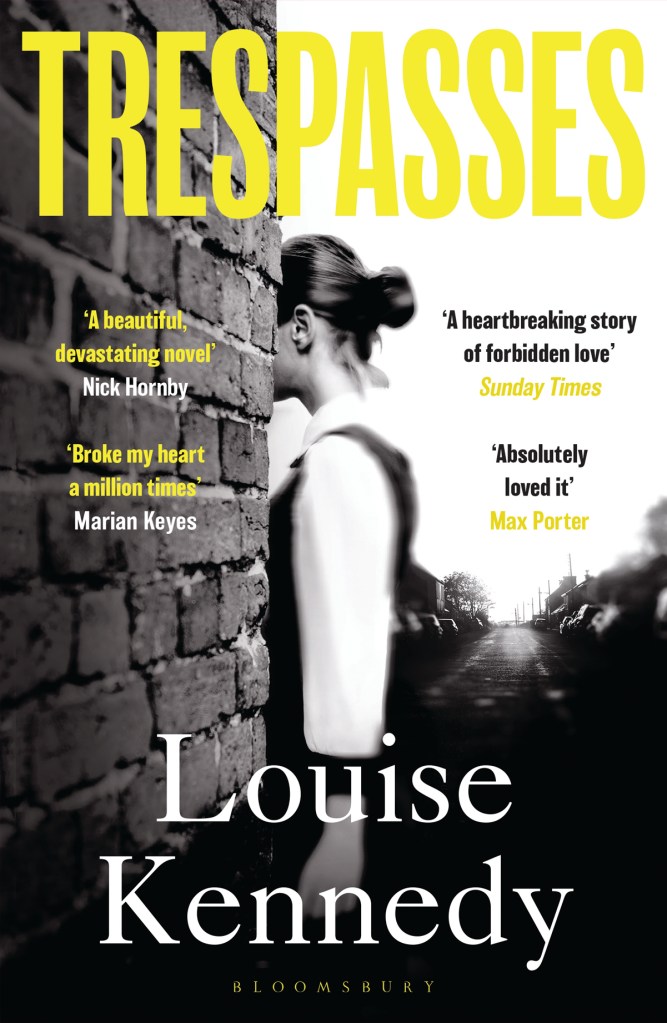
Women’s Prize book review #4 – “Trespasses” by Louise Kennedy

The smart money was on Barbara Kingsolver to win the 2023 Women’s Prize for Fiction, announced a fortnight ago, and the predictions were correct. Kingsolver is the first person to win the prize twice (she won previously with her highly acclaimed 2009 novel The Lacuna). I have not yet read Demon Copperhead – when I decided on the order I wanted to read the Women’s Prize shortlist I decided to leave it till last since it is by far the longest of the six books. So it is definitely on my TBR list and I am looking forward to it even more now.

I did manage to get through four out of the six shortlisted books, which I am happy with, given that it has been a very busy couple of months. The day job has been quite demanding, as has home and family life so I’m impressed with myself that I even managed to get through that many! Audio did the heavy lifting here, and the fourth book, which I am reviewing here, was another that I listened to on audio. 

I don’t know much about Louise Kennedy, other than that her Twitter feed is witty and self-deprecating! Trespasses is her debut novel which gives me some hope given that she is around the same age as me I think! It seems her writing career took off relatively late in life and she spent most of her working life as a chef. Kennedy grew up near Belfast and her intimate awareness of the impact of the troubles on ordinary people in Northern Ireland in the 1970s, ‘80s and ‘90s is a powerful theme in this book.

The main character is Cushla, a young woman who teaches in a Catholic primary school. She lives alone with her widowed alcoholic mother and helps out at the family pub, which is now run by her angry and domineering brother. The regulars in the pub make up a motley band of locals, some political some not, and include British soldiers from the local barracks who come across as insensitive, cruel and exploitative. 

There are two main strands to the novel, connected with Cushla’s two jobs. In school, Cushla’s pupils report their daily news and the vocabulary of military events, hardware and death, are shocking when they come out of the mouths of, literally, babes. One particular pupil that Cushla connects with is Davy McGeown, bullied (as is his entire family) because he is the product of a ‘mixed marriage’. Cushla takes Davy somewhat under her wing, giving him lifts to and from school for example and becomes closely involved with the family, particularly after Davy’s father suffers a brutal beating at the hands of paramilitaries. 

The second strand of the novel is the affair that Cushla begins with Michael Agnew, a prominent Belfast barrister, who although he is a protestant, manages to remain a powerful neutral force, drinking in Cushla’s family’s pub, for example, defending young Catholic men who become embroiled in paramilitary activity. Cushla and Michael are instantly attracted to one another but their affair is scandalous on many levels – he is married, he is older than her, socially they are from very different backgrounds and, of course, they have different religious affiliations, though neither of them is particularly attached to their religion. Their affair takes place in secret, mostly at Michael’s ‘town’ apartment. His wife remains mostly at their family home and there are hints that she is an alcoholic; certainly he tells Cushla that his marriage is “complicated” and he cannot offer her any commitment. To help provide cover for the affair, Cushla starts going out with another teacher at school, Gerry, who, it later transpires, has secrets of his own. 

Kennedy writes beautifully about the tender and passionate relationship that Cushla and Michael have. She also writes beautifully about the love and care Cushla has for Davy McGeown and his family, and the complex relationship she has with her difficult and mentally unstable mother. This is a novel about people, about love, and about family, and yet Kennedy weaves in some profound truths about life in Northern Ireland at that time – the messy politics, religious prejudice, the dominance of the church (and alludes to abuse in the Catholic church) living in constant fear, and yet, also, fear becoming normalised. It is an account of a kind of hell, but one in which love can still thrive, like weeds popping up through cracks in concrete. 

I loved this book and it is a brilliant debut. The audio version was also brilliantly read by Brid Brennan. Highly recommended.

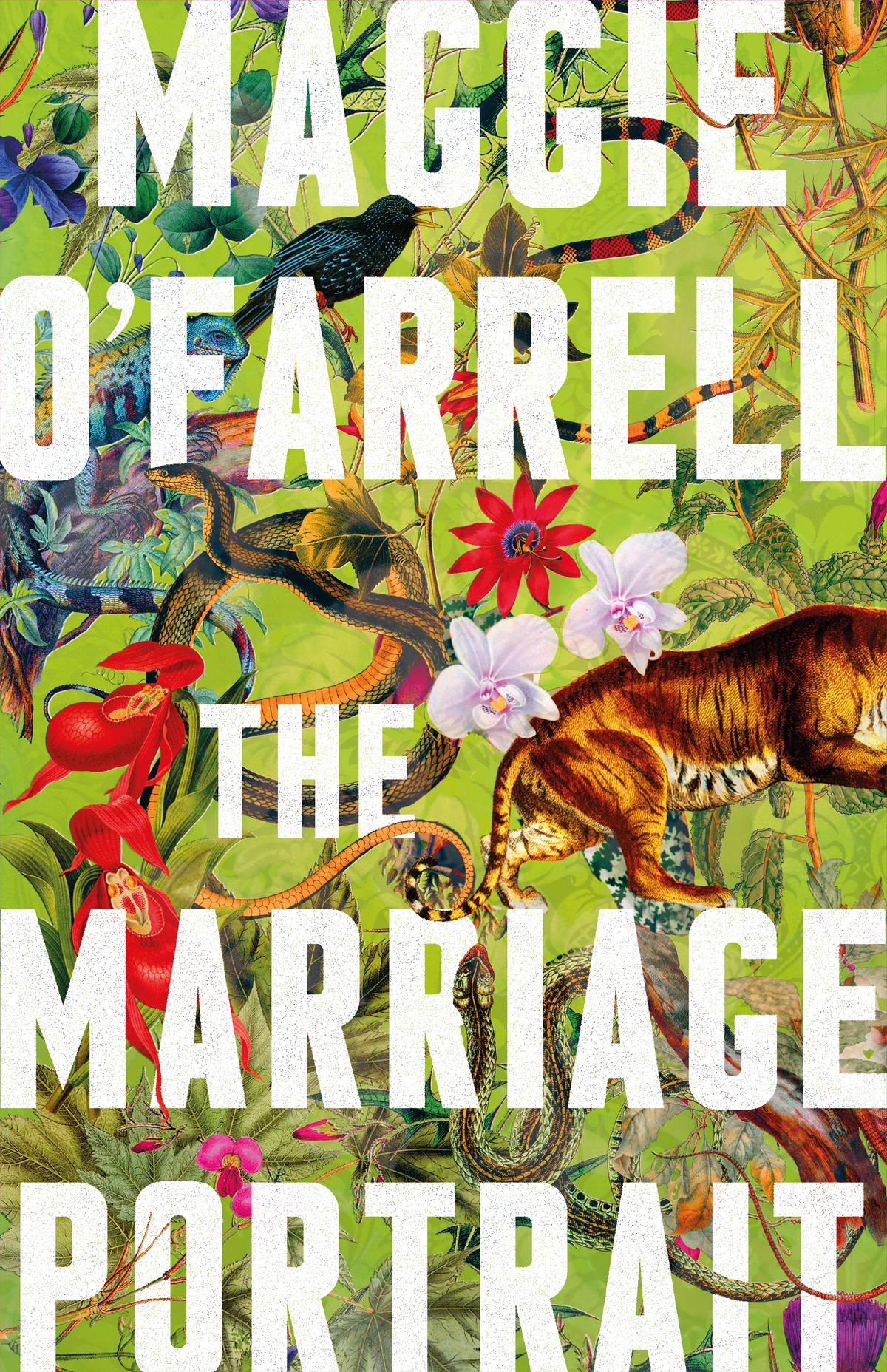
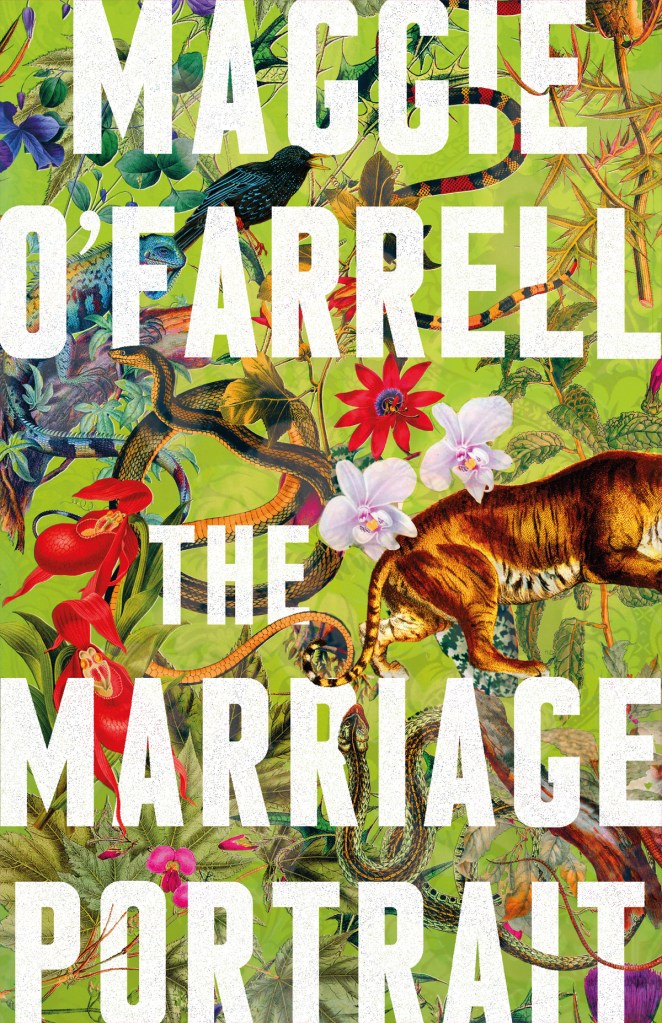
Women’s Prize shortlist review #3 – “The Marriage Portrait” by Maggie O’Farrell

Maggie O’Farrell won the Women’s Prize in 2020 with her eighth novel, Hamnet. It would be quite a coup if she won the prize again in 2023 with her ninth novel. Hamnet is without doubt one of my favourite novels of recent years. Beautifully written, moving, and an astonishing subject. In The Marriage Portrait O’Farrell takes a somewhat similar approach: taking a real historical figure, about which very little is known, and inventing their back story. This time, O’Farrell takes us to 16th century Italy. 

The main character in the novel is Lucrezia de Medici who lived a short life from 1545-1561. She was the daughter of the then Duke of Florence and his noble Spanish wife. She was their fifth child, and is portrayed in O’Farrell’s novel as somewhat unruly. Little was really expected of her, apart from a decent marriage, but as the third daughter, she would not have been considered for the highest ranking match. Her brothers, of course, were schooled in the arts of ruling. Lucrezia is portrayed as sensitive, and passionate about art and nature. She is taught to paint, since she shows some aptitude for it and it at least keeps her out of trouble. Painting is the one activity in which she finds true happiness.

Lucrezia’s elder sister Maria is matched with the nobleman Alfonso, the heir to the Duke of Ferrara, but when Maria dies suddenly, Lucrezia is forced to step in as a substitute. The children’s nurse, Sofia, sensing Lucrezia’s horror at the prospect, manages to persuade the Duke to hold back from marrying his daughter off, on the basis that she is still a child and not yet begun to menstruate. There is only so long that Sofia can protect her charge, however, and at the tender age of 15, Lucrezia is married to Alfonso, who, by then, is Duke of Ferrara. 

Lucrezia is terrified to leave her family. Initially, she is taken to her husband’s country residence, the delizia, where, as Duchess, she enjoys a little more freedom than she had in Florence. Her husband Alfonso, is constantly preoccupied with matters of state and a schism in his own family and largely abandons her. It is clear, however, that her expected role is to bear heirs and Lucrezia endures the consummation of their marriage with fear and horror. 

When the couple return to court to begin married life proper, Lucrezia becomes increasingly aware of a more sinister side to her husband. It is clear that her initial fear of him was not simply girlish trepidation, but a deeper sixth sense. Very soon she begins to fear for her safety. 

The novel opens at a banquet, where Lucrezia is being fed various delicacies by Alfonso. It is 1561, the year that she died and Lucrezia tells the reader that she believes her husband wishes her dead. Thereafter, the novel flits back and forth between Lucrezia’s early childhood, giving a sense of how her character and her place in the household evolved, and 1560-61 and the progress of her brief marriage. 

Having enjoyed Hamnet so much, I was really looking forward to this book and treated myself to a signed hardback copy. It moves at a much slower pace than Hamnet and I found it quite difficult to get into at first. There is more scene-setting and building of character than there is plot, but then we are talking about a very short span of time in the life of a person who did not have very much to do with their days! About halfway through, once Lucrezia is married, I think it improved – the sense of threat builds, the insular nature of courtly life becomes more apparent, and Lucrezia’s isolation all add to the feeling of danger for her. Even those she might reasonably think of as ‘friends’ – her husband Alfonso, his sisters, the servants – all in fact represent a potential threat. Her only confidante is her ladies maid Emilia, but she is also powerless and vulnerable. It is only when a group of artists arrives to set about making a commemorative portrait  of her (the marriage portrait) that Lucrezia realises the deep peril of her situation. As the novel darkens, it improves.

I would recommend this novel although for me it did not have the powerful impact of Hamnet, but then it must be very difficult to follow something that brilliant.

Women’s Prize shortlist review #1- “Fire Rush” by Jacqueline Crooks

It’s been a busy few weeks with half term, travel away from home and the day job, so I have not been doing as much reading as I would have liked. This is especially disappointing given that I’d set myself the goal of reading the shortlist for this year’s Women’s Prize! I have been doing a fair bit of driving and running though so at least I’ve been getting through some of them on audio. There is nothing quite like the feel of a book in your hands, but, increasingly, I am finding audio is the way I access most of my reading. Are you finding this too?

Fire Rush by Jacqueline Crooks was the first of the shortlisted books that I picked up and I am so glad I chose the audio version. At its heart is a love for music, specifically dub reggae, and the interconnectedness of the music, the Caribbean culture, the London scene of the 1970s where the book is set, and the idea of music as salvation. Short excerpts of dub reggae are built into the audiobook at key moments and it gives an extra dimension to the text, characters and setting, as well as the pace and tension of the book. This is also not a musical genre I am particularly familiar with, so I definitely would not have ‘heard’ it if I had read the book in hard copy.

The book opens in 1978 in the south London suburb of Norwood, where twenty-something Yamaye lives with her indifferent and sometimes cruel father. Her life seems to be going nowhere and the bleakness of the moment – it was a period of economic stagnation, cultural wilderness and all against a racist backdrop – is tangible. Yamaye lives for music, dub reggae, and spends her weekends at an underground club in the crypt of a church with her friends, sassy Asase and white Irish girl Rumer. There is an ever-present sense of threat from the authorities and most of the characters have had a brush with the law at some point. There is also an ever-present threat of violence, from darker forces operating in this underground world. 

At The Crypt, Yamaye meets Moose, a craftsman who works with wood, particularly the teaks and mahoganies from the Caribbean where he is from and where his grandmother still lives. Moose and Yamaye embark on a love affair. He dreams of going back to Jamaica with her and living a free and peaceful life in the country. Yamaye has dreams too, of becoming a DJ, mixing tracks at reggae nights. 

Spoiler alert:

All their dreams are shattered, however, by two devastating events: Moose is killed in police custody and Asase is found guilty of murdering Yamaye’s friend and the owner of the record shop she frequents. Events turn quite dark and fearing that her life is in some danger, Yamaye escapes to Bristol where she spends time in a ‘safe house’ which proves to be anything but. She must make a second escape and flees this time to Jamaica, determined to track down Moose’s grandmother, to find out more about her roots, and specifically to try and connect with her late mother who died mysteriously in Ghana when Yamaye was a child. In Jamaica she finds a new lease of life, but also encounters new dangers that will lead her to a final reckoning with forces that want to harm her. 

This is a really powerful book which tells a fascinating story. Over a period of five years or so we watch Yamaye grow from being a timid and cowed young woman, oppressed in her own home, to one who finds her inner power through music, love and embracing her true cultural inheritance. 

I loved this book. It was both gripping and engaging from start to finish. The audiobook is brilliantly read by Leonie Elliott (the actress who plays Lucille in Call the Midwife) who manages the range of voices and accents with aplomb. This is an example of audio really adding to the experience of the book and I recommend it highly. 

Women’s Prize for Fiction shortlist

The shortlist for the 2023 Women’s Prize for Fiction was announced following much anticipation last week. The winner will be announced on 14 June, but it is one of those literary prizes where you suspect all of the finalists feel like winners due to the sense of warmth and inclusivity around it. This prize has really taken off in recent years thanks to some brilliant marketing activity. The team made fantastic hay out of the Covid lockdowns, running Zoom chats with shortlisted authors (and many hundreds of fans) where you really felt like you were part of the contest. All facilitated by the inimitable Kate Mosse, of course, the dynamic founder of the Prize. Unlike the Booker prize the Women’s Prize also has a sense of humility about it; it doesn’t confine itself to purely literary novels. This is a contest that celebrates the joy of reading in its widest sense, with podcasts, blogs and email newsletters that really keep you engaged.

This year’s shortlist of six books includes three debut novels and three from established authors.

Fire Rush by Jacqueline Crooks

This book has been getting a lot of attention. It is the author’s debut novel, though her short stories and non-fiction work have garnered praise. Set in 1970s London it tells the story of Yamaye, a young black woman and her relationship with the music she identifies with as part of her cultural inheritance, dub reggae. She meets and falls in love with Moose, but when their love affair ends, it triggers a search for identity and a personal transformation.

Trespasses by Louise Kennedy

Another author better known for her short stories, Irish writer Louise Kennedy’s novel is set in Belfast during the period known as ‘the Troubles’, a poignant moment to remember those terrible days as we mark the 25th anniversary of the Good Friday Agreement. It tells the story of primary school teacher Cushla navigating love and politics in the most challenging of circumstances. For most of us it is hard to imagine what it must be like to try and live an ordinary life surrounded by violence and threat but if the reviews are anything to go by, Louise Kennedy has pulled it off here.

Demon Copperhead by Barbara Kingsolver

Kingsolver’s 1998 best-selling novel The Poisonwood Bible remains one of the best books I have ever read – it had such a powerful impact on me. This literary giant needs no introduction and has both won and been shortlisted for the Women’s Prize before. Demon Copperhead is said to be her modern take on Dickens’s David Copperfield where a young man, born into poverty in Virginia tries to make his way in the world in a modern America beset by social problems and prejudice.

Black Butterflies by Priscilla Morris

Another debit novel, this one also set in against the backdrop of conflict, this time Sarajevo in 1992. As we watch the terrible events in Ukraine unfold day after day it is easy to forget that only thirty years another devastating war took place on the European continent and destroyed a country. This novel tells the story of Zora, an artist and teacher who must decide whether to flee their home or try to stay and defend their city against siege.

The Marriage Portrait by Maggie O’Farrell

Another author who needs no introduction, having won this prize a mere three years ago with her incredible novel Hamnet. This is her follow-up and is another work of historical fiction, this time set in Renaissance Italy. Sixteen year old Lucrezia has been married off to a powerful Duke, Alfonso, whom she believes plans to kill her. Powerless and alone she must try and save her own life. Based on a real person, it looks like Maggie O’Farrell has produced yet another literary gem.

Pod by Laline Paull

This looks to be the most unconventional book on the shortlist, where the central character is a dolphin. Afflicted by a form of deafness which isolates her within her family group, Ea survives a tragedy that kills other members of her family. Young and alone, she must navigate the treacherous oceans and multiple dangers. Exploring themes of family and belonging Pod also remninds us of the fragility of our natural environment and the impact humanity has had on other species.

Quite a shortlist! I would love to think that I might be able to get through them all before the winner is announced – six weeks and counting! I hardly know where to start.

Women’s Prize shortlist announced today

Each year the Women’s Prize seems to get bigger and better! The idea for this wonderful initiative was first conceived in the early 1990s when it became apparent that despite women authoring the majority of books published, they rarely achieved more than one or two places on the shortlist for the prestigious Booker Prize; in 1992, there was not even one woman writer on the shortlist. Author Kate Mosse was the driving force behind the prize and remains its Director. She is a formidable character and I am not surprised she was the one to get this going! The first winner was the late Helen Dunmore for her novel A Spell of Winter. Other winners have included Carol Shields, the late Andrea Levy, Chimamanda Ngozi Adichie, Eimear MacBride, Ali Smith and Maggie O’Farrell.

Over the years the Prize has had a number of sponsors and has previously been named after them (the Orange Prize and the Bailey’s Prize), but since 2018 it has been known simply as the Women’s Prize and enjoys a range of joint sponsors. Its remit is not simply to award prizes for literary achievement, but also to support reading and creativity in the community more generally and to make a space in the literary world for women’s voices.

In many ways, the Prize feels more relevant than the Booker even, and I have particularly valued how, during the pandemic, the talks with authors, which often only took place in-person in London, came to Zoom, making the work and the writers more accessible.

The shortlist for the 2022 Women’s Prize was announced today and is as follows:

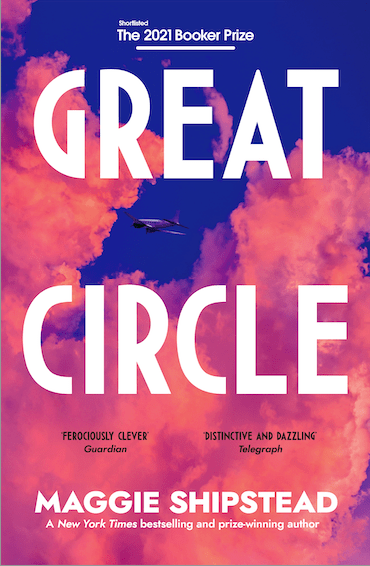
Great Circle by Maggie Shipstead – I’ve already read and reviewed this one as it was shortlisted for last year’s Booker, and it is AMAZING!


The Island of Missing Trees by Elif Shafak – set in Cyrpus in 1974 at the time of the island’s division.


Sorrow and Bliss by Meg Mason – 40 year old Martha seems to have it all until her marriage breaks down and she has to move back to her dysfunctional family home. Can her life ever be ‘fixed’?


The Bread the Devil Knead by Lisa Allen-Agostini – Alethea is in an abusive marriage. She witnesses a woman murdered by her jealous lover and seems to see what her own future might be. Can she change her life’s trajectory?


The Sentence by Louise Erdrich – set in a Minneapolis bookshop during the tumultuous period November 2019 to November 2020 which is haunted by one of its now deceased customers. New employee Tookie must solve the mystery and make sense of events.


The Book of Form and Emptiness by Ruth Ozeki – teenager Benny starts hearing voices after his father dies and his mother develops her own mental problems. He finds solace in the public library where he meets the characters who will help him through his grief.

This is a fascinating list of books and I would happily curl up on the sofa with any of them! I have long wanted to read Louise Erdrich’s work, so I think that may be the one I go to first.

Which do you fancy?

The winner is announced on 25 May and you can enter a competition to win copies of the shortlisted books by signing up to the the newsletter here.


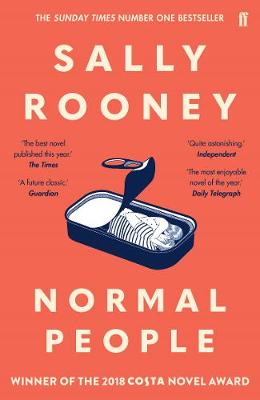
Book review: “Normal People” by Sally Rooney

I’m travelling to Dublin on the ferry from Holyhead, north Wales as I write this, making our annual summer visit to see family and friends. I love Dublin and think of it as a second home, having visited the place several times a year for about two decades now. I haven’t seen all the ‘sights’, although Dublin Zoo, the art gallery, Powerscourt, and the Natural History Museum have all been well and truly ‘done’! When we visit we seem to spend much of our time just hanging out, visiting people, sharing meals, etc. For me, it’s only when you do that, after visiting a place so many times that you really get to the heart of it.

Normal People imgIt seems appropriate that I should be posting a review of Normal People this week, a book so very much about Ireland, the challenges and contradictions at the heart of a nation that has transformed itself in recent years. It is not just about Ireland, but about what it means to be young in Ireland and about class. It is also about identity and, in common with some of the issues faced in the UK and many other societies I am sure, the draw away from regional towns and cities, towards a centre, a capital, where there is perceived to be more opportunity, and what that means both for the individual and for society in the wider sense.

 Connell and Marianne are two teenagers attending the same high school in Carricklea in the west of Ireland. Both are very bright and hopes about their future prospects are high, but that is where the similarities end; their lives couldn’t be more different. Connell is the much-loved only child of a young single Mum. The live together in a small house and Connell’s mother cleans for Marianne’s family. Although academically a high achiever, Connell still manages to be popular and admired. Marianne is much more of a loner and lives with her working Mum and brother (a threatening figure who becomes increasingly violent towards her). She is remote from her family, not well-liked at school, and has a spiky personality.

Despite their differences, Connell and Marianne develop a closeness which soon blossoms into an intense and sexual relationship. The author portrays skilfully the subtle differences in their perspectives, which will at times lead to difficulties of communication and understanding throughout their young lives and the ebb and flow of their relationship.

The pair both end up with outstanding exam results which means that both secure a place at the prestigious Trinity College, Dublin. We follow them to college and here their positions are reversed – it is Marianne now who finds her ‘tribe’ amongst the affluent, the elite, the middle classes, and Connell who struggles to feel at home, whose financial and social background contrasts so markedly with that of his peers.

Despite this, Connell and Marianne continue to have an on-off relationship for the duration of their university careers and beyond. At times their relationship is passionate and sexual, at others it is more platonic, mutually protective. But always it is intense, even where there is little contact between them, such as the period Marianne spends on a Scandinavian scholarship with the abusive artist she has for a boyfriend at the time.

It is a fascinating and compelling book, part elegiac romance, part social commentary, where there is very little in the way of plot, but an abundance of humanity that is acutely observed and intimately drawn. The book has rightly earned its young author widespread plaudits and praise and was shortlisted for this year’s Women’s Prize for Fiction. (The winner, An American Marriage by Tayari Jones, which I reviewed on here recently, was a worthy victor but I don’t envy the judges having to choose between these two outstanding novels.)

Normal People is a beautiful, clever book that will at times break your heart and at other times lift it, and I heartily recommend it. The only pity is that it’s relatively short!

Normal People has been widely read and reviewed – what did you think of it?

If you have enjoyed this post I would love for you to follow my blog. Let’s also connect on social media.

Facebook reading challenge – join us in June

Despite the awful British weather, it is actually June at the moment, halfway through it in fact, so it must be time for a new book on my Facebook Reading Challenge. Earlier in the week, I published a review of the May title – Lord of the Flies by William Golding, one of the great literary classics of the 20th century. So many people have studied this book at school, at a time, perhaps, when English literature was not the thing they were most into, that it can often elicit groans of anguish! In fact, coming to it again after so many years (and as a mother!), I saw new things in this book. That’s the great thing about a reading challenge; you pick up books that you might otherwise have turned away from.

This month’s theme is something from the Women’s Prize shortlist. At the time of setting the challenge I obviously did not know what was going to be on the shortlist. The title I selected is a book I have had my eye on for some time. In fact, I recommended it over a year ago in a post Hot new books for springAn Amercian Marriage by Tayari Jones has since been announced as the winner of the prize, as of 5 June, so I’m delighted to be reading it this month.

2019-06-14 10.49.53The book is about a young newly-married couple, Celestial and Roy, and is set in the American Deep South. Their lives appear full of potential until Roy is accused of a crime he did not commit. He is convicted and sentenced to twelve years in prison. The book concerns the effect of the separation on their marriage, how Celestial copes alone and what this means for their shared dreams.

The chair of judges of the women’s prize described the book as one that “shines a light on today’s America” and it has won praise from the likes of Barack Obama and Oprah Winfrey, as well as achieving wide acclaim in the review columns. The whole shortlist was extremely impressive and I could have chosen any of the books on; the fact that it beat Anna Burns’s Man Booker winner Milkman, which I loved, tells you something about the high calibre.

So, if you fancy a good read and getting involved in the discussion, do join us, it’s not too late. 

If you have enjoyed this post, I would love for you to follow my blog. Let’s also connect on social media.