I’m travelling to Dublin on the ferry from Holyhead, north Wales as I write this, making our annual summer visit to see family and friends. I love Dublin and think of it as a second home, having visited the place several times a year for about two decades now. I haven’t seen all the ‘sights’, although Dublin Zoo, the art gallery, Powerscourt, and the Natural History Museum have all been well and truly ‘done’! When we visit we seem to spend much of our time just hanging out, visiting people, sharing meals, etc. For me, it’s only when you do that, after visiting a place so many times that you really get to the heart of it.
 It seems appropriate that I should be posting a review of Normal People this week, a book so very much about Ireland, the challenges and contradictions at the heart of a nation that has transformed itself in recent years. It is not just about Ireland, but about what it means to be young in Ireland and about class. It is also about identity and, in common with some of the issues faced in the UK and many other societies I am sure, the draw away from regional towns and cities, towards a centre, a capital, where there is perceived to be more opportunity, and what that means both for the individual and for society in the wider sense.
Connell and Marianne are two teenagers attending the same high school in Carricklea in the west of Ireland. Both are very bright and hopes about their future prospects are high, but that is where the similarities end; their lives couldn’t be more different. Connell is the much-loved only child of a young single Mum. The live together in a small house and Connell’s mother cleans for Marianne’s family. Although academically a high achiever, Connell still manages to be popular and admired. Marianne is much more of a loner and lives with her working Mum and brother (a threatening figure who becomes increasingly violent towards her). She is remote from her family, not well-liked at school, and has a spiky personality.
Despite their differences, Connell and Marianne develop a closeness which soon blossoms into an intense and sexual relationship. The author portrays skilfully the subtle differences in their perspectives, which will at times lead to difficulties of communication and understanding throughout their young lives and the ebb and flow of their relationship.
The pair both end up with outstanding exam results which means that both secure a place at the prestigious Trinity College, Dublin. We follow them to college and here their positions are reversed – it is Marianne now who finds her ‘tribe’ amongst the affluent, the elite, the middle classes, and Connell who struggles to feel at home, whose financial and social background contrasts so markedly with that of his peers.
Despite this, Connell and Marianne continue to have an on-off relationship for the duration of their university careers and beyond. At times their relationship is passionate and sexual, at others it is more platonic, mutually protective. But always it is intense, even where there is little contact between them, such as the period Marianne spends on a Scandinavian scholarship with the abusive artist she has for a boyfriend at the time.
It is a fascinating and compelling book, part elegiac romance, part social commentary, where there is very little in the way of plot, but an abundance of humanity that is acutely observed and intimately drawn. The book has rightly earned its young author widespread plaudits and praise and was shortlisted for this year’s Women’s Prize for Fiction. (The winner, An American Marriage by Tayari Jones, which I reviewed on here recently, was a worthy victor but I don’t envy the judges having to choose between these two outstanding novels.)
Normal People is a beautiful, clever book that will at times break your heart and at other times lift it, and I heartily recommend it. The only pity is that it’s relatively short!
Normal People has been widely read and reviewed – what did you think of it?
If you have enjoyed this post I would love for you to follow my blog. Let’s also connect on social media.
 I have chosen a book which caught my eye a couple of months ago – The Lido by Libby Page. It concerns a friendship between two women, 86 year-old widow Rosemary and 26 year-old Kate, who strike up a bond when their local outdoor swimming pool in Brixton, south London, is threatened with closure. The two women have different reasons for wanting to campaign to keep the lido open, but they are brought together in a common cause.
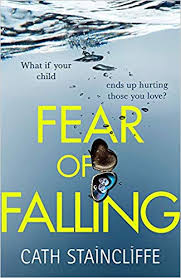 The centre of the story is the relationship between two women, Bel and Lydia, who meet at a New Year’s party in 1985, when they are both sixth-formers although at different schools in Yorkshire. They are very different people – Lydia is reserved, generally quite sensible, and from a secure and ordinary family. Bel is wilder, her family rather more bohemian and she has a difficult relationship with her parents. Bel grew up in France and then London and it is her father’s job that has brought them to northern England, where she is something of an outsider. Bel and Lydia are drawn to one another, despite their very different personalities; for Lydia, Bel represents spontenaiety, excitement, danger even. For Bel, Lydia represents security, a steady point in a turning world.
 Julia's books