The Platinum Jubilee #7 2010s to present

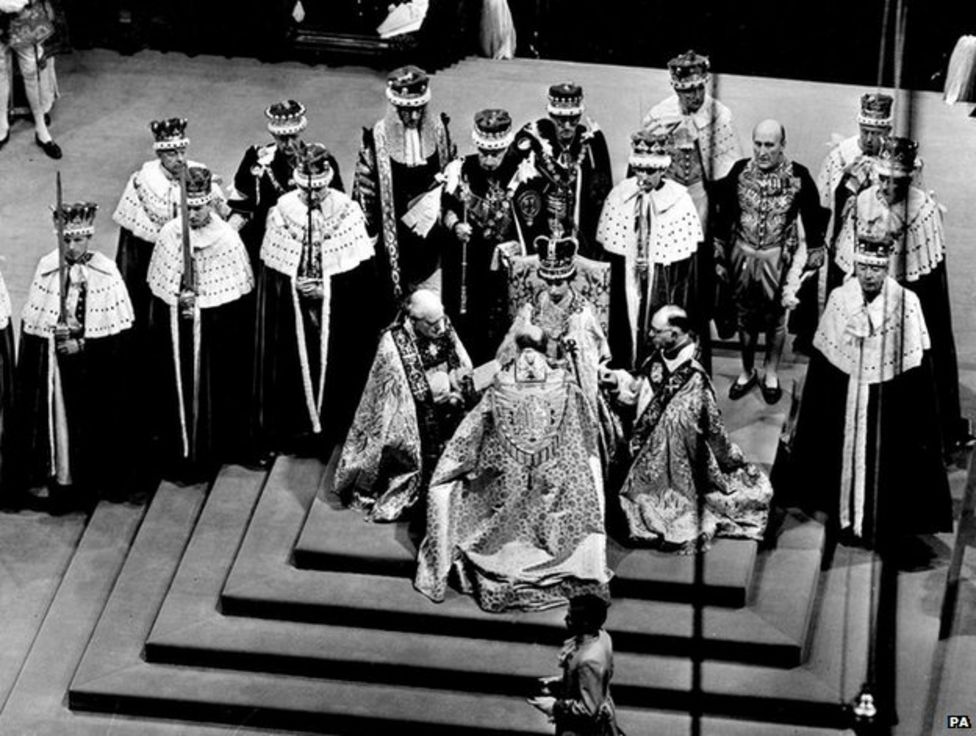
And so we find ourselves at the end of this Platinum Jubilee weekend, four days of events and celebrations that have been quite enjoyable, actually. I’ve been to two parties and for a change the British weather did not let us down! It does not seem so very long ago that we were celebrating the Diamond Jubilee (2012) in which the Queen and the Duke of Edinburgh, being sprightly 80-somethings, played a much more active role. It had not been too bad a decade for Her Majesty – we had two major royal weddings, William and Kate in 2011, then Harry and Meghan in 2018, plus a host of minor royal weddings. And all those newlyweds have produced the next generation of royals. Sadly, the last couple of years have been very difficult; the Queen lost her husband in 2021, a few weeks short of his 100th birthday, her son Andrew brought disgrace to the family when he was forced into an out of settlement in a sexual assault case, and rifts between Prince Harry, his brother, his father and ‘the Palace’ have seen him and his wife give up their royal duties and move to California. Their public pronouncements have been uncomfortable to say the least.

But all that has been set to one side for the moment. We were even able to forget the mess that passes for British government at the moment to enjoy a truly once-in-a-lifetime moment in history. Whatever you may think of Queen Elizabeth, monarchies more generally or the British Royal Family, the world will not see her like again.

I started this blog in 2016 and have probably read more in the last ten years than in any previous decade. A few of my favourite books since 2010 have been by American authors. Donna Tartt’s The Secret History was one of my favourite books from the 1990s. Her third novel The Goldfinch, published in 2013 certainly ranks in my top ten for the last decade. It follows the story of Theo Dekker, who loses his mother in an explosion at an art gallery. He manages to escape and takes with him a small but extremely valuable Dutch Renaissance painting. He spends the subsequent years concealing his crime and the book follows his story and the events that arise out of his concealment. It’s an extraordinary book.

Hanya Yanagihara’s 2015 novel A Little Life was another highlight, a novel of epic proportions following the lives of four college friends, all of them drawn together by their quirkiness, but also their relationship with Jude, the most vulnerable in the group. Set in New York city it is a novel of our times, dealing with sexuality, depression, self-harm, isolation and being on the outside. It is heartbreaking and completely compelling.
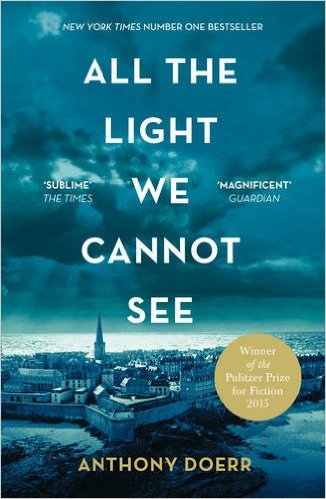
One of my other most enjoyable reads of the decade was Anthony Doerr’s All The Light We Cannot See, published in 2014. Set in St Malo, Brittany, it tells the story of Marie-Laure, a blind girl in second world war France and Werner, an orphan and member of the Hitler Youth and invading German forces, and how their worlds collide.

Sally Rooney took the literary world by storm in the last few years with her books Conversations with Friends (2017), Normal People (2018) and Beautiful World Where Are You (2021). Normal People was made into one of the televison events of the decade and I loved both the book and the series. Exceptional writing from a very talented young woman, who is still only thirty.

Elena Ferrante’s Neapolitan novels were another highlight of the decade. Published 2011-2014, I devoured them all and cannot choose between them for brilliance. I have yet to see the television series as it is currently only available on a channel I do not subscribe to. The two central characters Lila and Elena have stayed with me and the relationship between them has shed a whole new light on the nature of female relationships. Outstanding.
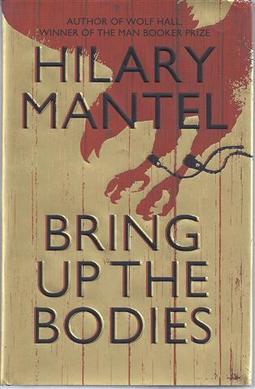
In the UK, Dame Hilary Mantel completed her Wolf Hall trilogy with Bring Up the Bodies in 2012 and The Mirror and the Light in 2020. It is a truly outstanding literary achievement. Having won her second Booker with Bring Up the Bodies, she did not quite get the hat trick with the final instalment. That honour went to Bernardine Evaristo for Girl, Woman, Other, although she shared that honour with Margaret Atwood for The Testaments.

Two other award winning novels by slightly lower profile authors I thoroughly enjoyed were Milkman by Anna Burns, which won the Booker Prize in 2018, and Birdcage Walk by the late Helen Dunmore, which was published posthumously in 2017. Milkman tells the story of a young woman growing up in Belfast during the time of the Troubles and struggling just to be herself and live the life she wants to without the threat of violence. Dunmore’s novel confirmed her as foremost among authors of historical fiction telling the story of a young woman in Bristol at the time of the French Revolution.

If I had not confined myself to British authors, my book of the decade would have been Richard Powers’s The Overstory, a book about trees and people trying to destroy them, versus people trying to protect them. But my parameters were set and Powers is American, so my book of the last decade, for sheer enjoyment, writing brilliance, masterful storytelling is Maggie O’Farrell’s Hamnet. It tells the story of a young William Shakespeare and his wife, and the 11 year-old son they lose to illness. Powerful, poignant, and a creative imagining of an event that actually happened but which we know so little about.

I have thoroughly enjoyed this exercise, looking back over books from a big chunk of the last century that I have enjoyed. Every day I have thought of more that I should have added to a previous decade and I am sure you can think of many others I have forgotten. I would love to hear your thoughts on any of my choices.

The Platinum Jubilee #6 2000s

After the turbulence of the 1990s, the noughties were a quieter decade for the Queen. She was getting older of course, in her mid-seventies by the turn of the century. In 2002 she celebrated her Golden Jubilee, marking an incredible half century on the British throne. It was an altogether more sedate affair than the Silver Jubilee in 1977, I seem to remember. Perhaps we were all becoming more grown up about the monarchy. The Queen also celebrated her 80th birthday in 2006 (my youngest was born on that day). She was officially an elderly lady and from that moment on she was pretty untouchable.

I think one of the reasons we took our eyes off the monarchy was that there was so much bigger stuff going on elsewhere in the world. There was the attack on the World Trade Center in New York in September 2001, of course, an event which led to prolonged and devastating war in the Middle East, the effects of which are still being felt today. The financial crash in 2008 would lead to a decade of austerity in the UK and the end of the Labour government.

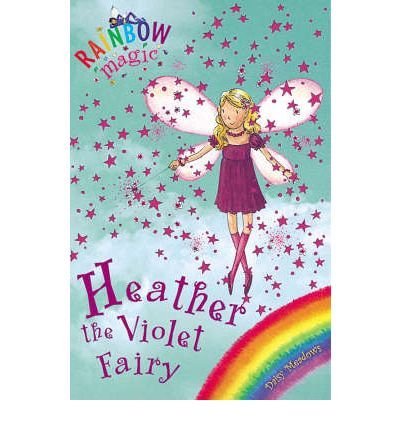
For me, the decade was dominated by small children. My three children were born between 2001 and 2006. These were my reading wilderness years. Most of my reading was of children’s books, which, to be fair, is no bad thing. We worked through the Harry Potter books, of course. A favourite of mine was also Philip Pulman’s Northern Lights (though this was in fact published in 1995), though my kids were less keen on this one. My son adored the Diary of a Wimpy Kid series by Jeff Kinney (2007 onwards) while my daughters adored the Rainbow Magic books (2003 onwards). We had a huge collection of them which they have never forgiven me for throwing out. To be fair, their opprobrium is deserved and I have no defence.

The wars in Iraq and Afghanistan stimulated my interest in literature from that part of the world. I read two books published in this decade by Afghan-American novelist Khaled Hosseini which are extraordinary – The Kite Runner (2003) and A Thousand Splendid Suns (2007). Both novels evoke the culture and atmosphere of Afghanistan and its turbulent recent history.

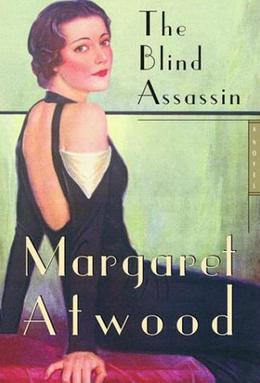
I had a long drive to work in the first couple of years of the decade. I used to buy audiobooks (on cassettes!) and one that I loved, and which I listened to several times, was Margaret Atwood’s The Blind Assassin, published in 2000. Complex and innovative in structure, it explores the relationship between two sisters in the 1930s and 1940s, as recalled by Iris, her sister Laura having died in 1945.

In the UK, Zadie Smith shot to literary fame with her first novel White Teeth (2000) about two men, a Bangladeshi and an Englishman, who became friends during the war, and how their relationship evolves later on amid racial tension in London. I am ashamed to say that this is a book I have tried and failed to read more than once. I have no idea why. It took me a long time to read books in those days so perhaps it required more mental energy than I had available at the time.

A book I did love was Mark Haddon’s The Curious Incident of the Dog in the Night-time, published in 2003. It is an innovative novel about a teenager with autism spectrum disorder who takes it upon himself to investigate the death of his neighbour’s dog. It is about how the central character Christopher navigates a world that has been set up for the convenience of the majority that does not experience disability or neurodiversity, and what this means for people who are on the outside of this group.

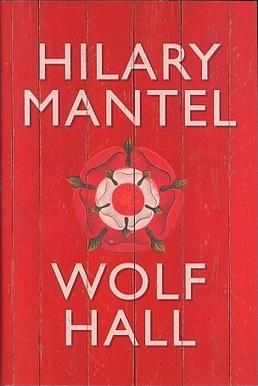
The book of the decade, for me, however, was Wolf Hall by Dame Hilary Mantel, published in 2009. I adored her earlier novel about the aftermath of the French Revolution A Place of Greater Safety (1992), but it was Wolf Hall that really cemented her reputation as one of the finest living British writers. And rightly so. As a piece of historical fiction it is truly extraordinary. The depth of her research and the profound degree to which she has understood both her subject (Thomas Cromwell, minister at the court of King Henry VIII) and the period, drips off the page. The plotting, the story-telling, the characterisation, the immersion, it is all breathtaking.

I can’t say with absolute certainty that I read Wolf Hall in the decade in which it was published (which was the rule I set myself), but on this occasion I am giving myself the benefit of the doubt for this is a truly outstanding book that might even be book of the century.

The Platinum Jubilee #5 1990s

The 1990s proved to be a torrid decade for the Royal Family; the Queen’s children were getting divorced left, right and centre. Charles and Diana separated in 1992 and divorced in 1996, Princess Anne divorced in 1992, and Prince Andrew in 1996. In 1992, a massive fire at Windsor Castle caused extensive damage – the Queen would go on to describe that year as her annus horribilis. But it would get much worse. In 1997 her beloved Royal Yacht Britannia was decommissioned, deemed no longer worth refitting, one of the few occasions on which the Queen has been seen to cry in public. Then, the big one, the death of Diana, Princess of Wales, in a car crash in Paris in September 1997, drew great criticism. The Royal Family failed to grieve alongside a nation that seemed to have had its heart ripped out and sharp contrasts were drawn between the warm and outgoing character of Diana, and the seemingly hard-hearted Royals. Diana had become a thorn in the side of the British monarchy and conspiracy theories abounded about the cause of her death.

I was in my twenties in the 1990s and therefore at my peak. I had my own fair share of ups and downs, romances and heartbreaks, successes and disappointments. I joined the Civil Service in 1991 after graduating in 1990 and had an exciting few years in Whitehall before moving to Newcastle in north east England. Eighteen years of Conservative government came to an end in 1997 when Tony Blair and his New Labour government were elected in 1997, and there was so much HOPE! The music of this era remains the soundtrack of my life. My favourite band Radiohead became one of the biggest bands in the world, releasing their seminal work OK Computer in 1997, which probably remains my most listened to album ever. I was also listening to REM, U2, Blur and Oasis of course, Morrissey, PJ Harvey going to lots of gigs, working in the capital so at the theatre all the time. I was living my best life! Or so it seemed at the time. I met my husband in 1999, so the decade ended on a high too.

I re-discovered contemporary fiction in the 1990s and some of my favourite all-time books came out in this decade. One of the best was Donna Tartt’s The Secret History, published in 1992, a debut novel about a group of Classics students at a New England college and the events leading up to the death of one of their number. In 1991, Nigerian poet and author Ben Okri won the Booker Prize for his extraordinary novel The Famished Road, a strange and dreamlike book about a spirit boy who finds himself torn between the spirit and the material worlds. I remember finding it both strange and fascinating, but hugely powerful.

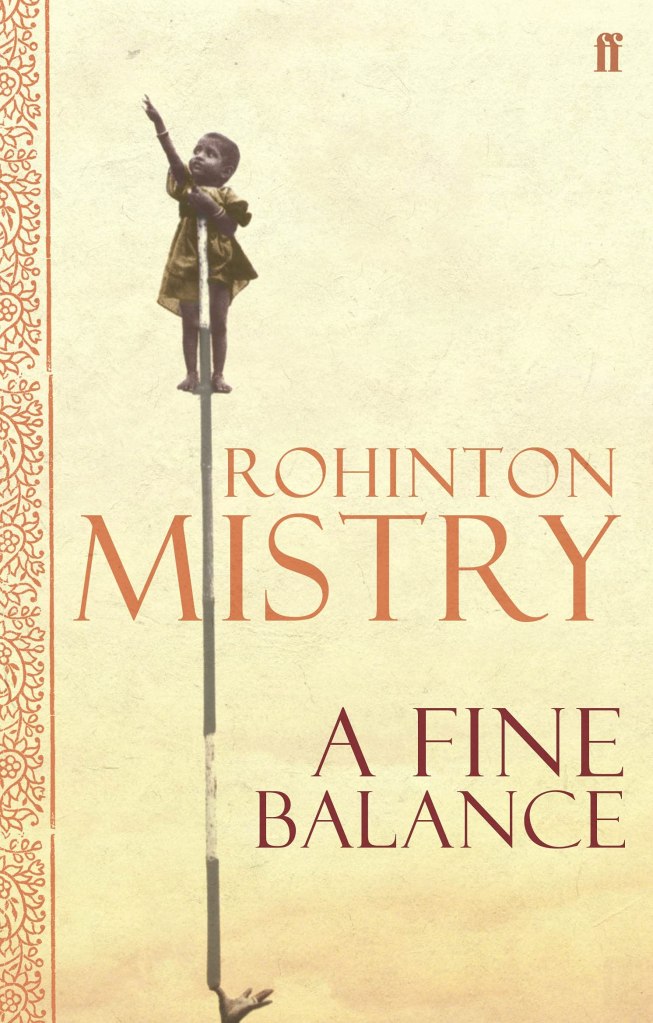
Two extraordinary Indian novels were published in this decade, both of which had a profound effect on me. Vikram Seth’s 1993 novel A Suitable Boy is one of the finest books I have ever read, and, at more than 1,300 pages long, it is also one of the longest ever published. I read it one Christmas when I was particularly miserable and it saved me. In 1995, Rohinton Mistry published A Fine Balance, another very powerful novel about life in the caste system in India.

In the UK, there were a couple of literary landmarks. Helen Fielding’s Bridget Jones’s Diary came out in 1996 – it WAS my life! It spoke for women of my generation, who were told we could have it all and then found we couldn’t really. Then in 1997 came JK Rowling’s Harry Potter and the Philosopher’s Stone and children’s literature would neve be quite the same again.

British-American novelist Tracy Chevalier took the literary world by storm in 1999 with her debut novel Girl with a Pearl Earring, a unique and innovative piece of historical fiction about the story behind Vermeer’s world famous painting. For me, it started a love affair with the Netherlands and with historical fiction for which I am very grateful.

Ian McEwan’s 1997 novel Enduring Love was another favourite. The scene with the hot air balloon remains one of the most arresting in the English language, in my opinion, and I am in awe of McEwan’s ability to create incredible stories out of the day to day.

But for me the book of the decade is AS Byatt’s Possession. Published in 1990, it also won the Booker Prize that year. The novel follows two present-day academics who are researching a possible romance between two previously unconnected Victorian poets. It is a book about academic rivalry and hubris, about lies and deception and is both a detective story and a romance. It is extremely literary whilst also being very accessible. It is a masterwork.

There are so many books I could have chosen from this decade. Reflecting on those years I see that they were turbulent for Her Majesty, and eventful and rich for me too, though rather more mirabilis than horribilis in my case, I am happy to say. At least none of my yachts were decommissioned.

The Platinum Jubilee #4 1980s

And then came the 1980s. It all started quite well for the Royal Family with the wedding of Prince Charles and Lady Diana Spencer in July 1981. I remember the event well and at the time it seemed like the biggest event that had ever happened in my life. The nation was enthralled by Diana Spencer, a fact that would become a problem for the Queen in the years to come.

It was the decade of my teens and much of the music of my youth was pretty dire – I was a fan of Adam and the Ants and Duran Duran! I was also a big fan of Japan and OMD, which was somewhat better. The Smiths and Joy Division came to the fore, but I was not into indie bands until much later. The prevailing culture was of materialism, prizing wealth and selfishness. Margaret Thatcher told us there was no such thing as society. In 1987 I went to university, truly a dream come true. With so many young people going on to higher education today (a very good thing in my view, though I do wish it was cheaper for them), it is easy to forget that in the 1980s this was a privilege gifted to only about 15% of 18 year olds, and the majority of those came from either a privately educated or grammar school background.

Most of my reading in the 1980s was of the classics, either in my preparations for studying an English degree, or during my studies. I did also study American and Irish literature, which was more modern, but I read little from post-war authors. I missed out on a lot!

There were some landmark books published in the 1980s. Margaret Atwood’s The Handmaid’s Tale, came out in 1985. It has always been an iconic novel, but has enjoyed a resurgence in the recent years with the extraordinary television series and the author’s follow-up The Testaments. It is truly frightening to me that some of the horrors envisaged in that novel are materialising before our eyes today.

In the US, Alice Walker was blazing a trail for non-heterosexual women of colour with her novel The Color Purple, published in 1982. It won the Pulitzer Prize in 1983 and was adapted into a film in 1985, by Steven Spielberg and starring Oprah Winfrey. It holds the dubious record for the film receiving the most nominations at the Academy Awards without winning a single Oscar. Hmm. It is hard to overstate the importance and significance of this book.

Magical realism as a literary style was being explored with exceptional applomb. Isabel Allende published her extraordinary debut novel The House of the Spirits in 1982 and Milan Kundera published The Unbearable Lightness of Being, a novel about the Prague Spring in 1968. His books were banned at the time by the communist regime in his native Czechoslovakia.

Of British books published in the 1980s I could choose a number as my book of the decade. An author I admire hugely, Kazuo Ishiguro, born in Japan but brought to the UK by his parents at the age of five years (and now a knight of the realm), published his Booker and Nobel Prize-winning novel The Remains of the Day in 1989. A beautiful book encapsulating perfectly British character and manners with tenderness and empathy.

In 1985, Jeanette Winterson published her groundbreaking semi-autobiographical novel Oranges Are Not the Only Fruit about a teenage girl growing up in northern England in the 1960s in a fanatical religious family and discovering her sexuality.

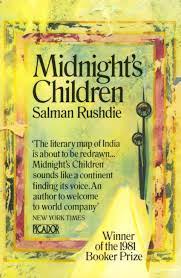
While I love both of these books very much, I don’t think I read either of them in the 1980s. So, my book of the decade is by Salman Rushdie (another knight of the realm, while Winterson is merely a CBE), who is described as an Indian born British-American, so I think it counts in the parameters I have set myself. Midnight’s Children won the Booker Prize in 1981 and was voted the ‘Booker of Bookers’ a few years ago. An awesome novel which was one of the first contemporary novels I read after I graduated in 1990 (the end of the 1980s, strictly speaking!), I remember being blown away by it. It is set at the time of Indian independence in 1947, specifically following the life of Saleem Sinai at the stroke of midnight in the new republic. Children born at that time were said to have been imbued with special powers. It is a spectacular novel, perhaps the finest of the second half of the twentieth century.

The Platinum Jubilee #3 1970s

The 1970s was a turbulent decade in Britain: the era of Empire was over, the economy was in chaos, there was frequent industrial action which resulted in power cuts, shortages of staple foods such as butter, and disruptions to refuse collections. There were a number of terrorist attacks in Northern Ireland and mainland Britain with tragic loss of life. Politics was a mess and the election of Margaret Thatcher in 1979 would be the start of eighteen years of Conservative government. Some parts of the country, for example areas where mines were shut down in the 1980s, would forever be scarred by its effects.

Culturally it was also a very mixed time. There was the nihilism of punk, and in particular The Sex Pistols. There was also the rise of disco with its sense of escapism and hedonism. The Queen commemorated her silver jubilee in 1977, an event I remember well, but which, looking back, seems to be so out of place in the context of the social, economic and political climate. Perhaps one might say the same about the platinum jubilee.

Looking back on the books I have enjoyed from this period I find that there are few noteworthy British choices. But there were some classics coming out of the Americas – Gabriel Garcia Marquez’s One Hundred Years of Solitude was published in 1970, William Styron’s Sophie’s Choice in 1979 and Alex Haley’s Roots in 1976 – it’s extraordinary to me to think this was the first time I became aware of the slave trade. Its adaptation for television in 1977 was a landmark cultural event of the small screen. Toni Morrison published her debut novel The Bluest Eye in 1970 and by the time of her third in 1977, Song of Solomon, she was award winning and critically acclaimed.
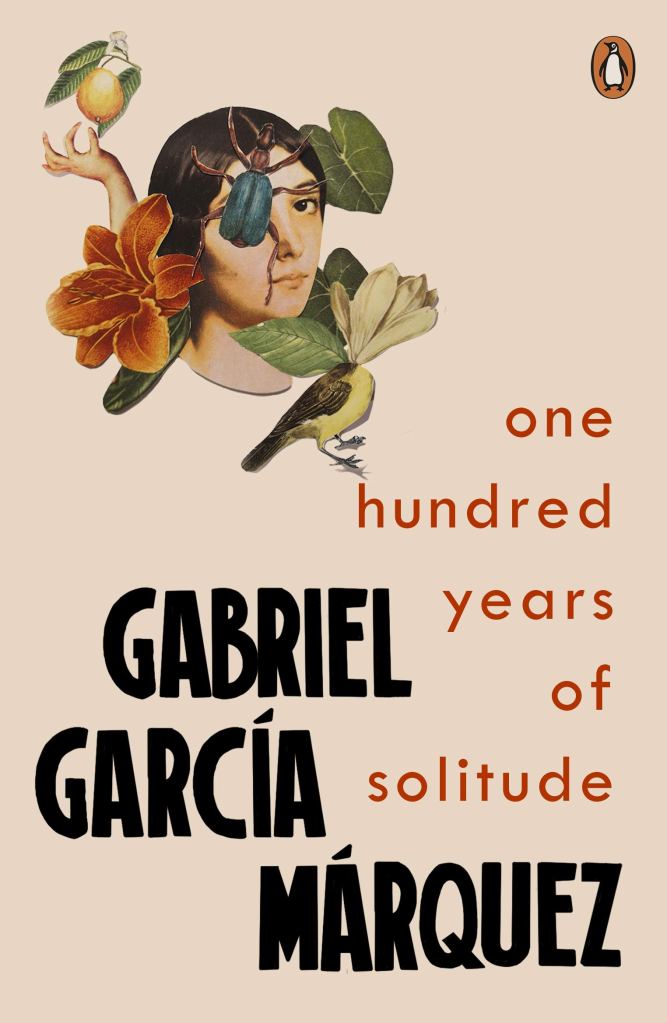
I read none of these amazing books in the 1970s as I was still very young. By the time Margaret Thatcher became Prime Minister (an event greeted with great apprehension in my home) I was 11 years old and I remember thinking that I might potentially be leaving school before she was gone!

My reading material evolved during this decade and some of my favourite books were James Herriot’s stories of life as a vet in North Yorkshire, starting with If Only They Could Talk in 1970. These books made me want to be a vet and I might have become one had someone not told me at a careers fair in the mid-1980s that I should probably pick an alternative career since it was hard to get into university and only people from good schools had a realistic chance… Ah, those were the days!

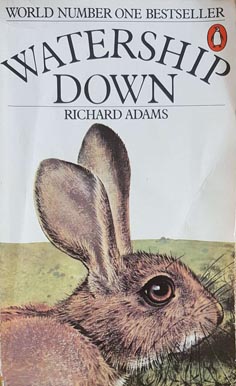
I want to say that feminist icon Angela Carter’s The Bloody Chamber (1979) was the biggest book for me from this decade, but I’m afraid it wasn’t. It’s going to be another white male, and another animal story – Watership Down by Richard Adams, published in 1972. This unique and powerful novel shaped much of my political (with a small ‘p’) thinking, my awareness of environmental issues and of animal rights, as did his other much darker novel The Plague Dogs (1977). I must have read the book around the time the film came out in 1978. It also led me to becoming a big fan of Simon and Garfunkel.

A strange decade indeed and not rich in literary output in Britain.

The Platinum Jubilee #2 1960s

My second post this Platinum Jubilee week and today I am selecting a book from the 1960s. At the start of the decade the monarchy was still largely revered in British society, but the cracks were beginning to show, not least in the decline of the British Empire. In 1961, the Queen welcomed President John F Kennedy and his wife Jackie Kennedy to Buckingham Palace, a visit that had mixed results.

In this decade the pendulum swung completely the other way from the 1950s and it is the decade everyone associates with sexual liberation, a determined assertion of greater freedom from the young and a general breaking down of assumed norms. The first generation born after the second world war came of age in the 1960s and after the austerity and rationing of the 1950s, it is no wonder that people were looking to express themselves more and to live a different kind of life to their parents. It was also a period of great turmoil; the second world war was long past, but the Vietnam War was in full swing and protests against it by the young proved a major international creative force, particularly in popular culture.

There were some interesting literary milestones in this decade. DH Lawrence’s extraordinary sexual novel Lady Chatterley’s Lover was published in the UK for the first time in 1960 (it had been written in the 1920s, but was only published privately in Paris). The publisher, Penguin, was prosecuted under obscene publications legislation and won a landmark victory. If the authorities were seeking to drive the book out of the public’s hands, the trial served only to draw attention to it and the book became a huge seller. Although the ban was sought ostensibly on the basis of its obscene content, one suspects that the Establishment also feared the ramifications of suggesting that there could be sexual relations across class boundaries. The long-established traditions and social norms were under threat.
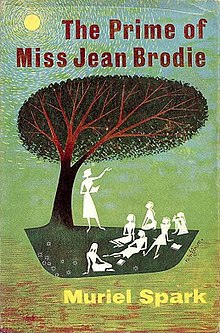
The decline of an old way of life is foretold in another landmark British novel published in this decade, Muriel Spark’s The Prime of Miss Jean Brodie (1961), about an unconventional teacher at an Edinburgh girls’ school. This book is frequently cited as one of the finest in English and catapulted its author to worldwide literary fame.

The 1960s also saw the rise of one of the greatest children’s writers of all time, Roald Dahl. In this decade he published James and the Giant Peach (1961), Charlie and Chocolate Factory (1964) and The Magic Finger (1966). Dahl changed children’s fiction forever – compare his anarchic books to those of Enid Blyton! Although I have to confess that I rather love both authors! Despite Dahl’s literary brilliance, his legacy is not without controversy.

For me, the book of the decade is Anthony Burgess’s A Clockwork Orange which was published in 1962. This book is a profound and disturbing novel, a bleak dystopian vision of a society where youth culture is dominated by unrestrained violence and anarchy and where the Establishment response is the most oppressive force and cruelty, as bad as the violence it was trying to suppress. Burgess turns language upside down, reflecting the fact that social order is upside down.
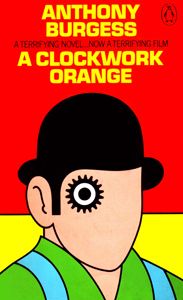
Born in the year of the Russian revolution (1917) in a suburb of Manchester. Burgess lived through interesting times, serving in the second world war, working as a teacher, translator and linguist, and was a composer as well as a writer. Artists of his kind come along rarely, and books like A Clockwork Orange come along rarely. It’s publication was surely one of the literary milestones of the twentieth century. Though I doubt Her Majesty has read it.

The Platinum Jubilee

I’ve never been a royalist. If anything, growing up in a working-class environment, my family was rather dismissive of everything the British royal family represents – aristocracy, privilege, unearned wealth, inequality, unelected power. My views have not shifted much, especially in the light of the various royal scandals of recent years. However, it is hard not to be impressed by Queen Elizabeth II; she represents a totally different era and mindset, and her forthcoming platinum jubilee really is an extraordinary moment in history. When you stand her alongside many of today’s politicians and world leaders, she is even more impressive. We will not see her like again.

To mark this momentous occasion, I intend to do what many others in the blogging world, the media and social media are doing, and picking my favourite books of the last 70 years, one from each decade of the Queen’s reign. I am going to stick to British books, which I know means it risks being a very white male list, but then perhaps that reflects the predominant literary forces in play throughout this time.

Let’s start with the 1950s then.

As a period in modern history I am fascinated by the 1950s. I’m not hugely knowledgeable about popular music, but this was the era of early rock and roll. The second world war was over and in Britain rationing was coming to an end and whilst there was still a great deal of hardship, there was I think a new energy in popular culture that would be fully unleashed in the subsequent decade.

On the flip-side, Britain was still a very buttoned-up country, very deferential, and popular culture reflected, not the truth of how society was, but a version that social and political leaders wanted it to be. Books that have looked back on this era have also shown that British society was deeply flawed, such as Andrea Levy’s Small Island.

Some of the best books I read in my teenage years (probably the books that made me determined to read English literature at university) were written in this decade: John Steinbeck’s East of Eden (I was obsessed with Steinbeck!), Truman Capote’s Breakfast at Tiffany’s and JD Salinger’s Catcher in the Rye and, one of my all-time favourites, Charlotte’s Web by EB White. They are all American novels, however, so I cannot pick them.

Instead, my pick is not just one book, but a collection – The Chronicles of Narnia by CS Lewis, although if pressed I would have to choose The Lion, The Witch and The Wardrobe. Lewis is one of my literary heroes, not just because his books are powerful wonderful stories, but also because of his great scholarship, output and influence. I remember at primary school, we were able to choose and buy Puffin books – we’d get a newsletter once a month or so and I would save up my pocket money for these little treasures. I got The Horse and His Boy because I liked horses, having no idea it was part of one of the all-time great literary series! I went on the read the whole series in order (in true child book geek style!) and loved them. At university I learned more of what they were really about and was in even greater awe. I love watching television and film adaptations and I love books that draw on Narnia (like Philip Pulman’s His Dark Materials trilogy and, of course, Harry Potter). The Chronicles of Narnia represent a true literary milestone.

Look out for my 1960s pick tomorrow!

And there it was…my 400th post!

I got very into my #KeepKidsReading week last week and my 400th post completely passed me by! It has been a busy time, with one thing and another, not least my two daughters starting their GCSE and A level exams, so I put out my posts last week without paying attention to stats or anything like that, not that I do much anyway! It wasn’t until early this week, when I looked back at my list of blogs so I could re-share, that I noticed I had clocked up 402.

So, I’m feeling pretty pleased with myself.

I have been blogging for almost six years so I’m not exactly prolific (I make that a little under six posts a month), but I’m okay with that. I prefer quality over quantity and I know that if I tried to chuck a blog out every day, I would put less effort into each one. Also, as a bookblogger, each post usually takes a fair bit of research, so the writing part is usually the least time-consuming.

I also don’t have thousands of followers so I don’t have any great insights for any novice bloggers out there. Nor do I monetise my blog in any way – this was always a passion project for me, not a job, and that gives me freedoms.

If I had to summarise what I heave learned from six years and 400 posts-worth of blogging, it would probably be this:

  • Blog because you enjoy it, not because you think you’re going to get anything out of it.
  • Read other people’s blogs – you can’t expect anyone to return the favour otherwise and you never know what you might learn.
  • Communicate with people – the blogging community, particularly fellow bloggers writing about similar things (your ‘tribe’) are amazing. Get to know them.
  • Write from the heart, be your authentic self, not what you think you should be.
  • Keep a meticulous log of your posts – maybe this sounds corny, but I have a huge spreadsheet which enables me to plan ahead, keep track of my reading (without which I would not have a blog) and keep track of events in the book world (prizes, etc).
  • Engage with social media if you want to, but you don’t have to. I used to share a lot on the various platforms, but now I do very little, and I don’t think it has made one iota of difference. Except that I am a lot happier when I’m NOT on social media. It depends on your subject area and target audience of course, but for me, the blogging community is a far more honest and rewarding one.

I’d be interested in your thoughts about blogging, whether you’re a newbie or an old-hand, bookblogger or something else. I’m always open to learning more.

#KeepKidsReading – Book review #3 – “Heartstopper” by Alice Oseman


My final book review of the week and this one really is about that quest to KEEP kids reading, at the age when their attention spans are shortening and the amount of time they spare for reading is at its minimum, ie the middle teen years. So, I’m finishing with a young author who is a sensation at the moment, Alice Oseman. At the age of just 27 she is already an award-winner for her multiple novels, novellas and graphic novels and her Heartstopper series has been adapted for television by Netflix. The four volumes of graphic novels are all currently in the top six of the WH Smith children’s book charts.

The Heartstopper series is about the relationship between two kids at a boys’ school, Charlie Spring (year 10) and Nick Nelson (year 11). Charlie is ‘out’ as gay but he is in a difficult situation with another boy, Ben, who is abusive and controlling and who masquerades as straight. Charlie meets Nick when the school experiments with ‘vertical form times’, which include kids from multiple year groups, and immediately develops a crush. Nick is lovely, but he is sporty and popular, everything Charlie is not. Everyone assumes Nick is straight – he does not even realise himself that he might not be. But as his friendship with Charlie develops their is a burgeoning attraction between the two. And, yes, dear reader, they kiss! This is where volume 1, which I read, ends, but the television series covers all four volumes.

Graphic novels, or books which explore unconventional formats (Nicola Yoon’s Everything Everything is another YA book I love for this reason) are perfect for kids who get bored or switch off when faced with pages and pages of words. This book can be read quickly, or you can savour its warm and expressive illustrations, so it will also appeal to avid readers as well, especially with the TV link.

Highly recommended for teenage reluctant readers, and everyone else besides!

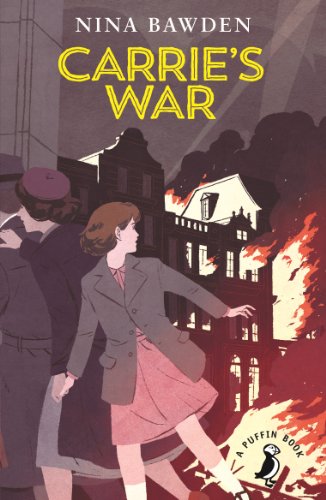
#KeepKidsReading – Book review #2 “Carrie’s War” by Nina Bawden

It’s my #KeepKidsReading week, which means I get to write about some wonderful children’s literature. On Wednesday I posted about a new author, Benjamin Dean, and his first novel, published last year, called Me, My Dad and the End of the Rainbow. Today, it’s time for something altogether different, one of the classics of children’s fiction, Carrie’s War by Nina Bawden. First published in 1974, the author drew on her experiences as an evacuee during the Second World War when she was sent to Wales.

The book opens with the central character, Carrie, returning to Wales where she and her brother Nick were evacuated during the war. She was twelve and he was ten years old at the time. Carrie, now widowed, has brought her four children to the small town, and tells them about her time there, about Mr Evans, the parsimonious shopkeeper, and his sister, Aunty Lou, with whom Carrie and Nick were sent to live. Carrie’s friend Albert was sent to the manor house outside of town called Druid’s Bottom, which was owned by Mr and Miss Evans’s sister, the elderly and poorly Mrs Gotobed, who has been estranged from her siblings since she married ‘up’ many years previously.

Carrie and Nick visit Albert and find Druid’s Bottom a much more inviting place than their own accommodation. Mrs Gotobed’s housekeeper is Hepzibah Green, who also cares for Mister Johnny, a simpleton who has limited language and intellectual skills, but a high level of intuition and empathy. Hepzibah tells the children all sorts of stories about Druid’s Bottom, including the legend of the skull of the slave boy. Apparently, when he died, the slave put a spell on the house, that if his skull ever left it, disaster would strike the estate and all those living there. Mr Evans believes Hepzibah to be a witch who is only after his sister’s money.

When Mrs Gotobed dies, Mr Evans, as her only living male relative, will inherit the property and intends to turn out Hepzibah and Mister Johnny. Albert believes the old lady would not have wanted this and that she must have left a will to that effect. When none is found, Albert tells Carrie he believes Mr Evans stole and destroyed it, just to keep his sister’s old housekeeper from living there.

Carrie and Nick are called back to live with their mother, who has moved to Glasgow where she is an ambulance driver. On their last night at Druid’s Bottom, Carrie tosses the slave boy’s skull into the horse pond, wishing ill upon the house, which now belongs to Mr Evans, as she is so angry with him. As the children leave on the train the next morning, they pass the old house, only to see it in flames. She had not expected the spell the be enacted so fast. Carrie has believed her whole life that she is responsible for the fire and that all the residents (Albert, Hepzibah and Mister Johnny) must have perished. She is so sure of her guilt that she never bothers to find out what actually happened.

Early one morning on their visit to Wales, Carrie’s children walk to Druid’s Bottom before their mother wakes up. The house remains derelict, but they find the now very old Hepzibah and Mister Johnny living happily in a converted barn in the grounds. Hepzibah recounts what really happened in the years since Carrie and Nick left and it was not at all like Carrie feared. She laughs at their hints that she is some sort of witch, as their mother had believed (in the nicest possible sense), giving rational explanations for all the seemingly mysterious occurrences, but the ending of the book is ambiguous on this point. It’s fascinating that modern books for children rarely leave this element of doubt, this unanswered question. Are today’s children really less tolerant of ambiguity?

Like Me, My Dad and the End of the Rainbow this is a ‘middle-grade’ book, and the central character is twelve years old. But, as you would expect from a book written almost fifty years ago, there is a kind of innocence that today’s children may find off-putting. The language and the structure are fairly simple and the setting not too difficult to imagine, so this book would probably suit the 8–10 year-old modern reader. Its themes are perhaps more complex than you might expect though, and it is multi-layered. On the one hand, a younger child could make a very simple reading – there is history of a certain aspect of the war they will be familiar with (I think my son read this in primary school as part of their learning about the war), there are some superficially obvious goodies and baddies, and the story is straightforward. For a more sophisticated reader, however, there is a more nuanced interpretation of the characters – about what underlies Mr Evans’s sadness and therefore his behaviour and attitudes as an adult, about the power of legends, and about the experiences of relatively young children thrust into situations beyond their control which were sometimes frightening.

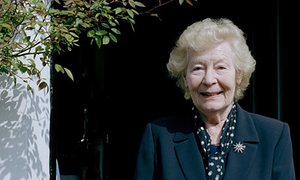
Nina Bawden’s first novel was actually an adult crime novel, but she then turned her hand to children’s fiction and was hugely successful. Carrie’s War was her third book for children and arguably her best-known. Her other books include The Peppermint Pig and The Robbers.

She was awarded a CBE in 1995 and died in 2012.

This book deserves a place on every child’s bookshelf.