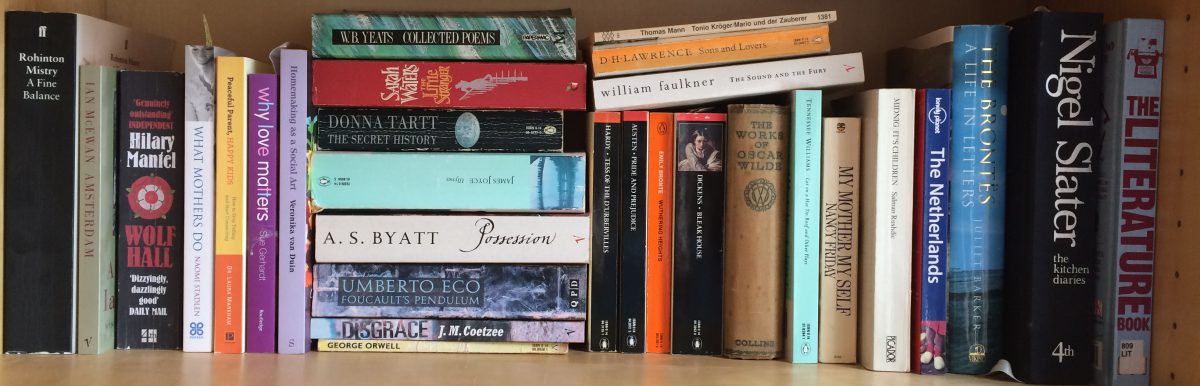
This book was given to me by a family member as a Secret Santa gift last year. I have been dying to read it for ages but it seemed to keeping slipping down the TBR list (does that happen to you too?) I determined to read it on my summer holiday, although in many ways it was rather a strange choice; not your traditional beach read! The subject matter is child sex trafficking and the author, a well-known actor in Ireland, came up with the idea after she became involved with a campaign to raise awareness of the issue in 2012.
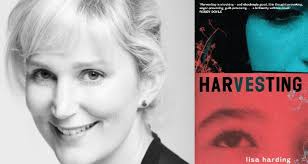
The book tells the parallel stories of two young girls, Nico and Sammy. Nico is from Moldova. She lives in a deprived rural setting, her family is poor and her father and two of her brothers are cruel and misogynistic. They have become brutalised by their poverty and by the systemic corruption and organised crime in their society. Nico’s mother is oppressed and powerless to stop the terrible fate that awaits her daughter. Nico has another brother, Luca, who disagrees with the family’s plans for her and wants to protect her, but he also cannot stand in their way. Lacking money for even a basic standard of living, Nico’s father sells his daughter for marriage to an older man, as soon as she starts her periods (so she is around 13). As far as the prevailing culture is concerned, she is a woman now and the family see no reason why they should continue to support her, so they seek to profit from her. Nico’s father believes that Petre, Nico’s future ‘husband’, will give Nico a good life in London and buy her all the things her family have been unable to give her. The two men are colluding in a mutual self-deception, one assumes because this is the only way that Nico’s father can justify selling his child in this way.
Nico is effectively kidnapped and it becomes very quickly apparent that she along with a number of other girls, is to be prepared for life as a prostitute. Nico is particularly valuable because she is so young and a virgin. The girls are drugged, abused, beaten and then trafficked across European borders until eventually they reach Ireland. Petre’s girlfriend Magda is the only person able to protect Nico even a little from the worst excesses of the gangsters and she is only able to do so on the basis that Nico is worth more if they treat her less cruelly than if she becomes ill through mistreatment. It is the only fragment of protection that Nico has.
The other main protagonist in the book is Sammy, a young Irish girl, of around 16, who represents a different side of sex slavery. She falls into a life of prostitution almost by accident. Problems at home (her mother is an alcoholic and her father can only cope by separating himself) and at school lead to her leaving home and falling into the hands of adults who exploit and abuse her. Sammy presents a more challenging character, firstly because, at a superficial level, her problems seem to be of her own making; she is rebellious, uncooperative and undisciplined. She puts herself in dangerous situations which have been interpreted as attention-seeking acts. She is a child out of control and has sacrificed the sympathy of those who might (should!) help her, such as the school authorities. What Harding does skilfully, though, is show us that, despite the fact that she is sassy and street-wise, Sammy is a child and no less deserving of protection than the more ‘innocent’ Nico.
What is also particularly chilling about Sammy’s story is that in a modern democratic western society, with liberal traditions, social services and proper policies and procedures in place to protect young people, even a young girl from a middle-class background can fall through the cracks and, worse, some of those who should be protecting her, are part of the problem.
The two girls eventually meet when they find themselves in the same suburban brothel and their fates become intertwined. This is not a book for the faint-hearted and some readers may find they are unable to bear the sex scenes. It is hard-hitting. Some aspects of it are almost unbelievable; as a frequent visitor to Ireland for many years now I find it difficult to accept that there is a huge underground network providing children for an illicit sex trade in a city I know and love. But the author has clearly researched the story extensively, and fact-checked with people who work and campaign in this field. This lends the book a shocking credibility. And we know from child sexual abuse cases of recent years that the worst perpetrators are often hiding in plain sight, and that the collective disbelief that people could act in such ways can blind us to the realities. This book will definitely shake you out of any complacency.
I recommend this book – it is hard to say it’s enjoyable, more that it is an important book, that is compelling, thought-provoking and necessarily shocking. It is well-written with strong characters.
Can you recommend any similarly hard-hitting but important books?
If you have enjoyed this post, do follow my blog and I owuld love for us to connect on social media.

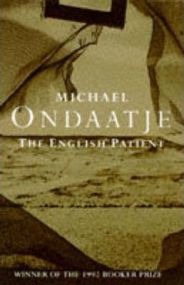 This shortlist was announced in May and the list was then put up for a public vote. My personal favourite of these was Wolf Hall. In 1983, the celebrate the 25th anniversary of the prize a “Booker of Bookers” contest was set up and three judges chose Salman Rushdie’s Midnight’s Children, which I probably agree with. It was good to see the vote open to the public this time rather than a small group of the literati, and the winner was
  In some ways, there is not a great deal to say about Death on the Nile that you couldn’t say about any other Christie novel, I suspect: there is a situation, in this case, a Nile cruise, being undertaken by 10-15 characters, all for different reasons. Conflicts and tensions are set up amongst the different characters, mysterious aspects of their personality or behaviour are noted, one of their number dies and then there is a process of detection to work out whodunnit. I did largely guess the correct outcome in the case of this novel, although I didn’t with Orient Express.
 I managed to read


 We are staying in Cancale, a smallish coastal town in Northern Brittany, arriving here on the overnight ferry from Cork to Roscoff, which was very pleasant indeed – good, reasonably-priced food, decent cabins and plenty to do.
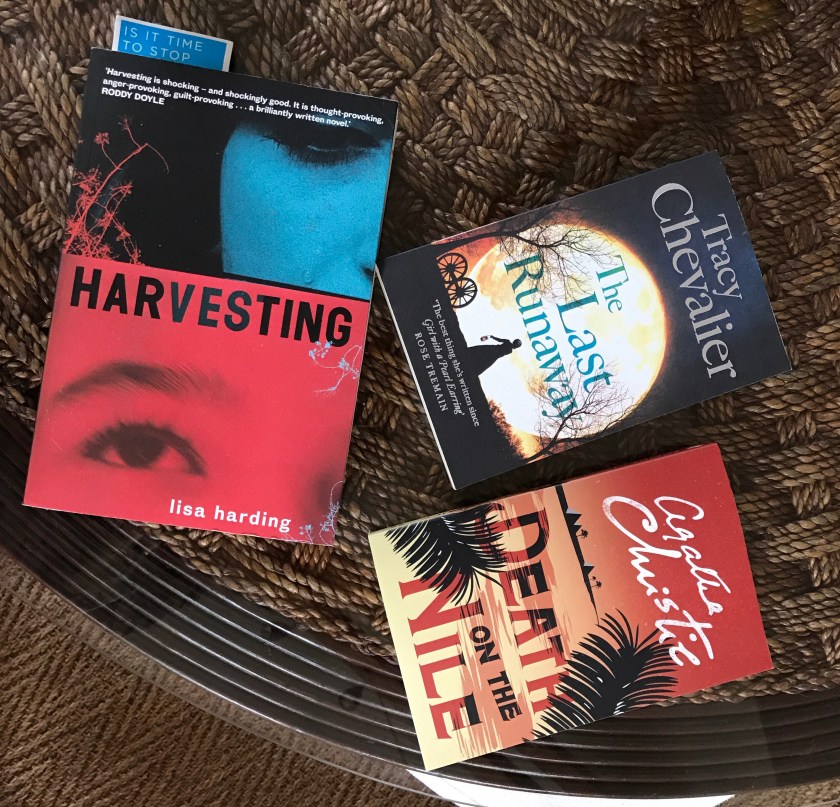
 I’ve been unusually restrained with my holiday library this year, just the three books: Harvesting by Lisa Harding, a harrowing account of child prostitution, child trafficking, abuse and neglect, Death on the Nile, by Agatha Christie, the August choice for my Facebook Reading Challenge, and The Last Runaway by Tracy Chevalier, one of my book club’s summer reading titles.
 The plot is not complicated: ‘Swede’ Levov is a third generation Jewish immigrant whose grandfather came to America from Europe. He was a glovemaker and set up a business in Newark, New Jersey which became highly successful. Swede’s father continued the business, which peaked in the 1950s and 1960s when glove-wearing for respectable women was the norm and most would have several pairs. (There is more information on gloves in this book than you will ever need to know, but it’s fascinating!) Swede inherited the business from his father, while his more wayward brother became a cardiac surgeon.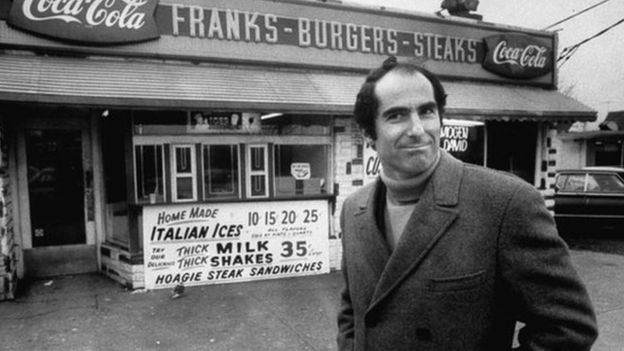
 The novel begins with a dramatic event: four children are travelling in a light aircraft across the Amazon jungle, which then crashes. The pilot dies (this is quite gently done, it is not frightening), which means the four children, five year-old Max, his older sister Lila, both Brazilian, and Con and Fred, two Brits, aged about 11-12, find themselves alone. Each of the children has their own back-story and their characters are carefully-drawn: Fred is resourceful, a natural leader who the others look to, but he is also a troubled soul, his mother is dead and he longs for the approval of his remote and uptight father. I should add at this point that the story is set, I would guess, in the 1950s. Con is a feisty and assertive girl, who is also often angry and finding herself in conflict or impatient with the others. She comes across as something of a spoiled brat, but she too is hiding a deeper insecurity. Her secret will be revealed much later. Lila and Max are siblings. Max is very young, vulnerable and afraid. Lila is fiercely protective of him, acts as a mother-figure in the absence of their own family, and has the maturity to bring the group together at times of great stress.
 Tom Hazard has an extremely rare condition called anageria which means he ages extremely slowly. He is one of a tiny group of people who live for many hundreds of years. Tom was born in London in 1581 and mixed with the likes of Shakespeare and Marlowe in his youth, worked for Captain Cook in the 1700s and was a jazz pianist in Paris in the 1920s where he met, among others, F Scott Fitzgerald and watched Josephine Baker dance. What an incredibly lucky guy, you might think, but his condition is a curse and does not go unnoticed. He is haunted by the fact that his mother was condemned as a witch in the small village in which they lived, because the locals suspected dark forces at play when her teenage son appeared never to age. In his ‘late teens’ he meets and falls in love with Rose, and they have a child, Marion. Rose is the love of Tom’s life and although they move around, trying to avoid staying in one place too long and attracting attention, he realises that his existence presents a danger to Rose and the child. He has no choice but to leave her. The last time Tom sees Rose is when she is in her 50s, on her death bed with the plague, while he still looks like the young man she fell in love with many years earlier.


