The Reading Agency launches its annual Summer Reading Challenge for 4-11 year olds this Saturday. It is managed via local libraries and its aim is to encourage children to read six books during the long school holidays. You can take them along to your local library, they collect a poster and borrow a couple of books. Then, each time they complete and return a book, they get a sticker. If they complete the six-book challenge they can get a medal at the end, particularly good for younger children (although ‘totes embarrassing’ for my youngest who is at the upper end of the age range!).
It’s a fantastic scheme and I wholeheartedly recommend it. I’ve done it for years with my children and, if nothing else, it’s a cheap trip out! It doesn’t have to be a fiction book; it can be non-fiction, a joke book, general knowledge, anything, so even suits those who are less willing readers.
My children are 15, 12 and 10 now, so my days of doing the Summer Reading Challenge, sadly, are numbered. However, I don’t know about you, but I am finding the challenge of getting my older ones to continue reading much more troublesome than when they were little. My teenager, for example, was read to daily practically from birth to double figures. He devoured Harry Potter, which was at its peak of popularity when he was the right age, devouring three of the longer volumes during a fortnight’s holiday one year. We did all the ‘right’ things…but I don’t think he has finished a non-school book this past year. Some of it is a reaction against the demands of school, I suspect, and some of it, possibly, a mini-rebellion against his book-pushing mother (and if that’s as far as his teen rebellion extends, I’ll take that, thanks!). Another factor might be lack of time, or just a preference for other forms of relaxation like TV, sport, computer games and hanging out with pals. I just hope that the groundwork done in the early years pays off in the future.
If you are having difficulty getting your children to read, or just want to support them more, I recommend Alison David’s Help Your Child Love Reading – perhaps you could make it your own summer reading challenge! I found it in my local library.
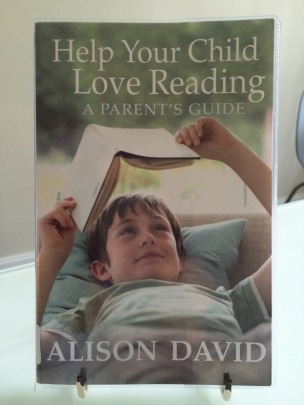
It’s a very useful little read for parents who wish to understand how they can both instil and maintain good reading habits in their children. And it has the advantage of being short and very accessible! The author’s context is the assault on our children’s lives from technology and media, and how they are gradually displacing books in our kids’ bedrooms. She is a believer in books and wants to give us some tools to ensure books keep their place in the digital environment.
Alison is not against technology, in fact she talks about how it can in fact enrich the reading experience for many children, adding opportunities for further online exploration, or providing, for some children, perhaps a more satisfying medium for exploring a book. She recommends boundaries for technology and screen-time, but is non-judgmental, giving advice and tips on how parents can manage digital distractions in their children’s lives.
The book is broken down into chapters by age group, so you can if you want just read the sections appropriate to your children, and she also does not shy away from the gender issue. The author takes this on and encourages parents to think a little more laterally about what is ‘good’ for them to read. I confess that I have before now been rather dismissive of my youngest daughter’s desire to buy a Minecraft handbook in preference to something I might suggest, such as a Michael Morpurgo or, heaven forfend, a classic from my own childhood like ‘Little Women’ or ‘Black Beauty’! Alison says we should embrace and take an interest in what they want to read. At least it gets them reading something, and if we can have a warm engagement with our kids about their reading choices, perhaps they will be open to our suggestions as well.
The teens chapter was particularly interesting. It can be relatively easy with young ones, in my view; they love to be read to at bedtime, you generally choose the books for them, reading is part of their daily life at school, and the choice of picture and early reader books now is quite incredible. I think we are in a golden age of children’s literature. True, there is also some fantastic YA fiction out there too, but I think teens can become a bit more picky about what they read. It is also the age where, as the author says, they can withdraw from their parents both physically and emotionally. They also have a bit more of their own money, usually, with which they are far more likely to buy an itunes card or a pizza than a book!
There are some great ideas in this chapter, such as modelling reading behaviours, being seen to read for pleasure, leaving newspapers and magazines lying around, and crucially, managing their screen-time. In other words, you exercise the influence more indirectly at this time, and you have to be more subtle in your approach. Discuss with them what they are reading, open a dialogue, and avoid coercing them to read (yup, tried bribery too!). What I found reassuring about this chapter is that the author invites parents of teenagers not to panic: “The best situation you can be in is to arrive at these years with the foundations of a good reading habit”; if you did the groundwork when they were little hang on in there, they will probably come back to reading even if they have a rebellious stage.
I would recommend this book to parents if you feel you’d like some advice or support on keeping your kids reading. A very easy read.

 Emmeline Pankhurst was, of course, born in Manchester, and her family home at 62 Nelson St, Chorlton on Medlock, now houses the Pankhurst Centre, which is open to the public on Thursdays. I plan to take the girls there during the school holidays, while the memories are still fresh. (Another coincidence: Emmeline Pankhurst’s birthday was last Friday.)

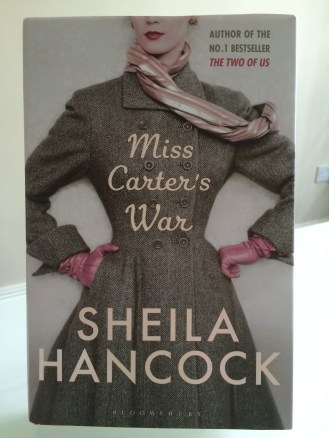 I had very mixed feelings reading Miss Carter’s War. I love Sheila Hancock: she published this, her first novel, at the age of 81 (which encourages me greatly!) and still has the energy to speak out for what she believes in – many of you will no doubt have seen her speak in the TV debates on the EU Referendum where she gave one of the most eloquent and passionate arguments for Remain that I saw throughout the entire campaign, and was one of the few people I saw truly engaging an audience. At 83 she is magnificent! However, I’m afraid I was disappointed with the book and had to work hard to keep going with it.


 With all the talk of “Independence” this week (don’t worry, I’m not going THERE) it will have escaped the notice of most people that it is Independent Bookshop Week (18-25 June).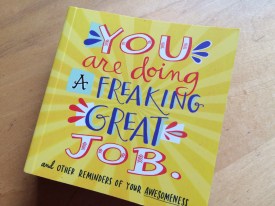
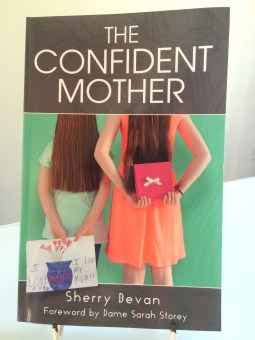
 Julia's books