As a mother of three, I find it is always a challenge to get back into the swing of things after a school holiday. I am self-employed and work from home so I tend to take the holidays ‘off’ (insofar as one is ever ‘off’ as a parent!), but it always seems to take me a week or so to restore the term-time order of things and get back into my rhythm, including my reading rhythm. The dynamic at home has also been affected by the fact that my eldest is deep in GCSE revision and now on study leave, wanting feeding during the day and everything!


We took a short family holiday to the Netherlands over Easter, a country we know well and have visited annually for many years now. We spend our time either in Amsterdam (a fab city for kids, by the way) or in the far south of the country in Zeeland, a fascinating area for which I have a very deep affection. I’m a bit reluctant to plug it because it’s authentic and unspoilt, but we love the cycling, the beaches, the space, the calm, the beautiful and historic Dutch and Belgian towns and the warm welcome we receive each time we go there.
Despite my love of Holland, its art and architecture and its people, I am ashamed to say that I know very little about its literature, so on this trip I decided to take with me a book called In the Dutch Mountains by Cees Nooteboom. He is one of the giants of not only the Dutch but also the wider European literary tradition. I picked up this book at a secondhand stall in a market in Dublin, so this particular copy is well-travelled!
Since starting this blog almost a year ago my reading habits have changed; I now find I am reading much more newly-published work than I have ever done before, which is great, but that has been at the expense of my reading of the classics or other contemporary fiction from recent years which I have wanted to read. There really are only so many hours in a day, after all! So, it felt lovely to be picking up a novel that was first published in 1984 and is widely considered to be a modern classic.
 What is so immediately intriguing about the title of the novel, of course, is that Holland is very, very flat. But In the Dutch Mountains imagines a world where the Netherlands extends much further south of its modern borders to northern Spain and the Pyrenees (hence the Dutch mountains). The narrator is himself a Spaniard, a civil servant who not only relates the story, but also philosophises on the processes of writing and story-telling: a story within a story. The main characters in the tale are Kai and Lucia, a slightly other-worldly circus couple, remarkable for their physical perfection, who are relieved of their jobs (because times have moved on and audience tastes have changed) and find themsleves travelling south to look for work. Kai is kidnapped and Lucia sets out on a journey to find him, accompanied by an old woman she meets on the way who agrees to drive her to find her lover.
The book is a vivid re-telling and reinterpretation of an iconic European fairy-tale, The Ice Queen, and explores the boundaries between myth and reality, but as a 21st century reader the strongest themes that came out for me were that of migration (for work), and what it means to be one nationality or another. The author contrasts the orderly, tidy north (what we now know as Holland) and the more chaotic, but freer south. He himself is Dutch but his narrator is part of the Spanish establishment (an inspector of roads), who happens to be a part-time novelist and philosopher. Alfonso, the narrator, is writing in the quiet of a school, empty of children who are on their summer holiday, a middle-aged adult sitting at a diminutive desk and chair. Thus the novel sets up a whole series of contradictions which invite us to challenge our assumptions and expectations.
This is a short novel, but one which merits reading slowly and deeply, and I will probably re-read it at some point. It won the 1993 European Prize for Literature. It was a curious read and I can’t exactly say I loved it, but I did find it fascinating, and it wasn’t at all what I expected. I think it’s always good to push your reading boundaries and as I read this book I certainly found myself drawn into a very different literary tradition than the one I have become used to in recent years. As a citizen of a nation that has expressed its intention to leave the European Union I feel strongly that European literature has a great deal to offer us in terms of enhancing our understanding of and empathy with our near neighbours, and I intend to read more of it in the future.
What European novels have you read? Do you think they are different in style and tone to English literature?
If you have enjoyed reading this blog you can subscribe to follow me by clicking on the link below or to the right, depending on your device.
 I’m off on a short holiday to the Netherlands so I’m planning to take some reading with me, of course, and have decided on another book from my
 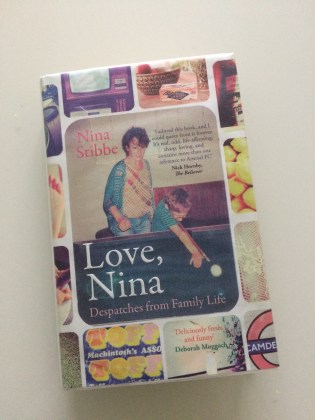 Nina is twenty when we meet her in the early 1980s. She lives with Mary-Kay Wilmers, editor of the London Review of Books, and her two young sons, Sam and Will, to whom she is a nanny. They live at 55 Gloucester Crescent NW1, an area that was also home to other literary types, among them Alan Bennett and Claire Tomalin, who also make appearances in the book, particularly ‘AB’ who is a great friend of ‘MK’.
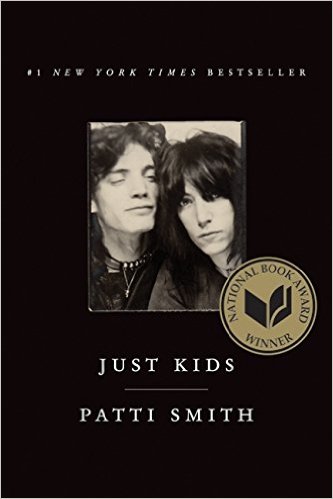 I’ve been an admirer of Patti Smith for a number of years now. I’m a bit young to have been a fan of hers when she first broke onto the music scene in the mid-1970s. I became aware of her much later when I picked up a sale copy of her debut album Horses. I was also aware of Robert Mapplethorpe, the late artist-photographer who was her lover and then close friend when they were both very young. Mapplethorpe died of AIDS in 1989 and it must have been in the 1990s that I saw an exhibition of his work in London (I had an interest in photography at the time). Later on again I learned about the connection between the two and how Patti had been, if you like, Mapplethorpe’s ‘muse’ when he was first discovering his art.
 Regular visitors to this blog will know that I am passionate about children’s literature. My children are part of the generation that grew up with Harry Potter. JK Rowling is one of my heroes, for a number of reasons, but primarily for all that she has done to get (and keep) children reading, particularly those who might otherwise not have done so. Harry Potter wasn’t the first literary character to bring wizarding and magic into children’s literary lives, however. The Snow Spider was first published 30 years ago and was a multiple award winner. It was originally published as a trilogy, but this anniversary volume has been issued as a stand-alone. I chose it for the book club I run at my daughter’s primary school.
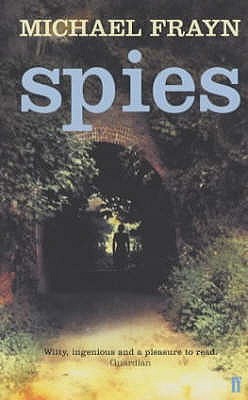 With Audible you get your first book free, so I downloaded Spies by Michael Frayn for my son, who is studying it at GCSE. I decided to listen to it myself as I had read the book when it first came out in 2002 and enjoyed it very much. It is a fantastic story and my listening experience was further enhanced by Martin Jarvis’s brilliant reading. The story is narrated by Stephen Wheatley, who, as an elderly man, revisits the suburban London cul-de-sac he lived in as a child during the Second World War. His neighbour and best friend at the time was Keith Hayward and together they spy on the households in the street and the comings and goings of the various residents. They grow increasingly suspicious about Keith’s mother’s frequent outings from the house and concoct an elaborate fantasy that she is in fact a German spy.
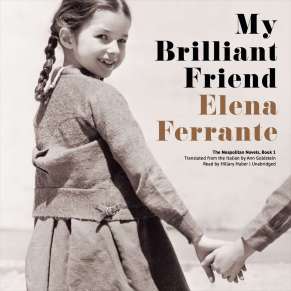 The first book I selected for myself was a long one (My Brilliant Friend by Elena Ferrante) so it took me a long time to get through (as a result I built up a few monthly credits). This book is the first in a series about two young women, Lila and Elena (I’m not sure if the book is in any sense autobiographical – the author is something of an enigma), and their intense relationship in their formative teenage years. Set in Naples in the 1950s it has the most remarkable sense of time and place and how life is changing for the young people of the city in terms of the shifting social structures and norms.


 Time Travelling with a Hamster was the first choice of the book club, and what a joy it is. At the heart of the plot is a tragic event – a boy who loses his father at the age of eight – but the author handles this so deftly, acknowledging the huge emotional impact it will no doubt have had on such a young child, but also deploying humour and intelligence to help child readers deal with such a challenging topic. I think it shows a great respect on the part of the author for the maturity and strength of his young readership.

 This was one of the books I took on holiday last year, but which I didn’t manage to read. I finally got around to it when we read it in our Book Club in December. I’d been really excited about it; I love Meera Syal (Goodness Gracious Me, The Kumars at No. 42), she’s such a talent and a fantastic role model. She has written two previous novels, both published in the 1990s, neither of which I have read.
 Julia's books