Audiobook review – “The Dog of the North” by Elizabeth McKenzie

My book club chose this book for our March read after examining the longlist for this year’s Women’s Prize for Fiction. We love this particular competition and always try and tackle one or two books on the shortlist – we are getting ahead of ourselves this year! I am ashamed to say that I have still not read last year’s winner, The Book of Form and Emptiness by Ruth Ozeki (we chose others from the shortlist), but that will have to wait for another time.

Books from literary competitions are not always considered particularly accessible, but this novel feels like a real ‘reader’s book’, something the Women’s Prize does particularly well. It is  darkly comic, wonderfully written and with a quirky storyline that will lift you without being patronising, and which does not opt for the easy or predictable plot solutions. 

Penny Rush is a thirty-something who has reached a difficult stage in her life. She has just separated from her husband Sherman, who seems to have experienced a premature mid-life crisis and taken up with another woman. Penny quits her job as a dental nurse, vowing to have a fresh start, and has just a few hundred dollars to her name when a series of family crises beset her. Penny is a lonely soul at this stage. Her beloved mother and stepfather disappeared some years earlier while touring in the Australian outback. Their disappearance has never been explained and their deaths remain unconfirmed. Penny’s sister Margaret now lives in Australia with her football player husband and two children. When Penny’s grandparents suddenly need help to deal with their own problems, only Penny is available to help.

Penny’s eccentric grandmother, former medical doctor (though who retains her license to practice), known as Pincer, gets into trouble with the police when human remains are found in her home. Penny teams up with Pincer’s accountant and friend Burt in an effort to help her. They conspire to clean up Pincer’s chaotic, and dangerously dirty home while she is out and it is the staff of the cleaning company Penny engages who find the bones. Burt is himself an eccentric, though it turns out, also a very sick one. He drives a highly customised and very ancient van which he calls ‘the dog of the north’. When Burt is admitted to hospital, he lends Penny ‘the dog’ which she needs to deal with the many issues that are piling up at her door.

Penny’s grandfather, Arlo, Pincer’s ex-husband, lives with his ghastly second wife Doris, but their marriage is bitter and tumultuous. As Arlo is ageing and his need for support is growing, Doris tells Penny in no uncertain terms that she wants her to get him out of the house and into a retirement facility. With Arlo’s agreement she does this. Penny and Arlo share a deep grief about the disappearance of Penny’s parents. Once out of Doris’s clutches, Arlo decides that he wants to make one final effort to discover what happened to his daughter and son-in-law, and he persuades her to accompany him to Australia. Penny becomes very sick on the trip, having contracted a dangerous infection when Pincer, angered by what she saw as Penny and Burt’s interference, stabbed her with a brooch.

The above is just a snapshot of the events of the book but I hope it gives a flavour of the journey that the novel takes you on. There are also many offshoots to the main storyline: when Burt is sick, his brother Dale visits him from Santa Barbara. Dale represents the calm and stable presence in the chaos of the situation in which Penny finds herself. She is drawn to him, despite his not being as colourful as many of the people she is used to and their relationship evolves slowly over the course of the novel. In the background there is also Gaspard, Penny’s biological father whom she was forced to remain in contact with throughout her childhood, but a man she now tries to avoid.

The novel is about a life that is constantly being buffeted between chaos and order. Penny wants order and calm (what her lost parents represent) but she somehow finds herself being pulled back into disorder, precariousness and unpredictability. Will she ever be able to assert herself and find the peace that she craves?

I loved this book. The characters are all brilliantly realised and the events, though extreme, are entirely believable. When you start the novel you enter a world where weird things, bad luck and chance encounters just happen. It is well-written and the pace is good. I listened to this on audio and the reading by Katherine Littrell was excellent.

Highly recommended.

Book review – “The Bell Jar” by Sylvia Plath

I honestly don’t know why I have never read The Bell Jar. I read quite a bit of Sylvia Plath’s poetry when I was a teenager having been exposed to some of her work at school. I have also read quite a bit of Ted Hughes’s work over the years too, so I’m slightly puzzled as to why it has never occurred to me to pick up Plath’s only, but still iconic novel. My university-age daughter read it a while ago and gave me a copy for Christmas.

The Bell Jar was published under a pseudonym in January 1963, just a few weeks before Plath took her own life at the age of thirty. She had already separated from Hughes by this time (following an extra-marital affair that he had) and her two children were very young. Plath had had a history of depression, however, and had made several attempts at suicide.

The Bell Jar is considered largely autobiographical. Its central character and narrator is Esther Greenwood whom we first meet in New York City, on an internship at a magazine. Esther is both fragile and an intellectual and although she is studying under a scholarship awarded in the name of a woman poet, she receives several academic and professional disappointments.

Set in the 1950s, it is clear that little is expected in the way of career success for Esther. Indeed, she is encouraged to consider such ideas as stuff and nonsense and to simply submit to the inevitable – marriage, having children and being a housewife. She is in a relationship with a boy from home, Buddy Willard, a paragon of mediocrity, who is studying to become a doctor. When Buddy falls ill with tuberculosis and spends months in a sanatorium, Esther visits him and begins to realise that a future with Buddy is her idea of hell. Furthermore, when he confesses to her that he has had a sexual liaison, but expects her to be ‘pure’ when they marry, it sets off an internal rage at the different ways men and women are treated. She feels oppressed and imprisoned.

This is a catalyst for Esther’s further deterioration until finally she attempts suicide. Much of the second half of the book is an account of the brutal psychiatric treatment she undergoes, including electroconvulsive therapy (which Plath herself endured) and being detained in a mental health facility.

The Bell Jar is a painfully intimate book. Plath draws you into her character’s state of mind and all the other characters are seen entirely through her eyes. The writing is both breathtaking and heartbreaking. Reading her prose descriptions it is clear that she is first and foremost a poet (although she is said to have been working on a second novel at the time of her death).

Cobwebs touched my face with the softness of moths. Wrapping my black coat round me like my own sweet shadow, I unscrewed the bottle of pills and started taking them swiftly, between gulps of water, one by one by one…..The silence drew off, baring the pebbles and shells and all the tatty wreckage of my life. Then, at the rim of vision, it gathered itself, and in one sweeping tide, rushed me to sleep.

Esther Greenwood’s account of her overdose in Chapter 13

Plath herself described writing The Bell Jar as taking a collection of episodes from her life and throwing them down on paper. Plath’s mother sought to ban publication of book and it was not available in America until 1971. Plath remains a feminist icon because of her loathing of the status afforded to women of her generation and the opportunities denied women like her. It is also widely believed that Plath was forced to set her own creative ambitions aside in favour of her husband’s.

Despite their being separated at the time of her death, Hughes arranged for Plath to be buried in the churchyard of Thomas a Beckett church in Heptonstall, West Yorkshire, an area of personal significance to Hughes.

Audiobook review – “Black Cake” by Charmaine Wilkerson

Byron and Benny are siblings who have grown apart in recent years. Brought together again, in an uncomfortable and fragile truce following the death of their mother, they are forced to confront family secrets that will shatter their worlds, but which will have the effect of healing their rift and enabling them to build their own challenging lives back again.

Eleanor Bennett knew she was dying of cancer at the age of 70. She was a widow, having lost her husband Bert, the love of her life, a few years earlier. She was close to her son, Byron, but her daughter Benny, a talented but troubled young woman, had drifted out of her life, leaving their California home and moving to New York after dropping out of college. Eleanor remained faithful to both her children, however, and her final act was an attempt to reunite her children after her death. Eleanor bakes a ‘black cake’, a kind of rich fruit cake, a recipe she was famous for and which she inherited from her ‘island’ (Jamaican) culture. Her intention is that her children should share the cake ‘when the time is right’. 

With the help of her lawyer friend, Charles Match, Eleanor also makes a lengthy recording which she instructs should be played to them both in person. In the recording she gives a full account of her life before the children were born. Eleanor was born ‘on the island’ as Coventina ‘Covey’ Lyncook. Her father, Johnny Lyncook, was an immigrant from China and was never fully accepted. Her mother left them when Covey was a girl, unable any longer to cope with her husband’s drinking and gambling. Covey was a talented swimmer and had ambitions to go to college, perhaps also to England, desperate to escape what she sees as a bleak future at home. Her decision is sealed when, in settlement of a gambling debt, Covey’s father agrees that at 17 she should marry local gangster, the much older ‘Little Man’ Henry. He dies suddenly at their wedding reception (foul play is to blame, but the guilty party is not clear) and Covey takes the opportunity to flee. 

After swimming to a place of safety she manages to escape the island altogether and get passage to England where she trains as a nurse. She hopes to meet up with the love of her life, Gibbs, who left for England some months earlier, but gives up hope after a few years. The turning point in Covey’s life comes when she is involved in a train crash while travelling with her friend Ellie (Eleanor). Covey is dragged unconscious from the wreckage, along with Ellie’s handbag, but her friend dies. At the hospital it is assumed from the identification in the bag that Covey is Eleanor, and so Covey reinvents herself, feeling freed at last from her fugitive status. 

Eleanor’s life takes many twists and turns after this. Byron and Benny listen to their mother’s story in bursts and with each new revelation about their mother’s life, her past, and as each secret is revealed they are forced to confront all that they thought they knew about her. Both siblings re-evaluate their own lives and purpose, with a new understanding about what drove their parents’ values and the truths behind the decisions they made for their family.

For a debut novel this book is an extraordinary achievement and is a New York Times bestseller. It is a great story and while there were one or two events that slightly stretched credulity, it held together well. The main characters are all well-developed and I liked the way the author used Eleanor’s life story to enable her children to make the changes they needed to make in their lives. It is a story about their ‘growing up’ as much as anything, and sometimes this can only happen after a parent is gone. The Black Cake of the title is a powerful metaphor for the importance of food to cultural identity, how it binds us together both at the level of family and of society. It is also clear that in this book food means love. If I have any reservation about the book it is that I think it could have been better if it was shorter. I listened to the audiobook, which was thirteen hours in length. I felt there was a point about three quarters of the way through where it could have ended very powerfully, and it would not have mattered to me that some of the minor questions were left unresolved – that is often what happens at the end of a parent’s life; you don’t get all the answers. But the last quarter of the book sought to tie up every loose end in ways that did not feel necessary to me and which felt a bit contrived at times. 

Overall, though, a great read and I recommend it.

Book review – “Mary and Her Seven Devils” by Peter Morris

As a bookblogger I am frequently approached by self-published authors to promote their work. I feel I should review more than I actually do – as an aspiring author myself, I know only too well how it is almost impossible to hook an agent and then to actually succeed in getting published via the mainstream route. Self-publishing and e-books have taken off in recent years, making the dream of publication a reality for so many authors. Readership depends largely on word of mouth, however, or the size of their budget, so it is by no means an easy route. 

I was attracted by the sound of Peter Morris’s Mary and Her Seven Devils. This is Peter’s sixth novel (two written in collaboration with another author). The blurb reads as follows:

Mary, a bright, very pretty and yet serious girl, by dint of her courage, common-sense and honesty, manages to navigate the delusions and the warped thinking of many of her contemporaries, to emerge as a good-natured and right-minded young woman who knows her own mind and who can tell good from bad.

Tested by right and wrong relationships and the colourful though dubious vicissitudes of the film world, but strengthened by her shrewd university flat-mate and her loving if naive parents, our pilgrim wends her way along paths where there is no moral consensus, to end up happily as a straight-thinking yet quietly sparkling heroine.

The story is a good one and the concept of the central character, Mary Fleet, on a journey in search of her true self, works well. Mary encounters a number of challenging events, ranging from the unwelcome sexual advances of a film producer from whom she secures work, being stalked by a corrupt social worker, and falling in love with a young man who is emotionally fragile. The plot is best read as a kind of quest, almost in the classical sense (and there are classical, theological and philosophical references here) – some of the events stretch credulity, but read as part of Mary’s odyssey, disbelief can be set to one side. 

I liked Mary, and her college friend Sophie. Both characters were well-developed and their motivations rang true. Some of the secondary characters were less well-developed, but, again, read more as ‘caricatures’ (devils?) they can just about work. The author has a disclaimer at the start of the book, that the depictions of social workers are in no way a comment on social services in Tyneside or anywhere else. It does seem as if the author has a bit of ‘beef’ with the social services sector though, as they are all pretty grotesque!

If I have any criticism of the book, it is one that applies generally, in  my view, to work that is self-published, and that is the want of a good editor. The book is set in 2016-19, but it felt much more like the 1980s to me, even down to the descriptions of clothing. As a mother of young people in this age group, I have a strong personal knowledge, and the students in this book felt more like me (university 1987-90) than my kids! I think a strong editorial input might have picked this up. There are only occasional references to the dates, however, so I was able to imagine it was the ‘80s!

I wish Peter Morris every success and hope this book finds its audience. It is available from Brown Dog Books. https://www.browndogbooks.uk/products/mary-and-her-seven-devils-peter-morris

Re-reading the classics – Audiobook review “Cranford” by Elizabeth Gaskell

I listen to more and more audiobooks these days. Life never seems to get any less busy and if I only reviewed the books I actually read in the traditional format, I think I might only manage a couple a month! C’est la vie. It’s interesting, though, and gives you a different perspective on an author’s work.

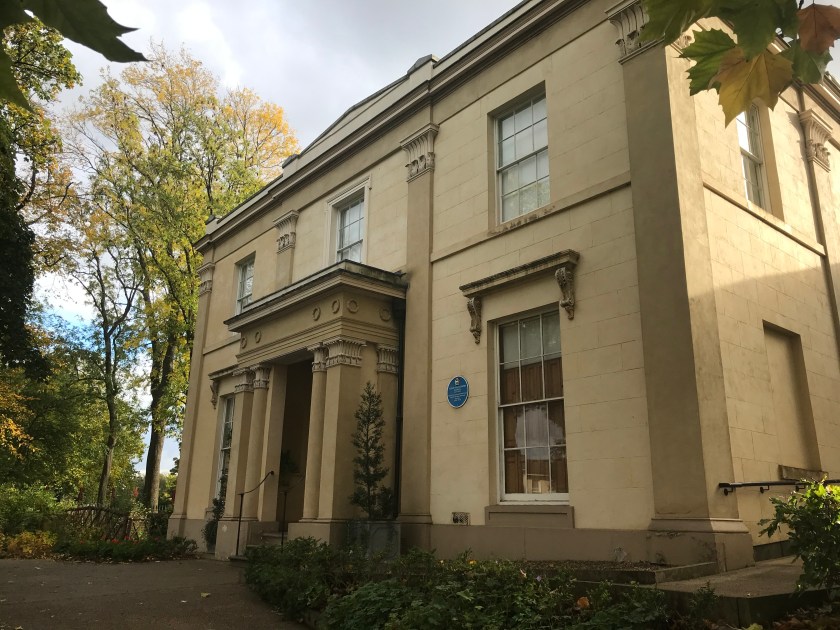
Elizabeth Gaskell’s home in Plymouth Grove, Manchester, where she lived from 1850-65

I have posted here many times about Elizabeth Gaskell – I have reviewed North and South and am a regular visitor to her home in central Manchester, a beautiful and calm space in one of the busiest areas of the city, close to the Manchester Royal Infirmary and the universities. Gaskell also has a strong association with the Cheshire town of Knutsord. She lived there with her aunt after her parents died. It is where she met and married Unitarian minister William Gaskell, and where she is buried in the modest churchyard of the Brook Street Unitarian Chapel, close to the railway station. Knutsford is a short drive from my home and I am a frequent visitor to the magnificent Tatton Park, the entrance to which is on the periphery of the town. 

I was delighted to find that an audio version of Gaskell’s second novel Cranford (which was first published in serial form between 1851-53) was available as a freebie in my audiobook subscription. The reading was by Prunella Scales, an actress I love and whose voice we seldom hear these days as she has been living with dementia for some years now. 

I had never read Cranford, thinking of it as one of Gaskell’s less serious works, and neither have I ever watched the much-acclaimed television series which includes most of Britain’s acting royalty, including several Dames and Sirs! Listening to the audio, however, was a joy. With its wit, irony and observation of character I think it is up there with Jane Austen’s best work. 

Set in the fictional market town of Cranford (which is so recognisable as Knutsford that it is remarkable to think that almost two hundred years have passed), it is narrated by Mary Smith, a regular visitor to the town as the guest of the ageing Misses Deborah and Matty Jenkyns.  Mary Smith writes detailed accounts of events in the town, mainly insofar as they affect the female community, the widows and spinsters. There is a powerful social hierarchy here, as well as a strict code of behaviour and manners. This is a country town, but the industrial revolution hums in the background – Drumble (aka Manchester), lies not too many miles away. 

Change is coming to the community, suggested by a death on the railroad, by the happy marriage between the widowed Lady Glenmire and the local surgeon Dr Hoggins (considered by some to be an affront to the social order), and by the collapse of a bank which leaves Miss Matty virtually penniless. All these events unsettle the established order in Cranford. But what the episodes reveal is the tender humanity beneath all the appearance (and indeed the inhumanity of some).

Cranford is a treasure of a book. Written by Gaskell mainly to generate income, it shows the professional writer at work, honing her craft, exploring her creativity and drawing on ‘what she knew’ in the pursuit of her art. Great fun but also poignant and truthful.

Highly recommended.

2023 Reading Not-Challenge review – “Fludd” by Hilary Mantel

A few weeks ago, I posted on here about not setting myself anything too challenging in the way of a reading challenge this year. Challenges can be a two-edged sword – they can certainly push you to achieve things you might not have done otherwise (or in the case of reading challenges, to read things you might once have overlooked), but they can also make you feel like a terrible failure – reading challenges are of course, uniquely time-consuming, and sometimes life just gets in the way.

Hence, this year I’m doing a reading ‘not-challenge’ – reading a book that has been sitting around on my shelves for a while but without being too hard on myself if I don’t get through very many. Such books, lying unread and perhaps unloved, either deserves some attention or should be passed on. The first book that I selected for 2023, Fludd, the second novel by the late great Hilary Mantel, was first published in 1989 and has definitely been languishing for a while.

It is a slim volume, more a novella, and set in northern England in the 1950s, not the territory we have become used to from this author. Mantel was born in a village in Derbyshire, of course, and the setting of the novel, the fictional town on Fetherhoughton, undoubtedly bears some resemblance to that part of the country at that time, though it is very much a caricature. The other striking thing about this novel is its comedy; this is very clever satire that, far from being about the bleakness of a northern moorland town and its inhabitants, as you might at first assume, is an expose of what Mantel sees as religious hypocrisy. 

The novel opens with Father Angwin, the priest at Fetherhoughton, being told by the bishop that he is to be sent a young curate, Father Fludd. It seems the bishop thinks things need shaking up a bit and that some fresh blood will bring renewed energy and dynamism to the parish. He also wants the gloomy statues dotted about St Thomas Aquinas church to be removed, describing them as idolatry, doing nothing to improve the minds of the parishioners. The statues come to represent a kind of resistance – Father Angwin will at first go along with the bishop’s wishes. (He more or less admits to Father Fludd that he has lost his faith, and is simply going along with his role because he hasn’t anything better to do.) The statues are removed, buried in fact, but in an act of defiance, Angwin will later ‘resurrect’ them! This is just one of the events occurring in the second half of the book, which will symbolically challenge the authority of the church in the town. In doing so, Mantel breathes life into the characters, into the town, as if it has somehow broken free of the yoke of the church.

Father Fludd is a mysterious presence. Angwin finds himself warming to him in ways that he did not expect, and on long evenings over whisky and firelight, he opens up to him. Fludd seems to have this effect on people. The local school is run by nuns at the convent, a comical bunch, led by the vicious Mother Perpetua. One of her charges is a young Irish girl, Sister Philomena, practically forced into the Order by her mother. Accounts of the food, the clothing, and the regime at the convent make it feel more like a prison than a place of faith and worship. Fludd will have an effect here too, which will feel dangerous to the church authorities but which will in fact be personally liberating.

Who is Fludd? This question is left hanging at the end of the book, Mantel is not making it that easy for us. There is a note at the beginning of the book telling us that the real Fludd was in fact a sixteenth century physician, scholar and alchemist, and that is perhaps the key to understanding the character she has created here; that he has brought about change in form through the application of mysterious powers. It is about finding magic, where it seemed there was only darkness. 

The author’s wit, her creativity and her eye for the comic are on display here in ways that are not as present in her epic historical fiction, for which she is much better known. In a sense, this novel feels playful, it’s a dark comedy and shows her lighter side. It is also confirmation, if we needed any, of the breadth of her talent, alas, gone far too soon.

So, I am delighted with this first pick of mine and am only sorry that it took me so long to get around to reading this book. Highly recommended.


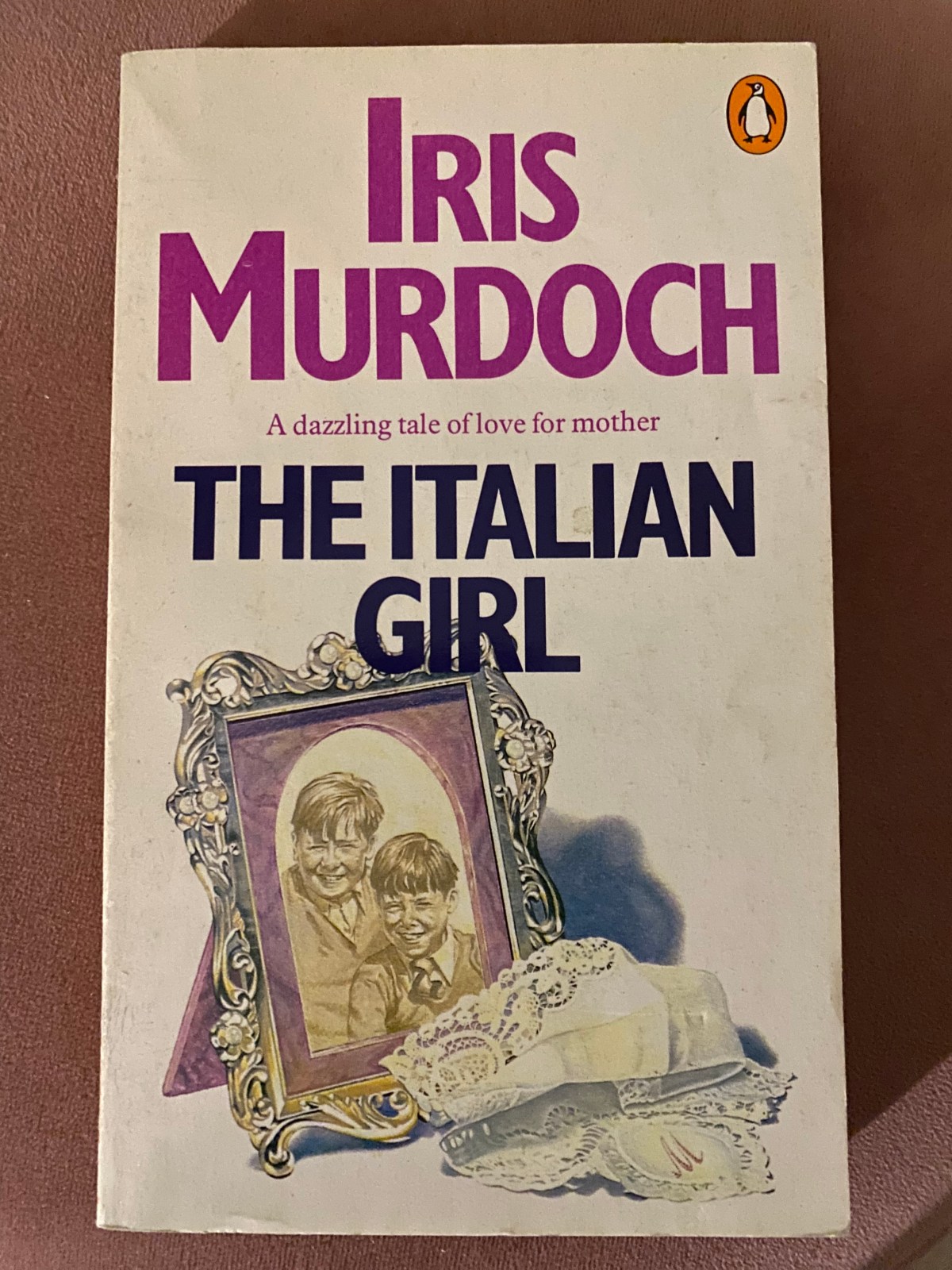
My second ‘off the shelf’ pick was Susanna Bailey’s Raven Winter which I reviewed on here last week as part of my #KeepKidsReading week. So, I’m on to my third pick and it’s still only mid-March. Yay! I’ve discovered I have a copy of Iris Murdoch’s The Italian Girl which I think I might have acquired secondhand sometime in the 1990s!

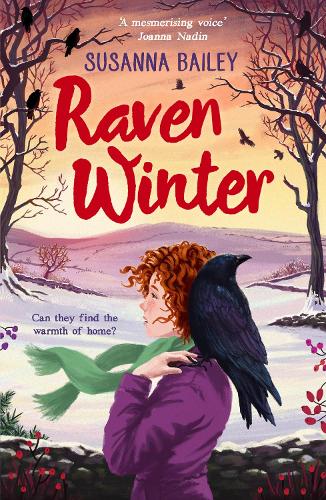
#KeepKidsReading Book Review – “Raven Winter” by Susanna Bailey

Having another #KeepKidsReading week on my blog has given me an ‘excuse’ to read a book which has been on my TBR pile for some time. It also fits perfectly with my reading challenge this year, which is to pick a long-ago purchased but so far neglected book off my bulging shelves. The first book of the year that I chose was Hilary Mantel’s early novella Fludd, a review of which I’ll post next week, but I wanted to tell you this week about Raven Winter. I picked this up when it was first published early last year, but somehow have never got to it. I’m so glad I did! 

The main character and narrator is Billie a twelve or thirteen year-old girl who lives with her ‘Mam’ and Mam’s boyfriend, Daniel in a flat somewhere in north east England. Billie moved to the flat relatively recently, having had to leave their previous home after her father went to prison for fraud against his employer. Billie has also started at a new school and is finding it difficult to make friends. People seem to know about her family situation and she has experienced some bullying. 

The other perhaps somewhat darker cloud in Billie’s life is Daniel, who is a dark and brooding presence throughout the book. He is a dominant and controlling character and there are strong suggestions that his intimidation of Billie’s mother is both physical and psychological. Billie cannot understand why her mother not only tolerates Daniel, but actually wants Billie to like him, welcome him as a substitute father. Billie misses her own father terribly; they were very close and shared a passion for nature and particularly birds. It is clear that there are secrets, that Billie has not been told the full story of her father’s ongoing absence, why they have lost contact with him, have not visited him for many months, and, now that his three year sentence has come to an end, why they are not reunited as a family.

Billie wants to run away. She sets out to do this one day, fleeing to a wild woodland area close to her home, Tanglewood, which her mother has warned her to stay away from. There, she finds an injured young raven and decides to take it home to nurse it back to health. Her relationship with the raven reminds of her father and brings her comfort. 

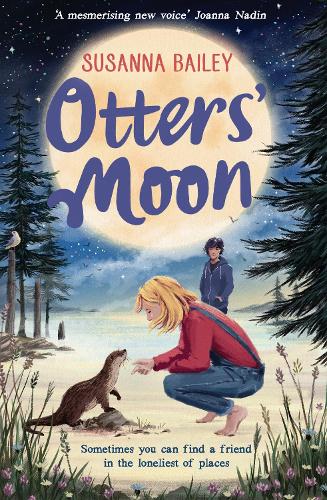
Raven Winter  is Susanna Bailey’s third book exploring the therapeutic relationship between animals and children who are facing challenging circumstances. Her first novel Snow Foal dealt was about a child going into foster care, and her second Otter’s Moon deals with divorce and relocation. Bailey clearly draws on her real-life experiences in the field of social work for her subjects. Raven Winter does suggest domestic abuse and a parent who is absent due to being in jail – tough topics – but I think it is done sensitively and gently. It is ‘middle-grade’ fiction after all, for the 8-12 age group. The bigger theme of the book in my view though is how children can find comfort in nature, how non-judgmental animals can help a child who feels alone, and how caring for someone or something outside of themselves, can be cathartic.

Bailey creates a lovely engaging character in Billie and the book is written very much from her point of view. To that extent I think it will encourage empathy in young readers. I also liked the way that the author ties up the ending. Even a few pages from the end it is not clear how things will turn out, so it will keep children interested. All the loose ends are tied up, but not in a schmaltzy, happily ever after way, rather in a realistic way that bears greater resemblance to the complexities of real life. It does end with hope, however, and that is the main thing needed in these sorts of books when they are aimed at this age group.

Recommended, and if Bailey’s other books are this good, they will provide ample material for children who enjoy this one. 

Book review – “Four Thousand Weeks” by Oliver Burkeman

I always enjoyed reading Oliver Burkeman’s columns in the Saturday supplement of The Guardian, but then two or three years ago he announced that he was going to stop doing them. Reading this book, one assumes that he had a bit of a revelation and that is what he is sharing with us in this his third non-fiction book. 

Burkeman opens by telling us that when asked to guess how long the average life is, most people, when told not to think too long or hard about it, come up with numbers such as 200,000 weeks, or longer. When people are then invited to calculate the number of weeks in a long life of around 80 years (if you’re lucky), most are quite shocked. Burkeman’s central point is that this is an absurdly, insultingly short amount of time, given the capacity of the human brain for ambition and the desire for happiness and fulfilment. As technology has enabled us to do more with our lives (we no longer have to spend time growing our own food, we can travel much further and faster and more cheaply than even our grandparents’ generation and we are living longer than ever) we have tried to cram ever more in, in the belief that this is the signifier of an objectively ‘good’ life. 

Burkeman describes himself as a time management geek and insists that he has tried every method and read more than most about how to squeeze even more into his busy life, to expand his list of goals and ambitions and to try and achieve more. He claims that not only do most of these methods fail at first contact with reality, but that they are not making us any happier either, quite the contrary.

Within the first few pages of the book, you realise that you have in fact been cheated. You are not going to find the one true time management method that is finally going to “work”. What you get is a long essay on why it is much healthier and more productive to embrace the fact that we do not actually spend very much time on this earth and that rather than trying to squeeze more in, we should be focusing on quality over quantity. So, it’s a book about learning to choose differently. When we understand what our purpose really is, what truly gives us joy, we can prioritise those things rather than the long list of more prosaic and ultimately less satisfying goals that we give ourselves. It can be so hard to let things go, of course – what if you want to be a great parent, a great cook AND a great painter. Well, I’m afraid Burkeman thinks we can’t do it all and we have to choose. But in choosing we will become better at the things we truly want.

When I became a mother in the early 2000s, there was a lot of literature about on the topic of ‘having it all’ – a fulfilling career, adorable high-achieving children, a loving partner, a stunning home, and a gym membership. I quickly realised that if that was a possibility, then I was a failure. I still feel at times that I did fail; I gave up my career on the birth of my second child because I hated sub-contracting my children’s care, I could not do everything to the best of my ability, oh and it made no economic sense. Reading this book brought some of those thoughts back to me and at times I felt vindicated. On the other hand, as a woman in my fifties now, well over half way through my four thousand weeks if that is to be my gift, it was also quite a sobering read. But perhaps also a timely one. Now my family is almost grown up it is time to shift my priorities once again and focus on what my real goals are. I don’t have time to visit every country, read every book or learn every skill that I’d like to. That is just a fact. And since the love of my family and my friends is actually the most important thing in my life it sharpens the mind. Time to choose and choose wisely. 

Highly recommended, but not for the faint-hearted!

Audiobook review – “The Sound of Laughter” by Peter Kay

Peter Kay comes from a strong northern comic tradition and is considered one of our finest comic actors and stand-up comedians today. In  my book club recently we decided we needed something light and funny, and perhaps also it was time for a memoir or autobiography, so Peter Kay fitted the bill. The first volume of his autobiography became the highest and fastest-selling autobiography of all-time. I think it has only just been knocked off that top spot by Prince Harry’s Spare. Which is disappointing.

Peter Kay’s success is entirely deserved. Hailing from a modest background in Bolton, he was brought up a Catholic (his mother was from Northern Ireland) and attended a primary school where he was taught mainly by nuns. Apparently, Peter Kay still lives in the area and even after many years at the very top of his game and with phenomenal successes to his name he comes across as grounded, modest and without affectation.

The Sound of Laughter recounts Peter’s childhood, teenage years and early life working in various low-wage jobs before finally finding success when he wins a northern comedy competition (beating the favourite and fellow comic Johnny Vegas, whom he clearly admires). Peter’s early life was ‘ordinary’ in every sense of the word, and yet it is a sign of his genius in a way, that he has mined this seemingly inauspicious material and dug up comedy gold which still serves him well today. Whether Kay is talking about the nuns at his school (whom he gives such names as ‘Sister Sledge’, ‘Sister Act’ and ‘Sister Matic’), his driving lessons and various driving instructors, his many jobs, (which included working in a petrol station, a branch of Netto, a cash and carry and a bingo hall), or his beloved family, his eye for every minute comic detail is laugh-out loud funny. I listened to this on audio, narrated by Kay, himself (who else could have done it!) and there is a wealth of ‘bonus material’ – he simply cannot help himself going off at tangents, throwing in an anecdote. I got through much of it in a couple of long car journeys and goodness knows what fellow motorists must have thought if they spotted me crying with laughter!

What is striking about Kay is that he in no way conforms to the ‘tortured comic genius’ trope that we recognise in the likes of Robin Williams or Tony Hancock, nor complex or controversial like Billy Connolly, Peter Sellers or Eddie Izzard. He just seems like a straight-up regular guy who you can imagine living next door to. And this is his USP.

At a time when young people are under so much pressure to achieve and when momentous decisions come thick and fast, Kay is also a shining example of how you do not need to go to the best school, the best university, or have outstanding qualifications to succeed. In his case, being true to oneself is a far more valuable commodity, as are hard graft, humility and self-respect.

Kay published a second volume of his autobiography in 2010, called Saturday Night Peter, which I will be downloading on audio. I hope it will be just as funny as the first volume – I’ll report back. He also said in an interview in 2021 that he was working on a third volume. As he is currently working on a months-long sell-out tour of the UK we wait with bated breath.

Highly recommended.

Audiobook review – “The Bread the Devil Knead” by Lisa Allen-Agostini

The Bread the Devil Knead is Lisa Allen-Agostini’s third novel (she has previously published YA fiction as well as a collection of poetry) and it was shortlisted for the Women’s Prize for Fiction in 2022. It is both powerful and a page-turner with a gripping plot as well as an engaging, authentic and complex central character who is also the main narrator.

Alethea Lopez is 40 years old, the manager of a clothing shop in Port of Spain, Trinidad. She is stylish and sexy. Her partner Leo is a musician who was once in a popular band. Alethea is also having an affair with her boss, the owner of the shop. But beneath her confident exterior Alethea conceals some dark secrets. The superficial aura of calm she has created around herself begins to crumble when a woman is gunned down outside the shop by a jealous lover. Alethea is shaken. A curious police officer drives her home and notices the bruises on her face. We learn from the outset that Alethea’s relationship with Leo is an abusive and violent one, perhaps that is why she looks for love with her boss, although that relationship is also abusive in its own way. 

The police officer’s curiosity is dangerous for Alethea; Leo reacts in a way that is designed to ensure that she will always be afraid of the consequences of revealing to anyone what goes on inside their home. And yet Leo has a powerful hold over Alethea that is more than just the constant threat of violence – she seems drawn to him, needs his desire for her, and his love, no matter how twisted and unhealthy it seems to the reader.

Alethea also has a brother, Colin, who is a preacher. They are recently reunited after years apart. Alethea narrates her story but there are also flashbacks to her childhood: she grew up in a single parent family. Her mother (also violently abusive to her) told her that she was the product of a brief affair she had with a Venezuelan, a man it is clear she will never meet. (Alethea has the additional social disadvantage of being lighter-skinned than most and of having a Hispanic surname). Colin joined their family when he was a toddler, having been brought by Alethea’s uncle to be cared for by her mother. Alethea was a few years older than Colin and clearly adored him. He was better treated by her mother than she was, but Alethea was never jealous and merely saw it as part of her role to protect him. 

As the violence in adult Alethea’s life gets worse, alternative pathways for her gradually come into view. A childhood friend who went to live in America returns, having married a rich man, and wants to open a boutique with Alethea. The renewal of her relationship with Colin causes her to examine the events of her childhood anew, especially when she finds that she has inherited property from her maternal grandmother. Gradually, the complex layers of Alethea’s emotional landscape are revealed and the reader begins to understand how she came to be here.

This is a profoundly moving novel; Alethea’s narrative is candid but she never becomes sorry for herself. She is vulnerable and damaged but she also has tremendous strengths and as her self-awareness grows so does her stature. 

Set in Trinidad, the novel is written primarily in the local creole. I listened to the book on audio and although the language was hard for me as an English-speaker to get into initially, my ear gradually became attuned to it and by the end I was so glad I had chosen this format because the musicality of the language added to the experience. It is also the author doing the reading and so she brings to it all her own knowledge of her character and Alethea truly comes to life.

Highly recommended, though readers should be aware that there is a significant amount of violence and the themes of domestic abuse, parental abuse and incest are explored unsparingly.