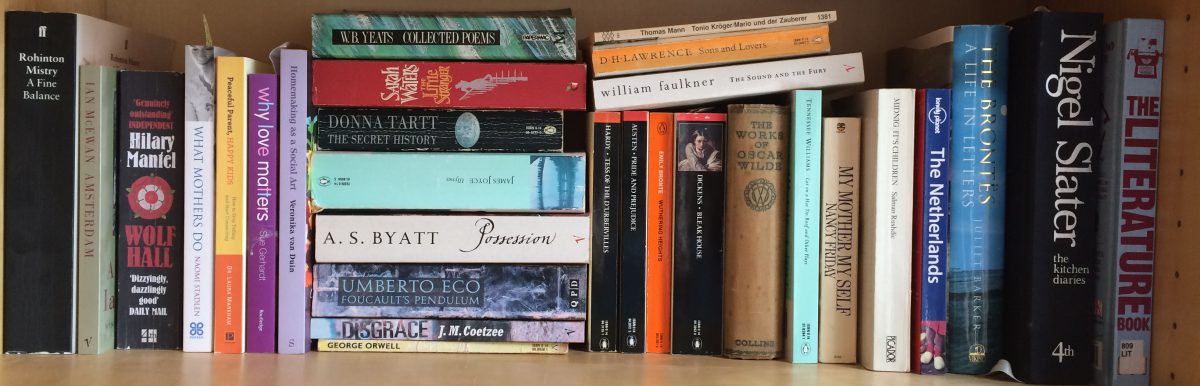
As another half-term holiday approaches, parents up and down the land will be seeking-out activities to do with their children. Hopefully, the weather will be good, which, when mine were younger, meant picnics in the park, walks in woodlands or county cycle rides. As they get a bit older, these are not always as exciting as they once were and it is often the case that parents have to provide at least one ‘centrepiece’ activity, something that is a bit more special. You could do worse than provide a literary slant to such an outing, so here are a few suggestions:
Hill Top, Cumbria
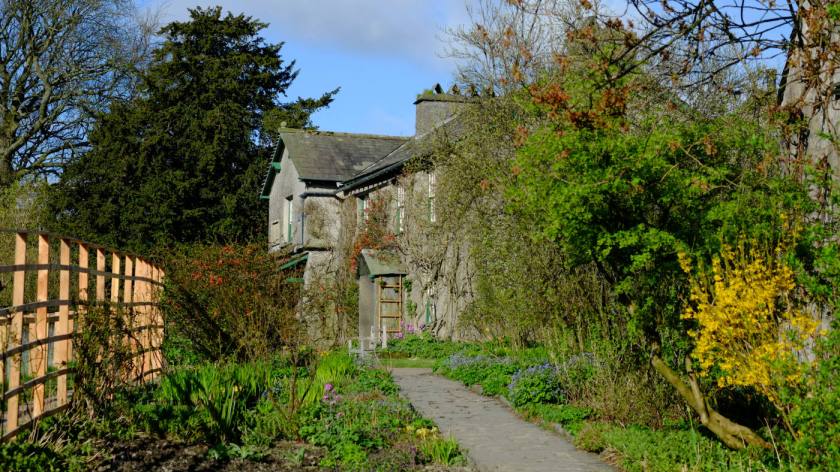 Former home of Beatrix Potter, now in the care of the National Trust. A must for lovers of Peter Rabbit, which may now have added resonance after the release of the film earlier this year.
Haydays Festival, Hay-on-Wye
The annual Herefordshire literary festival runs from 24 May to 3 June and there is as always a packed programme for children and adults alike, with forest schools and crafts, as well as the to-be-expected author talks. Tickets can be booked here.
Edinburgh International Children’s Festival
At the other end of the UK, there will be lots of fun and performance in Edinburgh between 26 May-3 June. See the full programme here.
Seven Stories, The National Centre for Children’s Books, Newcastle upon Tyne
 I was living in Newcastle when this place opened and I’m thrilled to see its thriving. They have a fantastic programme of events. Take a look here.

Roald Dahl Museum and Story Centre, Great Missenden, Bucks.
I haven’t met a child who doesn’t love Roald Dahl and so a visit here would be a huge treat. It’s the former home of the author, where he lived for 36 years and they have a running programme of events. Full details here.
Harry Potter experience, Warner Bros Studios, near Watford
At the pricier end of the spectrum and tickets need to be booked in advance, so it’s likely to be busy at half term, but a treat for die-hard fans of the young wizard. Details here.
Alternatively, you could visit Alnwick Castle, where much of the action was filmed, or Kings Cross station, and stand at platform nine and three quarters!
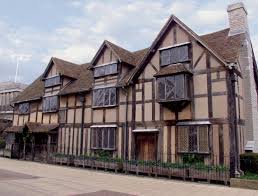 Stratford upon Avon
For year 9s and upwards, attention will be turning to GCSEs. A Shakespeare text is compulsory on the English literature syllabus, so a visit to Stratford, the Bard’s birthplace and home, will give some context. You could even take in a play. Details of all the relevant places are here.
I hope that whets your appetites.
I would love to hear your suggestions, particularly any events that may be a bit cheaper!
If you have enjoyed this post, do subscribe to my blog, by clicking on the ‘Follow’ button. You can also follow me on social media.
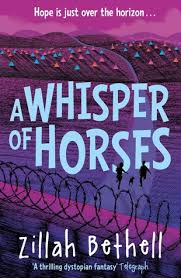 The novel is set in Lahn Dan, you’ll recognise the pun, but the place described in the book will be unfamiliar; it is practically a separate city-state within England, encircled by the ‘Emm Twenty-Five Wall’ that none of the inhabitants dare cross (told that there is only a deserted wilderness on the other side anyway). This is a time after ‘the Gases’ (a reference to climate change), the ‘Tems’ has deteriorated to a muddy flat and only the rich are able to live in the ‘crystal towers’ that afford them some natural light and allow them to live above the pollution layer. In a nod to Aldous Huxley’s Brave New World there is a strict hierarchy in the society: at the bottom are the Pbs, who do most of the work, then slightly higher up are the Cus, the professional classes, but true power lies only with the Aus. Give the child a prize who spots that these are chemical symbols and what this says about the social order! Lahn Dan is run by ‘the Minister’ a distant and slightly mythical figure, not unlike Big Brother, whose orders are carried out by Mordecai and his Secret Police. It all has echoes of 1984.
 The story begins near Aylesbury where the spivvy disgraced engineer Dr Absolom is trying to sell ‘mechanicals’. These are child robots which were initially created to perform tasks that society no longer wanted humans to do. We learn some vague details about how the experiment got out of hand when some rogue scientists tried to instil their creations with a soul. This was considered a step too far and laws were put in place to limit the capabilities of these creations, and, in particular, to forbid the building of adult-sized mechanicals. The environment we are observing, however, appears somewhat lawless, and it is clear that Absolom is operating on the margins and that there is a black market in mechanicals.
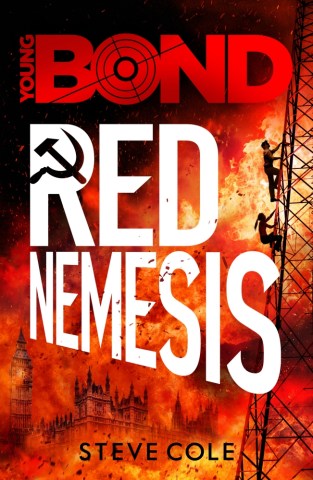 To my shame I have never read any of the Fleming novels (my husband has and he likes them a lot), so I was delighted to pick up this book from the children’s section of my local library and if you have pre/young teens in your household, I think they might like it. Red Nemesis by Steve Cole, is the ninth novel in the
  Juno is a widely-published author, Queen of Teen 2014 and member of the LGBT community. The story begins with a funeral, for Eliza, girlfriend of central character, Samuel. Eliza was killed in a car accident in which Samuel was driving. He is grief-stricken and finds himself in conflict with his family, who do not understand his torment. Samuel seeks out the estranged sister of his vicar father, with whom he cut off contact after she began to dabble in the supernatural. Through his Aunt Marie, Samuel enters a world where he can bring Eliza back to life, but at a deadly price.
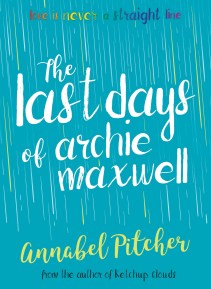 I found this grittier and rather more challenging than Grave Matter. It would suit teens who enjoy social realism or who may be coming to terms with difficult family relationships or with issues around sexuality. The book opens with Archie’s parents announcing they are to separate. Archie’s sister suspects it is because their father is gay. This is going on in the background, but Archie also has issues at school. He is part of a gang with some of the cooler kids, but who are actually unpleasant bullies. He befriends one of the more desirable girls at school, Tia, about which he is mercilessly teased by the other lads. Tia’s brother committed suicide on the railway line near Archie’s house, a year earlier, and he finds himself telling her that he saw her brother just before the day he killed himself, because she seems to need this to comfort her in her grief. As a result they become close. Thus, Archie finds himself sucked into lying, whilst his own home life seems to be falling apart.
 The central character in the story is Budi, a football-mad eleven year-old boy whose hero is an English footballer called Keiran Wakefield, who plays for Real Madrid. Budi and his friends spend all their free time playing football, role-playing their favourite teams and stars. One of Budi’s friends has an old television and they sometimes watch matches together too, late at night Indonesia time. To that extent Budi and his friends are like any other boys their age and your children will be able to identify with their passions and their aspirations. The similarities end, however, when you compare the daily lives of these children with ours in the developed world; Budi and his friends work in factories, mainly sweat shops, where the conditions are poor and where the manager is cruel and exercises discipline through the use of corporal punishment. Budi makes football boots that are shipped off to Europe. They work for a pittance and, despite both Budi and his Dad working, the family still does not have enough income to eat a meal every day. Budi’s best friend is Rochy who lives with his mother and two sisters (his father is dead). Budi tells us that Rochy is the cleverest person he knows but that he had to withdraw from school because he needed to work to support his family. His existence is altogether darker – his mother barely communicates (depression?) and there is the suggestion that the two sisters are involved with the sex industry, although younger readers will not pick this up.
 This book is set in a familiar country (England) but in a future time where life has changed and the world is very different: bus journeys cost hundreds of pounds, many routine tasks and jobs are carried out (not very well) by robots and everyone carries a QWERTY, which it seems is some next generation pocket computer. Auden Dare is an eleven year-old school boy who lives with his mother in Forest Gate in east London. When we first meet him we learn that his father is away fighting in the war in Europe. Climate change has taken hold and water is scarce. Indeed, water, or the lack of it, seems to be the root cause of the conflict in which Auden’s father is involved. Auden has a condition called achromatopsia, which means he is unable to see colours, only shades of grey.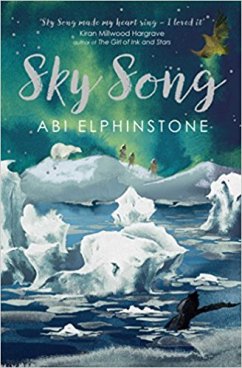
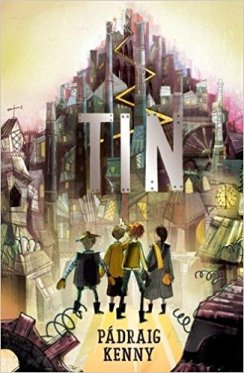 Tin by Padraig Kenny
 The Light Jar by Lisa Thompson
 The Unpredictability of Being Human by Linni Ingemundsen
 The Final Six by Alexandra Monir
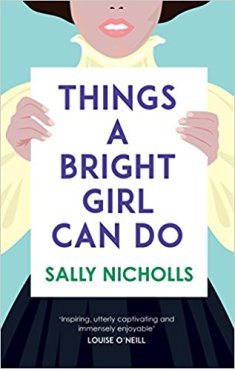 Things A Bright Girl Can Do by Sally Nicholls
 I really liked this little book and it’s the third in the Invincibles series. The central characters are two friends, Nell and Freddie, and Mr Fluffy, a cat. Nell’s teenage brother Lucas, has a sleepover camping with his friends in the garden, which, of course, the younger ones want to be involved with. Through ‘Pester Power’ Nell manages to persuade her parents to let her and Freddie participate for a few hours. Noises in the woods (the waste ground next to the garden) terrify them all, but, of course, it turns out to be nothing more sinister than Mr Fluffy! It’s a great little story, with nice illustrations and a level of humour which children will love and adults will also identify with. Recommended.
 Similar in style to The Invincibles, this book is along the lines of The Addams Family – set in Nocturnia, a land of comic creatures, ghouls, vampires, mummies, etc. The central story is that Amelia’s parents are to throw their annual Barbaric Ball. They are keen for King Vladimir to come, but he has not been seen in public for years. The king decides he will attend with his son Prince Tangine, and, in preparation for getting to know the people, the Prince will attend the local school. He is of course, very haughty and unkind, and Amelia is particularly cross when he demands, and gets, her pet pumpkin Squashy. It turns out that Prince Tangine hides a devastating secret – he is half-fairy (terrifying creature of the light!), though his mother disappeared when he was young, leaving his father bereft. Amelia discovers this as she tries to rescue Squashy from the palace, and, when the truth is revealed, Tangine owns up to his faults and they all become friends. It’s a fun little story, and the toilet humour will appeal very much to the irreverent side of children. Lovely illustrations and plenty of contemporary references. It is basically about friendship, inclusiveness and being nice to people. Recommended though less in this one to keep parent readers interested.
 The central character is Jaz, a 12 year-old girl who is in Year 7 at secondary school. She is dyslexic, doesn’t care too much for school (“Boring!”) and lives with her Mum and three older brothers, their Dad having left shortly after Jaz was born. Jaz is a bit of a rebel with a big heart. She struggles a bit at school, she comes across as someone who finds it difficult to deal with the mainstream demands of sitting still, concentrating, and not least the focus on reading and writing; there does not seem to be much allowance made for her dyslexia. She also struggles a bit with friendship issues, having jealous feelings towards another girl who she feels is going to ‘steal’ her best friend Lily. So we see Jaz is a bit insecure too.
 Julia's books