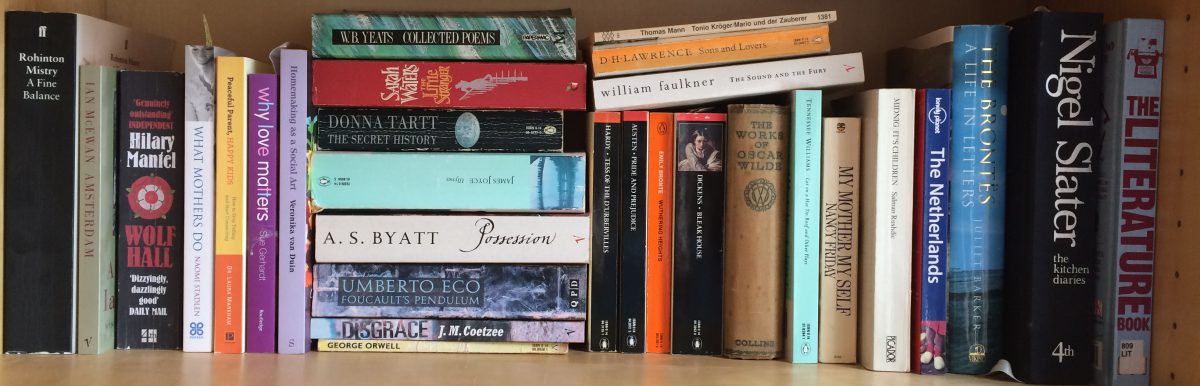
I am currently compiling a list of books that every child’s bookshelf should contain (look out for a future post). There are a lot of kids out there who love to read and the only problem their parents have is keeping up with consumption. But for many of us, keeping our kids reading in the face of so many other assaults on their time is like waging a war on multiple fronts and it’s not always easy to keep them interested in books once they get past 11 or 12 years old.
If you recognise this, then a film adaptation can be a good way of sustaining their interest, supplementing the act of reading with some visual stimulation and sharing the engagement with them (some kids just need more social interaction and books generally mean being on your own). So here are my top picks. They may not be the best film adaptations (such a list would be incomplete without The Wizard of Oz, in my view, but the L Frank Baum book on which it is based would not top most people’s reading lists), rather it is a list where I think both the film and the book complement each other and which may help kids with or lead them to the book. The order is in roughly increasing age appropriateness (my opinion).


- Charlie and the Chocolate Factory by Roald Dahl – I could probably populate a whole list with Roald Dahl adaptations, but the two films that have been made of this book are both superb and very different, which just goes to show how differently books can be interpreted. Personally, I prefer the 1971 version Willy Wonka and the Chocolate Factory starring Gene Wilder, but the 2005 version with Johnny Depp is also excellent.
- Matilda by Roald Dahl – the 1996 film stars Danny DeVito and his wife Rhea Perlman as Matilda’s appalling parents.
- Alice’s Adventures in Wonderland by Lewis Carroll – there have been many film and television adaptations of this and its follow-up Alice Through the Looking Glass. I love the 2010 version by Tim Burton which stars Anne Hathaway, Helena Bonham Carter and Johnny Depp.
- The Chronicles of Narnia by CS Lewis – again, there have been many adaptations of the five books in the series. I love the big 2005 production which stars Tilda Swinton as the White Witch and Liam Neeson as the voice of Aslan.
- How to Train Your Dragon by Cressida Cowell – the three films (2010-17) may be rather more well-known than the books, but if your kids liked the films try and get them into the books.
- The Sheep-Pig by Dick King-Smith – you can’t not love the 1995 film Babe based on this book.
- Madame Doubtfire by Anne Fine – Robin Williams is on classic form in the 1994 film version Mrs Doubtfire.
- The Spiderwick Chronicles by Tony DeTerlizzi and Holly Black – my son loved the movie and then went on to read all the books.
- Little Women by Louisa May Alcott – a classic book, and the 1933 film version with Katharine Hepburn is a classic also. There is also a 1994 film with Susan Sarandon, Winona Ryder and Kirsten Dunst, among other big names.
- Northern Lights by Philip Pullman – The Golden Compass (2007) is based on the first book in the His Dark Materials trilogy and stars Nicole Kidman, Daniel Craig and Ian McKellen among others.
- Coraline by Neil Gaiman – I haven’t read the book, but I love the 2009 movie. Gaiman will appeal to a certain kind of child who likes dark fantasy.
- A Series of Unfortunate Events by Lemony Snickett – I love the 2004 film starring Jim Carrey.
- The Book Thief by Markus Zusak – a challenging book and a challenging film, released in 2013, but well worth the effort. Recommended for 11-13 year olds. Younger kids will need you to watch this with them.
- The Fault in our Stars by John Green – my daughters, aged, 12 and 14, love John Green. They love the high emotion! The film is pretty good, but a weepie, so tissues at the ready.
- Holes by Louis Sachar – a superb book. The film is rather more comic than the book, in my view, but a good one for teenage boys I would suggest.
- Watership Down by Richard Adams – another classic weepie the 1978 film was voiced by a big-name cast and who could forget the score and theme song, Bright Eyes by Art Garfunkel. Written in 1972, teenagers will recognise the issue of environmental destruction.
Have you spotted the glaring omission? Yes, the Harry Potter series. Left out simply because it needs no introduction. Most kids, it seems to me, have read or watched all of them, or both.
Are there any that you would add to this list? I would love to hear of your favourites.
If you have enjoyed this post, please subscribe to my blog by clicking on the ‘Follow’ button. You can also follow me on social media.
 I am a firm believer that all reading material is good, just keep them at it, and adults should not judge if their kids want to read comics and picture books when they might think they ‘should’ be reading something more mature. If this sounds like a child you know, I’ve found a great little series they might find interesting. Hamish and the Baby Boom by Danny Wallace and illustrated by Jamie Littler is the fourth book in a series. Hamish Ellerby is the central character, a 12 year-old boy and leader of the Pause Defence Force in the town of Starkley. Hamish’s father is some sort of secret agent, ever engaged in defending earth against the evil Scarmash. Hamish has inherited some of his father’s abilities and leads his small group of friends in the PDF against strange and hostile happenings in the town of Starkley.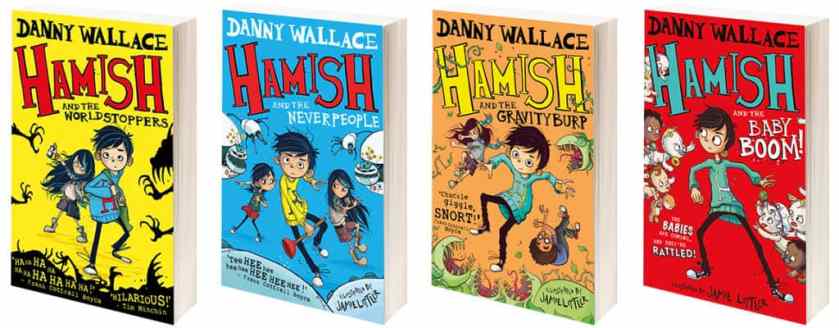
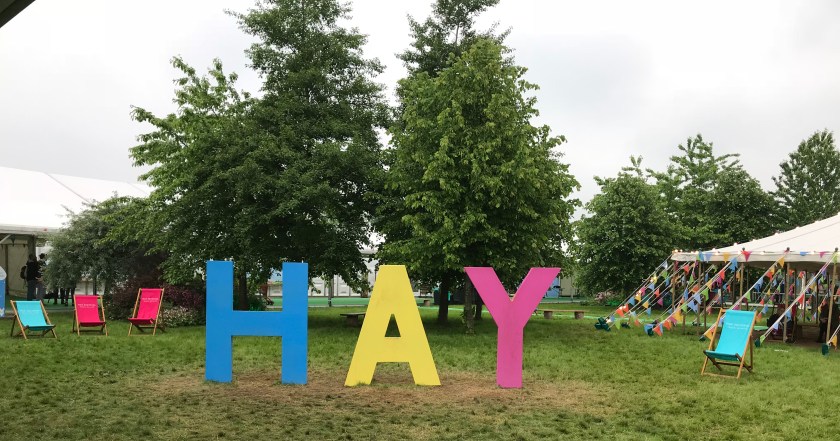
 I then saw Rupert Everett (with whom I fell in love years ago after his appearances in films Another Country and Dance with a Stranger in the mid-1980s) in conversation with Alan Yentob. Everett has just completed his film about Oscar Wilde, a passion project which it has taken over ten years to bring to fruition. There was a BBC4 Imagine documentary about it a couple of weeks ago.
 Finally, my last event of the day was hearing Turkish author Elif Shafak speaking about her new book The Forty Rules of Love. I reviewed her novel

 The central character of the novel is Florence Claybourne, elderly resident at the Cherry Tree sheltered housing development. Each of the residents has their own apartment, but the block is warden-controlled by Miss Bissell and Miss Ambrose, and there is a Day Room where communal activities are held. Some of the residents are frailer than others and there is the sense that this is the feeder facility for the local residential care home, Greenbank. The eponymous Elsie is Florence’s best friend, that’s the first ‘thing’ about Elsie; they have known each other since they were at school. The second ‘thing’ is that Elsie ‘always knows what to say to make me feel better’; Elsie always sounds a note of calm and reassurance whenever Florence becomes tense or upset, as she does frequently when the events of the novel unfold. Elsie and Florence are constant companions.
 I am a passionate supporter of public libraries, it’s where my reading journey started as child and I have never lost my fascination with them. With so much pressure on local council budgets, our libraries are under constant threat of closure. Many have already succumbed. Those that have survived have had to innovate, and this is great to see, becoming information and community hubs, putting on more and more events even becoming tourist information centres as well, but for me, their role as first-line guardians of our reading lives is foremost.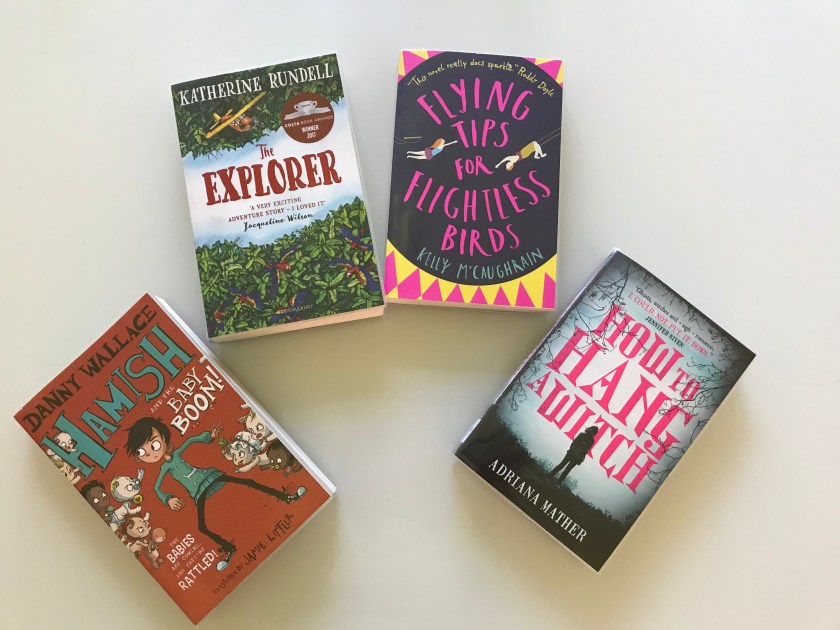
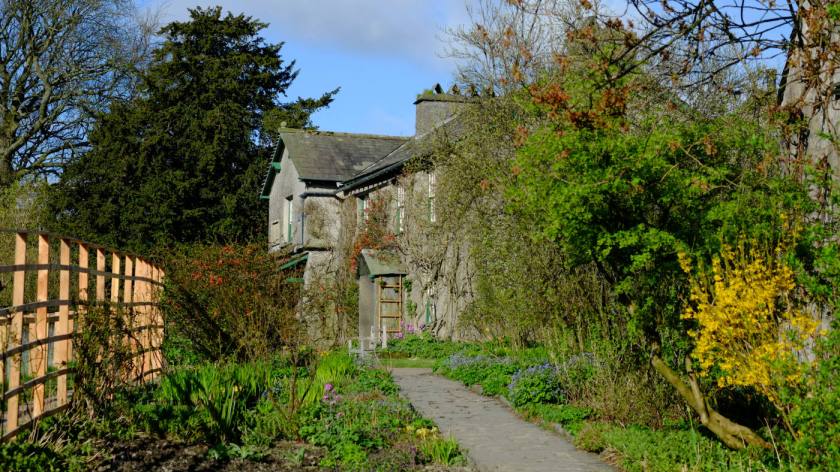 Former home of Beatrix Potter, now in the care of the National Trust. A must for lovers of Peter Rabbit, which may now have added resonance after the release of the film earlier this year.
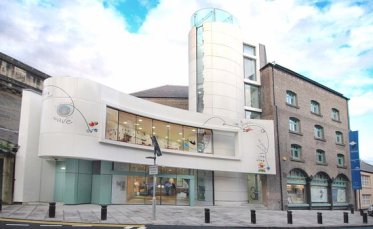 I was living in Newcastle when this place opened and I’m thrilled to see its thriving. They have a fantastic programme of events. Take a look
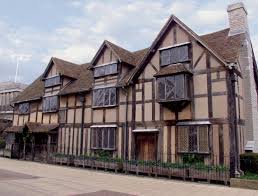 Stratford upon Avon
 I’m a big fan of audiobooks as a way of passing otherwise dead time in a more constructive way – for me it’s car journeys, or whilst exercising. It might also be while you’re waiting for swimming lessons to finish or at the supermarket. You have to choose your titles carefully though, because it’s not just about what you listen to, but the narrator is really key to the enjoyment. For example, audiobooks I have enjoyed have been Holding, narrated brilliantly by the author Graham Norton, Frankenstein, narrated by Derek Jacobi and 1984, narrated by Andrew Wincott (Adam from The Archers). Their reading styles enhanced my enjoyment. A title I enjoyed less because of the narration was The Girl on the Train, where I felt the male voices were not done well.
 I have recently finished listening to The Story of a New Name by Elena Ferrante, Book Two in her Neapolitan Novels series. I have listened to and reviewed here, Book One,
 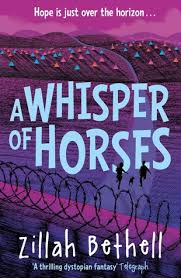 The novel is set in Lahn Dan, you’ll recognise the pun, but the place described in the book will be unfamiliar; it is practically a separate city-state within England, encircled by the ‘Emm Twenty-Five Wall’ that none of the inhabitants dare cross (told that there is only a deserted wilderness on the other side anyway). This is a time after ‘the Gases’ (a reference to climate change), the ‘Tems’ has deteriorated to a muddy flat and only the rich are able to live in the ‘crystal towers’ that afford them some natural light and allow them to live above the pollution layer. In a nod to Aldous Huxley’s Brave New World there is a strict hierarchy in the society: at the bottom are the Pbs, who do most of the work, then slightly higher up are the Cus, the professional classes, but true power lies only with the Aus. Give the child a prize who spots that these are chemical symbols and what this says about the social order! Lahn Dan is run by ‘the Minister’ a distant and slightly mythical figure, not unlike Big Brother, whose orders are carried out by Mordecai and his Secret Police. It all has echoes of 1984.


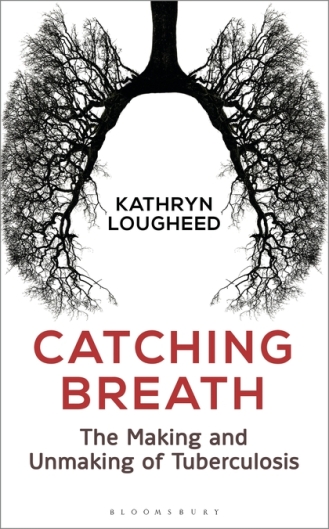 One of the books I consulted as part of my research into understanding more about the disease, its symptoms and its effects, was published very recently, in 2017. It’s called Catching Breath: the making and unmaking of tuberculosis by Kathryn Lougheed. The author is a former scientific researcher and is now a journalist and science writer. The book is excellent. It is fantastically well-written, even funny in parts (the author has an interesting sense of humour – her Twitter handle is @ilovebacteria!). She is out to make some serious points, however, about this, one of the oldest diseases known to humanity, which has so successfully mutated, crossed species and diversified and which just keeps on winning. Her main argument is that TB remains a disease of poverty and inequality. Globally, it affects the weakest – the young, the old, the poor or those who are already sick. She argues that, although it is a complex disease, if there was sufficient political will, many more lives could be saved. If there was as much resource and international effort put into tackling TB as there has been, say, to addressing AIDS, there would have been far greater success to date. In 2015 the World Health Organisation (WHO) announced its ‘
 Julia's books