September is the new ‘New Year’ for many people, particularly those of us with school-age children’. Everything feels fresh and filled with optimism for me and the Autumn colours provide stunning landscapes. The air seems fresher and the sun a little brighter. Tomorrow (Thursday) marks the start of the Autumn equinox in the northern hemisphere. (Did you catch the amazing Harvest Moon last Friday? Here are some images.)
It’s also a great time of the year for the Arts – here in the north-west we have the Manchester Literature Festival from 7-23 October; I always try and squeeze a couple of events in and many are free. The theatres all launch their new seasons – really looking forward to seeing Maxine Peake in A Streetcar Named Desire at the Royal Exchange – and there are always lots of new movie releases, in time for the Oscars in February.
I’m not a big movie watcher (most of my cinema trips are with the children), but I noticed at this year’s Oscars there were a number of big winners that were based on books. So, I set about to watch some of these, read the books on which they were based and compare. I watched/read:
- Room by Emma Donoghue
- The Danish Girl by David Ebershoff, and
- The Revenant by Michael Punke
There was also Carol, based on the novel by Patricia Highsmith of course; I watched the film (which did not live up to the hype for me) but have not read the book.
Here are the results, with my scores out of 5 for each:
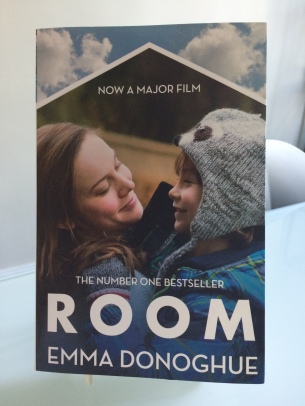 Book 5/5
Film 5/5
Absolutely loved both of these. I believe the author wrote the screenplay and so the film follows the book very closely. Briefly, it’s about a young woman, Joy, who is kidnapped, raped and imprisoned by her captor for 9 years. She bears his child and the two are kept in an outhouse. When her son Jack is 5, Joy decides to try and escape. The film tells the story beautifully, but it does not portray the child’s perspective as brilliantly as Donoghue does in the book, his unconventional naming of things and his inability to conceive of a world outside their Room. Both are fantastic, however, and I recommend them highly.
 Book 3/5
Film 4/5
The Danish Girl tells the story of Lili Elbe, an early pioneer of gender reassignment surgery in the 1930s. Lili was born as Einar Wegener, a Danish artist and marries Gerda, an American. It is based loosely on facts but much of the detail is fiction. The book, for me, was less about Lili and more about the relationship with Gerda, and, indeed, the effect on her of her husband’s journey to becoming a woman. Much of the detail, for example Gerda’s back-story, is omitted from the film, and in many ways this made it a little more successful for me as it had a tighter focus. It also has a different ending, which I think works better.
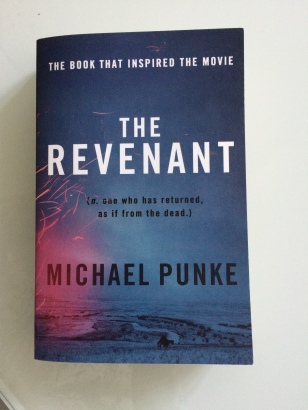
Book 5/5
Film 4/5
This probably would not have been on my ‘must-read’ list had I not set myself this task…which just goes to show it’s good to go out of your reading comfort-zone! Absolutely gripping book, a real adventure story, whilst also superbly-written. The Revenant is based loosely on the true story of Hugh Glass, an American pioneer in the 1820s, who is savaged by a bear and abandoned by his gang of fur-hunters who believe he will die. He is left briefly in the care of two members of the gang (whose instructions are to bury him once he is dead), but they leave him whilst he is still alive, taking his rifle and knife. Miraculously, Glass does not die after they have gone and he sets out on a quest to track down the others and enact his revenge. There are some narrative changes in the film, which I found a little clumsy, but were necessary, I think, for the different medium. Leonardo DiCaprio is brilliant and it’s a real action-adventure movie, though I spent some of it with my eyes closed – a bit on the gory side for me at times!
My overall conclusion from this exercise is not that books are better, but that they tended to have more nuance and more depth, even if that was sometimes less well-executed, as in the case of The Danish Girl. I should add that in each case, I read the book first, which may have influenced my opinion.
If you have read or watched any of these, I’d love to hear your views. If you’d like to learn a bit more about these books, you can read my full-length reviews here.
 This was a library loan, which is problematic as I could only borrow it for 3 weeks (and then another 3 weeks, renewed online), when actually it’s the kind of book that lends itself to being picked up from time to time, read for a few pages and then put down again. It does not work as well when you try to read big chunks of it at bedtime. (And it’s a hefty book!)
 I didn’t think that the words “life-changing” and “tidying” could belong in the same sentence in anyone’s world, let alone adding the word “magic” as well! Don’t get me wrong, like many people, I enjoy the buzz I get from a clean tidy space, it’s the cleaning and tidying bit I don’t like. Marie Kondo is a different kind of animal, but she is highly likeable because she doesn’t try to hide it. She confesses that when she was a child she loved tidying both her own and other people’s things, and devoured women’s magazines with all their cleaning and tidying tips.


 Emmeline Pankhurst was, of course, born in Manchester, and her family home at 62 Nelson St, Chorlton on Medlock, now houses the Pankhurst Centre, which is open to the public on Thursdays. I plan to take the girls there during the school holidays, while the memories are still fresh. (Another coincidence: Emmeline Pankhurst’s birthday was last Friday.)