
It was the Autumn Equinox yesterday, exactly halfway between the shortest and longest days, when the hours of daylight and the hours of night are the same. From now until Christmas, the nights will begin to draw in. It’s a while before you notice it fully, of course and I always find that as the leaves on the trees begin to turn and fall and the temperatures cool, I actually feel a burst of energy and an increased desire to get out for walks and enjoy nature. It’s as if I only realise what I have when it starts to go and then I want to make the most of it! Yes, that certainly sums up part of my personality!
Regular readers of this blog will know that I am passionate about children’s literature and getting, correction, KEEPING kids reading – don’t they all love to be read a story when they’re little?! When and why does that stop? I spent hours in libraries when my kids were little, but I struggle to keep my 11, 13 and 16 year old children into their books. I’m not going to moan about screens; they are as inevitable a part of young people’s lives as food and drink, and, frankly, now mine all have pretty independent lives, I quite like the reassurance their mobile phones give me.
 If you are finding it hard to motivate your children to read you may find this little book helpful – Alison David’s Help Your Child Love Reading – which I’ve reviewed here and plugged many times, because it contains practical advice and will not chastise you for allowing them screen time.
I love the title and the cover photo – it’s not an instruction guide on how to make them do something against their will, but how to embrace one of the most joyful and stress-relieving habits there is. And with the shocking news this week about how many of our young girls experience depression, reading is a hobby that all of our children can benefit from. So as life for those of us in the northern hemisphere gradually returns to the indoors, there is no better time to revive a reading habit. As is my regular wont, I’ve picked out a few children’s books that have caught my eye recently.


Pax by Sarah Pennypacker (age group 8-12 years) was published last year, but seems to be getting a lot of publicity at the moment. It has a beautiful cover and is the story of a boy’s friendship with a fox. I’m really keen to read this one. Birthday Boy by David Baddiel (age group 9+) looks like being another smash hit in this genre for the comedian turned children’s author. Published earlier this month it considers the question, what if it was your birthday every day? Be careful what you wish for is the message! A Place Called Perfect (age group 8-12 years) by Helena Duggan concerns Violet and her family who move to the town of Perfect, where everyone has to wear glasses to stop them going blind and where nothing is quite (as perfect) as it seems.
Most primary school age children are fairly easy to manage and get reading; it’s those pesky teens who present the biggest challenge! I’ll give you some ideas for this age group next week.
Happy reading!
Do you have any children’s books to recommend?
If you have enjoyed this post, please follow my blog for weekly thoughts and book reviews.
 The novel begins more or less where The Glorious Heresies left off with the central character, Ryan Cusack, embroiled ever more deeply in the Cork city underworld of drugs, money laundering and violence. McInerney has managed to keep Ryan’s character consistent – he has evolved in an entirely credible way – although, unlike in the first novel, there now seems almost no hope of the more refined, gentler side of his personality prevailing to choose a different lifestyle. He is more embedded in the criminal fraternity than ever but remains an engaging and attractive central character. If anything, his charisma grows as he matures; true, he does some pretty unpleasant things, and not always at the behest of his criminal masters, but you can see that McInerney, if this turns out to be part of a series of novels, is building him up to be the tormented gangster.
 However, The Power is a prize-winner and seems to have been universally lauded, most notably by Margaret Atwood (Alderman’s literary mentor) whose ground-breaking novel The Handmaid’s Tale has just enjoyed a very successful television adaptation. The premise of The Power is a subversion of current social norms where men dominate, to one where women discover that they have a physical superiority, an ability to electrocute and disable, even kill, men. The novel begins (presumably in the current time) when women begin to discover they have this power and start to use it in ways that enable them to dominate. The story is told through the experiences of a number of women and a male. First there is Roxy, the young daughter of a London gangster who, once she discovers her power, undertakes a purge of all her male foes, her father’s enemies, and her half-brothers who threaten her, to become the top gangster in her field. Then there is Margot a small-time US politician who discovers she has the power and uses it, over a period of years to eliminate her political enemies and rise to great things. Initially, Margot has to hide her power; society is initially hostile to it, and therefore those who have it, seeing at as a threat which could upset order and stability (yes, much of the novel has to be read as a deep irony). Margot, as a politician is also connected with a number of corporations who would no longer support her if they knew she was a carrier of the power. Third, there is Allie, a teenager adopted into a right-wing southern American Christian family (more irony). She is abused by her adoptive father and in one of his assaults she electrocutes and kills him. She then escapes to a convent from where she morphs into Mother Eve, the head of the cult which spreads the power worldwide. One of the followers of the cult is Tatiana Moskolev, the estranged wife of the President of Moldova, who sets up her own republic in the north of the country and establishes a brutal regime where men are mere playthings, sexually abused and murdered at will. Finally, there is Tunde, a young Nigerian, who when we first meet him is trying to seduce a young woman, unsuccessfully as it turns out, because she gives him a small but still very humiliating electric shock when he makes his move on her. It is clear the power dynamic has shifted! Tunde senses that change is about to come to the world and so he sets about travelling the globe, posting his obervations on the internet and thereby becomes an international journalistic sensation.



 So, September is my month of choice for resolutions. My
 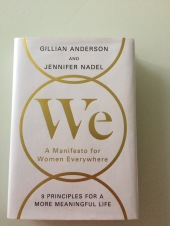 Before the summer break I also read


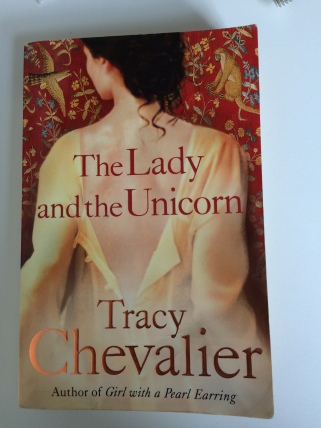 I picked up The Lady and the Unicorn at the secondhand book stall at my youngest daughter’s school summer fair and read a large chunk of it whilst there. It would not normally have caught my eye on a bookshelf as the cover is more suggestive of a cheap sexy romance (nothing wrong with that if that’s your thing!), but I was very quickly drawn into the world that Chevalier evokes, as she also did so brilliantly in Girl with a Pearl Earring.
 This ancient fortress up on a hill is a potted Portugese history lesson. It’s fabulous and from here you can get a panoramic view of the city. You take the antique Tram 28 to reach it. Aside from the main site I recommend the tour of the ancient archaeological area (above, where they have found evidence of habitation as far back as the Iron Age) which is generally under-attended, and is fascinating because you get to see and understand exactly how people have lived in and used the fortress over the centuries.


 Julia's books