
Peter Kay comes from a strong northern comic tradition and is considered one of our finest comic actors and stand-up comedians today. In my book club recently we decided we needed something light and funny, and perhaps also it was time for a memoir or autobiography, so Peter Kay fitted the bill. The first volume of his autobiography became the highest and fastest-selling autobiography of all-time. I think it has only just been knocked off that top spot by Prince Harry’s Spare. Which is disappointing.
Peter Kay’s success is entirely deserved. Hailing from a modest background in Bolton, he was brought up a Catholic (his mother was from Northern Ireland) and attended a primary school where he was taught mainly by nuns. Apparently, Peter Kay still lives in the area and even after many years at the very top of his game and with phenomenal successes to his name he comes across as grounded, modest and without affectation.
The Sound of Laughter recounts Peter’s childhood, teenage years and early life working in various low-wage jobs before finally finding success when he wins a northern comedy competition (beating the favourite and fellow comic Johnny Vegas, whom he clearly admires). Peter’s early life was ‘ordinary’ in every sense of the word, and yet it is a sign of his genius in a way, that he has mined this seemingly inauspicious material and dug up comedy gold which still serves him well today. Whether Kay is talking about the nuns at his school (whom he gives such names as ‘Sister Sledge’, ‘Sister Act’ and ‘Sister Matic’), his driving lessons and various driving instructors, his many jobs, (which included working in a petrol station, a branch of Netto, a cash and carry and a bingo hall), or his beloved family, his eye for every minute comic detail is laugh-out loud funny. I listened to this on audio, narrated by Kay, himself (who else could have done it!) and there is a wealth of ‘bonus material’ – he simply cannot help himself going off at tangents, throwing in an anecdote. I got through much of it in a couple of long car journeys and goodness knows what fellow motorists must have thought if they spotted me crying with laughter!
What is striking about Kay is that he in no way conforms to the ‘tortured comic genius’ trope that we recognise in the likes of Robin Williams or Tony Hancock, nor complex or controversial like Billy Connolly, Peter Sellers or Eddie Izzard. He just seems like a straight-up regular guy who you can imagine living next door to. And this is his USP.
At a time when young people are under so much pressure to achieve and when momentous decisions come thick and fast, Kay is also a shining example of how you do not need to go to the best school, the best university, or have outstanding qualifications to succeed. In his case, being true to oneself is a far more valuable commodity, as are hard graft, humility and self-respect.
Kay published a second volume of his autobiography in 2010, called Saturday Night Peter, which I will be downloading on audio. I hope it will be just as funny as the first volume – I’ll report back. He also said in an interview in 2021 that he was working on a third volume. As he is currently working on a months-long sell-out tour of the UK we wait with bated breath.
Highly recommended.
 My book club chose this for our pre-Christmas read (I’ve only just finished it!) and we all thoroughly enjoyed it. It’s long, and perhaps could have been edited somewhat, but I imagine the main buyers of this book will be Michelle-fans who want as much detail as possible. The first part of the book was, for me, the least engaging. My fellow readers and I were a little surprised to learn that Michelle Robinson did not in fact come from an affluent background. She was a ‘Southsider’ – from a part of Chicago that was fairly blue-collar and largely African-American, and became more so as she grew older and some of the white residents moved out. A picture is painted of a family with strong values around hard work, doing the right thing, caring for others and loyalty to family. Michelle excelled in school through hard work, determination and the support of her parents and attended both Princeton and Harvard Law School. She has never forgotten her humble beginnings, however, and this underpins her commitment to equality and social justice. However, I did feel this part of the book was most descriptive; in the context of the book as a whole I can see why it would have been important to her to put her politics in perspective, but it was a tiny bit…pedestrian?
 I chose this book for my 2018 Facebook Reading Challenge. The June theme was an autobiography, a tricky category since enjoyment can often depend on your feelings about the author. I also wanted to avoid titles that would most likely have been ghost-written. After thinking about it for some time, I chose this, the first volume in Angelou’s memoir series, and the one which is often considered to be the best. It can be read as a stand-alone.
 Browsing in the bookshop last year, I noticed that she had published her own autobiography, at the age of 83 – I note with some pleasure that her 84th birthday is in fact today! Many happy returns! Reading the blurb whetted my appetite – I was not aware of her life as a groundbreaking Literary Editor at the Sunday Times, or that she had five children, including one boy who died as a baby, and another son who was born with severe disabilities, nor that her first husband, fellow journalist Nicholas Tomalin, was killed in 1973, when her children were still very young. It sounded like a very interesting read.
 We decided for our March meeting we’d read Graham Norton’s 2014 memoir The Life and Loves of a He Devil. We wanted to read an autobiography and felt that among the many “celebrity” memoirs out there, Graham’s might have more to offer than most. We all like him as a broadcaster and personality and thought it might be fun. We were not wrong! But when we came to meet and discuss it, we had very little to say. We’d exchanged a number of messages on our WhatsApp group in the preceding weeks, with many laughter emojis, asking each other if we’d come across the dog and condom anecdote yet, or the Dolly Parton story. Some sections of this book, which I read most of whilst on a train journey to London, were laugh-out-loud, or rather “try to suppress a laugh because I’m in public”, moments. It’s a romp and Graham writes the way he speaks, with wit, authenticity and complete honesty. His writing style is similar in his novel
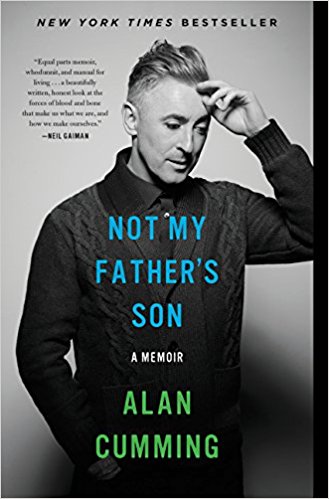 I was really torn between Claire Tomalin, Anjelica Huston and Alan Cumming. I left it in the hands of the local library and it was Alan Cumming that became available first! I’m still waiting for Claire Tomalin, and that is probably the one I was keenest to read. I was attracted to Alan Cumming’s book, however, because its premise is not dissimilar to the book I am writing, namely family research and the uncovering of a long-held secret. There the similarity ends, however, as Alan’s book is much more about his relationship with his father.
 For November, the challenge is to read a book set in or by a writer from the southern hemisphere – which is, broadly, South America, southern Africa and Australasia. As the nights draw in and it gets increasingly wintry I wanted to be reminded that in other parts of the world it is Summer! So, my choice this month is Isabel Allende’s Portrait in Sepia, a book I picked up in my local Oxfam bookshop and which has been sitting on my ‘to read’ pile for far too long. Allende is such a fine writer and I’ve read a number of her books over the years. It’s great to have an excuse to dive into this one and experience the sensuousness of her writing and the world she evokes, as the last leaves fall from the trees here and nature seems to go into hibernation.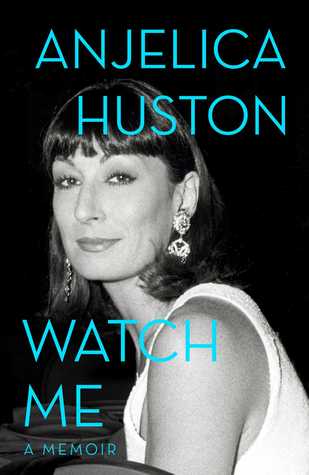
 Finally, I saw in the bookshop recently that Claire Tomalin has written A Life of My Own, where, for a change, she is writing about herself. I admire Claire Tomalin hugely; she has written some of the finest biographies produced in recent years, covering subjects such as Jane Austen, Samuel Pepys and Mary Wollstonecraft. She has led the most astonishing life: an unhappy childhood, four children, the death of her husband, the loss of a child, and the eternal struggle between motherhood and work. I think I would find this book truly inspiring.
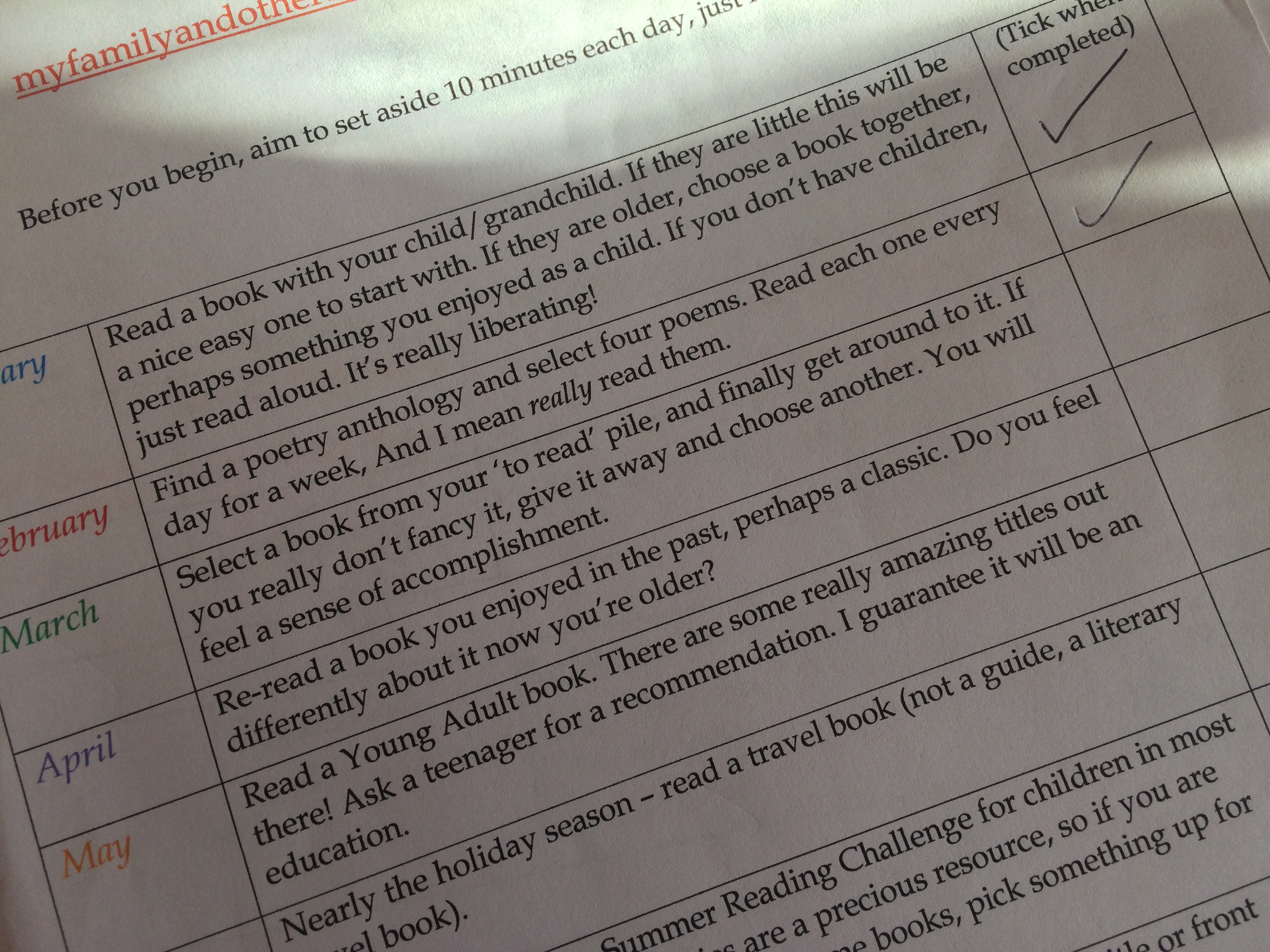 So, the task for March on my
 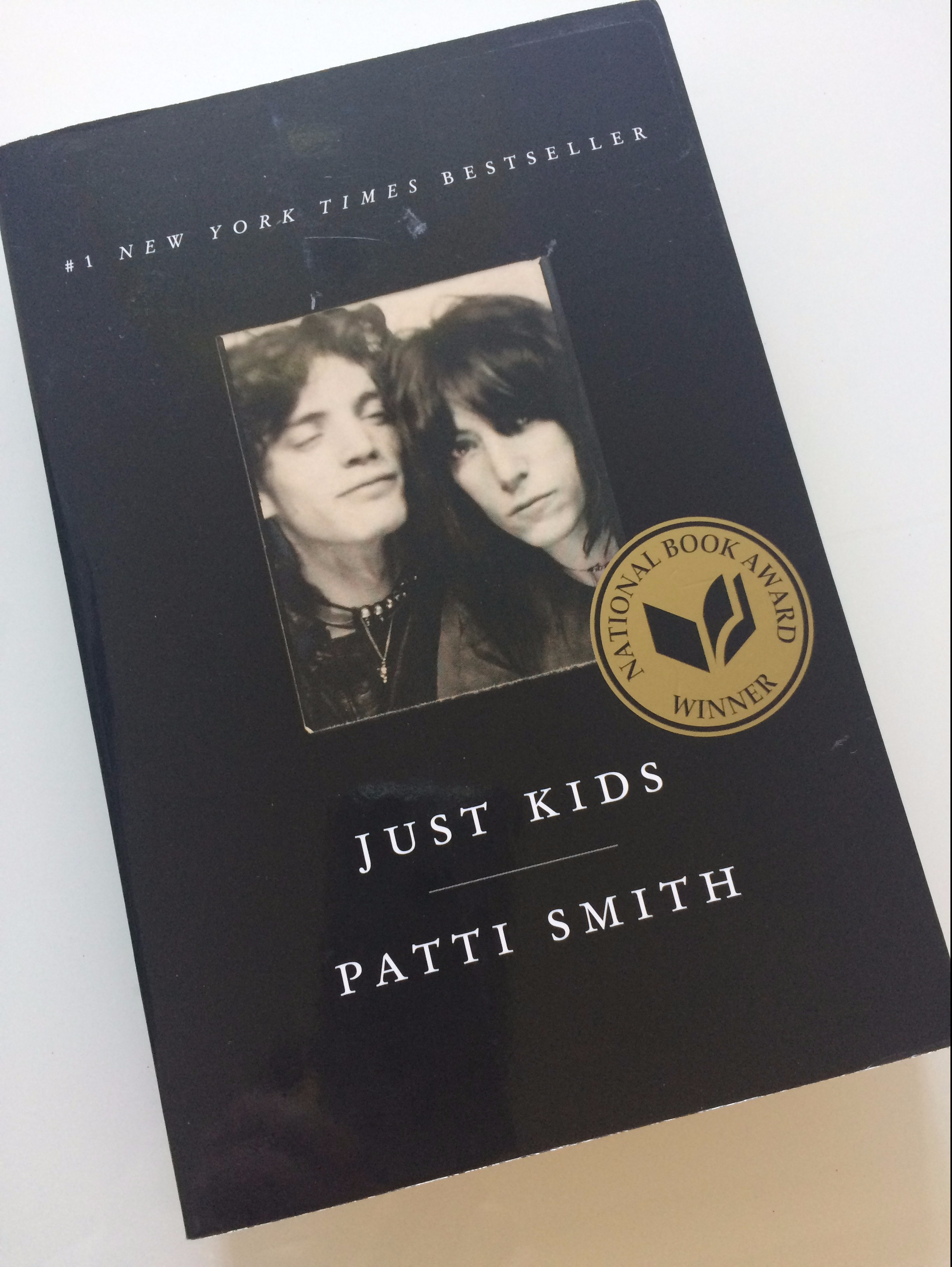 Patti Smith is a fascinating woman who has led a fascinating life. I have been meaning to read this book for years (it was published in 2010), so when I came across it in the Strand Bookshop whilst on my trip to, where else, New York last summer, it had to be bought! (It’s a very New York book.)
 I’m not knocking either of these genres, I’m simply saying that literary non-fiction is a very tough genre to sell in. I read recently that the average non-fiction title in the US sells 250 copies a year (one for roughly every million people), or 2,000 copies over its lifetime. It makes you wonder why on earth you would write one! Many seem to be written by academics, journalists or people who have already established themselves in a chosen field and know they are writing for a particular niche. One striking thing about the genre, though, is that authors have a real passion for the topic, and the authenticity of the work is palpable.
 Julia's books